Lappí grows beyond labels
Spanish converter Lappí Labels and Flexible Packaging has an ambitious growth strategy focused on targeted acquisitions and buoyed by artificial intelligence.
Flexible packaging was never part of the original plan for Spanish converting group, Lappí Labels and Flexible Packaging. But opportunity has an interesting way of presenting itself.
As customer needs evolved, Lappí began to view flexible packaging not as an additional product line, but as a strategic response to market shifts. Today, the group is pursuing targeted acquisitions in flexible packaging that add specialist capabilities, capacity and market access.
Lappí’s most recent acquisition in July 2026 of Alempack in Portugal further expanded its footprint in the Iberian Peninsula and strengthened the company’s offerings for flexible packaging in the fast-moving commercial goods market.
The Alempack acquisition was the third of its kind for Lappí. It followed acquisitions of Gráfica Calipolense in 2019 and the Portuguese companies CPM-Penta in 2023, acquisitions that allowed Lappí to double its size and strengthen its presence in the region.
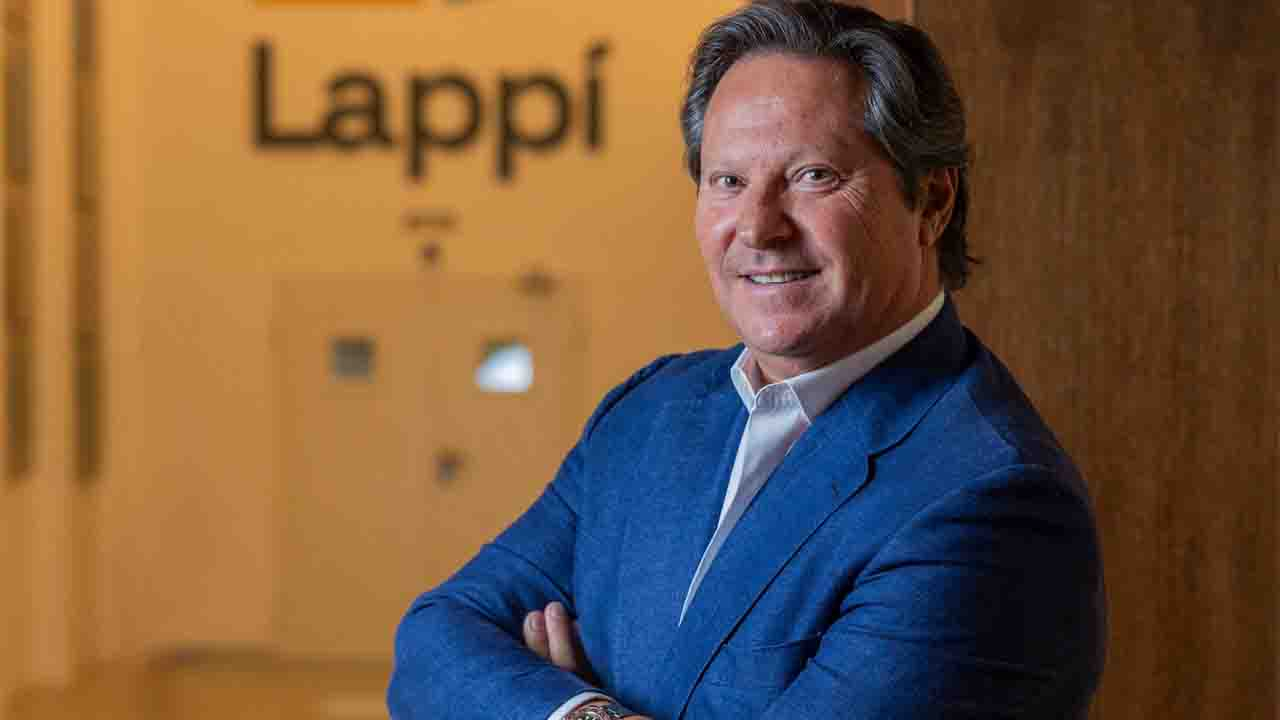
‘With the incorporation of Alempack, we give continuity to a way of growing that we are very clear about in Lappí Labels and Flexible Packaging: integrate solid companies with complementary capabilities and teams that reinforce our industrial project,’ says CEO Antonio Lappí Perea. ‘This is the third acquisition we have made in just over two years. Each of the companies that have joined has contributed to expanding our capabilities, our knowledge of the market and our industrial presence.’
Each of the companies that have joined has contributed to expanding our capabilities, our knowledge of the market and our industrial presence
For a company like Lappí Labels and Flexible Packaging, acquiring an established flexible packaging company often makes far more business sense than building a greenfield operation.
With these acquisitions, Lappí gains immediate access to specialist capacity, experienced teams and established customer relationships that would take years to build organically. It also created opportunities to serve customers across both labels and flexible packaging.
Lappí is now made up of six companies, seven manufacturing facilities and more than 390 employees across Spain and Portugal.
Alempack, which employs more than 40 people, will enable the group to double its flexible packaging business. Lappí is expected to reach estimated organic sales of 74M USD (65M EUR) in 2026, and is planning two more acquisitions this year.
History
The move into flexible packaging may seem like a significant shift for a company that’s regarded as one of Spain’s established label converting groups, but Lappí has always embraced opportunities rather than standing still.
And, really, if we look back at the company history, Lappí didn’t set out to be a label supplier either. But through a series of strategic shifts, acquisitions and investments, it has set the course for Lappí Labels and Flexible Packaging into one of the leading label and now flexible packaging groups in the Iberian Peninsula.
The company’s origins date back to 1959 when it began as Lappí Industrias Graficas, a commercial printer. In the 1970s, Lappí Perea’s father recognized the potential in the label space and secured the wet glue label business of an important bottled water brand in Spain. The customer helped propel Lappí firmly into the label space.
In 1990, the company expanded again by adding self-adhesive labels, which eventually became a major part of its business. Under the leadership of Lappí Perea, who joined the company in 1997, Lappí (then called Grupo Lappí) ramped up investment in shrink sleeve and wraparound label technology. Lappí Perea led the company through a series of acquisitions in the mid-2000s.
Investment from private equity group Diana Capital in 2017 supported the new stage of growth, while the Lappí family continued to lead the day-to-day operations.
Headquartered in Seville, Lappí Labels and Flexible Packaging has seven production locations in Barcelona, Madrid and across Portugal, with approximately 60,000sqm of manufacturing space.
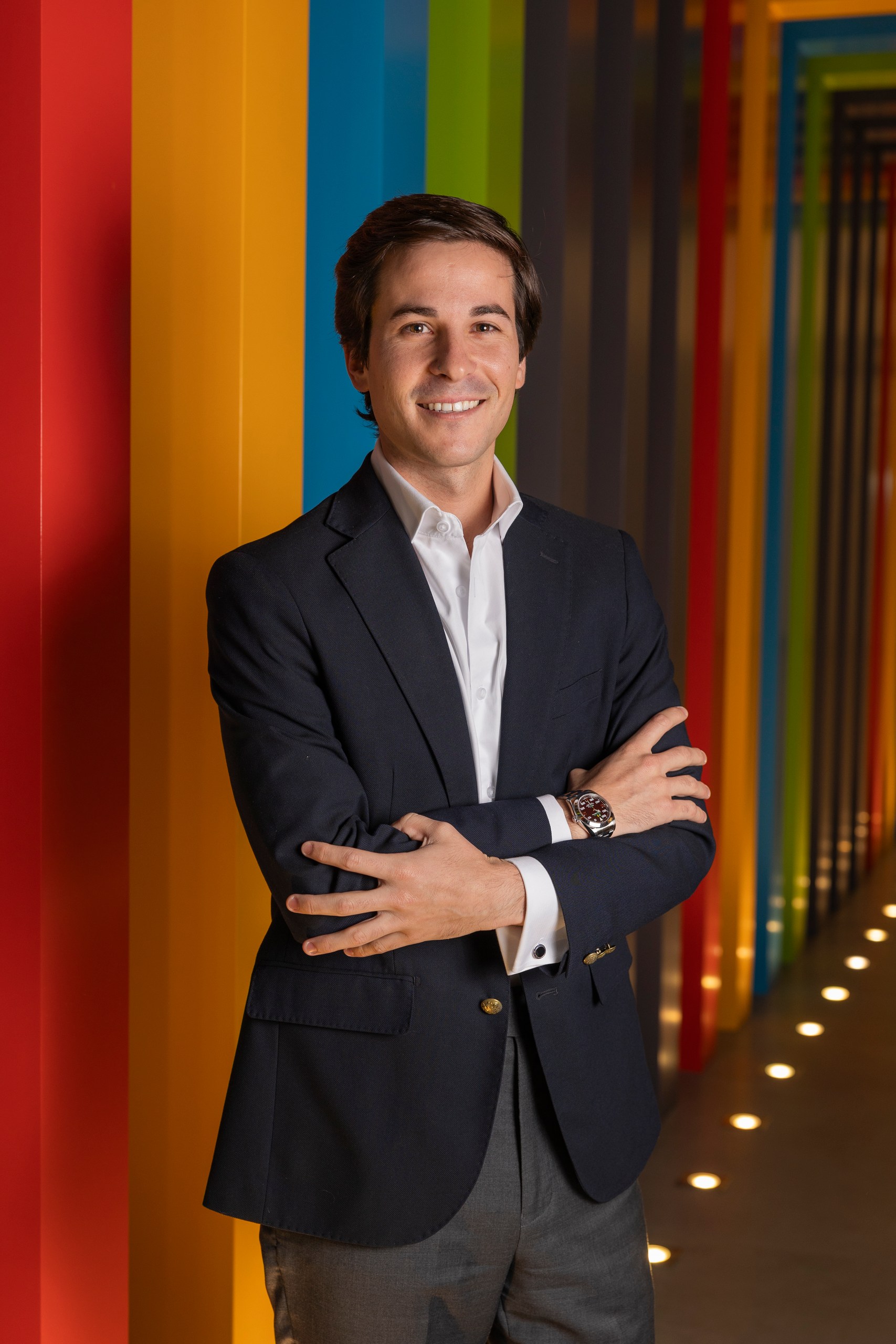
Lappí Perea is joined by his children, Carmen Lappí Moreno and Juan Lappí Moreno, who represent the third generation of the family business; a legacy that is not lost on either of them. Both of them have had successful careers outside of the industry before joining Lappí.
Juan Lappí Moreno says: ‘I always say that my grandpa was the entrepreneur. He started with the crazy idea. My father took us to another level, and we, as the third generation, have to maintain this legacy.
Your surname doesn’t guarantee you a seat as an executive of the company; you have to try your best, and you have to work as much as you can to preserve that legacy.’
Technology, end uses Lappí’s product portfolio represents a wide range of labels and packaging for consumer package goods and industrial end-use segments, including pressure-sensitive, wet-glue and wraparound labels, shrink sleeves and flexible packaging. Carmen
Start where it really hurts, do it properly, and then scale, learn, measure, govern and test
Lappí Moreno describes the company as ‘label generalists,’ but is more targeted when it comes to flexible packaging.
‘In labels, you can go to a very broad market, and we have,’ she says. ‘We do beer labels, pet food, cosmetics, pharmaceuticals, food and beverage. But in flexible packaging, it’s better to focus on segments and applications.’
Lappí’s manufacturing platform has evolved alongside the group’s growth and today combines a broad range of printing, converting and finishing technologies.
Its capabilities include gravure printing, full HD and CI flexography, sheet-fed and rotary offset and digital printing for both labels and flexible packaging, supported by different web widths, and UV, conventional and solvent-based drying systems. These are complemented by advanced converting, automation and value-added finishing technology.
The group’s technology base includes equipment from HP, Heidelberg, Nilpeter, MPS, Miyakoshi, Omet and Windmöller & Hölscher. This combination of production processes enables Lappí to manufacture a comprehensive portfolio, including pressure-sensitive, wet-glue and wraparound labels, shrink sleeves and flexible packaging. Its flexible packaging portfolio includes complex printed reel films, flowpack applications, lidding films, stand-up pouches, vacuum pouches, shrink pouches and other packaging structures.
The availability of multiple technologies and production routes allows Lappí’s technical teams to assess each project based on material selection, print quality, functional requirements, run length and converting needs before assigning it to the most appropriate process and manufacturing site.
This industrial base is supported by Lappí’s sustained investment policy.
The company allocates approximately five to six percent of annual revenue to capital expenditure.
Artificial intelligence
As a company that has long prided itself on innovation and adaptation, it’s no surprise that Lappí is further along than most when it comes to one of today’s defining technologies: artificial intelligence.
Lappí’s open-arm embrace of AI means the company is embedding it into its culture and building the digital foundations needed to scale, while at the same time preserving its customer and employee centric focus.
Lappí has appointed Carmen Lappí Moreno to lead AI adoption across the company. She encourages AI experimentation, and is using it to improve processes and reduce manual work. (See boxout)
‘We have always understood that growth is not only about expanding capacity, technology or markets, but about building a company prepared for the future while remaining faithful to the values and industrial discipline that have brought us to where we are today,’ Lappí Perea says.
‘AI is another step in that evolution. Not as an end in itself, but as a tool that will help us improve, make better decisions and continue building a stronger, more competitive and future-ready company.’
Carmen Lappí Moreno has established a dedicated committee of AI ‘champion users’, whose aim is to focus on practical use cases, while managing cultural shifts in the workforce. The goal, leadership says, is to enhance productivity, not replace people.
‘I think that AI is about redefining the work and the skills of the people doing it,’ she says. ‘Our focus is not on removing people, but how we can sell more, produce more, and be better.’
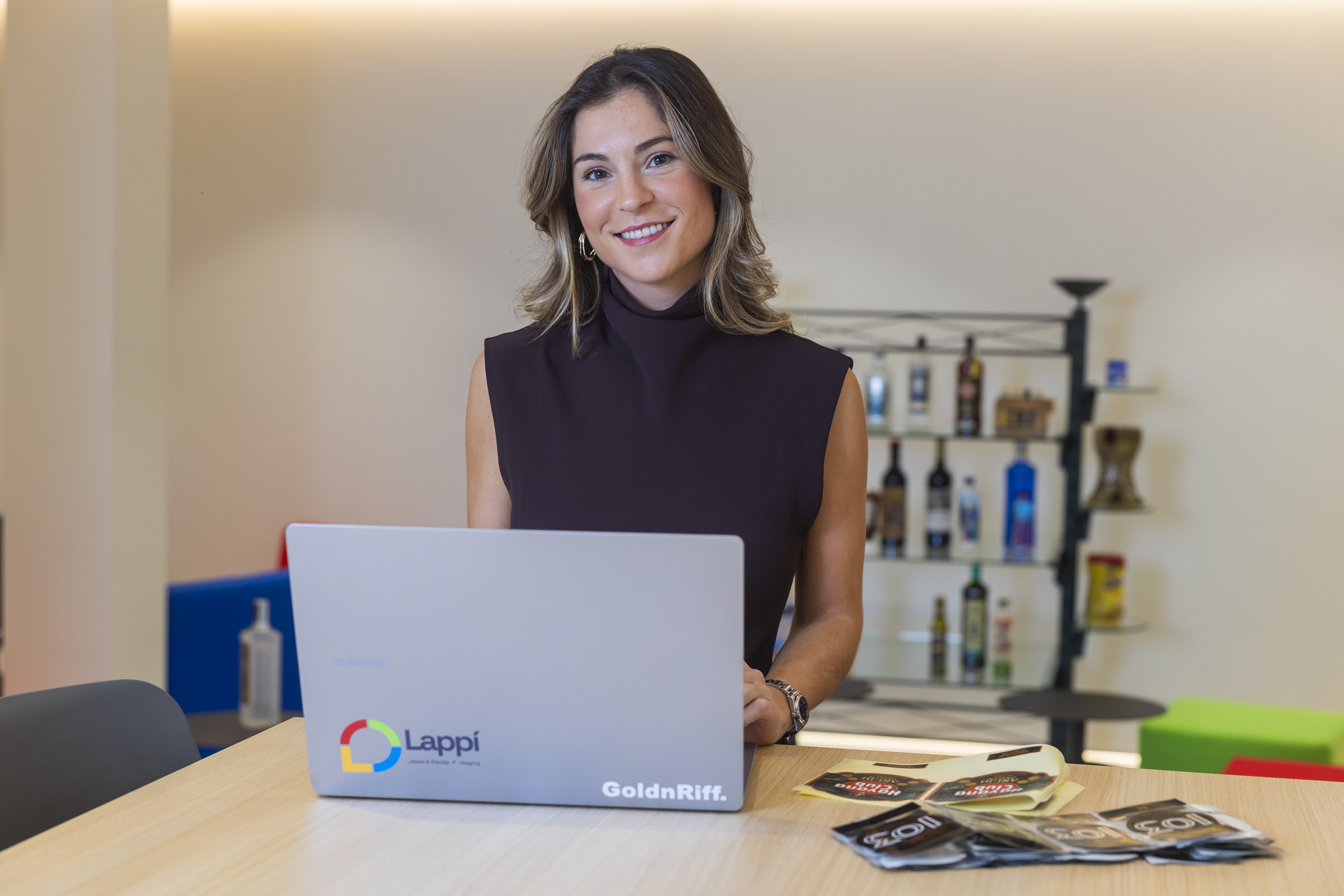
Carmen Lappí Moreno spoke at Finat’s European Label Forum in Seville this spring and described how any AI project at Lappí gets off the ground. Before embarking on any proposed AI project, the project must answer a key question. ‘Does it help us work better, and what impact will it have on how we compete?’ she explains. ‘We prioritize based on impact and feasibility.’
For businesses exploring AI in their companies, her advice was simple: ‘Start where it really hurts, do it properly, and then scale, learn, measure, govern and test.’
Lappí’s expansion into flexible packaging and its early embrace of AI are rooted in the same philosophy: staying ahead of change rather than reacting to it. Whether the company is broadening its portfolio to meet evolving customer needs or leveraging AI to make its people and processes more efficient, the company continues to invest with the future in mind.
AI agent transforms order entry
For Lappí Labels and Flexible Packaging, order intake was once viewed as a largely labor-intensive administrative process. Not anymore, thanks to an AI-powered agent developed in-house.
Nearly all of Lappí’s orders come via email and often in inconsistent formats, such as PDFs, Excel files or even text messages. This variability creates opportunities for human error.
The company’s head of AI, Carmen Lappí Moreno, says that roughly 10 percent of its orders contain some type of mistake that could lead to production issues, incorrect quantities or additional work.
The AI agent created by Lappí reads incoming orders, validates the information, applies customer-specific knowledge and predefined business rules, and converts unstructured data into reliable, structured information for the production system.
Importantly, the system is designed with what Carmen Lappí Moreno calls ‘human in the loop’, meaning its AI agent can still verify missing information or inconsistencies and flag the issue for human review rather than simply making assumptions. The goal here is not to replace employees, but to allow them to focus on higher-value tasks outside routine order processing.
The result is improved data quality, fewer errors reaching production and a more efficient process that gives Lappí a clearer view of customer behavior and business trends.
Stay up to date
Subscribe to the free Label News newsletter and receive the latest content every week. We'll never share your email address.