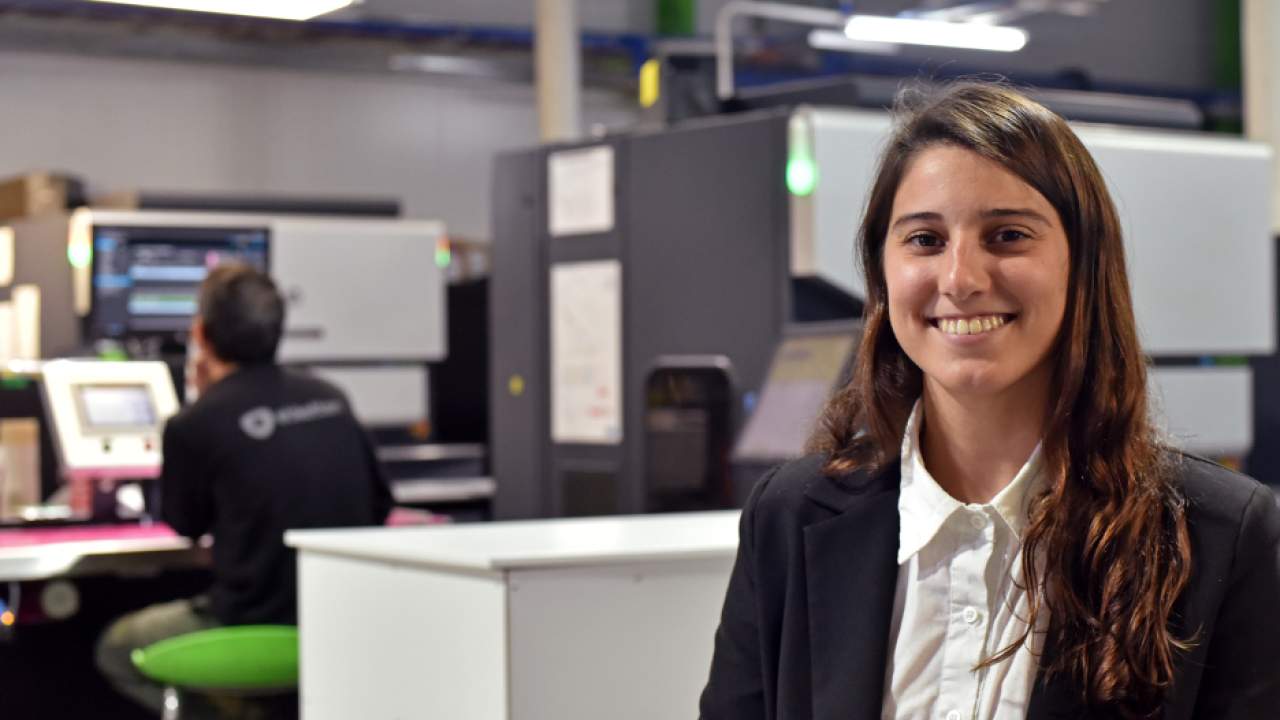
Valley bridges US, Mexico manufacturing boom
With production sites on either side of the US-Mexico border and strong expertise in durable labeling, Valley has been well-placed to take advantage of the nearshoring trend.
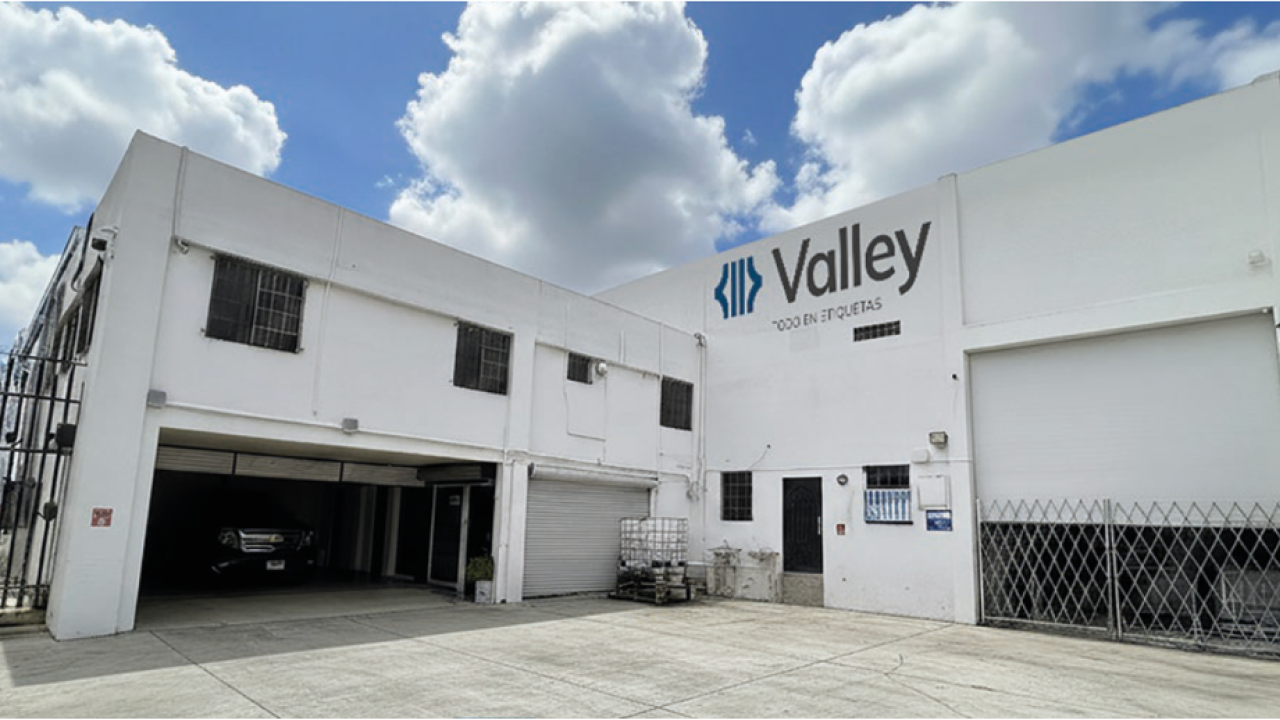
US/Mexican label converter Valley has built strong production and distribution capabilities on either side of the countries’ borders. Leveraging its expertise in high-quality, durable label applications, it is taking advantage of the nearshoring trend of manufacturers setting up plants in northern Mexico and selling their products in the US market.
The company, known in Mexico as Valley Latino américa, specializes in UL-certified custom labels for demanding industrial applications such as automotive, aviation and household appliances, frequently creating unique constructions that can withstand the harshest of environments.
Among its clients are Ford, General Electric, General Motors, Tesla and Whirlpool. With a Durst Tau RSC inkjet press freshly installed, among other new investments this year, and a reorganization of its printing capabilities underway across its plants in both the US and Mexico, Valley is preparing for its next stage of growth.
Opportunity
Valley Commercial, as it was then known, was founded by Mexican couple Osca Serrato and María de los Ángeles Serrato more than 35 years ago in Brownsville, Texas, as a distributor of labels produced by trade printers. Their three US-born children now run the operation. Its focus from the beginning was on durable label applications and high-quality materials, which stood in good stead for its move around 10 years later into printing its own labels.
The founders’ middle son, Joel, now the company’s general director, was sent across the border in 1998 to set up a label printing facility in Ramos Arizpe in Coahuila, northern Mexico. ‘The family believed there was more opportunity for opening the plant in Mexico rather than the US,’ he recalls. ‘The Mexican government gave support to new businesses.’ Equipped with a second-hand Mark Andy 820 flexo press and a single operator, who taught himself to use the machine from scratch, there were ‘initial teething problems’, admits Joel Serrato. But soon the fledgling operation was growing and buying surrounding land to expand the business.
In 2002, the company opened a second production site in northern Mexico, this time in Monterrey. Again, it started with a small facility and began buying neighboring sites to reach it scurrent footprint of four warehouses. A distribution center has since been opened in Matamoros, Tamaulipas, streamlining logistics for both northbound and southbound shipments.
Valley also moved its US site from Brownsville to the nearby Texan town of McAllen, a hub for ‘maquiladoras’: parts manufacturers and assembly plants for companies selling into both the US and Mexico, and began printing labels there five years ago, no longer distributing them from other converters. ‘Production in the US is only five years old, but it is expanding,’ says Serrato.
‘Many of our clients have been with us since the beginning.’ The company now employs around 20 staff in the US and more than 80 in Mexico. Joel Serrato is joined in running Valley by his elder brother, Oscar, who leads the US operation, and his younger sister, Nancy, in charge of logistics.
Nearshoring
With one production facility in the US and two in Mexico, plus its Mexican distribution site, the setup allows Valley to manufacture and distribute its labels on both sides of the border. The Mexican plants represent 75 percent of the company’s overall production, with 25 percent produced in the US. Sixty percent of Mexican production is exported to the US market.
‘We are taking advantage of the nearshoring trend,’ says Joel Serrato. ‘There have been many foreign companies setting up manufacturing facilities in northern Mexico to serve the US market.’
Additionally, the bi-national set-up provides insurance. ‘We were unaffected by the uncertainty surrounding tariffs earlier in the year, because we can manufacture in Mexico for the Mexican market, and in the US for the US market,’ he says.
Durable labels, particularly for the automotive sector, represent around 60 percent of production. Food, cosmetics and pharma account for 10-15 percent.
The rest includes shipping and variable-use labels tied to cross-border logistics. ‘Our production is less segment-specific and more about the flow of goods across the border,’ says Serrato.
The consistent factor is quality, he continues. ‘Our focus is on high quality, not price. We are not interested in competing at the lowest cost. Our contracts with
There have been many foreign companies
setting up manufacturing facilities in northern
Mexico to serve the US market
Joel Serrato of Valley and his wife Dalia Treviño, with the Durst Tau press, bought at Labelexpo Mexico 2025clients are often long-term. Strong relationships are important to us.’
Valley’s reputation rests on its ability to deliver labels that can survive the harshest conditions. Its products are designed to endure both extreme heat and cold, from 50 deg C warehouse trucks to sub-zero aircraft fuselages.
‘We’ve produced labels that must last five years in marine environments or withstand aviation-level temperature swings,’ Serrato says. ‘Some of our most demanding jobs use specialty materials were wasting even a meter can be very expensive.’
All materials and consumables that Valley uses in its production are UL-certified. Materials come from Avery Dennison, Fedrigoni, Flexcon and UPM Adhesive Materials. ‘We have to be very precise in our production,’ says Serrato.
‘Our processes are regularly audited. Sometimes our client will specify which suppliers we must use for materials and adhesives. On other occasions, we will create the construction ourselves and then send it off to be UL-certified.’
Harsh environments will sometimes be simulated, so a label that is required to withstand five years in the ocean, for example, can be tested in just a few weeks.
Labels for distribution within Mexico also meet NOM (Norma Official Mexicana)
standards, which ensure that products sold in the country meet specific safety, quality
and performance standards. A recent new area of production is graphic overlays, a type of printed decal that can be applied to the exterior layer of products such as washing machines.
‘We started this about a year ago,’ Serrato says. ‘We see lots of potential
with this application.’ Serrato cites folding carton production for small pharmaceutical boxes as a potential area for future expansion.
Reorganization
To support its next stage of growth, Valley has embarked on a major reorganization of its production facilities and a new wave of technology investment. The site in Monterrey will be dedicated to digital printing, housing a new 330mm (13in) Durst Tau 340 RCS E inkjet press
bought during Labelexpo Mexico 2025 in Guadalajara in April.
Alongside it is a Mark Andy Digital One, installed in 2017 after the deal was confirmed at Labelexpo Europe; it was the first such machine sold in Mexico, and a 2m (79in) web width Agfa flatbed inkjet press.
A 2m web width Mimaki cutter will arrive soon, while finishing for the Durst press is handled by a Rotocon converting line, another first in the Mexican market.
We were unaffected by the uncertainty surrounding tariffs earlier in the year, becausewe can manufacture in Mexico for the Mexicanmarket, and in the US for the US market
‘The print quality of the Durst machine is exceptional,’ he continues. ‘We can print on many different types of material, which is important for us, and its UL-certified inks are a huge advantage. The press is quick to set up and prints very fast for a digital machine, at 80m/min. We’ve heard that even Apple specifies Durst machines for some label suppliers; that’s the level of quality we want to reach.’
The Monterrey site will soon feature a dust-free clean room for specialized applications. All labels produced in the digital-only facility are for durable applications and are UL certified. Once the reorganization is complete, the site will be officially reinaugurated.
Valley’s flexo output is being concentrated in Ramos Arizpe, Coahuila. It houses 22 presses in total, from Mark Andy, Allied Gear and Etirama, in a variety of web widths. Production is dedicated to prime labels.
Finishing of the company’s flexo output takes place on machines from the Chinese manufacturer Henyue. Serrato says they are evaluating the RFP 340 flexo press jointly developed by Chinese manufacturer HS Machinery and Rotocon, which was exhibited at
Labelexpo Mexico 2025, describing it as ‘very interesting’.
‘I’ve been traveling to and buying equipment from China for more than 10 years,’ he says. ‘I was a pioneer in bringing Chinese machines to Mexico. People often have out-of-date ideas about the quality of Chinese technology. But in recent years, the quality has risen dramatically, and this is shown by how many Chinese manufacturers have been exporting huge quantities of machines.’
In McAllen, Texas, Valley’s production is all currently flexo, but as part of its reorganization, the company plans to add digital capabilities. ‘We want to have dual capabilities in both countries. This will give us the ability to meet any client’s needs,’ Serrato says.
One of Valley’s defining principles is financial prudence. ‘We don’t much like credit,’ he says. ‘We’ve always bought our equipment outright.’
This conservative approach has allowed the company to invest in both machinery and facilities without exposure to debt, a rarity among converters of its size.
As the North American supply chain reconfigures under the nearshoring trend,
Valley’s cross-border manufacturing model serves as a template for other companies. By maintaining dual production bases, investing in certification and the
latest digital technology, and preserving its culture of quality and family values, the Serrato family has turned a small Brownsville distributor into a binational, multi-facility manufacturer ready for its next stage of growth. Our focus will always be on high-quality, durable products and strong relationships,’ concludes Serrato. ‘That’s how we began, and that’s how we plan to continue – on both sides of the border.’
Stay up to date
Subscribe to the free Label News newsletter and receive the latest content every week. We'll never share your email address.