Exclusive: Durst and MPS outline growth plans following acquisition
Labels & Labeling spoke with Durst and MPS exclusively about the recent acquisition, where both companies outlined plans for continuity, investment and growth . Will Drysdale reports
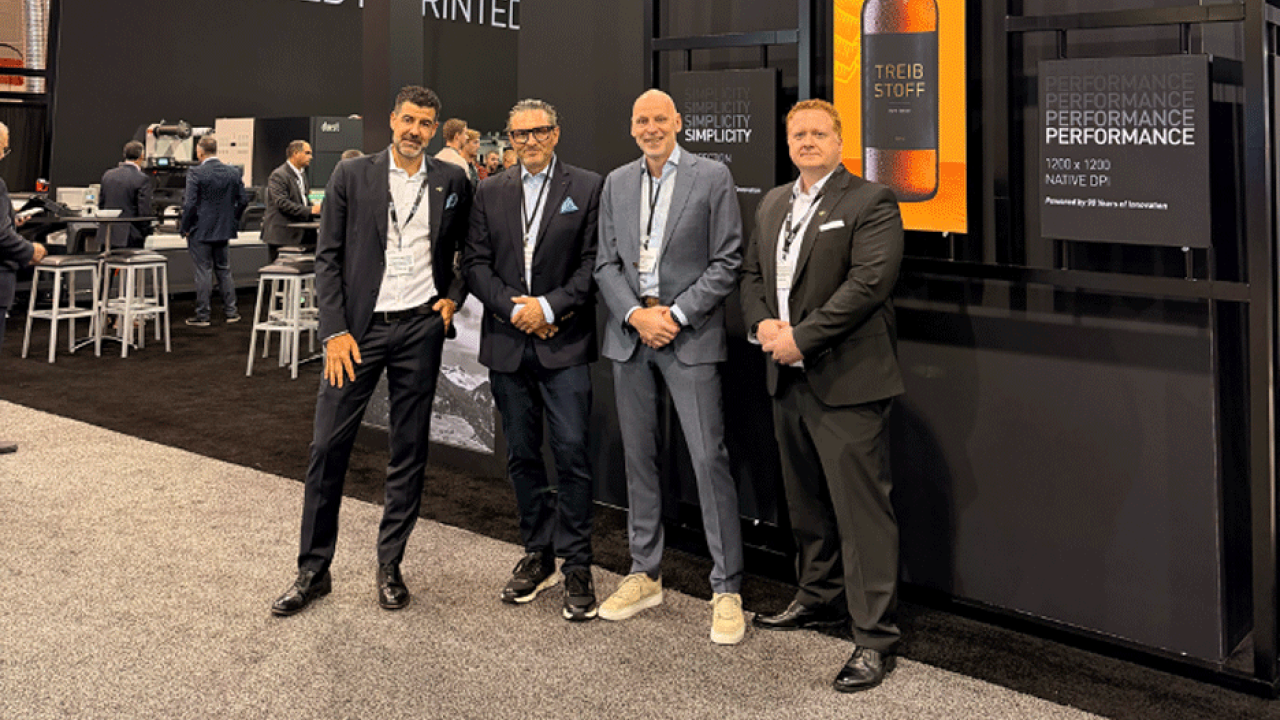
Durst Group and MPS have emphasized continuity for customers while outlining opportunities for investment, international growth and future technology integration following Durst’s planned acquisition of the Dutch flexo press manufacturer.
The acquisition, announced at Loupe Americas in Chicago, will take effect on January 1, 2027, subject to closing conditions and regulatory approvals. The business will operate as MPS – A Durst Group Company, retaining the MPS name, its existing management team and its focus on flexographic printing equipment.
The acquisition will expand Durst’s label and flexible packaging portfolio beyond digital and hybrid printing by bringing dedicated flexographic press technology into the group. It also provides MPS with the financial backing, international infrastructure and technology resources of a larger, family-owned business.
Speaking exclusively to Labels & Labeling at Loupe Americas, Thomas Macina, sales director of Labels and Flexible Packaging at Durst, said the acquisition reflected the company’s ambition to provide converters with a broader range of technologies.
‘We are always looking for new growth opportunities,’ Macina said. ‘We want to be very close to the industry and give label converters all kinds of solutions.
‘We develop solutions within our own company, we collaborate with Omet, we have our own software development and ink laboratories, and now we also have MPS within the group.'
MPS adds further flexographic technology, engineering expertise and application know-how to Durst’s existing digital and hybrid platform.
Adding flexo to the Durst portfolio
Durst has established its position in the labels market through its Tau digital press portfolio and the KJet and XJet hybrid platforms developed in partnership with Omet. That partnership continues unchanged. Durst has also invested heavily in software, automation, workflow management and ink development.
MPS gives Durst a flexographic press portfolio, coupled with an established installed base and specialist engineering and application knowledge. This will allow the group to address converters that continue to rely on flexo, alongside those investing in digital or hybrid production.
Macina said the decision reflected feedback received from converters and Durst’s belief that the future of label production would involve multiple complementary technologies rather than a single printing process.
‘At the end of the day, we listen to feedback from customers around the world and try to serve them with the broadest portfolio possible,’ he explained.
Although Durst sees potential to bring the companies’ respective capabilities closer together, Macina stressed that the immediate priority would be to stabilize and support its existing customers.
‘For now, the most important thing is to give continuity to the MPS project and serve customers with flexographic printing equipment,’ he said. ‘So we are giving them security and continuity in what they have started, as well as a brighter outlook for the future.’
The acquisition comes only months after a management-led buyout at MPS. L&L also had the opportunity to sit down with MPS CEO Michiel Borst, who explained the two companies were already familiar with one another following discussions involving MPS and a number of businesses across the industry in recent years.
Borst said the relationship developed further as MPS rebuilt its operations and began to regain momentum during 2026.
MPS recovery exceeds expectations
According to Borst, MPS has performed better than anticipated since its restructuring, helped by the continued support from existing customers and confidence in the employees who remained with the business.
‘Business has been very good,’ he said. ‘We anticipated a certain level of business, but we have already overperformed. We have some very loyal customers who know that the team is still on board.
‘The faces in the market and the knowledge are still there, and that has created confidence among existing customers. We have also received orders from new customers.’
Retaining employees and technical expertise has been particularly important as MPS has worked to rebuild relationships across its installed base. Borst said customers were reassured by the presence of people who already understood their presses, applications and production requirements.
The company has deliberately concentrated its recovery efforts on regions where the MPS brand has traditionally held a strong position. These include the UK, Spain, Germany, Benelux and Bulgaria, where it has an established installed base and agent or service networks.
‘We focused on specific regions where we are strong, where we have a strong installed base and a strong agent network, mainly in Europe,’ Borst explained. ‘Those are traditional strong markets for us, and that has helped us get up and running.’
The recovery has not been limited to new equipment sales. Borst highlighted the importance of spare parts, press retrofits and service work, which provide immediate support to customers while generating recurring business for MPS. This installed-base activity will also benefit from Durst’s wider international service and spare-parts infrastructure once the acquisition has been completed.
MPS identity to remain
Both companies were keen to make clear that the acquisition would not result in the disappearance of the MPS brand or an immediate overhaul of its product strategy.
MPS will continue to develop, manufacture and sell its existing flexographic presses. Its current management will remain in place, with Borst continuing to lead the company as managing director of MPS – A Durst Group Company.
‘A lot will stay the same,’ Borst said. ‘It will be the same people and the same brand within Durst Group. We have all the flexo knowledge, and the main goal is to continue positioning ourselves as a strong flexo player.
‘The focus for now is to keep doing what we do well and concentrate on the areas in which we are strong. We will continue serving all our customers, and they will see the same people. The difference is that we are now backed by a strong partner, which can only be better for customers.’
Borst added that customers should expect the acquisition to strengthen service and support rather than create additional distance between MPS and its installed base.
‘Customers should not feel that this combination will lead to a lower level of service or a greater distance between us,’ he said. ‘They should feel that it is at least the same and preferably much better, with stronger service and support.’
MPS’s existing direct sales channels will remain in place across Europe, in the US, however, Durst US will assume responsibility for the sales and service of MPS equipment from January 2027.
This will give MPS access to Durst’s established regional organization in the country and provide US customers with a larger sales, service and support infrastructure.
‘MPS customers will now be part of a bigger group,’ said Macina. ‘We can bring them a broad portfolio, whether that is digital, hybrid with Omet or, of course, continuity with the flexo systems.’
Investment and product development
Durst intends to support continued investment in MPS and its technology development.
Macina said the group would assess where resources could be applied to strengthen MPS’s existing portfolio and respond to the changing requirements of label and packaging converters.
‘We will strengthen MPS wherever we can,’ he said. ‘We will look at the different opportunities to strengthen its portfolio and provide the best solutions to the market.
‘We will invest together in what is needed to offer the best solutions in the marketplace.’
However, the companies cautioned that no firm product roadmap had yet been agreed, as Borst stated the MPS strategy had not been altered during the discussions leading up to the acquisition and that decisions on potential shared developments would follow later.
‘The roadmap has not changed already,’ he said. ‘With the Durst combination, we will have greater power in innovation and the ability to work more quickly on future solutions and help customers through more integrated systems.
‘At some point, we will look at what kind of integrated solutions could be developed, but nothing has been decided or defined. We have only just announced the acquisition, so the focus is on making sure that we continue doing what we do.’
The two companies also have their own software and workflow capabilities. Borst acknowledged the potential for these technologies to be brought together but said it was too early to confirm how this might work.
Any future integration is likely to be guided by practical customer requirements rather than the immediate consolidation of products, as both executives repeatedly stressed the importance of listening to converters before determining where investment should be directed.
Omet partnership continues
One of the most immediate questions raised by the transaction concerns Durst’s relationship with Omet, with which it already develops and markets hybrid presses combining digital and conventional printing and finishing.
Durst and Omet have worked together for almost a decade and currently offer the KJet and XJet hybrid platforms. Macina confirmed that the partnership would continue independently of the MPS acquisition.
‘We have a great partnership with Omet that has been in place for almost 10 years,’ he said. ‘We have been very successful together, and hybrid machines are a key element of our growth.’
Macina said there are currently no plans for an MPS-Durst hybrid press and confirmed that Omet remains Durst’s hybrid partner.
‘We always evaluate new ideas and possibilities, and there may be new developments in the future, but not in the short term,’ Macina added. ‘For now, our hybrid platforms will continue to be developed in collaboration with Omet, which is a partnership we value very much.’
Rather than replacing the Omet relationship, MPS provides Durst with a separate route into flexographic production.
Borst also acknowledged that Durst already had a hybrid press relationship and said any future MPS development would be based on where the companies could add value without simply duplicating existing systems.
Borst said: ‘They have an Omet hybrid machine, and that will continue.’
‘With the development and innovation capabilities we will have together, we will assess how we can integrate the solutions that both companies have in ways that strengthen the position of customers.’
Automation and the longer-term plan
Looking three to five years beyond the completion of the acquisition, Borst said his ambition was for MPS to remain a strong and recognizable flexo brand while achieving renewed growth.
He expects the backing of Durst to help MPS continue the progress it has made since restarting its operations, while creating opportunities to develop joint solutions based on customer demand.
‘I see MPS as we are today: a strong brand with a very strong position in flexo, but hopefully with further growth,’ Borst said. ‘Since we restarted, we have begun walking that path.
‘Hopefully, we will also have been able to develop solutions together with Durst that fit the needs of customers, whatever the application. We have a growth ambition.’
For Durst, the long-term opportunity lies in building production systems that reflect the direction in which label and packaging manufacturing is moving. Macina identified sustainability, automation and reducing resource requirements as central priorities for future development.
Macina said Durst would work closely with converters to understand what they would need to remain competitive over the next five to 10 years. Those converters, in turn, would be responding to changing requirements from brands for more efficient and sustainable production.
The immediate message from MPS is that customers can expect continuity of products, personnel and support. Durst’s initial role will be to provide stability and resources while the companies assess where closer cooperation can deliver measurable benefits.
Borst said the early reaction from customers had been positive, with converters interested in the greater range of technologies and services that the combined organization could eventually provide.
‘Customers are increasingly looking for one-stop-shop solutions, and this enables that,’ he concluded. ‘The first response has been very good. Customers are positive and interested to see what it will bring for them.’
Stay up to date
Subscribe to the free Label News newsletter and receive the latest content every week. We'll never share your email address.