Loupe Americas 2026 materials, inks and coatings review
Material suppliers used Loupe Americas 2026 to show that sustainability is being engineered into day-to-day production gains while maintaining premium aesthetics.
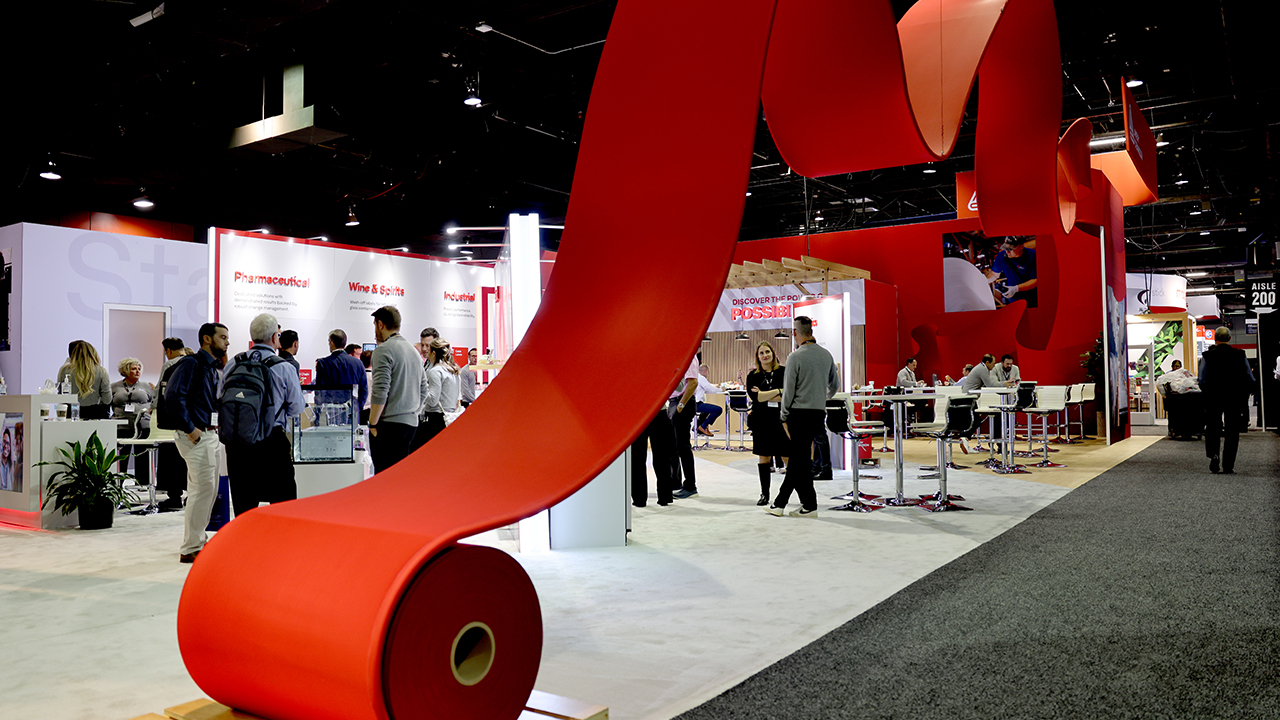
Loupe Americas' (formerly Labelexpo) wider vision was evident throughout the show floor; however, the focus was still on labels, with the addition of flexible packaging and some folding carton examples.
The most interesting developments did not treat sustainability as a separate specification, though; they combined material reduction, recyclability and lower energy demand with the issues converters encounter every day: press speed, changeovers, waste, adhesion and consistency.
Downgauging was one of the clearest themes as suppliers showed thinner facestocks, liners and thermal-transfer films that placed more usable material on a roll without increasing its diameter. Elsewhere, mono-material design, wash-off performance and coatings intended to work with established recycling streams reflected the growing influence of extended producer responsibility (EPR) and European packaging rules such as PPWR, even on products sold in North America.
Labelstocks, adhesives and smart materials
Avery Dennison presented two developments removing practical constraints from demanding label applications. AD Fusion is a range of customized, pre-inserted RFID inlays supplied in roll format. It lets a converter add RFID capability to presses it already owns, rather than installing a separate insertion line, while also giving multi-site businesses the option to produce RFID work at plants without dedicated equipment.
The construction is designed to remain thin so the inlay can pass through the converting process without causing color variation, voids or other print defects associated with a thicker inlay. Its flexibility also broadens the range of curved or tightly radiused packs that can carry an RFID-enabled label. Converters still need suitable encoding and verification controls; Avery Dennison highlighted SICK and Voyantic among the technology partners supporting that stage of production.
Jason Rambler of Avery Dennison said: 'One of the biggest barriers to the market right now is the capital expenditure on the equipment and also the flexibility of where you can run it.' He added that a converter without insertion equipment could receive rolls with the inlays already inserted and run them on existing presses. The proposition is becoming more relevant as retail deployments increase and digital product passport (DPP) and EPR requirements strengthen the case for a digital identity.
One downside is that the inlays are currently not reusable; however, work continues across the supply chain to understand their end-of-life treatment in different recycling streams.
The company also previewed Anchor AT, a next-generation hot-melt adhesive designed for cold, wet and frosted surfaces. The goal is a single construction that stays secure as a product moves between refrigerated, ambient and frozen conditions, reducing the need for application-specific adhesive inventories. A water-immersion demonstration at the stand showed a label remaining firmly attached to a wet bottle. Initial constructions are planned on a 54lb semi-gloss paper and a 2.6 mil white BOPP film, with clean convertibility positioned as an important advantage over traditionally soft or gummy hot melts. Customer trials are continuing ahead of the planned US launch late in 2026.
Mactac launched OptiScan E, a thinner thermal-transfer paper construction using its new SmartTac adhesive. The development moves from a conventional 40lb facestock to 36lb paper and offers 2.1 mil SCK and 1.6 mil glassine liner options. The thinner construction allows more labels to be wound on a roll of the same outside diameter.
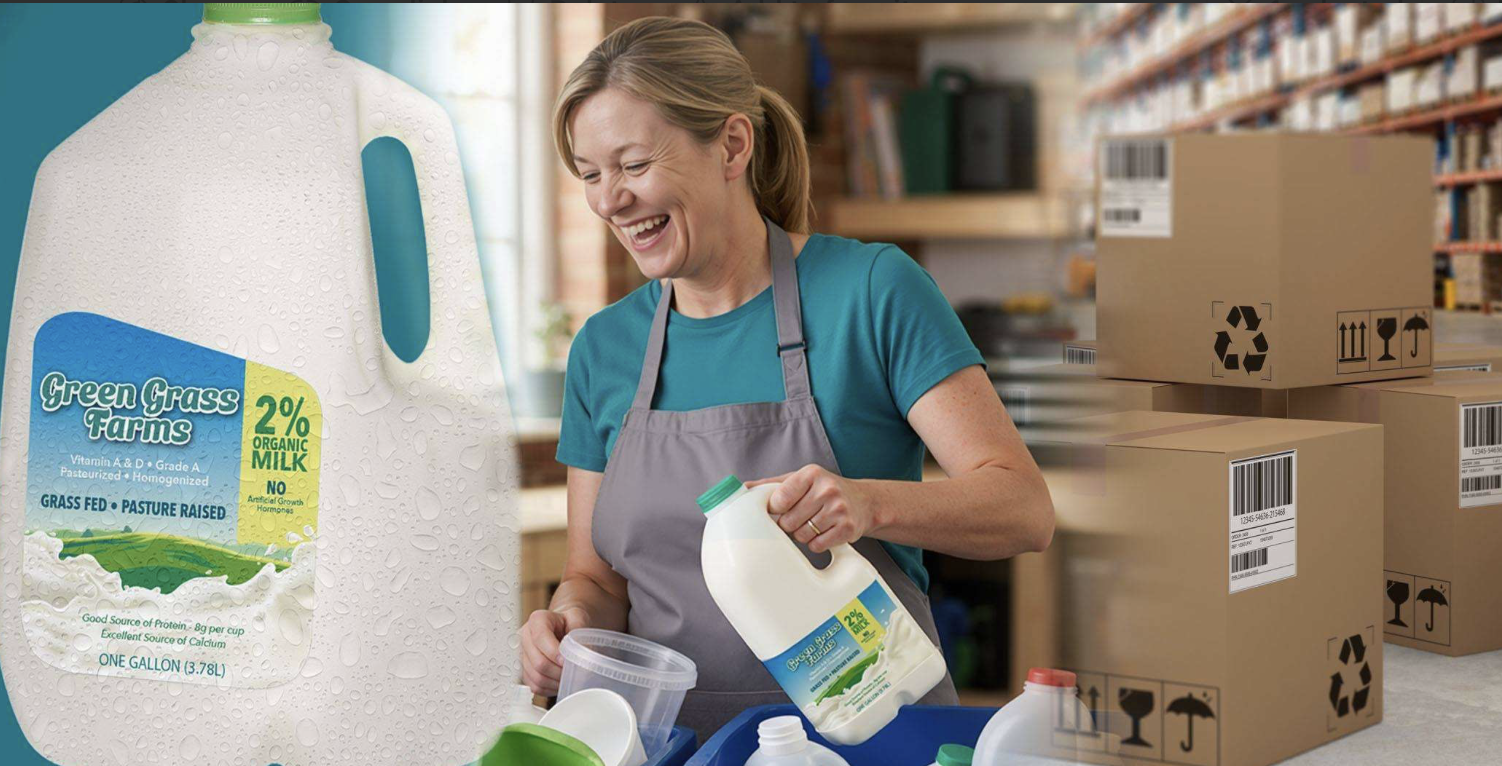
That simple change affects the whole production and distribution line: more labels per roll means fewer press and application-line changeovers, fewer cores and cartons, better pallet use and less storage and transport demand. Mactac said trials had delivered equivalent print and converting performance, including barcode readability, with the material validated at speeds up to 500ft/min. Depending on the customer's starting construction and how fully they capture the logistical gains, early feedback pointed to potential relative savings of about 8 to 15 percent across the supply chain.
The adhesive program began in early 2025 and included converter and end-user trials before the public launch. Mactac emphasized that the value doesn't rest solely on lower material input; the economic case strengthens when roll handling, packaging, freight and production uptime are calculated together.
Archroma has launched an ultra-high-solids, water-based pressure-sensitive adhesive polymer. It contains roughly 7 percent more solids than a conventional benchmark while aiming for the same finished performance. With less water to remove, coaters can reduce drying demand and move more active material in each shipment.
The effect is particularly significant on high-volume lines running at around 900m/min or above, where a 6 or 7 percent shift in solids can translate into meaningful energy and throughput gains. The environmental argument also extends beyond the printing process, as a higher-solids product can reduce the number of trucks needed to deliver an equivalent volume of usable polymer.
Archroma is also developing a complementary group of specialty products, including low-temperature adhesives for chilled and frozen foods and wash-off systems for returnable glass bottles.
A bottle may complete around nine or 10 wash-and-refill cycles before it can no longer meet the required quality, making clean label removal an important part of the reuse system.
UPM Adhesive Materials used Loupe Americas to present a portfolio built around specific application challenges rather than a single sustainability message. Speaking to Labels & Labeling at the show, Anna Hunt, UPM's director of marketing, sustainability and communications for the Americas, explained how the company is combining its adhesive expertise with purpose-designed facestocks and complete label constructions. 'Our customers depend on us to solve complex labeling challenges, and that responsibility drives everything we do,' she said.
The six product platforms on display covered industrial environments, beverage, pharmaceutical, consumer-goods and logistics applications. UPM Endurance targets difficult substrates and demanding environments where a standard pressure-sensitive construction may struggle to maintain adhesion. UPM Vetro is designed for wine and spirits, addressing the journey from label application and shelf presentation through consumption and end-of-life considerations. UPM PharmaSure focuses on the regulatory, technical and change-management requirements of pharmaceutical and healthcare labeling, where consistency and documentation can be as important as visual performance.
UPM also highlighted conformable films for squeezable containers and flexible packs. These applications place considerable strain on a label construction because the facestock, adhesive and print must move with the package without lifting, creasing or losing visual quality. The development reflects a broader trend at Loupe, material suppliers are treating the label as an engineered system rather than offering the facestock, adhesive and liner as largely independent components.
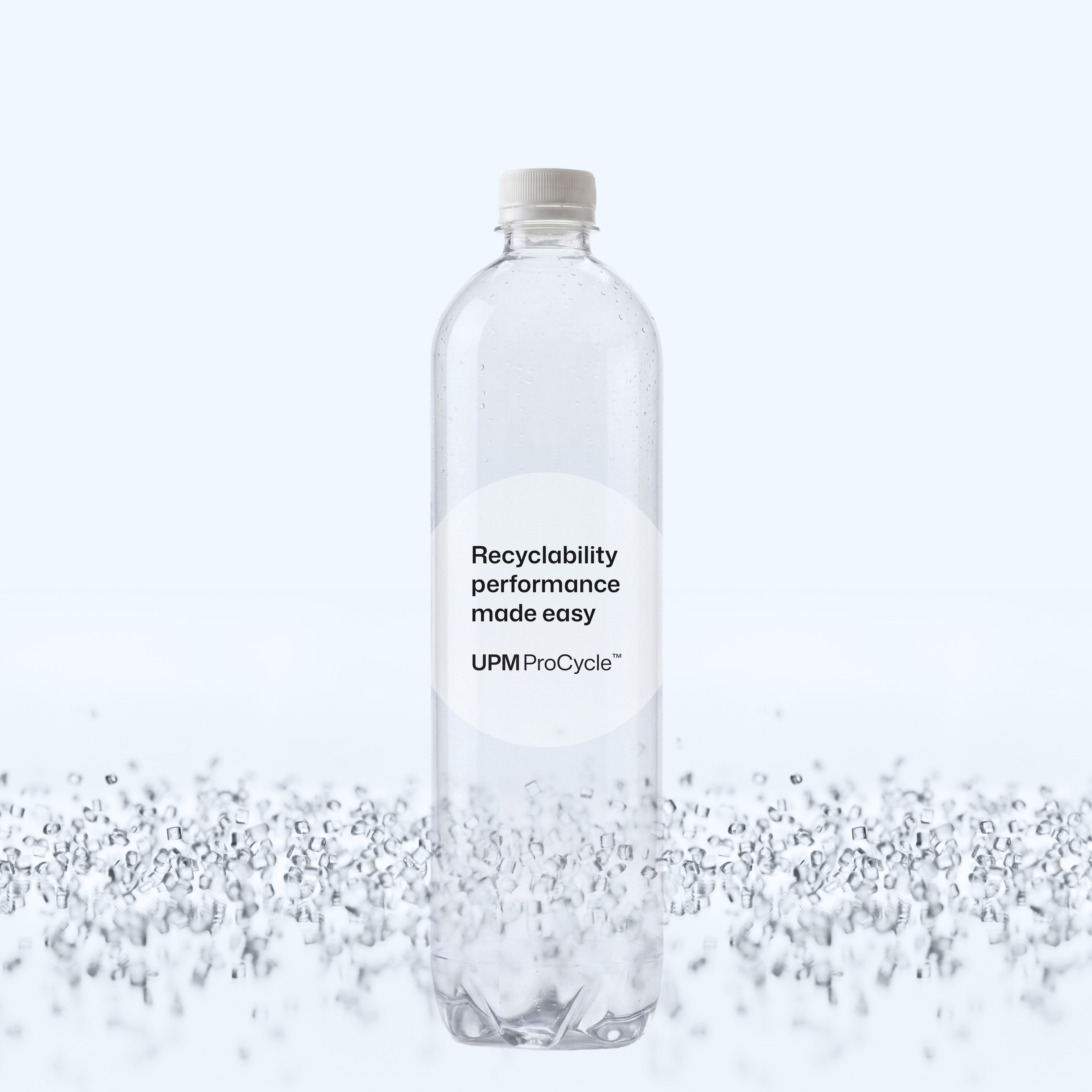
The UPM ProCycle portfolio represents circularity, bringing together products designed to work with established packaging recycling processes. The range includes APR-recognized adhesive technologies intended to support the recycling of plastic packaging. This application-specific approach is significant because a label described simply as 'recyclable' says little without identifying the container material, recovery process and test protocol involved. UPM's proposition therefore centers on matching each label construction to the intended recycling route while retaining the converting, dispensing and adhesion performance the customer requires.
For logistics and variable-information printing, UPM OptiCut Linerless eliminates the release liner and is designed for high-speed print-and-apply operations in fulfillment and distribution. Removing the liner reduces material use and eliminates a waste stream, while allowing more labels per roll. The operational benefits can include fewer roll changes, longer uninterrupted production and reduced storage and transport demand. The construction still has to deliver clean cutting, controlled adhesion and reliable feeding, making press and applicator performance central to the sustainability argument.
Beyond its pressure-sensitive portfolio, UPM Specialty Materials launched UPM Asendo 80, extending barrier technology previously used in packaging papers into an 80gsm label facestock. The paper provides grease resistance without intentionally added PFAS and targets food-contact and other grease-sensitive applications, including oils and prepared foods. UPM said the grade is independently tested, compatible with a range of adhesive types and suitable for UV flexo and UV inkjet printing. It is available with FSC or PEFC certification and meets relevant FDA and German BfR food-contact requirements.
The timing is important. PFAS restrictions in food-contact packaging are increasing pressure on converters and brands to find alternative barrier technologies without compromising print or application performance. By adapting an established packaging-paper technology to a conventional label basis weight, UPM is giving converters a more direct route into higher-value grease-resistant applications.
UPM's presentation ultimately demonstrated how the materials discussion is moving away from isolated environmental claims. Liner elimination, recycling compatibility, certified fiber, PFAS-free grease resistance and application-specific durability each address a different part of the value chain. The challenge, and opportunity, is to combine those gains with consistent converting performance that lets a product move from a sustainability trial to routine production.
Fedrigoni Self-Adhesives showed how premium appearance and circular design are converging. Its portfolio combined papers with recycled or alternative-fiber content, high-end textures and films designed for demanding decoration. The company's breadth enables wine, spirits, beauty and food brands to pursue distinctive tactility while examining the complete label construction rather than the facestock alone.
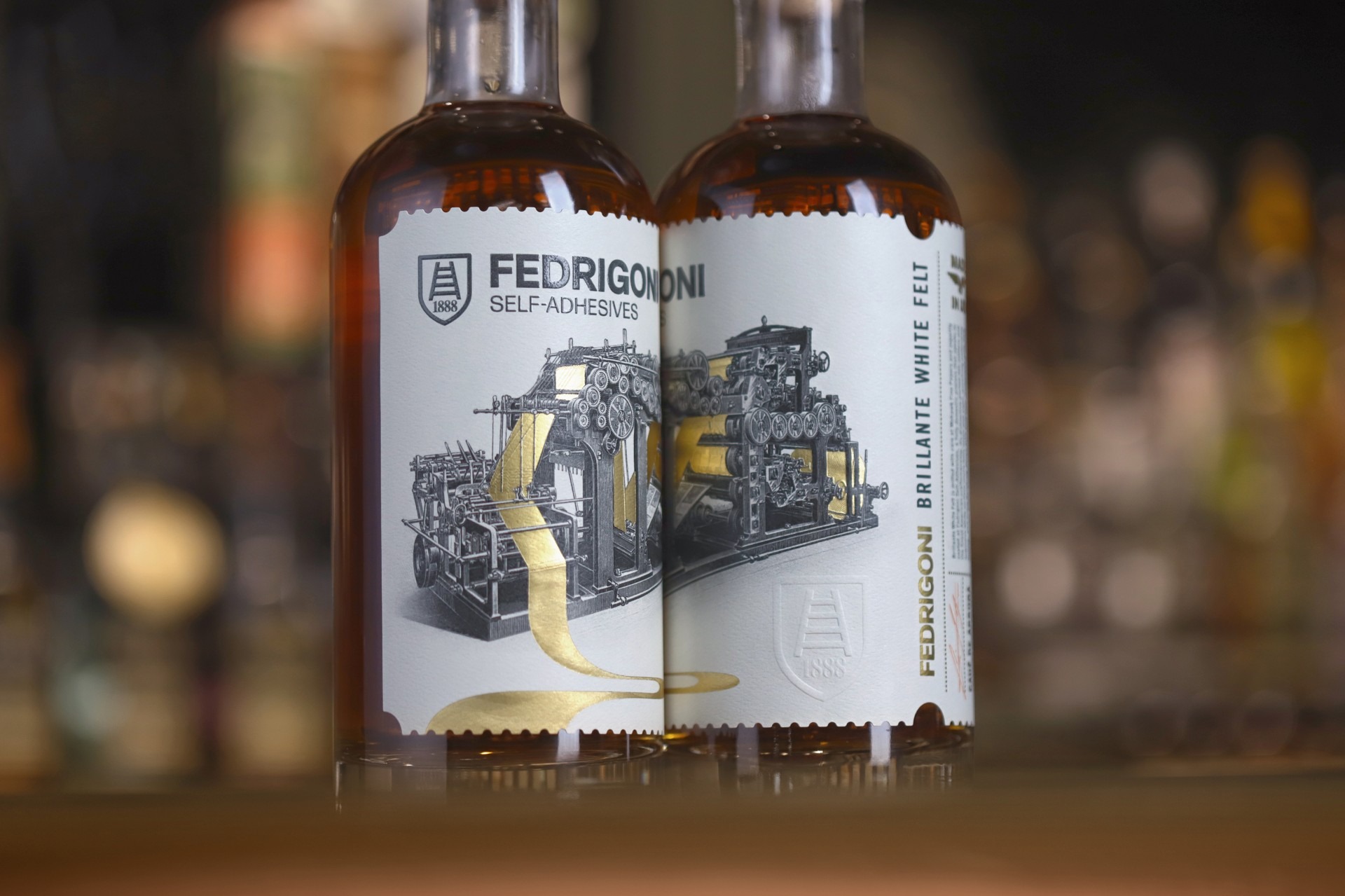
The discussion increasingly includes wash-off behavior, liner choice and fiber source, alongside embossing, color and print response.
Flexcon focused on engineered pressure-sensitive films for durable labels, product identification and graphics. The value of these lies in matching the facestock, topcoat and adhesive to the complete service environment, including chemical exposure, abrasion, outdoor weathering and difficult application surfaces. The company also demonstrated how downgauging and more compatible film choices can be introduced without losing the durability that makes film labels necessary in the first place.
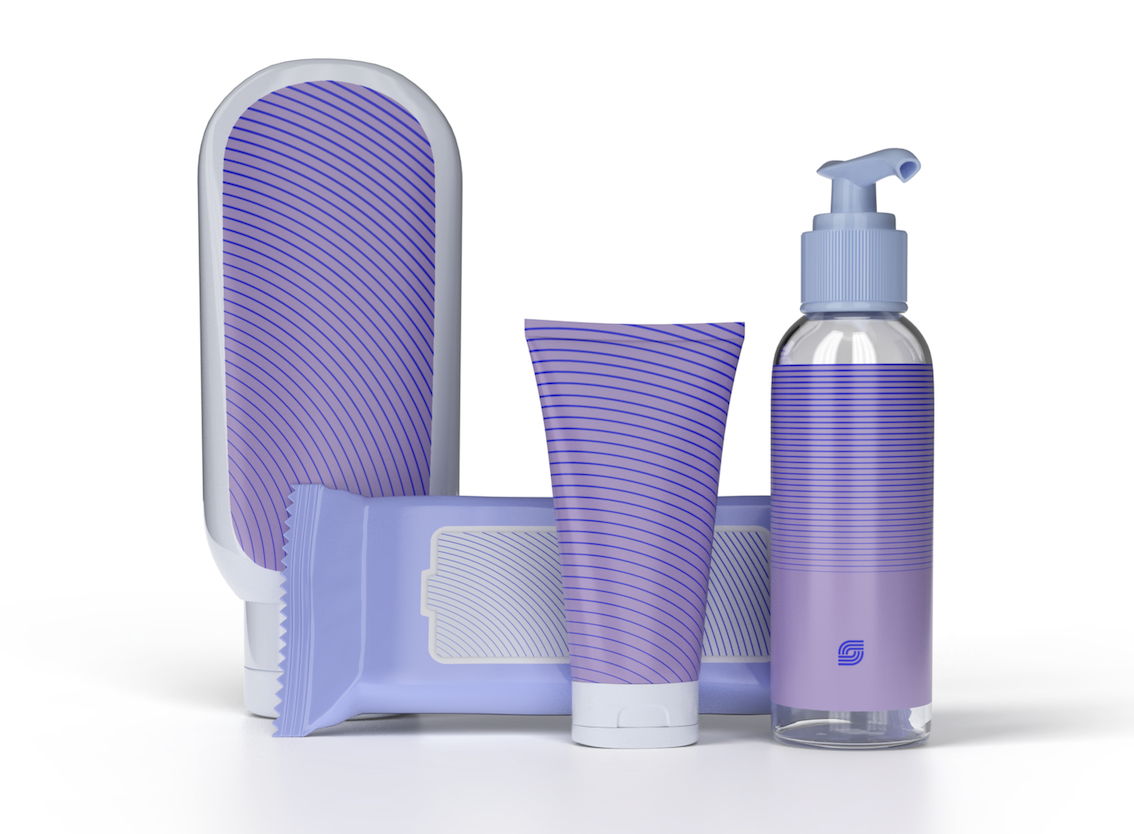
3M's display covered durable label materials and transfer adhesives for high-value industrial applications. These products address low-surface-energy plastics, powder-coated metal and other substrates on which a general-purpose adhesive may fail. The emphasis was on treating adhesion as a system influenced by surface preparation, temperature, dwell time and the mechanical demands placed on the finished label.
Chiripal Poly Films presented BOPP technologies for labels and flexible packaging, including clear, white and cavitated grades. The range reflects continuing demand for lighter constructions and films that can deliver opacity, stiffness or barrier with less material. Film consistency and surface treatment remain decisive because downgauging only delivers real savings if the material still runs reliably through printing and converting.
DuPont highlighted material science for packaging structures in which barrier, protection and recyclability must be balanced. The company's portfolio supports both conventional and emerging constructions, using coatings and polymer technologies to maintain performance as packs move toward simpler material combinations.
Ocean Ridge showed pressure-sensitive materials sourced for a broad range of label applications. Its offer included papers and films for everyday work, as well as constructions for more specialized environments. The stand reflected the continuing importance of availability and supply-chain resilience alongside product innovation.
Polyart presented synthetic papers that combine paper-like printability with water resistance, tear resistance and chemical resistance. These materials remain relevant in horticulture, industrial identification, logistics and outdoor applications where conventional paper is vulnerable but the handling and print characteristics of a paper sheet are still desirable.
PPG's packaging materials work centers on coatings that add barrier or functional performance to paper and film. The opportunity is to replace complex laminates or problematic chemistries with a coated structure that still protects the packed product and can be processed within a more favorable recovery route.
Thai KK displayed self-adhesive papers, films and tapes for general and specialist label applications. The portfolio's diversity gives converters options across price points and end uses, while the company continues to build its presence outside its home markets.

Release liners, linerless and thermal media
Armor-Iimak used a 110mm-wide thermal-transfer ribbon to demonstrate the production value of downgauging. A standard 450m roll generally uses a 4.5 micron polyester carrier. The AWR XL ribbon uses a 3.35 micron carrier, allowing 600m of ribbon to fit on the same roll diameter. Operators therefore gain one-third more running length without changing printer settings, storage systems or handling routines.
The direct benefit is fewer ribbon changes and more printer uptime. Armor-Iimak calculates that the format can improve uptime by up to 40 percent while using 26 percent less plastic, with an estimated saving of around 830g of carbon dioxide per roll. The ribbon is also produced without solvents. Before launch, the company completed internal work and ran about three months of customer trials, with users reporting no loss of print quality.
The company also demonstrated its patented CleanStart feature. A cleaning section at the leading edge of the ribbon passes across the thermal printhead when a new roll is fitted, removing the dirt and adhesive contamination that accumulate during use. This makes cleaning part of the operator's normal ribbon-change routine and can protect an expensive printhead in warehouses and manufacturing plants where manual maintenance is easy to miss.
Color ribbons account for only an estimated three to five percent of the market. Still, Armor-Iimak has also used its unusually broad color range to address applications where black is not sufficient for branding, coding or differentiation.
OSP presented linerless materials as a way to remove release-liner waste and place more labels on each roll.
According to OSP, successful adoption depends on the relationship between the face material, release coating, adhesive and application equipment; the construction must unwind cleanly, cut consistently and apply at production speed.
Ricoh showed thermal media for logistics, retail and industrial identification. Direct thermal performance remains a balance between imaging sensitivity, environmental resistance and the chemistry demanded by the end use. The company shared that its developments address longer label life and more demanding exposure while retaining reliable barcode generation.
Likexin displayed release liners and related silicone-coated materials. Release consistency, caliper control and web flatness are vital to high-speed converting, even though the liner is not visible on the finished product. The supplier's range targeted both conventional pressure-sensitive work and applications in which liner specification can unlock material reduction.
Tailored Label Products brought an application-led perspective to specialist labels and converted components. Its work illustrates how material selection is often inseparable from die-cutting, tolerances and the conditions in which the finished component will be installed.
Ximax presented liner and release technologies for pressure-sensitive converting. The company addressed the familiar goals of stable release, clean dispensing and reduced waste, all of which become more demanding as constructions are made thinner.
Joy Paper showed paper and release-base options for label production. Paper uniformity, strength and silicone hold-out remain essential to a liner that needs to withstand coating, converting and high-speed dispensing before entering its own recovery stream.
AEBO's thermal materials addressed variable information applications in transport, retail and industrial markets. The display underlined the need to select media around the complete use cycle, including printer energy, image density, abrasion and exposure to heat or moisture.
Aluminum Féron presented specialist laminated and coated materials, including metallic structures used where barrier, heat management or a distinctive surface is required. Such constructions serve narrower applications, but performance must remain consistent through printing, converting and end use.
CRG showed coated and engineered substrates for demanding label and packaging applications. Its offering demonstrated the importance of custom material combinations when standard papers or films cannot provide the required heat resistance, release, barrier or bond.
Conversource represented the supply and service side of the materials market, helping converters match consumables and ancillary products to the equipment already on their floors. That role becomes more valuable as plants adopt a wider range of conventional, digital and hybrid processes.
Durico presented thermal and coated media for tickets, tags and variable-data labels. The portfolio included products designed for reliable image formation and dimensional stability, two properties that directly affect scan rates and downstream handling.
Films, foils and decorative surfaces
Taghleef Industries used the expanded Loupe format to show label, flexible-packaging and graphic-arts applications together. Ambra Stocco, marketing manager, explained that the same film-making expertise applies across all three segments, while the stand organized the portfolio around performance, appearance, circularity and emerging applications.
Derprosa tactile films supplied leather-like, soft-touch and other premium surfaces for cosmetics, personal care, wine and spirits. Shape360, the company's polyolefin shrink-sleeve platform, is designed to float away from PET flakes during recycling. A new white version adds light-blocking performance for dairy drinks and protein shakes moving from opaque bottles into clear PET, helping protect color, vitamins and shelf life without compromising PET recovery.
The company also showed Titanium metallic in-mold label film with an optical density adjusted to current sorting and recycling processes; bio-based PP films made with feedstocks derived from tall oil or used cooking oil; and compostable film options for applications such as fruit labels. A PP banderole film for PP yogurt cups was positioned as a replacement for paper so that the container and label can follow the same recycling stream.
Another in-mold development is designed to separate printed label flakes from a clear PP container during recycling, limiting ink contamination while recovering cleaner polymer. Taghleef also presented PP graphic film as a PVC alternative and Nativia films for industrially and home-compostable flexible packaging. As Stocco put it when discussing the banderole construction, 'The idea is to replace paper labels and give the pack a full mono-material solution.'
Innovia Films presented BOPP films for pressure-sensitive labels, wraparound labels and shrink applications. The company's work on coated and cavitated structures seeks to deliver the opacity, stiffness and print surface required by the application while supporting mono-material polyolefin packaging strategies.
Breit Technologies displayed decorative and functional films used to create effects without adding a separate printing pass. Transfer and lamination technologies can introduce metallic, holographic or tactile value at scale, but their adoption increasingly depends on how the finished construction behaves in sorting and recycling.
Cosmo Films showed label and packaging films spanning clear, white, cavitated, coated and synthetic-paper grades. Its range addressed both the mechanical demands of high-speed conversion and the market shift towards recyclable mono-material structures.
HSF Films presented specialist substrates for labels and flexible packaging. The company's offer included films selected for print receptivity, dimensional stability and visual performance, supporting converters that need alternatives beyond commodity grades.
HYF displayed shrink films and related packaging substrates. Sleeve material must combine controlled shrink curves with printability and container geometry, while current development increasingly considers density and separation in the bottle-recycling process.
JCR showed film and laminate options for label and packaging conversion. The stand reflected continuing efforts to simplify material structures while retaining the barrier, machinability and appearance required by brand owners.
Lanying presented filmic materials for pressure-sensitive and packaging applications. Consistent gauge, surface treatment and roll quality are fundamental for converters running increasingly
Nobelus expanded its decorative-film range with FineGlitter, a tactile finish in which the sparkling effect is incorporated into the film rather than applied as a loose surface treatment. The result is intended to retain its appearance without glitter rubbing off during handling. Available as both a thermal laminate and wet film, it targets book covers, folding cartons and premium printed products requiring a pronounced visual and tactile effect.
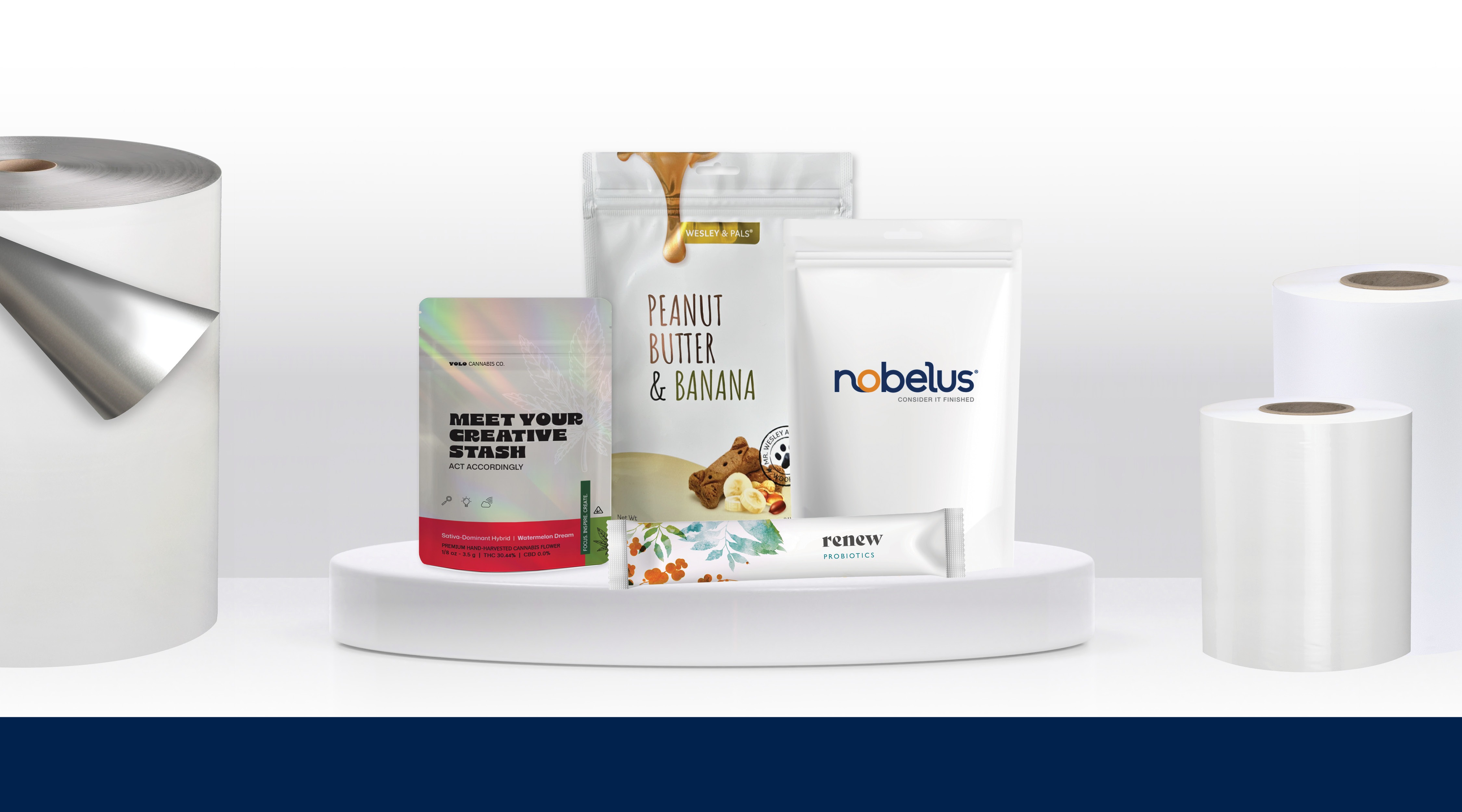
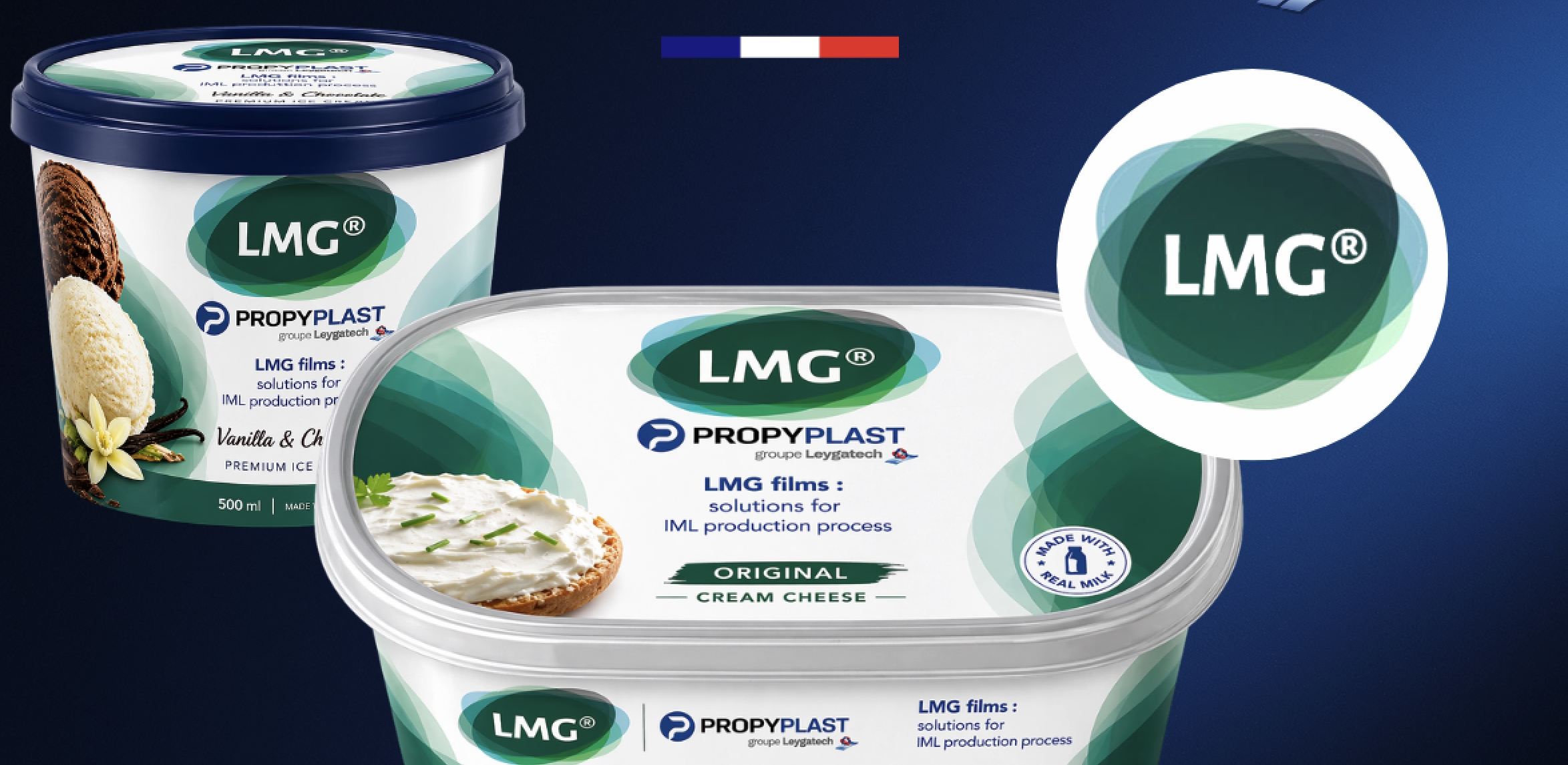
Propyplast showed its polypropylene films for labels and packaging. Polypropylene's role is growing where brands want a label or lidding component to remain in the same material family as the main pack. However, recycling assessments must also consider inks, coatings and adhesives.
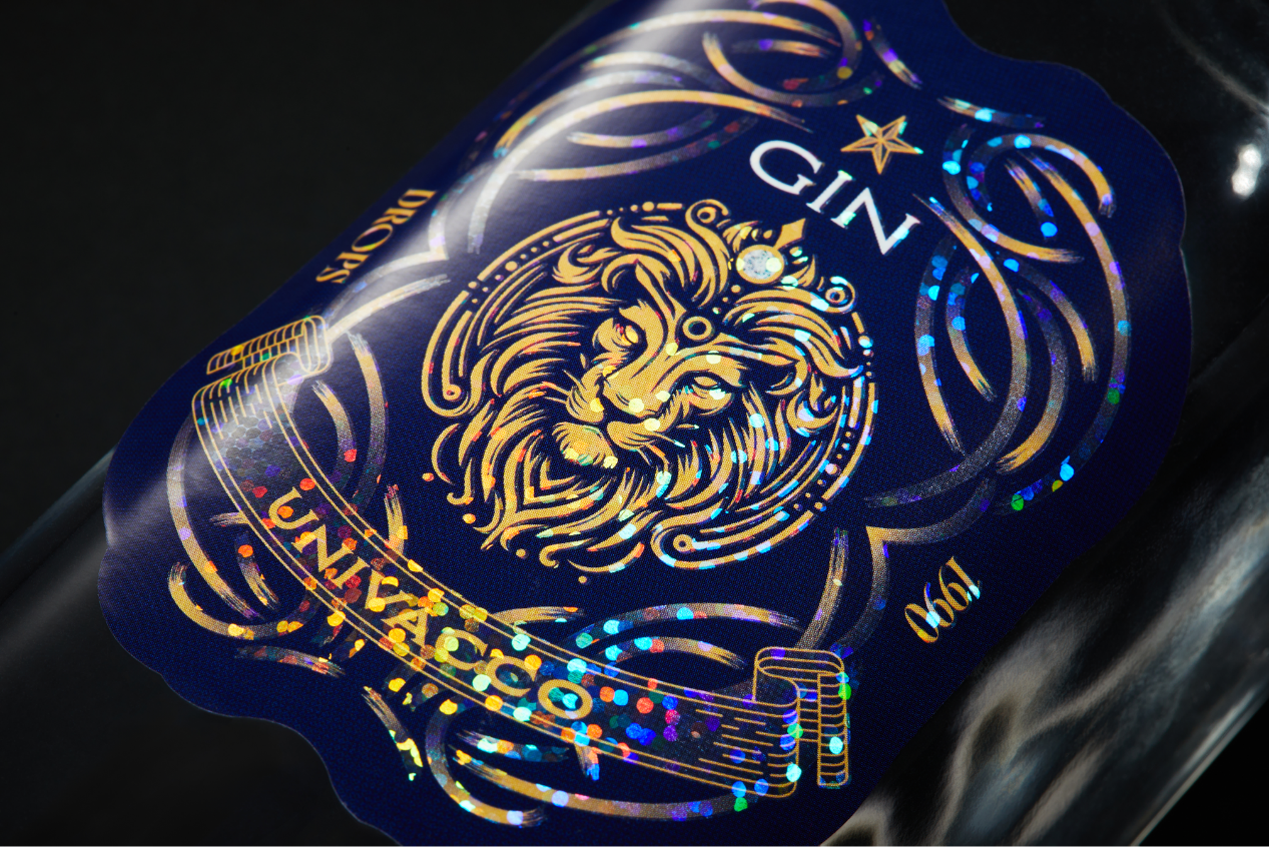
Univacco presented cold foils, hot stamping foils and transfer products for decorative labels and cartons. The range supports metallic impact without a metalized substrate and gives converters a choice of embellishment process based on run length, registration and press configuration.
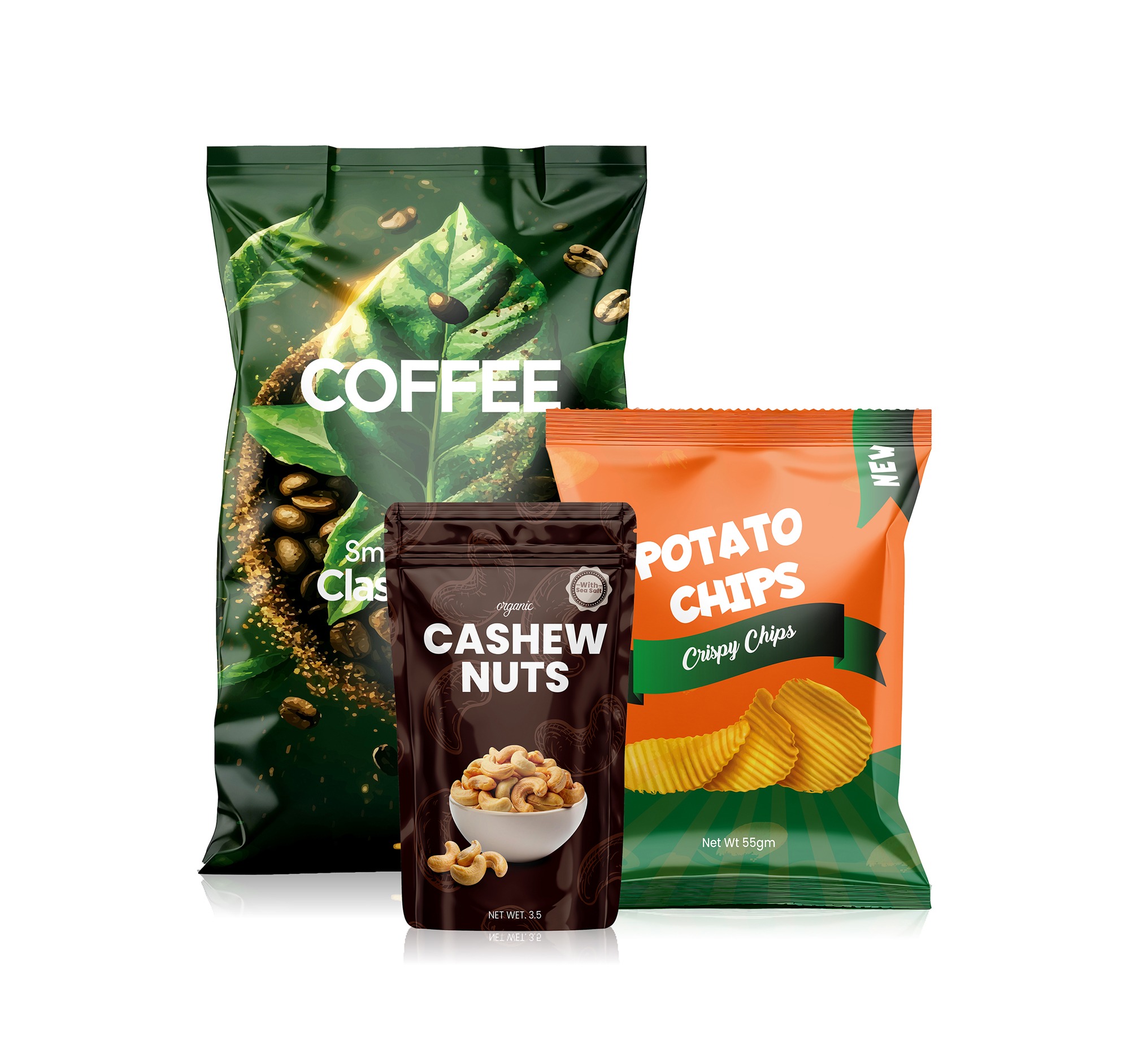
Wausau Coated Products displayed pressure-sensitive constructions for wine and spirits, food, logistics and durable applications. Its custom-coating capabilities allow facestock, adhesive and liner to be tuned for smaller or technically unusual programs.
A live demonstration was taking place at the booth. A wash-off label was removed from a wine bottle that had sat in ice-cold water for three days, showing that the labels and adhesive can withstand extreme temperatures and still remove cleanly, allowing the bottle to be reused.
Inks color and digital print
Flint Group Packaging Solutions’ largest-ever presence at the event brought conventional narrow-web inks and coatings together with the Xeikon digital portfolio. The company's new name, Flint Group Packaging Solutions, reflects the fact that packaging now accounts for more than 80 percent of its business.
On the narrow web side, Flint revisited the EkoCure platform it introduced as LED curing began to enter the market. The system has since developed through low-migration and dual-cure versions. Keith Nagle, eastern commercial manager for narrow web, said: 'This line and this name mean a lot to Flint. It is very recognizable in the industry, and we will continue to evolve the system into the next generation.' The company also introduced Flexocure LEAP in North America, a conventional UV low-migration platform designed to reduce the risk associated with mobile photoinitiator species.
Flint presented its coatings as functional layers that protect the product, support recyclability and contribute to package performance, rather than merely providing gloss or matt appearance. Vivo Color Solutions connects color prediction, a cloud database, quality management and production data to help plants formulate and control color more consistently.
Regulation ran through the press conference hosted on the first day of Loupe. Flint described a global team monitoring requirements including PPWR, the German Printing Ink Ordinance and changing US state rules, then feeding those restrictions into raw-material selection and formulation. The need is no longer confined to the territory in which a job is printed; a US converter may need a European-compliant ink because its customer exports the finished packaging.
Actega's display brought together primers, inks, coatings and metallization for digital and conventional packaging. Edgar Contreras, strategic account and new business development manager, highlighted ACTDigi LEP Primer alongside the wider trends shaping ink and coating development. Created for HP Indigo presses including the 6K, 6K+ and 8K, the water-based coating is intended to improve ink adhesion and print quality across a broad substrate range while supporting subsequent embellishment. Low consumption and straightforward cleaning are intended to make the primer practical in production and technically effective.
The company also highlighted ACTSmart, a water-based, self-crosslinking ink system for surface-printed shrink film. It is designed to run above 700ft/min without a separately added catalyst, simplifying handling and reducing the variability associated with a two-component system. SafeShield UV-LED inks address increasingly strict compliance requirements, while Ecoleaf produces an on-demand metallic effect with substantially less metal and waste than conventional foil processes.
Siegwerk's stand connected ink performance with packaging circularity. The company has invested heavily in deinking, barrier coatings and ink systems designed for recyclable structures, recognizing that color chemistry can either enable or frustrate the intended recovery route.
The company’s presentation at Loupe Americas combined product safety, curing flexibility, water-based technology and digital color management. Speaking to Labels & Labeling, Todd Blumsack, Siegwerk's general manager for the US and Canada, discussed the company's latest ink and coating developments, changing market requirements and its success in the Labels & Labeling Global Awards.
Among the launches were two dual-cure ink systems that can be cured using either conventional UV or LED-UV technology. Sicura Orbis LEDTEC was developed for in-line label applications across a wide range of substrates, giving converters greater freedom when switching between curing systems. Nutriflex Orbis Dual Cure adds low-migration performance for label and flexible-packaging applications where product safety and regulatory compliance are critical.
Siegwerk also presented updates to its Aquantum water-based range. The latest Film III ES, Poly Screen III and Ultra Pro inks combine print quality and durability across film and paper substrates with a formulation approach intended to support more sustainable production. The wider portfolio includes coatings and adhesives for conventional, digital and hybrid workflows.
Alongside its chemistry, Siegwerk demonstrated FastMatch Cloud, its digital color-formulation and matching system. The platform is designed to accelerate color preparation, improve matching accuracy and reduce press corrections. Faster formulation can shorten downtime, while improved control of recipes and returned ink can reduce inventory and waste. Blumsack said combining ink and coating development with tools such as FastMatch Cloud helps converters improve efficiency while responding to sustainability and regulatory pressures.
Siegwerk's sustainability strategy also earned recognition at the show when it received the Labels & Labeling Sustainability Award with Enplater Group. The companies developed a recycle-ready, high-barrier mono-material polypropylene pouch for food packaging, offering an alternative to conventional structures that combine several incompatible materials.
The pouch uses Siegwerk's Cirkit Oxybar White technology, which combines an oxygen barrier and white ink in a single layer that can be applied in-line. Advanced polyurethane-based inks provide adhesion, print quality and resistance for the flexible-packaging application.
Blumsack said the award reflected the 'dedication, expertise and collaborative spirit' behind the development. The project also supported one of the wider messages emerging from Loupe: inks and coatings are no longer viewed simply as color or protection. They are becoming functional components that can determine whether a complete packaging structure achieves its barrier, safety and recyclability requirements.
Sun Chemical used Loupe Americas to demonstrate how it is combining an extensive ink and coating portfolio with closer pressroom partnerships. In an interview with Labels and Labeling, Dennis Sweet, vice president of narrow web tag and label at Sun Chemical, appeared alongside Mark Andy CEO Duane Pekar to discuss the companies' new North American distribution agreement and the challenges converters face as labels and flexible packaging continue to converge.
Under the agreement, Mark Andy Print Products has become a North American distributor for Sun Chemical's narrow web inks, coatings, adhesives and color-management products. The available portfolio includes UV, UV LED, water-based and specialty technologies, including SolarFlex Max D and SolarWave inks, AquaVerse water-based products, SolarLam UV laminating adhesives and SunLam solvent-free adhesives.
'Together, we can help customers achieve greater color consistency, improve productivity, streamline operational efficiency and address increasingly complex label and flexible packaging requirements,' Sweet said.
Color management forms an important part of the partnership. Mark Andy customers will gain access to SunColorBox, Sun Chemical's ecosystem for color communication, matching, formulation, dispensing and production control.
Sun Chemical and Mark Andy are also collaborating on high-speed flexographic applications, including low-migration ink performance and curing at higher press speeds. The work combines Mark Andy's press and web-handling expertise with Sun Chemical's ability to adapt ink chemistry to different equipment, substrates, curing systems and regulatory requirements. Plans also include installing ink-dispensing technology at Mark Andy facilities and selected customer sites, allowing spot colors to be produced closer to the point of use while reducing excess inventory and waste.
A second partnership announced at the show brings Sun Chemical together with Cyngient. The companies have created a joint-branded range of advanced coatings and high-performance adhesives, with a particular focus on embellishment, tactile and visual effects, and reliable on-press performance. By combining Sun Chemical's global R&D capabilities with Cyngient's specialty-product expertise and responsive technical service, the partners intend to help narrow-web converters develop differentiated, higher-value applications without adding unnecessary production complexity.
INX International showcased conventional and digital ink technologies, with an emphasis on color consistency, cure response and regulatory suitability. Its portfolio supports flexo, offset, gravure and inkjet processes, enabling converters to align color expectations as work moves between technologies.
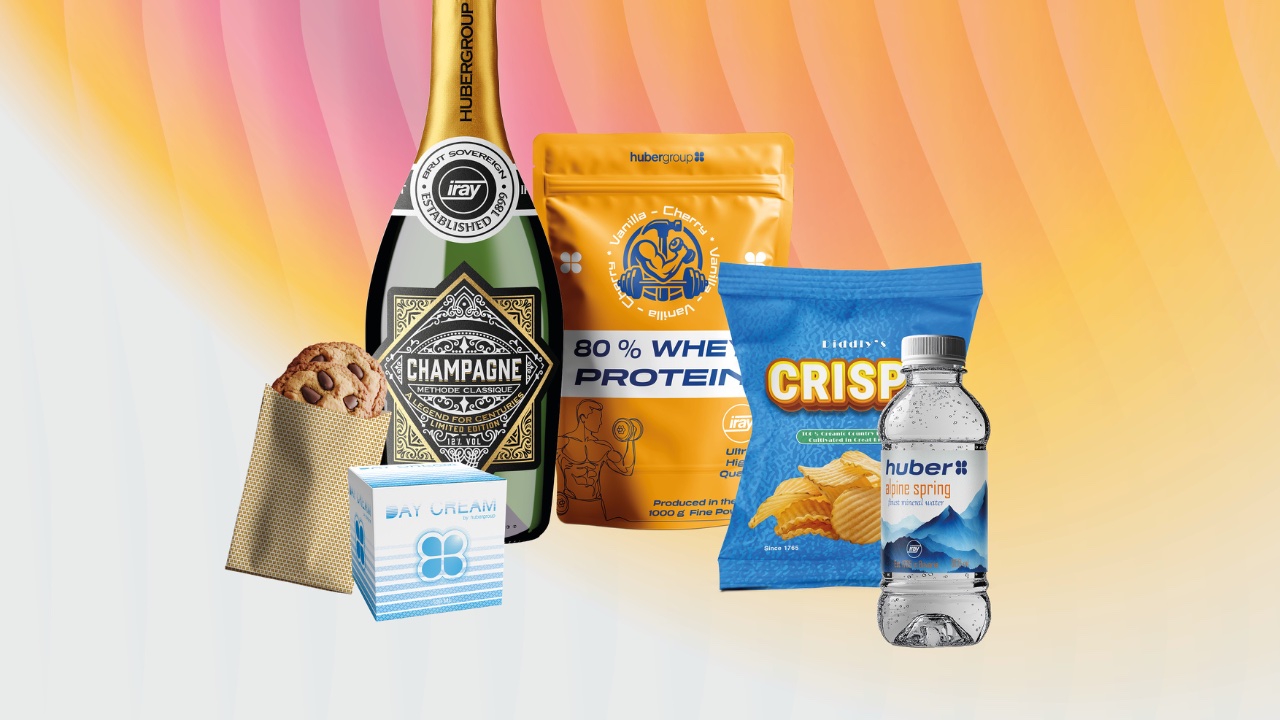
hubergroup presented packaging ink systems and services shaped by migration risk and changing chemical restrictions. Raw-material selection, documentation and application testing are becoming as important to converters as color and runability, particularly when a package will be sold across several jurisdictions.
Nazdar displayed inks for digital, screen and narrow web printing. The company's ability to match colors and formulate for specific printheads or curing systems supports converters running mixed equipment fleets and specialist applications.
BIC presented ink and consumable options for label production, focusing on dependable color and production economics. The offer reflected the continuing role of regional suppliers in supporting converters with technical response and shorter supply chains.
Interactive Inks and Coatings showed formulations tailored to specific press and end-use requirements. Custom development remains important where a standard ink cannot provide the required adhesion, resistance, curing response or special effect.
Super Color Digital highlighted digital color and consumables. As run lengths shrink, the ability to produce repeatable color with limited set-up waste continues to strengthen digital printing's role in labels and adjacent packaging work.
Zeller+Gmelin presented narrow web ink systems covering UV, LED and specialist applications. Its technical focus included cure performance, migration considerations and the need to maintain stable color at production speed.
Functional and protective coatings
Cyngient combined specialty inks, coatings and technical services for converters seeking differentiated effects or fixes to unusual adhesion and performance demands. The company's application-led approach suits the growing overlap between labels, flexible packaging and printed electronics.
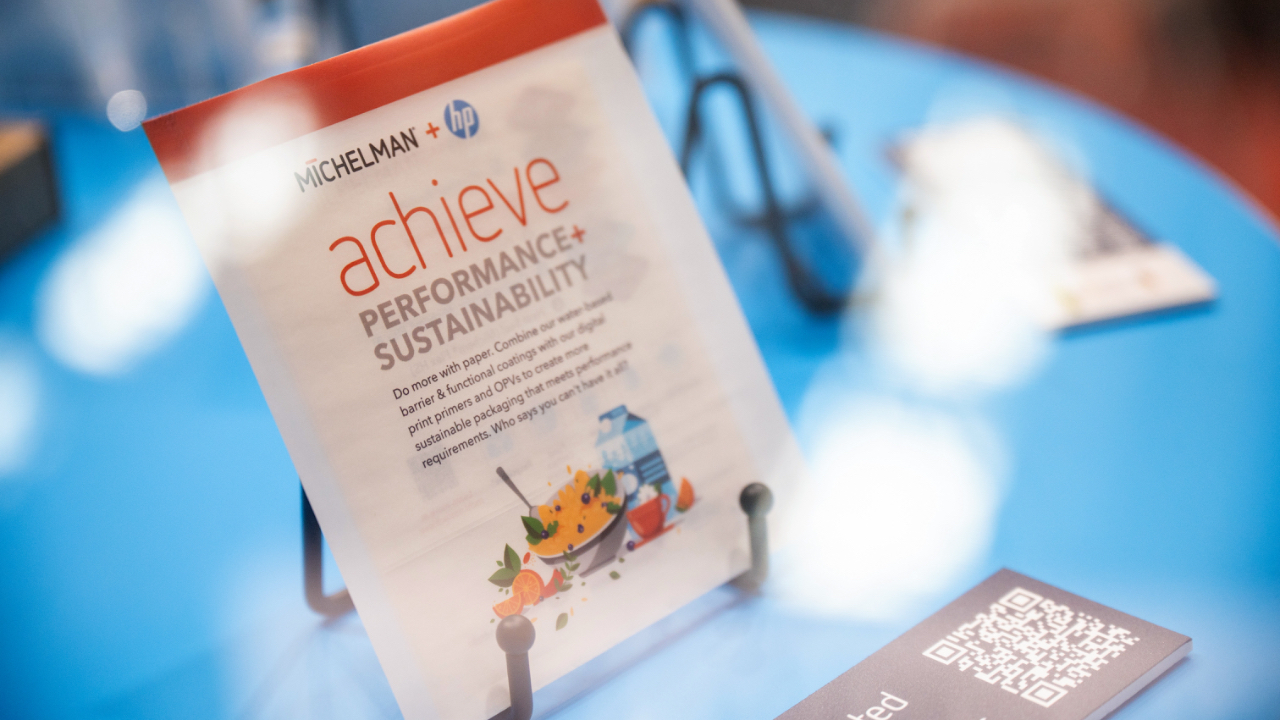
Michelman presented water-based primers, barrier coatings and surface treatments that can help simplify packaging structures or improve digital print adhesion. Such layers are increasingly expected to perform several jobs at once, from protecting the contents and providing heat-seal response to helping the pack enter a preferred recycling stream.
NAStar showed specialist pressure-sensitive and water-activated technologies for applications that sit outside high-volume commodity labels. Its development model combines coating and converting expertise, allowing a construction to be designed around the final function.
Natrcolor presented color and coating technologies, emphasizing water-based systems. The market continues to seek lower-emission chemistry, but adoption depends on drying efficiency, resistance and compatibility with the substrate and press.
Stahl highlighted functional coatings for paper and film, including technologies that can add barrier, tactile response or surface protection. The movement away from complex laminates creates opportunities for coatings, provided they deliver the necessary performance at a practical coat weight and do not obstruct recycling.

UVitec showed UV and LED-curable coatings for protection and special effects. Energy-curing systems can deliver immediate handling and strong resistance, while current formulation work addresses photoinitiator choice, migration risk and the changing availability of raw materials.
Conclusions
Across the materials sector, the strongest launches converted an environmental objective into an operating advantage. Armor-Iimak and Mactac used thinner constructions to extend roll length and reduce changeovers. Archroma's higher-solids polymer cut the quantity of water that a customer must transport and evaporate. Avery Dennison's pre-inserted RFID material lowered the equipment barrier to smart-label production, while Taghleef designed film to function with the complete pack in recycling.
Another clear direction is that regulation is becoming a design input, as PPWR, digital product passports, EPR rules and chemical restrictions are influencing materials sold well beyond Europe because brands and converters operate across borders.
That does not produce a single answer, though, as a washable returnable bottle label, a floatable shrink sleeve and a mono-material yogurt band each solve a different recovery problem. It does require suppliers to explain exactly what their construction does, under which test method and in which recycling system.
Loupe's expanded scope made those connections easier to see. Labels remain the center of the event, but the same converters, chemistries and substrates are evidently moving into flexible packaging, cartons, graphics and smart identification as customers look for a one-stop shop for their products.
Stay up to date
Subscribe to the free Label News newsletter and receive the latest content every week. We'll never share your email address.