At TLMI Annual Meeting, speakers address economic challenges
Speakers discussed hiring challenges, geopolitical conflict, evolving tariff policies, inflation and interest rates.
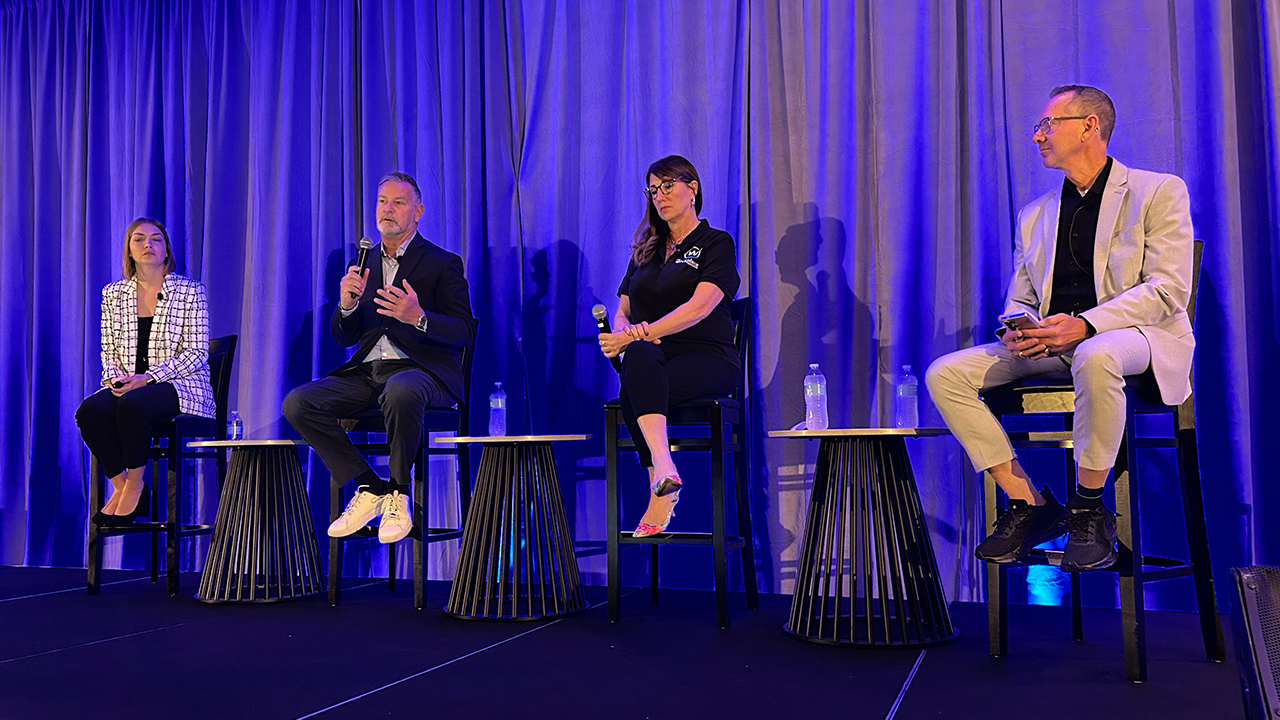
State of the Industry panel, L-R: Kristin Yerecic, Corey Reardon, Claudia St John and Brian Van de Water
The TLMI Annual Meeting took place October 25-27 in Fort Lauderdale, Florida, with educational sessions addressing economic forces disrupting trade, raising prices and challenging label converters.
The theme of this year's meeting was ‘Built for Monday’, reflecting the professional association's goal of delivering information attendees could take back to their companies after the event.
State of the industry
During the Annual Meeting’s first panel, ‘The View from Our Partners: State of the Industry’, analysts discussed some of the most pressing trends facing label converters.
Kristin Yerecic, owner and executive vice president of customer experience and administration of Yerecic Label, and TLMI’s new chair, moderated the panel, which featured Claudia St John of The Workplace Advisors, Brian Van de Water of SPL Consulting and Corey Reardon of AWA Alexander Watson Associates.
The session opened with attendees participating in a poll through the Annual Meeting’s new app. The poll asked, ‘What keeps you up most at night about your business?’, with the two most popular responses being ‘market growth and profitability’ and ‘economic uncertainty’.
Reardon commented that he believed those two responses were connected.
‘As we look at the economic uncertainty and slower GDP growth in markets around the world, that's affecting the growth of our industry,’ Reardon noted. ‘Historically, the label industry grew at plus one GDP growth. So, if GDP was growing at 4 percent, then we had 5 percent market growth. But as GDP growth continues to be sluggish, as the market has also matured, we're growing about on par with GDP growth, not plus one GDP growth. In some more commoditized segments and products, it's even minus one GDP growth.’
Reardon noted that the economy will likely be soft for another 12-18 months.
He also said the label industry is mature. There are pockets of higher growth, such as in RFID and some specific applications like electronics, but overall growth is slow.
Despite this, St John, another panelist, said she often speaks with converters who are struggling to keep up with their workload because they don’t have enough staff. This highlights another challenge for many label converters: they’re struggling to hire staff amid a tight labor market and a wave of retirements.
St John encouraged attendees to consider hiring young people and recent graduates: ‘Those recent grads may be totally overqualified for the jobs that you have available to them, but they would take them in a heartbeat to get them in this industry. So, I think there's a lot of tea leaves in the labor market that are out there, but it's not going to be easy the next five years. There are still folks who are desperate to get into this industry, to get into a career that can satisfy them going forward, and we just need to be thinking about them and focusing on them.’
The session ended with one final poll asking, ‘Where is your company investing most heavily over the next two years?’ The most common response was ‘sales and business development’, followed closely by ‘production equipment and physical automation’.
Geopolitical impact
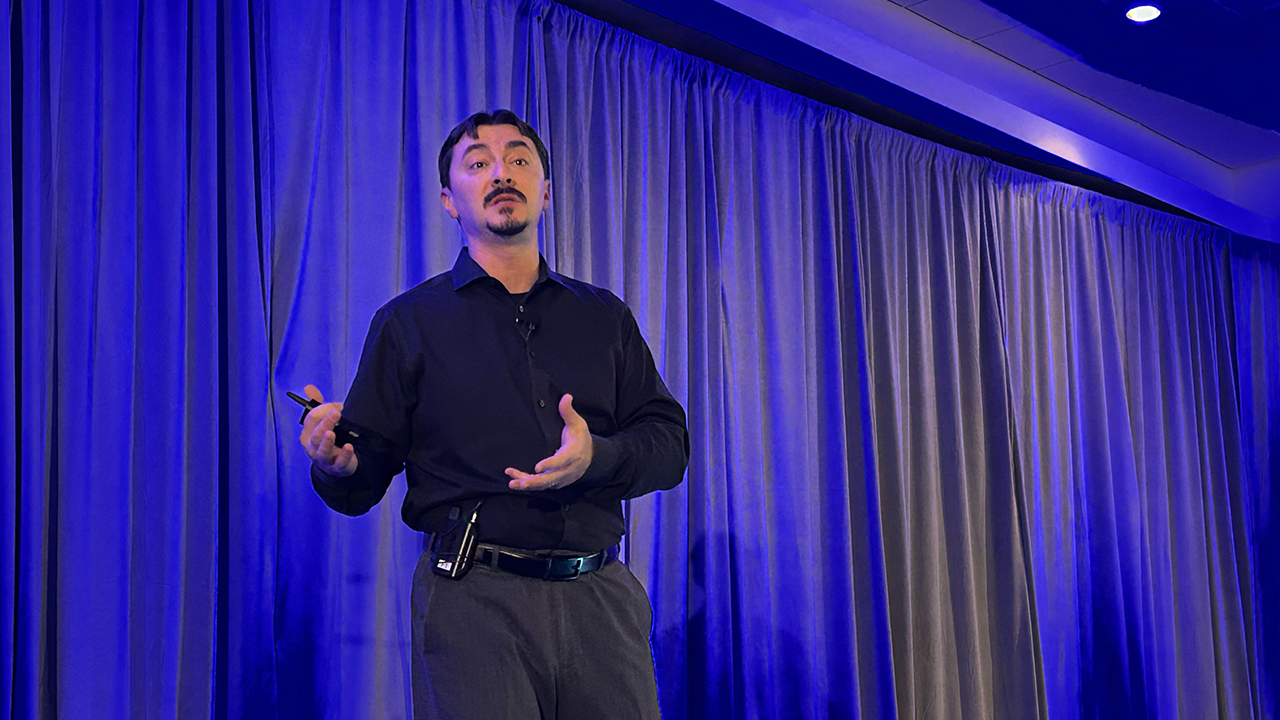
The standout educational session at the Annual Meeting focused on economics and policy and was led by economist Alex Chausovsky, president of 3DM Consulting. He opened his presentation with an overview of the world’s economies. The US economy remains dominant at about 32.4 trillion USD, or roughly a quarter of the global economy. China has the world’s second-largest economy, at about 20.9 trillion USD, but he said it is unlikely to catch up because its population is shrinking. India recently overtook China in population size.
Chausovsky also examined the impact of the Iran war and the closure of the Strait of Hormuz, along with the broader issue of global chokepoints—narrow bodies of water through which large volumes of global trade pass every day.
He noted that foreign actors now view these chokepoints as tools. For example, Houthi rebels, fighting alongside Iran, have blockaded the Bab el-Mandeb Strait, forcing tankers to reroute through the Suez Canal and around Africa. This has slowed oil and gas shipments to Asia. As a result, the cost of chartering an oil supertanker has risen from 300,000m USD a day to over a million USD a day. This is unlikely to improve soon.
'What we're seeing is a recalculation of global risk,' Chausovsky said. ‘These prices are never going to return to what they were before, because we’re waking up to the reality that these chokepoints are highly vulnerable and can be easily disrupted.’
Meanwhile, China has now been disrupting the flow of trade through the South China Sea. The Panama Canal, another chokepoint, has been fairly insulated from these geopolitical challenges, but it has been affected by the Super El Niño, which has reduced water levels in the canal and, subsequently, the amount of traffic that can go through.
‘If we used to live in the world of planning for the mean, we have now shifted to the world of planning for the standard deviation,’ Chausovsky noted.
He added: ‘The idea that you have a single strategy and focus only on executing that strategy needs to be discarded as outdated. What you have to do is scenario planning, war gaming for potential outcomes, and having at least a semblance of a plan for what you will do and which levers you will pull to respond. These levers are very much operational in nature. How much inventory do I hold on hand? How much pricing response is called for if scenario A, B, or C happens?' Diesel prices are now at their highest in over three decades, causing shipping and transportation prices to surge.
‘This will put significant upside pressure on everything across the economy. In particular, we have started to see food inflation in our individual lives. That's coming by the end of the year, and you're going to notice your grocery bills continue to go up as a result of this.’
Economic forces
Turning to tariffs, Chausovsky noted that US tariff policies will continue to evolve. In addition to geopolitical factors, this will put upside pressure on inflation.
‘The latest data shows that inflation rose from 3.4 percent year over year for total CPI to 3.7 percent last month,’ Chausovsky commented. ‘I don't know about you, but it certainly feels to me like it's higher than 3.7 percent when you look at gas, groceries, household electricity costs, or health insurance costs—which, by the way, are projected to increase between 33 and 50 percent for 2027. It certainly feels like inflation will continue to run above target.’ Chausovsky expects inflation to be about 4 to 5 percent by the end of the year.
Chausovsky advised businesses to prioritize profit over revenue. Companies should monitor profitability and margins not just overall, but also by product line and customer. If customers fall short of profitability thresholds, businesses need to have difficult conversations with them.
Chausovsky expects interest rates to remain high. Another rate hike may occur by the end of the year, with rates expected to stay steady through next year and potentially fall no earlier than 2028.
Despite these challenges, Chausovsky remains confident in the strength and resilience of the American economy, with quarter-over-quarter GDP growth holding at its historic average of about 2 percent.
‘The preponderance of evidence suggests that the US economy, especially the industrial economy, is not heading into a recession next year,’ he concluded. ‘It should have mild and potentially accelerating growth.’
Stay up to date
Subscribe to the free Label News newsletter and receive the latest content every week. We'll never share your email address.