Sky Labels helps Adora shine in Kenyan market
In the competitive Kenyan beauty market, Adora has carved out a name for itself with eye-catching packaging and strong collaboration with Sky Labels.
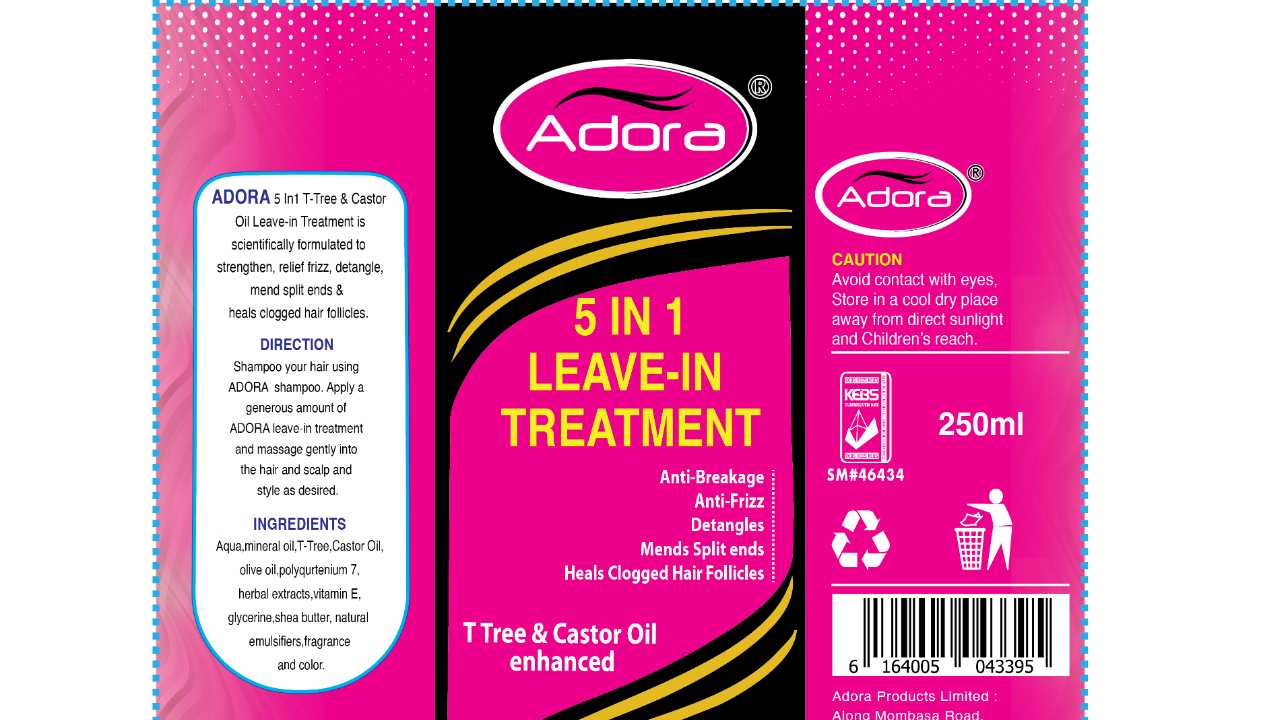
When Christine Kamanda and her team launched Adora in 2020, the world was in the middle of a global pandemic. The Nairobi, Kenya-based brand began its journey with a hand wash and a sanitizer in response to urgent demand. Since then, Adora has become one of Kenya’s fast-growing personal care brands, now available in over 80 percent of towns across the country.
From the beginning, Adora focused on market awareness, product quality and a strong visual identity. Sky Labels, a Nairobi-based converter, helped shape the brand’s standout shelf appeal.
Identifying market gap
Before Adora, co-founder Kamanda and her partner had experience distributing imported beauty products across East Africa.
She says: ‘We noticed that imported brands often faced supply issues, high taxes and clearance delays, which made
them expensive and inconsistent in the Kenyan market.’
At the same time, the market is seeing intense competition with new brands cropping up every week. Kamanda explains: ‘Many new brands enter the market with low prices but can’t sustain operations. While there are a few restrictions to entering the Kenyan market, many startups launch without proper certifications. Some begin small, even making products at home. But once they hit legal and regulatory hurdles, many can’t keep up.’
The team moved quickly to create Adora, starting with accessible hygiene products and later expanding into hair care and skincare. Today, the brand offers 20 to 30 SKUs and serves the mass market.
Building a strong brand identity
A product’s visual identity plays a major role in a startup’s success. The team turned to Malik Hamisi, the company’s graphic designer, who was instrumental in shaping Adora’s early branding.
Once the designs were ready, the team partnered with Sky Labels to produce the final packaging.
‘They did an excellent job. When our products hit the shelves, customers were drawn to them right away. That strong first impression helped us establish trust and recognition from the very beginning,’ Kamanda says.
“When our products hit the shelves, customers were drawn to them right away”
Palak Dave, operations director at Sky Labels, explains that developing Adora’s label required close attention to material,
finish and functionality. Since Adora’s products include oils, shampoos and pastes meant for use in humid environments such as bathrooms, the label had to be both waterproof and oil-resistant.
The team chose polypropylene (PP) materials, specifically silver-metalized PP and white PP. ‘The PP silver added a glossy, metallic effect while resisting oils,’ Dave explains. ‘We printed the colors directly onto the silver and added foil stamping in gold and silver to the logos for extra shine.’
That shine on the labels was a strategic decision to help them stand out on the supermarket shelf.
Susan Wanjiku, sales representative for Adora at Sky Labels, worked closely with Hamisi to fine-tune the colors. To achieve
brand consistency across dozens of SKUs, they combined CMYK process printing for images with Pantone spot colors for logos and key elements.
Challenges
The journey wasn’t without its hurdles. Early tests revealed that some label adhesives reacted with Adora’s product formulations, especially oils and moisture-heavy items. ‘We had some cases where labels would peel or fade after a couple of weeks,’ Dave recalls.
To resolve this, Sky Labels ran multi-week trials using different adhesives, working closely with its material suppliers and the Adora team. The issue was traced to incompatible adhesives.
Dave explains: ‘We learned that some adhesives, like acrylic or hot melt, don’t work well with certain product formulations. We worked closely with our materials supplier, ran multiple two- to three-week tests and carefully observed how the labels held up. Eventually, with the right adhesive and material combination, we got it right. Now the labels hold up well, even in bathrooms or high-moisture settings.’
Dave explains that a label’s longevity largely depends on the type of bottle the brand uses.
‘If the bottle has a smooth surface, the label adheres well and stays intact. But if it’s grooved or textured, the label tends to peel off over time, regardless of the material,’ she says.
Another challenge was ensuring color accuracy from screen to print. What you see on a monitor isn’t always what comes off the flexo press.
Wanjiku explains: ‘Sometimes we had to rework the plates or remix the Pantone inks to get it just right. Malik was always closely involved in approvals, which helped a lot.’
As for color mixing, Wanjiku notes that while some steps are manual, they also use color-matching systems to ensure accuracy in the final output.
For early-stage proofing, Sky Labels used digital printing for mock-ups and special shapes and sizes before committing to full production runs.
Typical production volumes for Adora labels run from 5,000 to 10,000 meters, for approximately 50,000 pieces per SKU.
Stay up to date
Subscribe to the free Label News newsletter and receive the latest content every week. We'll never share your email address.