Skanem Africa installs first Durst digital press in East Africa
The investment enables Skanem to accelerate speed, flexibility and hybrid label production.
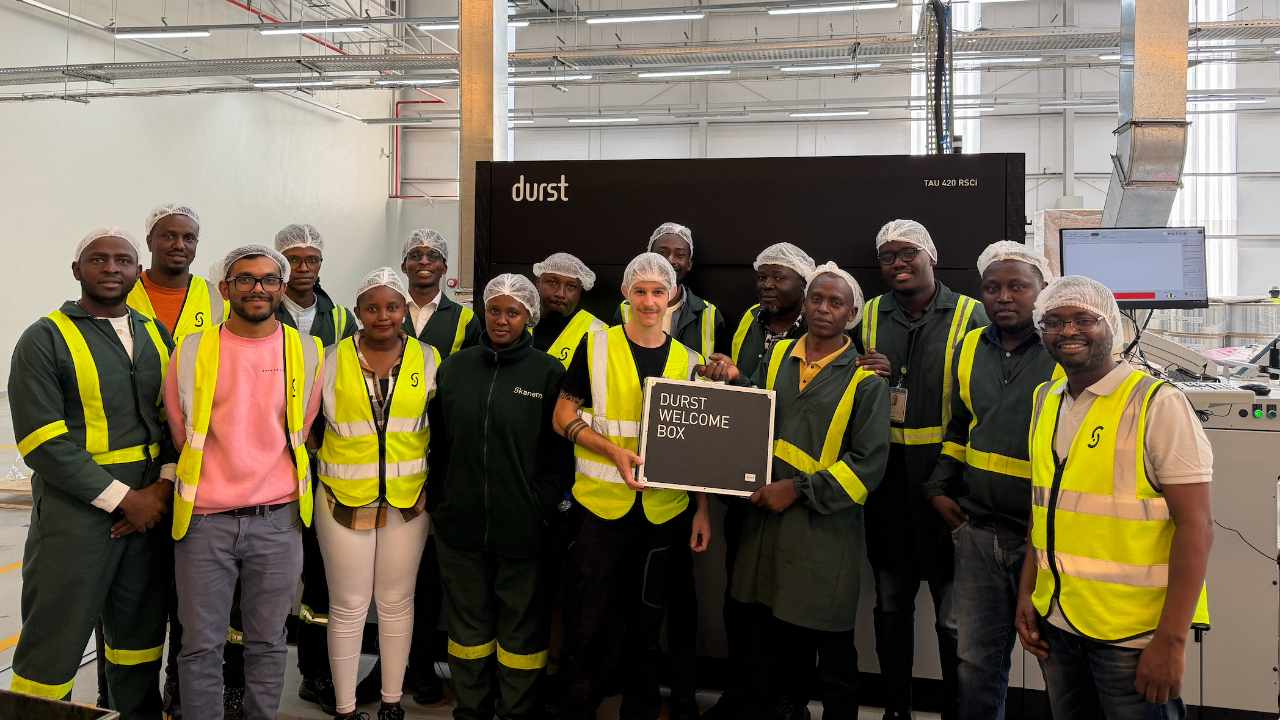
Skanem Africa has strengthened its production capabilities by installing a new Durst Tau RSCi 420 digital inkjet press at its Nairobi facility. The investment marks the company’s first move into digital printing and the first Durst installation in East Africa.
The decision reflects a broader transformation in the regional labels market, where demand for faster turnaround times, increased SKU variation and shorter production runs is reshaping converters’ strategies, such as Skanem’s. The shift is encouraging converters to adopt a hybrid production setup in which digital complements traditional flexo.
The company houses four Bobst conventional flexo presses. The integration of Durst’s digital inkjet press enables Skanem to respond more effectively to changing brand-owner requirements while complementing its existing flexo strengths.
According to Sachen Gudka, managing director of Skanem Africa: ‘This investment marks an important step in how we support the market. Brand owners today need faster product launches, more flexibility across SKUs and lower inventory risk.
‘Our investment in the Durst digital inkjet platform allows us to respond to these needs in a much stronger way. It positions Skanem Nairobi as a more capable hybrid partner for customers across East Africa.’
“We are Durst’s first customer in East Africa and they were very keen to use us as a flagship customer in the region”
By combining digital and flexo technologies, Skanem can now manage a broader mix of job lengths, from short to long runs, with improved efficiency.
‘The investment is about helping our customers move faster and innovate more confidently, knowing the new product development cycle will be shortened, and also bring products to market with greater speed and agility,’ he adds.
Skanem Africa evaluated several options before selecting its digital partner. Beyond technical performance, the strength of the partnership and regional commitment were key differentiators.
‘We chose Durst based on support, responsiveness and interest. We are Durst’s first customer in East Africa, and they were very keen to use us as a flagship customer in the region,’ Gudka notes.
He also emphasizes confidence in inkjet as the future direction of digital printing. ‘I believe digital inkjet is the way forward and will come out stronger. Durst is a good quality machine and gives us the right placement.’
To complement the press, Skanem has also installed A B Graphic Digicon Series 3 off-line finishing equipment, enabling a complete and streamlined production workflow.
Changing print landscape
The installation represents a key milestone not only for Skanem Africa but also for the wider East African label market, positioning the company as an early adopter of industrial inkjet technology in the region.
‘I think for us, it’s really about the fact that labels should be an enabler, not a bottleneck. And it is a strategic capability investment,’ Gudka says.
‘The hybrid capability of conventional flexo and digital gives our customers more choice and a better fit-for-purpose solution. So ultimately, it’s about speed, flexibility and lower commercial risk.’
Middle East disruptions
The recent disruptions in the Middle East have impacted the global supply chain. For Skanem Africa, these disruptions have impacted the sourcing of BOPP films. Fortunately, the company was able to secure shipments ahead of escalation, allowing it to build buffer stock. However, replenishing that stock has since become difficult.
‘Getting supplies out of the Middle East now is difficult. To mitigate this, Skanem Africa has begun diversifying its sourcing strategy. Suppliers with production capabilities in Egypt are offering some support, while we are looking at alternative supply routes from India and China to maintain continuity. However, this will result in longer lead times because of shipping routes and higher costs. We have to balance that, which eventually stretches our working capital,’ Gudka says.
Material costs are rising, putting pressure on working capital. Gudka notes that disrupted shipping networks could take at least six months to stabilize.
‘This is impacting consumers because converters will pass on price increases to brand owners, who will then pass on price increases to consumers. Consumers are already constrained and dealing with higher inflation arising from fuel costs and food costs, which will impact their disposable income and demand in East Africa,’ he explains.
Interestingly, rather than slowing down, brand owners are engaging in panic buying to secure materials at current prices before new, more expensive stock arrives. However, Skanem Africa is prioritizing fair allocations to all customers.
Stay up to date
Subscribe to the free Label News newsletter and receive the latest content every week. We'll never share your email address.