Tecnocut: restructuring resilience and a return to growth
Spanish tooling specialist Tecnocut has emerged from what its leadership describes as one of the most demanding periods in the company’s history.
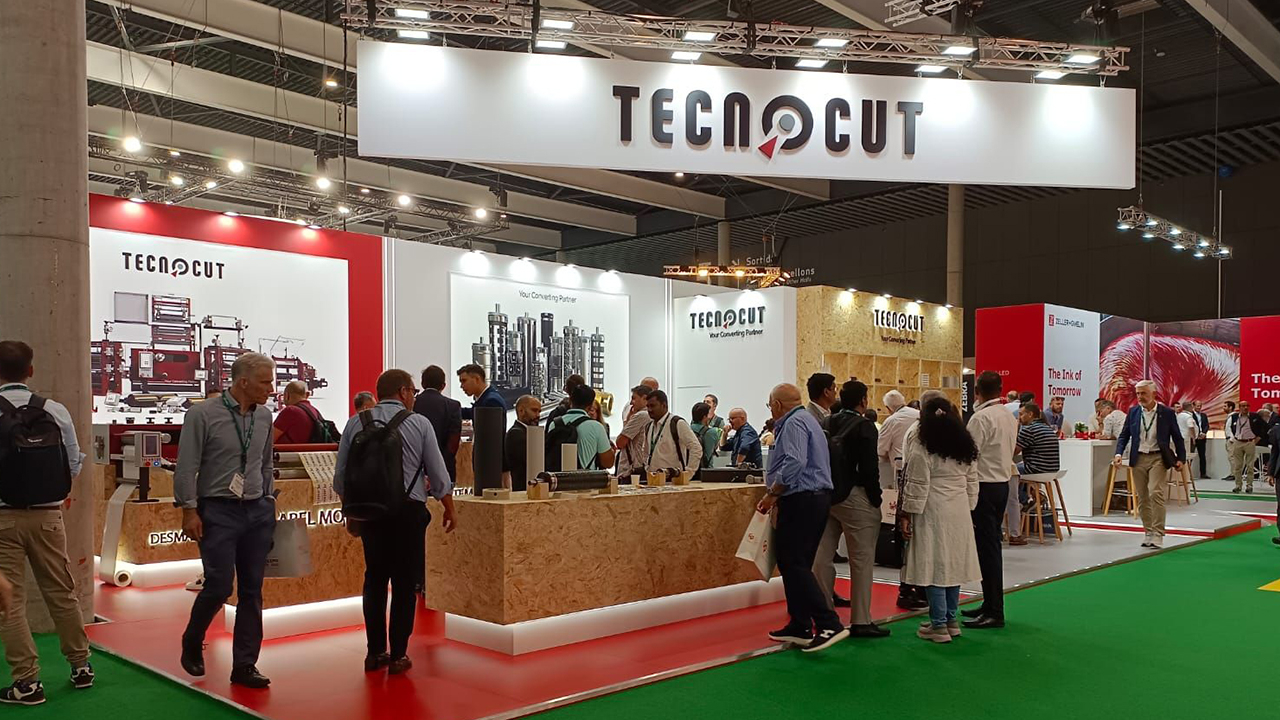
Growth for most companies is seen as a natural progression, with the exploration of new markets or the expansion of the technology on offer to customers. Still, for some, rapid expansion can have its drawbacks. Tecnocut’s co-owner and managing director, Pol Estrada, shared with Labels & Labeling lessons learned from what he described as the ‘most demanding period in its 33-year history’.
Headquartered in Barcelona, Tecnocut has increased its presence in recent years across Italy, France and Portugal, alongside its core Spanish market. However, early investments, particularly in Italy, required longer than anticipated to return on investment.
According to Estrada, the pressure did not stem from a lack of demand but from rapid international expansion that stretched cash flow as new markets took longer than expected to generate returns.

‘At one point, we were in a demanding stage. We were growing very fast, opening in new countries, the market response was positive, but the ramp-up period in new countries required more working capital than initially forecast,’ says Estrada. ‘You need to forecast exactly when you will see the payback’.
The company initially expected returns within three to four months, but this extended to five or six months, creating a gap between investment and incoming revenue. Before the described financial trouble, Estrada shares that the company had been profitable for the past 33 years.
‘Even if you are profitable, if you are spending more money than you are generating for one or two years, the company can move into a difficult financial situation,’ he says.
The experience forced the business to slow further expansion plans, reassess priorities and focus on stabilizing operations before entering additional markets, showing that sometimes it is vital to take a step back to go forward.
To reinforce its financial position, Tecnocut secured backing from a Spanish external investor, while the founding family retained majority ownership.
At the same time, the company carried out an internal restructuring focused on operational efficiency and organizational clarity. Staffing levels were adjusted slightly by ‘two to three positions’, Estrada says, but the primary objective was to define responsibilities more clearly and improve service performance.
Estrada says: ‘Now everyone knows exactly their role, their responsibilities and what they need to deliver. That clarity has helped us improve our service and customer attention.’
The business has since returned to financial stability, supported by steady order volumes and improving performance in newer markets.
For Tecnocut, Italy is now performing well, while France is beginning to deliver consistent orders for flexible dies and tooling.
The company has also secured approvals from major converter groups and is strengthening its local presence with dedicated technical and commercial resources.

‘Our priority is to reach the same level of service in France and Italy that we deliver in Spain, including technical response within 24 hours and regular customer visits,’ says Estrada.
Once its southern European operations are fully consolidated, Tecnocut plans to target the UK, Germany and Poland.
Tecnocut positions itself as a specialist engineering-led supplier in a market dominated by larger global tooling companies. Rather than competing primarily on price, the company is focusing on product development, responsiveness and long-term customer relationships.
Among its key technologies are electronically adjustable anvil systems and autonomous matrix-removal technologies, both adaptable across multiple press platforms. The company is also developing AI-supported service tools to provide faster remote diagnostics and technical support, expected to be released later this year.
Estrada says: ‘Our strategy is to offer something different, strong engineering, fast support and long-term partnership. When there is a problem, the customer knows we will be there.’
Industry lessons
When asked what the main lesson was after successfully navigating out of the financial situation Tecnocut was in, Estrada says: ‘Cash flow is king. You can be selling well, but if you don’t control cash flow, you have nothing.
‘It doesn’t matter how much you sell, if you don’t control your cash flow, you have a problem.’
The experience also reinforced the importance of building close, long-term relationships with customers, particularly as European suppliers face increasing price pressure from lower-cost competitors.
The company’s recovery comes at a time when many businesses in the label and converting industry are navigating slower investment cycles and economic uncertainty amid rapidly encroaching regulatory pressures.
‘Our message to the market is simple,’ said Estrada, ‘Many companies go through difficult periods. If you manage the situation properly, you can come back stronger.’
With finances stabilized and new markets beginning to contribute, Tecnocut’s next phase will focus on disciplined, rather than rapid, growth, expanding its European footprint while maintaining tighter control over the fundamentals that underpin it.
Stay up to date
Subscribe to the free Label News newsletter and receive the latest content every week. We'll never share your email address.