Impact Labelling doubles down on digital inkjet with Screen
Irish family converter builds inkjet platform for growth.
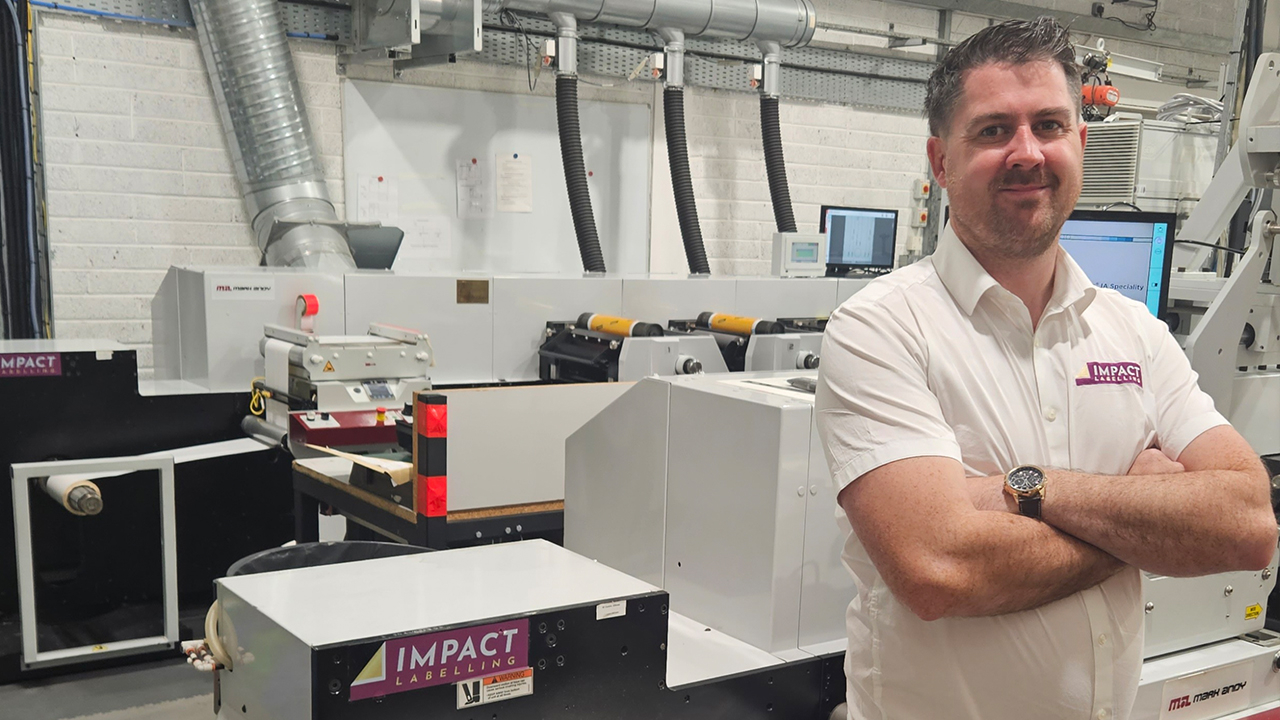
Five years ago, Impact Labelling installed Ireland’s first Screen low-migration inkjet press. It was a bet. The Limerick-based family converter was already running flexo presses, already serving food and pharma customers, already growing steadily. Digital inkjet was the accelerant, not the foundation.
That bet has paid off. Sales have more than doubled. The company now delivers over 2 million labels a day to customers in more than 70 countries. In April 2026, it commissioned a second Screen Truepress for a dedicated new unit at Eastlink Business Park. A 5,000sqft expansion of its premises is underway. The workforce has grown. So has the ambition.
‘We need to keep growing to keep up with the larger groups,’ says Evan Fox, managing director of Impact Labelling and second-generation head of the family business. ‘Impact has a truly committed team that works hard every day and shares a clear passion for where the company
is headed.’
Fox grew up playing around his father’s factory and remembers copies of Labels & Labeling always being around. Now his own children spend school holidays sweeping the warehouse floor. This time, they will be able to find an article about them in the magazine.
“The business is a huge part of our family life. We talk labels at Sunday dinner”
Founded more than 25 years ago by Richard and Deirdre Fox, Impact Labelling operates from two sites at the same business park: a main production facility that houses flexographic printing, finishing and warehousing, and a separate Digital Hub now dedicated entirely to its Screen inkjet presses. The setup is deliberate. Fox wanted digital production consolidated under one roof, physically distinct from the flexo operation but close enough to share resources. It is a structure that reflects where the company is heading as much as where it has been.
Digital journey begins
The first Screen press, a Truepress L350UV+ LM, arrived in 2021. Impact Labelling chose it for a specific reason: low-migration inks certified by EuPIA, Swiss Ordinance and Nestlé, which opened the door to regulated food and pharmaceutical work that had been difficult to serve with flexo alone.
‘This machine enables us to supply labels at competitive prices, with extremely short lead times and provides a consistently high-quality product every time,’ notes Fox. ‘The fact that Screen’s technology is food and pharma safe was very important to us.’
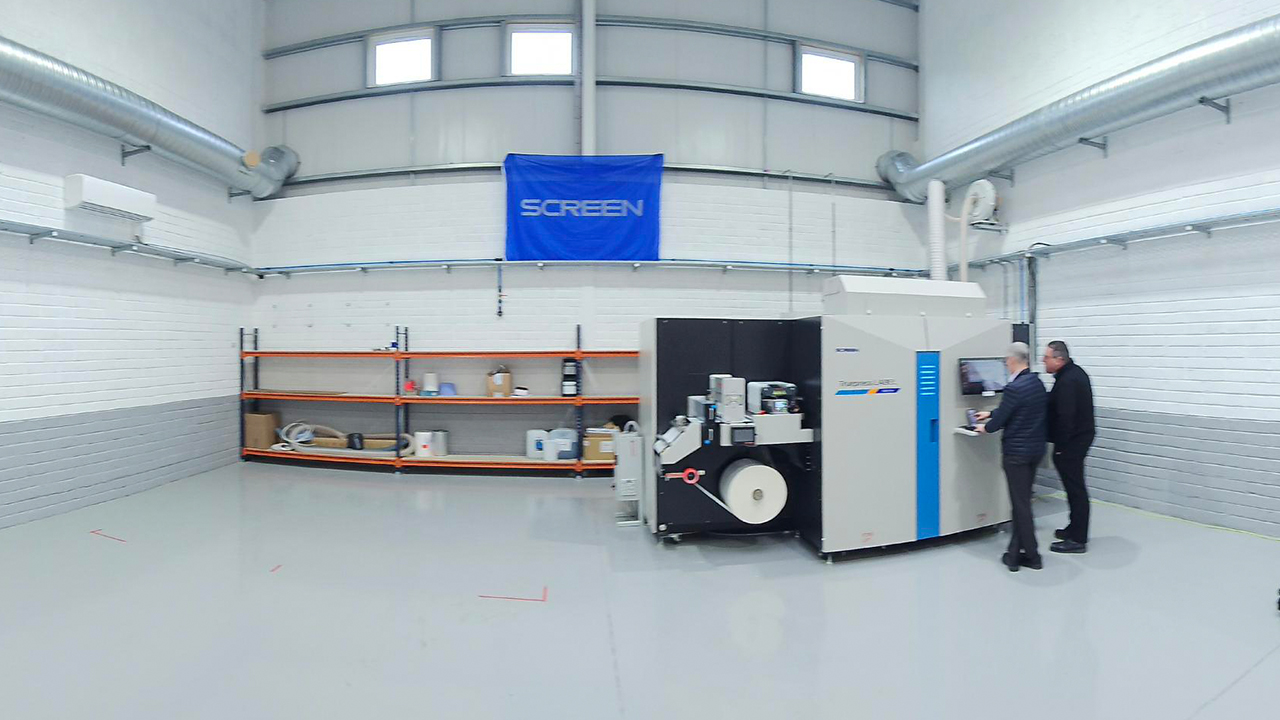
Short runs that would have been uneconomical on flexo became viable overnight. Changeovers were fast, substrate waste was minimal, and new customers followed quickly. The press opened doors to regulated markets that had previously required converters with specialist compliance credentials, giving Impact Labelling access to pharmaceutical and food industry clients who demanded both consistent quality and full traceability.
The effect on the business was immediate and measurable. Even with significantly higher volumes and more orders per day, Impact Labelling maintained an average turnaround of 4.5 days. To keep pace, the company added a second digital finishing line and introduced an additional shift. The growth was not just incremental. It fundamentally changed the balance of the business.
Second press adds capacity
The first machine’s reliability made the case for a second. Over 4.5 years, the Screen press recorded uptime exceeding 90 percent, with only five days of downtime due to breakdowns. Those are numbers that justify a repeat purchase without much debate.
The new press is a Truepress Label SAI S running a six-color CMYK with white and orange configuration at speeds of up to 60m/min. The press was commissioned in late March 2026 and entered production the following week.
“Doubling down on digital inkjet allows us to handle more work efficiently while also freeing up flexo capacity and adding digital redundancy”
Fox frames the decision in terms of capacity rather than technology for its own sake. ‘We have been extremely happy with the quality and uptime of the Screen press, so investing in a second machine was the logical next step,’ he explains. ‘Rather than expanding flexo capacity directly, doubling down on digital inkjet allows us to handle more work efficiently while also freeing up flexo capacity and adding digital redundancy. That gives us more room for growth across our core target industries.’
Local support comes from Litho Supplies, Screen Europe’s distributor in Ireland, with engineers available remotely within minutes and on-site within two hours. ‘It’s important to find the right machinery for success in the label printing sector, but also the right partners,’ adds Richard Styles, managing director of Litho Supplies. ‘Impact Labelling needs mutual trust with clients and a reputation for reliability, two things they’ve already come to expect from Screen.’
Hybrid production model
None of this has come at the expense of flexo. Impact Labelling runs Mark Andy Performance Series presses alongside the two Screen machines, with an A B Graphic Omega SRI finishing system providing 100 percent camera inspection via FleyeVision. The flexo side handles the company’s blue-chip accounts.
The crossover point from digital to flexo is higher here than at most converters. Impact Labelling focuses on low- to medium-run work, where makeready time matters most, and the Screen presses push the economics of digital further up the run-length scale than many competitors can match. Which jobs go where depends on each customer’s specific requirements, but the bias is clearly toward digital for anything below a certain volume threshold.
What ties the two platforms together is Flint Group’s Vivo color management system. Fox is emphatic about its impact. ‘Vivo has been revolutionary for us, taking the guesswork and trial‑and-error out of color matching,’ he notes. ‘It works seamlessly across both platforms, giving us either an ink mix for flexo or a Pantone reference we can then input to the Screen presses, consistently delivering matches under delta 2.’ For customers whose work moves between digital and flexo depending on run length, that sub-delta-2 consistency means brand colors stay identical regardless of which press prints the job.
Local roots, global reach
Ireland has no shortage of good label converters. Impact Labelling has not tried to compete for the ultra-long-run accounts that attract the bigger groups. Instead, it has built its reputation on speed, service and flexibility, qualities that appeal equally to a local artisan food producer ordering a few thousand labels and multinational brands managing hundreds of SKUs across multiple markets. The company’s labels end up on products in over 70 countries, but the relationships that generate that work are often personal and local.
‘We always strive to deliver the same level of service and quality, whether it is for a household-name multinational or a local artisan producer,’ explains Fox. ‘We spend a lot of time pursuing household-name brands, as those relationships can take a long time to develop. Smaller accounts, on the other hand, often come through word of mouth or social media, which has been a massive tool in helping us spread our wings in recent years.’
The company sponsors the Blas na hÉireann Irish food awards and offers Kanban and VMI inventory management alongside anonymous delivery for trade customers and a 24/7 online ordering portal called Siteline, which integrates with the company’s Label Traxx ERP. These are not bolt-ons. They are central to a service proposition designed to embed Impact Labelling deep into its customers’ supply chains, making it harder for competitors to dislodge on price alone.
Sustainability and compliance
Impact Labelling earned its ISO 9001 certification back in 1999, when the previous generation was still at the helm. Fox points out that many of the practices, now labeled sustainable, were simply how the company operated from the start: waste reduction, energy efficiency and responsible sourcing. The difference now is that customers are asking for the paperwork to prove it.
Today, the certifications include ISO 9001:2015, ISO 45001 and ISO 14001 and EcoVadis recognition. Solar panels installed under the company’s Impact Green initiative in 2020 now generate over 30 percent of on-site energy. Combined with food safety compliance through EuPIA, Swiss Ordinance and Nestlé-certified digital inks, the portfolio has become a genuine competitive advantage, particularly with customers who audit their supply chains before placing orders.
‘In the last two to three years, especially, we have seen a huge push from customers toward leaner and more sustainable operations,’ Fox observes. ‘It is a journey we are delighted to support them with, not only because it is what customers want, but because it is important that we do what we can for the next generation.’
Investing for the future
The wish list for the next investment cycle is long: a 17-inch flexographic press, another digital finishing line, additional ABG Digicon modules for embellishment and crossover work, another camera inspection line and a potential upgrade to the main plain white line. The 5,000sqft expansion at Eastlink Business Park, secured in late 2025, is being fitted out to accommodate new machinery, additional warehousing and dedicated Kanban storage for key customers.
‘This is the question that keeps me awake at night because there always seems to be more investment requirements, thankfully,’ Fox admits. ‘Most of our investment decisions are driven by customer requirements and lead times, so the timing will depend on which projects move first.’
Being family-owned shapes how those calls get made. Impact Labelling can move fast when it spots an opportunity. There is no board to convince, no quarterly earnings cycle to manage. But equally, every investment is weighed against the long term. Fox is already thinking about the generation after his own, and every decision reflects a simple question: will this still make sense in 10 years?
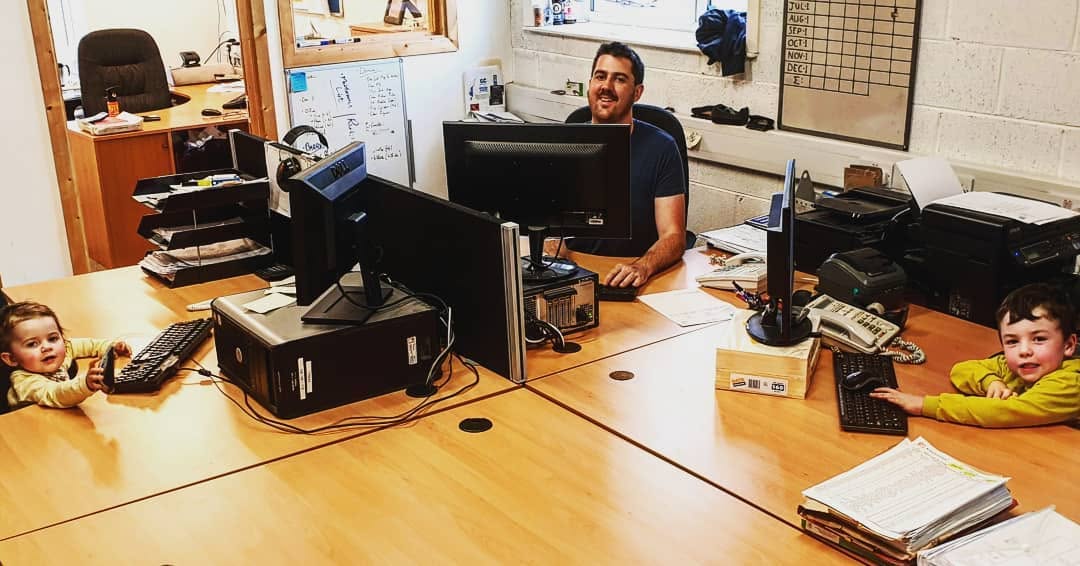
‘The business is a huge part of our family life. We talk labels at Sunday dinner,’ he comments. ‘I want them to understand the business from the ground up so that, if they decide to take it on one day, they are as well prepared as I was, thanks to the way my father prepared me.’
Stay up to date
Subscribe to the free Label News newsletter and receive the latest content every week. We'll never share your email address.