Loupe Americas 2026 finishing equipment review
RFID, automation and embellishment technologies were some of the biggest trends among finishing suppliers at Loupe Americas 2026.
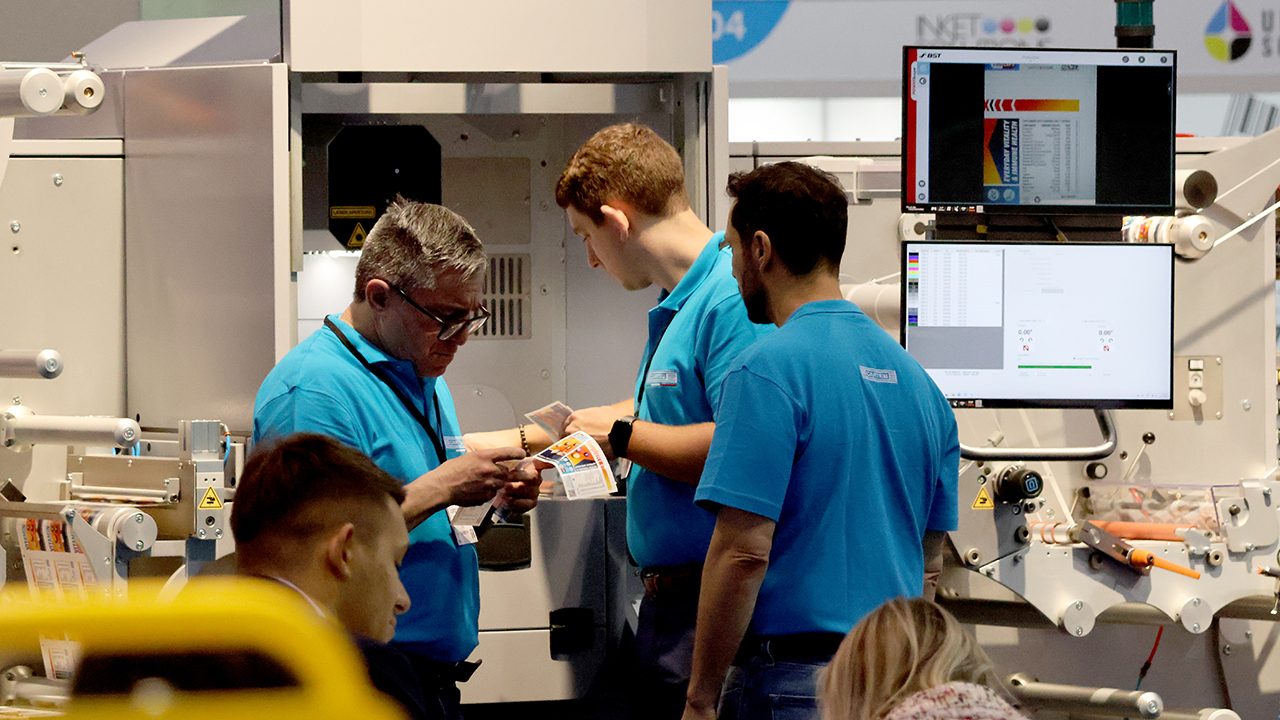
Brands are demanding traceable labels, faster turnaround times and eye-catching designs. To meet these needs, many converters are aiming to add RFID systems, automated machinery and technology that can add embellishments to labels and help them stand out on shelves.
At Loupe Americas 2026, finishing technology suppliers highlighted innovations in RFID converting equipment, faster and more automated machinery and digital embellishment systems.
At the same time, label converters are also expanding into new packaging segments such as flexible packaging, and suppliers are highlighting how their technology can support this move.
Smart labeling
This year, 36 percent of attendees expressed interest in RFID, up from 28 percent in 2024.
It was one of the biggest trends among finishing and converting technology suppliers that showed equipment for RFID insertion, encoding and verification, with many machines combining multiple RFID production steps.
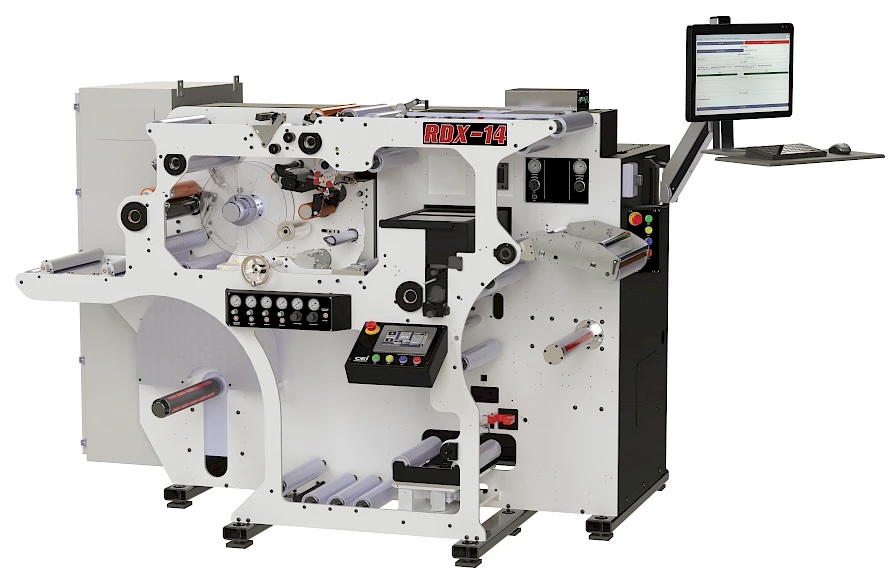
For example, LemuGroup CEI showcased its RDX RFID inserter, capable of inserting, validating, encoding and rewinding. The company introduced this machine last year.
‘The RFID market is one that’s growing every day,’ says Patrick Taylor, technical business development manager at LemuGroup.
Walmart’s RFID Initiative, which requires RFID labels on a growing number of its products, drove much of the initial demand for RFID. Other retail brands have since introduced similar requirements.
At Tamarack Products' booth, the company exhibited an inlay RFID splicer for continuous RFID production, as well as a label applicator for applying RFID labels to folding cartons on folder/gluer lines.
‘It’s mainly about tracking inventory and tracking expiration dates, perishable goods, and doing that as fast as possible,’ says Brad Boxrud, project engineer at Tamarack. ‘With RFID, you can minimize the amount of logistics you have to go through as a retailer. Instead of having one employee count all the packages and products on their shelving units individually, they can just walk the aisle with a scanner, and it just pings every single box in the aisle. It turns an eight-hour job into a 30-second job.’
GM Finishing also showcased an RFID machine, RD350, that can insert, program and verify RFID labels. Uffe Nielsen, CEO of GM Finishing, reported that this machine drew strong interest at this year’s show.
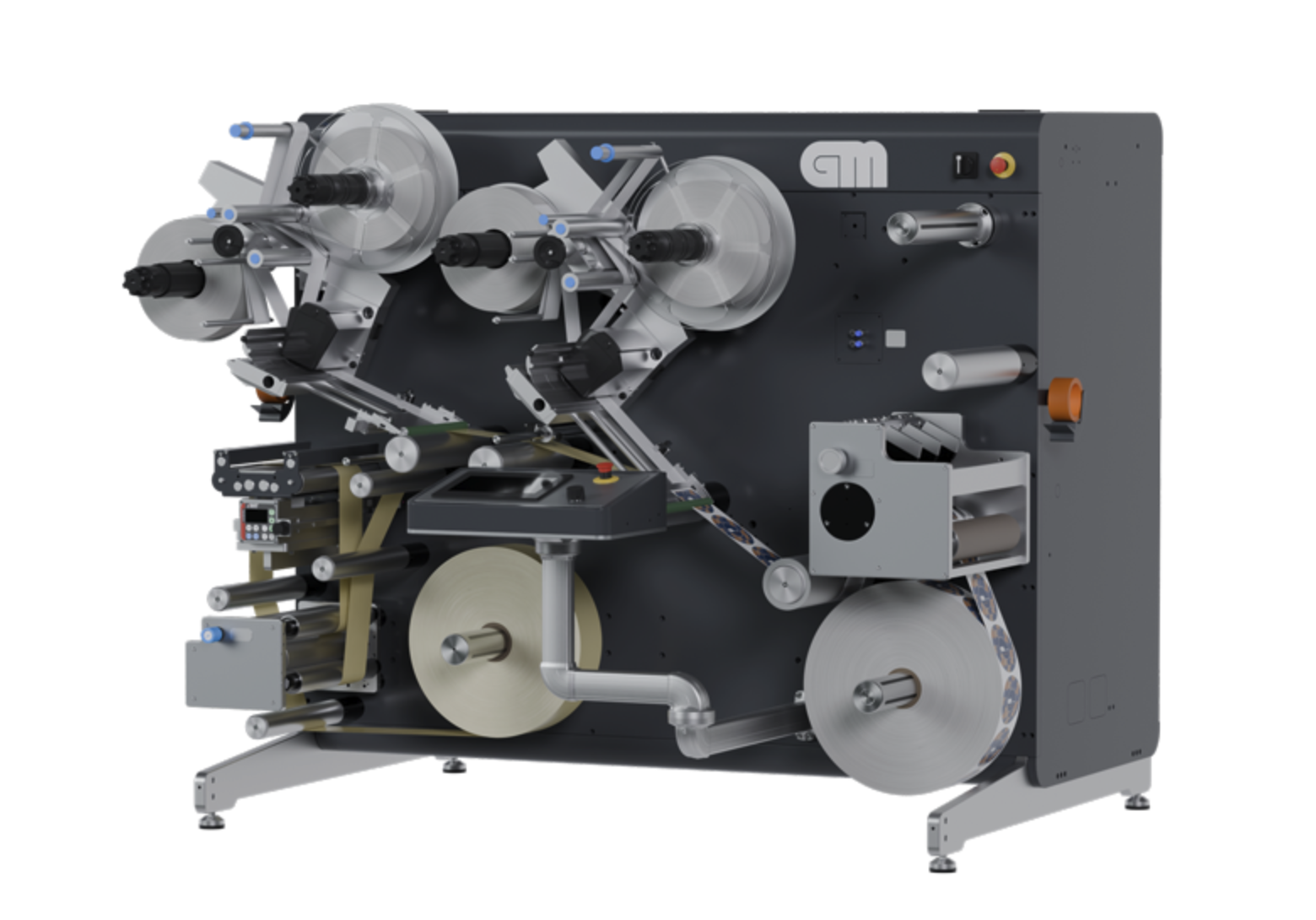
‘The ease of use and having it on a super compact platform makes it more appealing to medium-sized print shops than buying a huge RFID line that looks economically challenging and difficult to use,’ Nielsen says. ‘You can actually buy a machine now on a 2m frame that can do 90 percent of the RFID production.’
Other suppliers exhibiting RFID equipment included Delta ModTech, which demonstrated a modular RFID machine. The show configuration could insert RFIDs at speeds up to 500ft/min.
Muhlbauer displayed an entry-level RFID converting machine for wet inlay labels, and ADA highlighted its A-200 RFID labeling converting machine and its RF-500 RFID encoding and rechecking machine.
Automation
Incorporating more automation into technology is a common demand from converters for all parts of the label production process. That can be especially true in finishing, a stage where they often face bottlenecks.
Matik seeks to address these bottlenecks with its digital label factory, a system the company showcased at its booth. It is made up of the SEI Laser Labelmaster, integrated with KyoJet and KlimJet modules. With just one operator, the machine can take a blank roll, unwind it, print on it with a 5-color digital inkjet system, apply digital spot varnish, digital cold foil, and finish it. The system is fully modular and digital.
‘It’s all about the automation and the ecosystem,’ says Dean Haertel, executive vice president of sales at Matik. ‘It’s from blank roll to ship, all with one operator, all controlled by one company.’
Loupe Americas was the first time that Matik showcased both the KyoJet CMYK+W digital module and the KlimtJet module for digital cold foil and digital spot varnish.
‘Our biggest thing is automating the bottleneck,’ Haertel adds.
Lemorau also highlighted automation features. Its Smart-L Premium compact digital finishing machine offers automatic setup for flexo printing and die-cutting. In contrast, its ICR4 inspection, slitting and rewinding machine provides an automated setup and blade system.
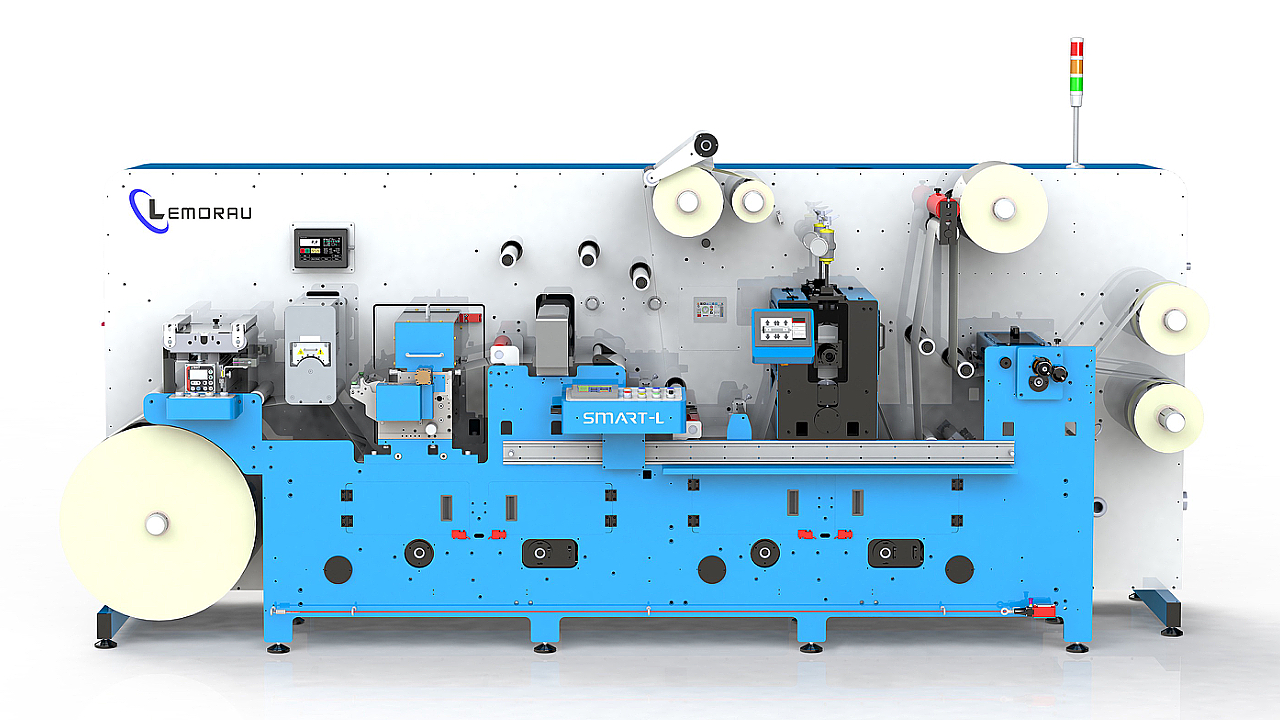
Natália Lopes, sales and marketing manager at Lemorau, notes that workforce challenges underscore the importance of automation. When hiring is difficult, converters need more automated technology.
‘There are a lot of operators that are retiring,’ Lopes notes. ‘It’s very difficult to find and attract new talent to come into the industry.'
Meanwhile, Quantum Design showcased a Maxcess Tidland SmartSlit machine and a KTI MTR Series four-spindle turret rewinder. The machines offer easy setup and fast changeovers, plus automation features, including the SmartSlit’s automated knife positioning system and the MTR’s automated core-loading system.
This year’s show also featured some robotics.
A B Graphic International partnered with Zenon to show robotic arm technology at its booth. For manufacturers with consistent workloads, this technology can take rolls, box them, seal the boxes and place them on pallets.
Meanwhile, Develop highlighted its custom machinery. The company has machines for label manufacturers and can provide systems for automated assembly, drilling, scanning, packing and palletizing. Its Automation Assessment can evaluate where automation makes sense. The company focuses on robotics but also offers non-robotic cells.
‘There’s a fair amount of labor shortage in some of these markets,’ says Ryan Jacobowitz, software engineer at Develop. ‘So when facilities are growing, they need to use integrators to make these lines more efficient.’
Enabling market differentiation
Several exhibitors highlighted machinery integrated with embellishment systems, as brands express interest in label and packaging designs that stand out on shelves.
‘Every brand has a choice in how it wants to move its product,’ says Scott Tacosik, director of business development at Kurz. ‘It’s proven with studies from Clemson and Michigan State University what metal decoration does for a brand: the degree of first-eye fixation and length of fixation for a metalized label versus non-metalized alternatives. The results are much higher with metalized variations. Embellishment comes with a cost, so we come up with technologies that make it as efficient as possible.’
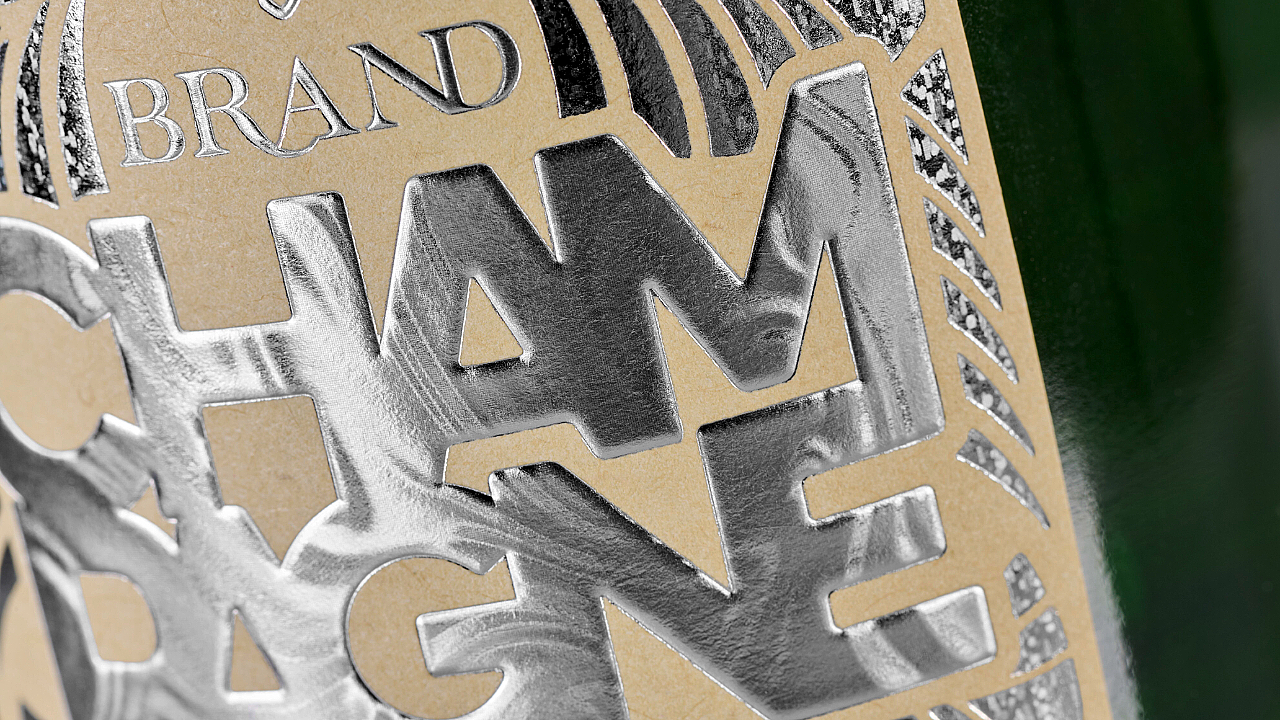
Kurz partnered with Nilpeter to demonstrate a Nilpeter FA-17 press integrated with a Kurz Distorun cold transfer module. The module uses less foil, which makes it more economical.
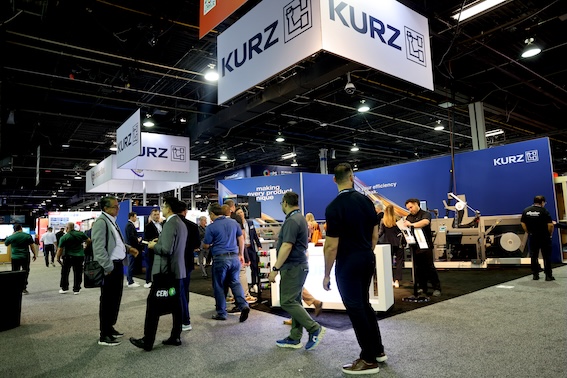
‘We don't want to forget our roots, which are cold and hot foil,’ Tacosik explains about the decision to partner with Nilpeter at Loupe. ‘Let’s integrate it together, do both in-line, to show what’s possible.’
Tacosik noted that digital embellishment is growing, tactile finishes like embossing are popular and converters want versatile technology that can produce both heavy coverage and fine details.
Meanwhile, Cartes showcased its Jet D-Screen digital system, capable of high-build embellishments, tactile finishes, foil applications and spot varnishes in different thicknesses.
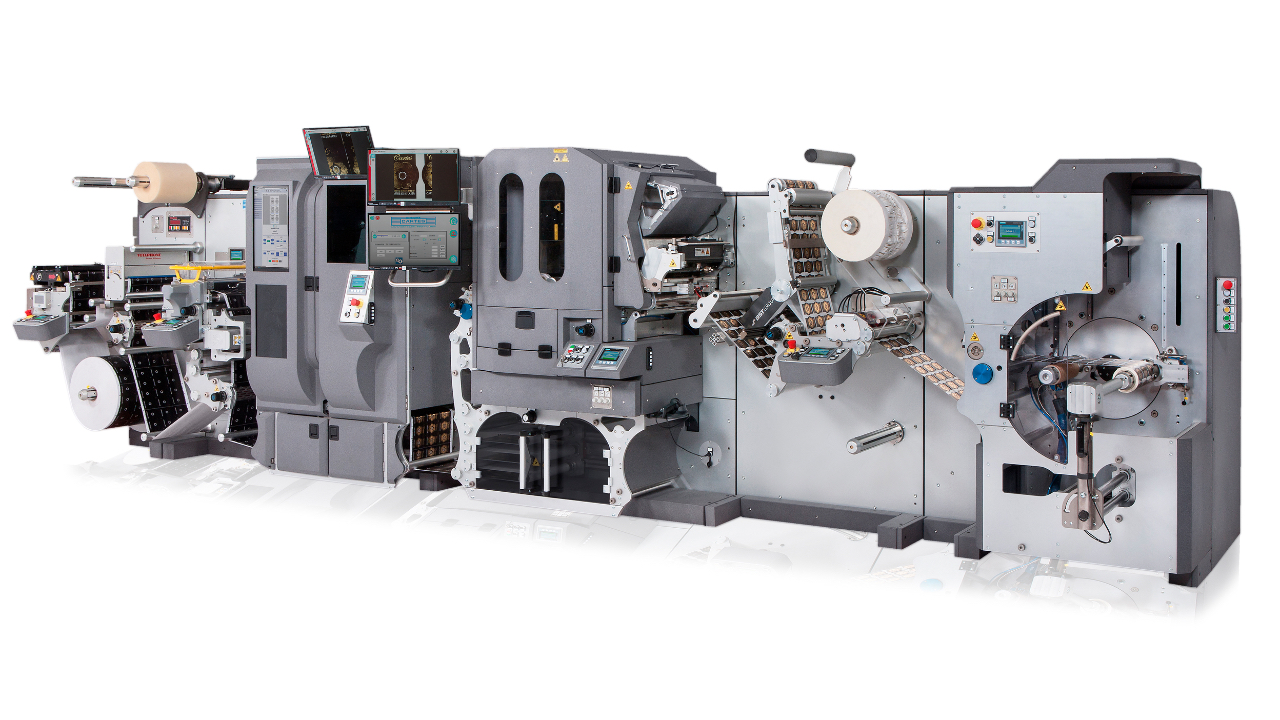
Actega highlighted EcoLeaf, a metallization technology that minimizes waste, launched at Labelexpo Europe 2025 in Barcelona. The company exhibited this technology in the US for the first time at Loupe Americas.
Infinity Foil launched a new foil for security applications. To the naked eye, it looks like a standard holographic foil, but under a black light, it reveals a pattern or image underneath.
‘We’re seeing security being a driving factor these days for authentication and for brands to really not only increase, but also strengthen their identity, and make sure consumers are buying legitimate product,’ says Ross Hutchison, national sales manager for Infinity Foil and president of Universal Engraving.
Converging markets
On the show floor, suppliers promoted technology that blurs the lines between labels and other packaging segments.
AB Graphic International, which had its largest-ever exhibit at Loupe, brought 14 machines spanning labels, flexible packaging, RFID converting and embellishing markets. This included the North American debut of the Galaxy GS20 Plus integrated with ABG’s PouchJet digital embellishment system. This system expands ABG’s offerings into the flexible packaging segment.
‘We understand that Loupe is expanding, and we see the industry as a whole expanding,’ says Jim Kehring, director at ABG. ‘A lot of our customers are starting to branch out.’
Ashe Converting Equipment brought its 65in Diamond slitter rewinder, the widest machine of its kind it has ever showcased at Loupe/Labelexpo. This slitter rewinder can handle both flexible packaging and pressure-sensitive labels.
Matthew Godbold, sales manager at Ashe, noted that the company has long seen demand for wider equipment that goes beyond this technology convergence. Wider slitter rewinders let converters slit master rolls into the exact widths they need before printing, giving them more control over their materials. Additionally, as presses have gotten wider, finishing technology has had to follow.
‘With the rebranding of Loupe, and a stronger focus on flexible packaging, we also saw demand from flexible packaging converters may be coming in,’ Godbold says. ‘A lot of in-line flexo presses and digital presses are also going wider, so it gives us the opportunity to show our capabilities in supplying wide-web, mid-web and narrow web slitter rewinders that we produce.’
Gonderflex also demonstrated a wider piece of equipment, the GFXL3000, a 30in-wide finishing machine for flexible packaging, integrated with an in-line digital embellishment unit from JetFx. It is intended to be a complete finishing platform complementing the HP Indigo 200K. The GFXL3000 provides thermal lamination, coating, varnishing, slitting and rewinding, while the JetFx module offers spot varnish, cold foil and cast and cure. It now has an updated thermal lamination system capable of faster speeds, along with an updated temperature control system.
‘We take the roll of printed material produced on the HP Indigo, and we put it in our machine to make it into a finished roll that the customer can then put on his pouch-forming line or his seaming machine for shrink sleeves,’ says Thomas Gonder, sales and marketing manager for Gonderflex. ‘We’re integrating multiple processes into a single finishing platform.’
Karlville highlighted machinery for both flexible packaging and shrink sleeves. For flexible packaging, the company provides slitters, laminators and pouch machines. It also displayed a Plus series seamer for shrink sleeves.
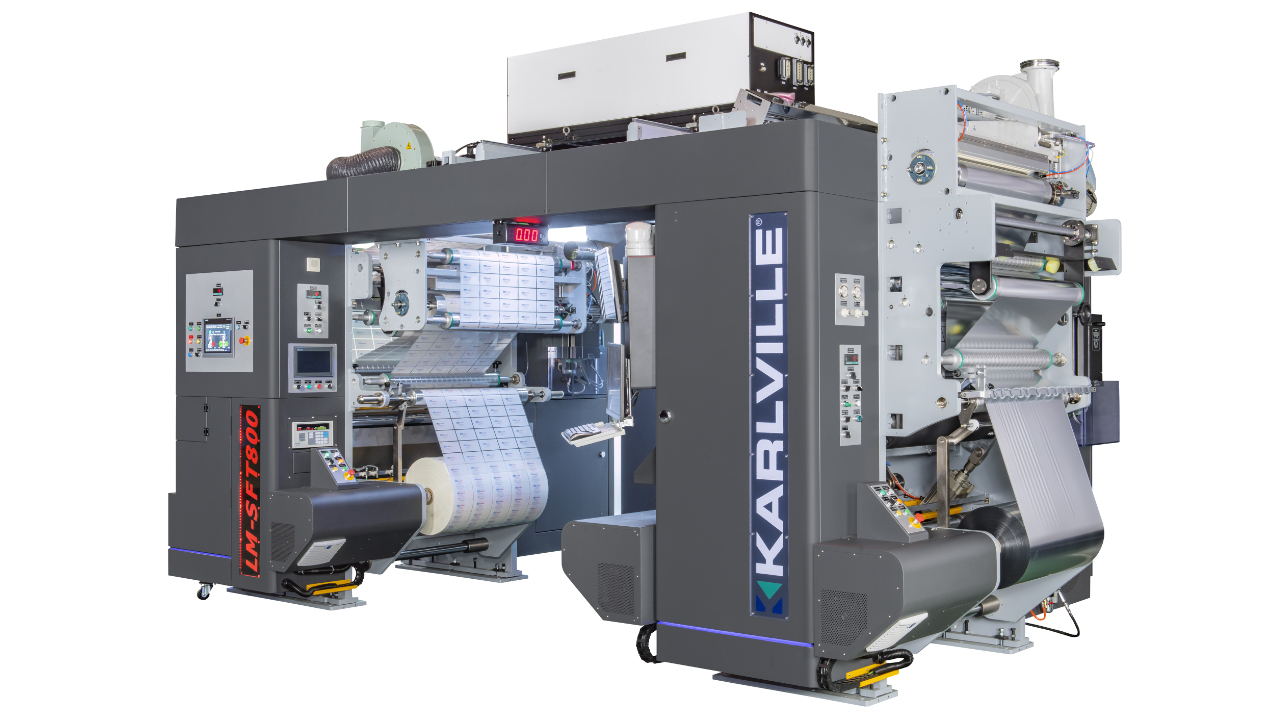
‘Flexible packaging and shrink sleeves are markets that have been proven, even during Covid-19 when the world shut down,’ notes Raul Matos, executive vice president at Karlville. ‘They’re not going anywhere, and they’re going to continue to grow based on population growth.’
Linerless technology
Several companies highlighted finishing technology for linerless labels at the show.
Jennerjahn’s booth featured a Model JJF 54 automatic slitter rewinder, capable of handling up to 54in-wide rolls. The company partnered with Green Bay Packaging to showcase its rewinder technology’s ability to work with linerless labelstocks.
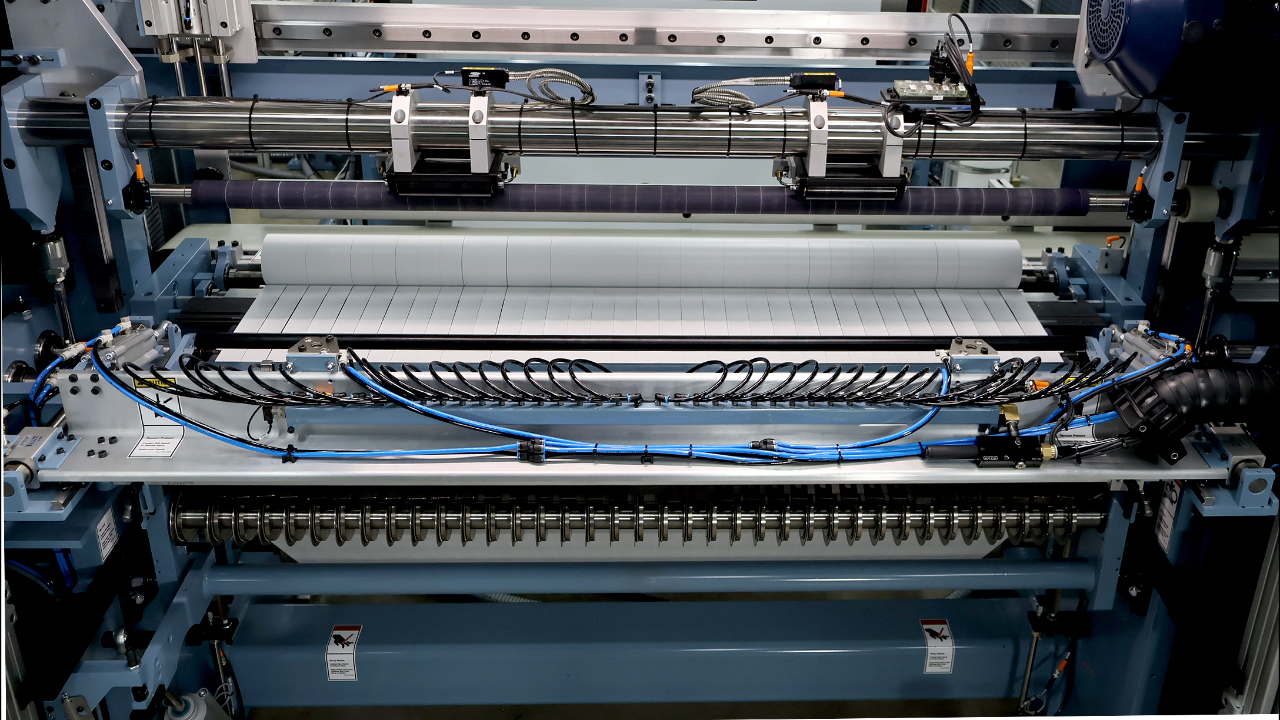
‘It's been interesting talking, getting a lot of feedback from customers, attendees and exhibitors,’ says Kyle Mosier, sales engineer at Jannerjahn. ‘Everybody sees linerless as the future to eliminate liner waste. The liner is recyclable, but the process is difficult. Being able to print and apply labels without removing a liner or rewinding and discarding it saves a lot of waste and gives more labels per roll.’
Due to increasing customer interest ETI Converting decided to focus on linerless labels at this year’s show. The company exhibited several applicators at its booth, including one for square labels, one for other shapes and one for wraparound linerless labels for trays.
Baudry Bayzelon, sales director at ETI Converting, says that the benefits of linerless go beyond sustainability: ‘Those offer great, of course, savings on material, but also there are more labels per roll, less changeovers.’
Finishing highlights
Prati showcased its Saturn slitter inspection rewinder along with its Digi Compact digital finishing line. The first can be configured to include die-cutting, back numbering and more, while the latter offers more versatility.
‘Customers nowadays look for versatile and open technologies, which can handle different kinds of substrates and also different functions,’ says Claudia Fabbri, sales director at Prati.
Kroenart highlighted a high-speed coating station that can coat both sides of a label simultaneously at up to 1000m/min.
Martin Automatic showcased its MBS automatic butt splicer and LRD transfer rewinder, both for automatic, nonstop roll changing.
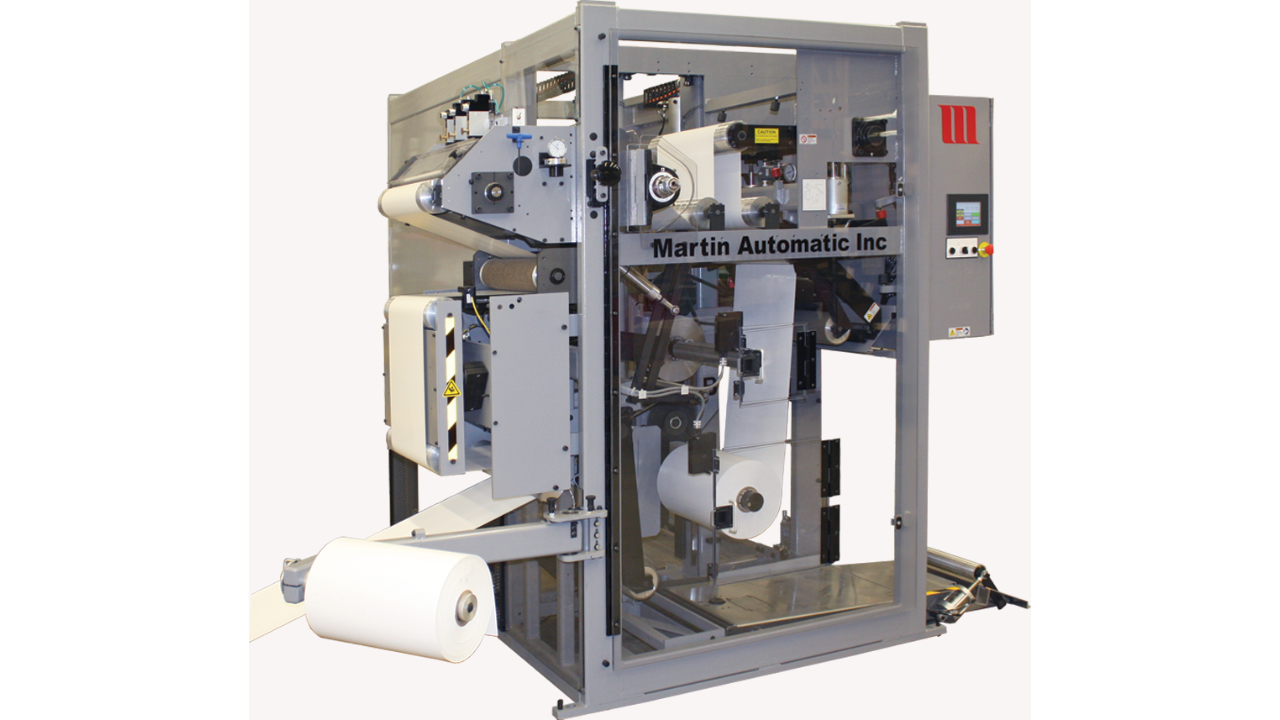
‘Printers and converters are looking to offset a lack of motivated workforce,’ says Craig Thomson, regional manager at Martin Automatic. ‘It’s difficult to hire people. It’s difficult to keep them and train them. They’re looking for tools that people like Martin Automatic can provide to help them navigate that environment, more automation, more nonstop operation. You’ve got to get the production out, and we also have to keep it as simple as we can because people aren’t going to stick around to be trained well on things.’
A show of investments
Across finishing and converting, exhibitors repeatedly reported that attendees were interested in buying.
‘Last Labelexpo, we had a lot of what I would call window shoppers that were looking and dreaming of the equipment,’ GM’s Nielsen says. ‘Times were a little more difficult for the label industry. What we see now is more confidence, more money. We sold machinery off the booth that wasn't planned sales, but walk-in clients. It’s nice when it happens, but it’s not something you can expect every day that people walk in and buy capital equipment.’
Thomas Reardon, general manager at Vemax, had a similar observation about Loupe Americas 2026. Vemax highlighted its V-Printer 330 HD hybrid inkjet printing system, VSRH 350 rotary and semi-rotary finishing system, VDE 370 inkjet embellishment system, VRTA-U blank label and turret system and its auxiliary equipment portfolio.
‘Two years ago, we had a lot of people walking by, but nobody buying,’ Reardon says. ‘This year, a lot more people are buying. They’re coming and saying, “I have a project.”’
Stay up to date
Subscribe to the free Label News newsletter and receive the latest content every week. We'll never share your email address.