Sacchital rewrites flexible packaging rules
Italian converter installs world’s first Screen Truepress PAC 520P.
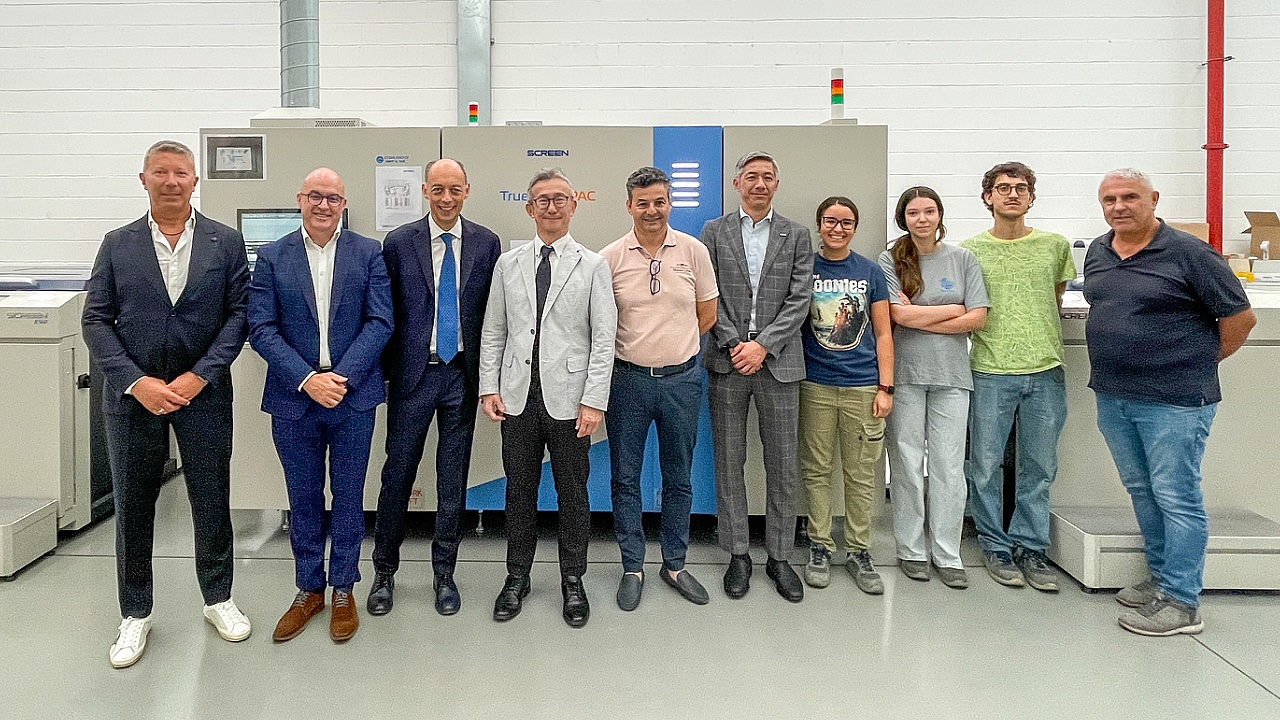
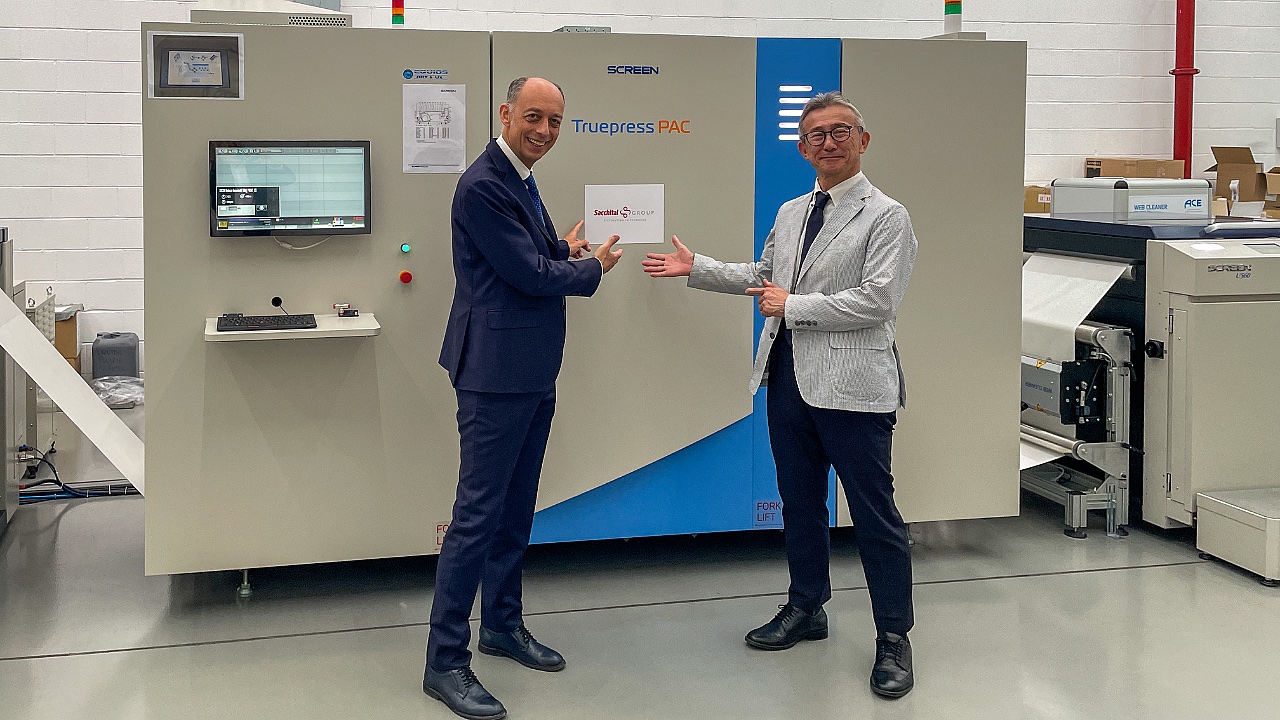
Sacchital Group is using a single, compact digital press machine to rewrite the rules of paper-based flexible packaging, blending 80 years of converting know-how with a bold bet on inkjet as the next strategic platform for brands under pressure to decarbonize and differentiate.
With the world’s first Screen Truepress PAC 520P, Sacchital positions itself not only as an early adopter but as a co-architect where paper, print and regulation intersect in the next decade.
From Milan printer to paper pioneer
Founded in 1945 near Milan, Sacchital grew alongside Italy’s post-war food and consumer-goods boom. It evolved from a traditional flexible packaging converter into the hub of a diversified industrial group. Over the decades, the company layered printing, laminating and paper-processing expertise on top of its roots, building a reputation for tailor-made, high-barrier structures serving food, cosmetics and pharmaceutical customers.
Today, Sacchital Group operates five production plants across Northern Italy, with Dupol Next in Bergamo focused on semi-finished extrusion and other sites in the Milan and Turin areas dedicated to flexible packaging converting and printing. Across a roughly 350,000sqm industrial footprint, the group supplies both European and global markets, combining industrial scale with the flexibility to engineer niche structures for demanding brands.
Built around bespoke packaging
Sacchital talks about ‘bespoken’ packaging: structures engineered not only to protect a product, but to fit a specific brand story, machine park and distribution reality. Within the group, this philosophy translates into the ability to combine paper, aluminum and polymers into mono- and multi-layer laminates, integrating options such as windows, specialty coatings and premium finishing effects to deliver precise shelf impact and performance.
The multi-plant model underpins this bespoke approach. Dupol Next provides core extrusion capabilities, while other plants specialize in rotogravure, flexographic printing and now digital printing on paper, allowing Sacchital to cover the entire workflow from semi-finished materials to fully printed, finished reels. That spread of technologies gives the group latitude to allocate work by run length, complexity and lead time, rather than forcing every job through the same production channel.
Sustainability pressures
If the group’s history is rooted in print and converting craft, the future is being dictated by regulation, innovation and consumer requests. Rising demand for recyclable, low-impact packaging is intersecting with the European Union’s upcoming Packaging and Packaging Waste Regulation (PPWR), which will mandate higher levels of circularity and recyclability across the sector. Sacchital reads that combination as both an obligation and an opportunity: a chance to elevate paper from ‘green option’ to a mainstream alternative to plastic in flexible formats.
“This project represents a pivotal entry into a new segment, and we believe digital inkjet can lower entry barriers for converters exploring paper packaging”
‘Competitive sustainability and performance must go hand in hand,’ says Alberto Palaveri, executive board member of the board at Sacchital Group and CEO of Åkerlund & Rausing. That ethos has already driven investments in paper-based structures, barrier development and process optimization, and now extends into digital printing as a tool to support circularity initiatives and reduce waste at the level of SKUs and campaigns.
Why digital, why now?
As brands rationalize plastic usage and experiment with recyclable paper-based formats, they are simultaneously grappling with exploding SKU counts, shorter product lifecycles and a constant churn of promotions and market tests. Traditional gravure and flexo remain indispensable for long runs and highly standardized ranges, but they struggle to reconcile economic efficiency with the high variability and fast response times that marketing teams now expect.
Sacchital saw a gap: an agile, low-impact printing technology dedicated to paper-based flexible packaging that could complement, not replace, its analog platforms. By becoming the first company worldwide to install Screen’s Truepress PAC 520P, the converter aimed to secure that missing link by adding digital inkjet as a strategic ‘third pillar’ in its print architecture.
Inside the Truepress PAC 520P
Screen’s Truepress PAC 520P is a water-based inkjet press designed specifically for the new generation of heat-sealable, recyclable paper packaging. Its inks comply with strict European safety standards, targeting food and sensitive applications, and align with brands and regulatory requirements for migration and environmental impact.
Physically compact and engineered for simple integration into existing converting lines, the press is designed to slot into a plant without requiring major infrastructure overhauls. For converters like Sacchital, that means the ability to introduce digital paper printing into established workflows, from pre-press through finishing, while relying on proven Screen inkjet technology already deployed in commercial and label markets.
New economics for paper-based SKUs
For Sacchital, the most profound impact of the PAC 520P is economic rather than purely technical. Digital printing makes it possible to produce short-run, fully finished reels of paper-based packaging with high design variability, ideal for market testing, seasonal campaigns and the proliferation of niche SKUs. By printing ‘what’s needed, when it’s needed,’ the company can reduce overproduction, slash inventory risk and limit obsolescence when regulatory symbols or nutritional information change.
“Competitive sustainability and performance must go hand in hand”
The platform also promises a step-change in responsiveness. Sacchital reports that the new technology enables final orders to be ready for shipment within 48 hours, dramatically compressing time-to-market compared with conventional processes that depend on cylinder engraving, plate production and longer makereadies. That speed is particularly attractive to brands using localized designs, personalized messaging or test-and-learn campaigns, where the cost of delay can outweigh the cost of print.
Balancing digital with gravure and flexo
Crucially, Sacchital’s move is framed as additive rather than disruptive to analog operations. Flexo and gravure remain the backbone of long-run production, delivering cost-effective manufacturing and ultra-stable color for core SKUs. The PAC 520P is deployed as a complementary asset, absorbing work where run lengths, versioning or lead times would make plates or cylinders a barrier.
This hybrid mindset allows Sacchital to make pragmatic technology choices on a job-by-job basis. Long, stable runs stay on gravure or flexo; mid and short runs with frequent artwork changes, localized content or regulatory complexity migrate to digital, all while sharing substrates, finishing and quality standards across the group. The result is an integrated print ecosystem rather than parallel silos competing for volume.
Circularity, PPWR and digital’s role
The timing of the investment is tightly bound to PPWR and similar regulatory frameworks that are reshaping packaging design criteria in Europe. As recyclability thresholds rise and EPR schemes intensify scrutiny on material choices, brands will need to iterate more quickly on both structures and artwork to stay compliant and communicate clearly with consumers. Digital paper printing can help them do that without locking capital into large stocks of pre-printed material that risk becoming obsolete with each legislative tweak.
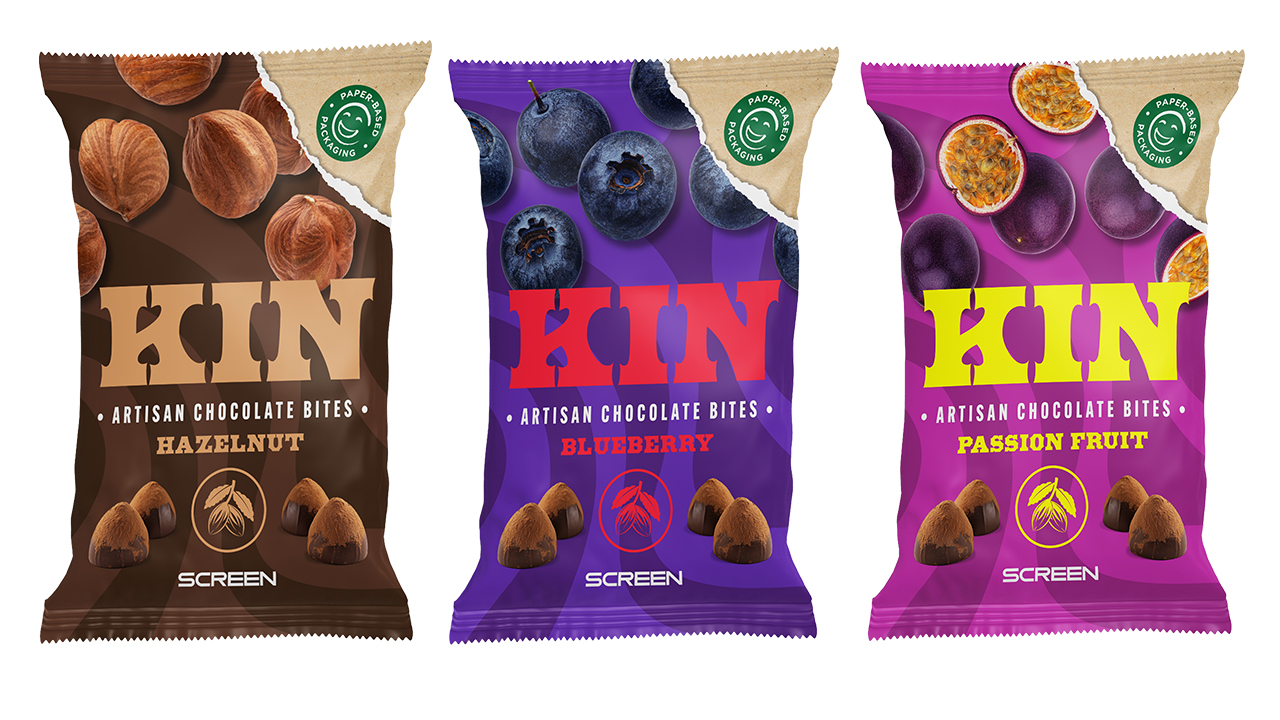
By focusing the PAC 520P on heat-sealable, recyclable paper substrates, Sacchital is also aligning its printing platform with its broader sustainability narrative: enabling the pack itself to join established paper recycling streams. At the same time, the print process uses water-based inks and avoids plate or cylinder waste.
According to Palaveri, the objective is not to react to market shifts but to ‘actively shape the transition’ toward packaging portfolios that are both competitive and genuinely eco-conscious.
A partnership to de-risk digital paper
For Screen, Sacchital’s installation is a showcase of inkjet’s expansion into flexible paper packaging, building on long experience in commercial and label printing. ‘This project represents a pivotal entry into a new segment, and we believe digital inkjet can lower entry barriers for converters exploring paper packaging by simplifying production and reducing waste,’ notes Yukiyoshi Tanaka, president of Screen.
The partnership is set up as a collaborative platform rather than a one-off machine sale. Sacchital and Screen plan to work together on new applications, supporting customers in shifting from plastic to paper and demonstrating how digital can future-proof their packaging portfolios in the face of regulatory and market change. For brand owners, that collaboration offers a pathway to experiment with new structures and designs without assuming all the technical risk themselves.
Redefining role in the value chain
Sacchital’s adoption of the PAC 520P crystallizes a broader repositioning of the group from converter to co-designer of packaging ecosystems. With five plants spanning extrusion, converting, gravure, flexo and now digital inkjet on paper, the company can engage earlier in customers’ development cycles, advising on material choices, print strategies and regulatory trajectories. Its capacity to deliver short-run, high-variability paper packaging within 48 hours is likely to pull it even closer to marketing and innovation teams, not just procurement departments.
‘Innovation is in our DNA,’ notes Palaveri, ‘but the PAC 520P installation shows that this is no mere slogan: it is a strategic bet that the intersection of paper, digital print and regulation will define the next phase of flexible packaging.’
For the labels and packaging community, Sacchital’s move offers an early glimpse of how converters may re-tool their plants, and their business models, to ensure that sustainability, performance and speed to market are no longer competing demands, but mutually reinforcing elements of the same value proposition.
Stay up to date
Subscribe to the free Label News newsletter and receive the latest content every week. We'll never share your email address.