artience and DIC set Japan’s first film recyclability protocol
Standardizing deinking and debonding evaluation to advance circular economy across Japan’s supply chain.
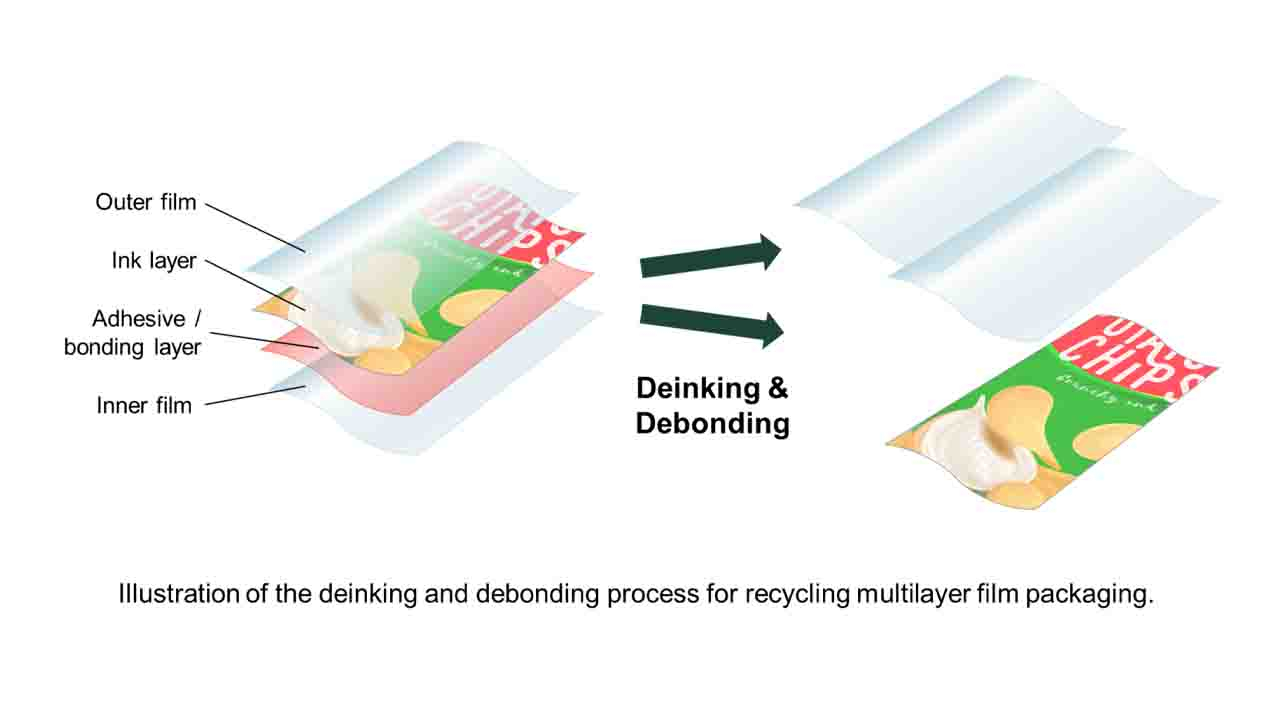
The artience Group, through its packaging subsidiary Toyo Ink Co and DIC Corporation have announced the development of the industry’s first ‘common industry protocol’ to standardize test procedures, evaluation criteria, and reporting formats for deinking and debonding in the material recycling of flexible film packaging within the Japanese market.
This protocol establishes a unified environment where stakeholders across the supply chain including converters, brand owners, and recyclers can evaluate and compare recyclability based on shared, domestic standards. By creating this common foundation, both companies aim to accelerate the circular use of flexible packaging and contribute to the realization of a circular economy.
In recent years, the importance of repurposing used plastics as resources has intensified due to fluctuating resource prices and rising geopolitical risks, with the Japanese government positioning the circular economy as a key growth strategy. Within the packaging sector, there is a mounting demand for product designs that facilitate easier recycling and for the expanded use of high-quality recycled plastics.
Flexible packaging, used extensively in food, daily necessities, and pharmaceuticals, provides superior functionality for content protection, weight reduction, and transport efficiency. However, because it is composed of multiple materials such as films, printing inks, and laminating adhesives—the processes of deinking (removing printed ink) and debonding (separating layered films) are critical for high-quality material recycling. Previously, Japan conducted these evaluations using proprietary test conditions and criteria, making it difficult to compare results across companies or materials. This lack of standardization hindered recyclability assessment during the design phase and complicated information sharing across the local supply chain.
Developed jointly by the artience Group and DIC, printing ink manufacturers, this protocol break down competitive boundaries to address Japan's unique recycling infrastructure needs. By pooling expertise in printing inks, laminating adhesives, and recycling technologies, the companies have established a standard consisting of three core elements:
Test Procedures: Clarifies equipment, test conditions, material handling, and operational steps to enhance reproducibility within Japanese testing environments.
Evaluation Criteria: Sets objective standards for assessing deinking/debonding efficiency and the resulting quality of recycled plastic.
Reporting Format: Standardizes test conditions and results into a unified format, facilitating smooth information exchange among domestic stakeholders.
Adopting this protocol offers significant benefits to the Japanese supply chain. For converters, it streamlines the selection of printing/processing conditions and materials that prioritize recyclability. For brand owners, it enables the selection of highly recyclable packaging materials based on objective, reliable data. For recyclers, it allows for the setting of appropriate processing conditions based on material characteristics, leading to improved recycled plastic quality.
The artience Group and DIC will continue to refine the accuracy and practicality of this protocol by incorporating insights from actual packaging materials and recycling processes in the Japanese market. They are committed to promoting a framework where recyclability can be discussed and evaluated across the entire domestic supply chain, from design and manufacturing to collection and recycling. Both companies invite industry stakeholders in Japan to adopt this protocol, aiming to establish it as the standard for recyclability assessment in the flexible packaging sector.
The two firms will showcase the new Protocol at their respective booths during Tokyo Pack 2026.
Stay up to date
Subscribe to the free Label News newsletter and receive the latest content every week. We'll never share your email address.