Esko CDI Quartz XPS ecosystem wins Innovation Award
The technology was recognized for combining next-generation imaging, advanced screening, LED exposure and intelligent automation.
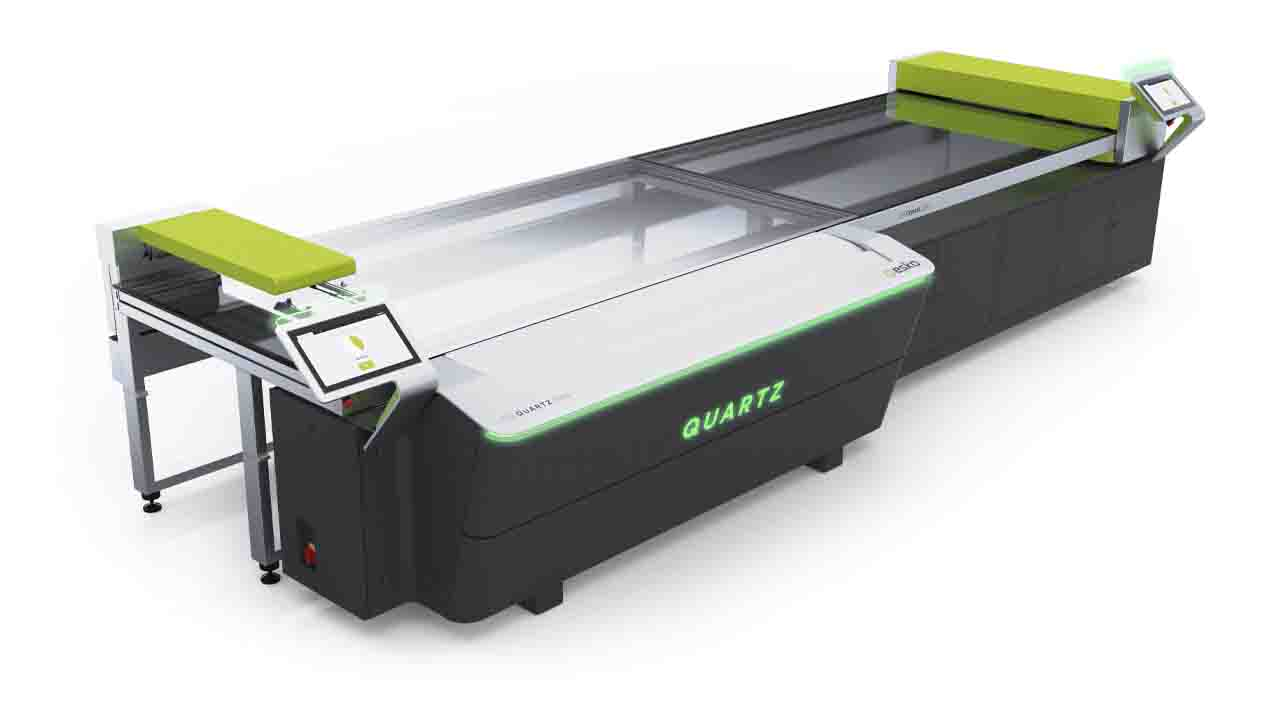
Esko has been named winner of the Innovation Award in the supplier category at the prestigious FlexoTech Awards 2026, with its CDI Quartz XPS ecosystem recognized for its contribution to advancing the flexographic printing process.
The Esko CDI Quartz XPS ecosystem was recognized for combining next-generation imaging, advanced screening, LED exposure and intelligent automation to deliver a new level of quality, consistency and efficiency in flexographic platemaking.
‘Winning this Innovation Award is a tremendous recognition of our continued focus on developing technology that makes a tangible difference for flexographic printers and tradeshops,’ said Jan De Roeck, director of marketing, strategy and industry relations at Esko. ‘With the Quartz ecosystem, we have taken flexographic plate imaging to a new level, combining breakthrough imaging technology, advanced screening and intelligent automation to deliver print quality that rivals gravure while retaining the productivity and flexibility that make flexography so valuable.’
Built on the proven Esko CDI and Crystal XPS platforms, the Quartz ecosystem introduces a new approach to plate imaging through next-generation optics, ultra-high-resolution imaging and proprietary Q-Cell surface technology. At the heart of the system is a newly developed optical platform capable of imaging at 4,000 ppi, almost twice the conventional industry standard. Combined with Crystal XPS LED exposure, this creates microscopic 2,000 lpi Q-Cell surface structures across solids and screening dots. Precisely engineered to optimize ink transfer at a microscopic level, these structures deliver smoother solids, cleaner highlights, improved tonal transitions and sharper fine detail.
‘Quartz is designed to optimize the complete plate production process, not simply one stage of it,’ said De Roeck. ‘The CDI Quartz imager, Crystal XPS LED exposure unit, Quartz screening software and Flexo Front End work together to automatically optimize imaging parameters according to plate type, substrate, anilox specification, press configuration and ink set.
‘This integrated approach delivers highly repeatable plate production and exceptional consistency from job to job, helping printers and tradeshops reduce process variability and achieve target print quality faster.’
Quartz provides two advanced screening modes tailored to different print requirements. Variable Highlight Q-Cells (VQ) are designed to maximize solid ink density while delivering exceptionally smooth vignettes and highlight reproduction, while Stochastic Q-Cells (SQ) extend tonal range for demanding high-definition graphics, supporting greater image fidelity and stability.
The technology also delivers measurable production benefits, with Quartz delivering solid ink density improvements of up to 0.7, virtually eliminating pinholes and dot bridging, improving barcode and reverse-text reproduction, and enabling ink savings of up to 20% through the use of lower-volume anilox rolls.
‘Quartz also supports water-based inks and premium print quality on increasingly demanding substrates, including materials containing high levels of post-consumer recycled (PCR) content,’ added De Roeck. ‘This combination of quality and production efficiency gives flexographic printers greater scope to meet evolving packaging requirements without compromising the inherent productivity advantages of the process.’
The ecosystem has also been designed to protect existing customer investments. The new optical platform maintains compatibility with established CDI imaging modes, including Crystal Screening and HD Flexo, allowing customers to adopt Quartz technology while retaining proven workflows.
The award entry was reinforced by commercial validation, which has demonstrated the impact of the technology in real-world production environments. European flexographic prepress specialists report improvements in process standardization, faster achievement of target print quality and output that rivals rotogravure.
‘Quartz represents a fundamental step forward in what flexography can achieve,’ said De Roeck. “For more than 30 years, Esko CDI technology has helped drive the evolution of digital flexographic platemaking. Quartz builds on that heritage while bringing together imaging, exposure, screening and automation in an integrated ecosystem.
‘The result is a new benchmark for quality, consistency and efficiency. We are delighted that the FlexoTech Award judges have recognized the innovation behind Quartz and its potential to advance the capabilities of the flexographic printing process,’ he said.
Stay up to date
Subscribe to the free Label News newsletter and receive the latest content every week. We'll never share your email address.