Editor’s note – consolidation
As end-user marketing budgets became ever tighter and product cycles shorter, inefficient print companies simply went to the wall, or were acquired by bigger groups, and the industry was forced to take on board new technology to increase efficiency and protect margins.
Like the old-style commercial print industry, the label industry is highly fragmented. When pressure-sensitive technology started taking hold in the 1970s and 1980s, label converting companies were formed at a blistering pace, started either by new entrepreneurs, or by press operators leaving established companies to start their own. This was driven by the high growth rates across the industry in the 1980s and 1990s and the novelty of pressure-sensitive labels for many end users, meaning all these small new companies could thrive. The entry cost for a basic letterpress or flexo press, new or second hand, was relatively low and there were plenty of well-trained operators to work them due to firmly embedded apprenticeship programs.
Today, we face a very different scenario. In developed markets pressure-sensitive growth rates are barely above two percent; end users have consolidated their buying operations on a regional and often on a global basis and squeezed converter margins; the cost of the most efficient converting machinery and surrounding workflow and ancillaries is far higher; run lengths continue to come down as product variation and shorter marketing cycles become the norm; and there is a global shortage of trained press operators.
In this situation, medium-sized converters have found it increasingly difficult to remain profitable. Not able to achieve the scale to compete with the large groups, they have been the principle acquisition targets of behemoths like CCL and Multi-Color Corporation. Even on a regional scale, we see the formation of groups – in L&L recently we covered Nuceria’s acquisition of Turin-based Appia, which is a perfect example of this trend.
To avoid this fate, mid-sized (in German, ‘Mittelstand’) companies need to specialize in multi-process workflows which add real value to end users, combining conventional or conventional/digital print and finishing processes which will form the core displays at Labelexpo Europe in September 2017.
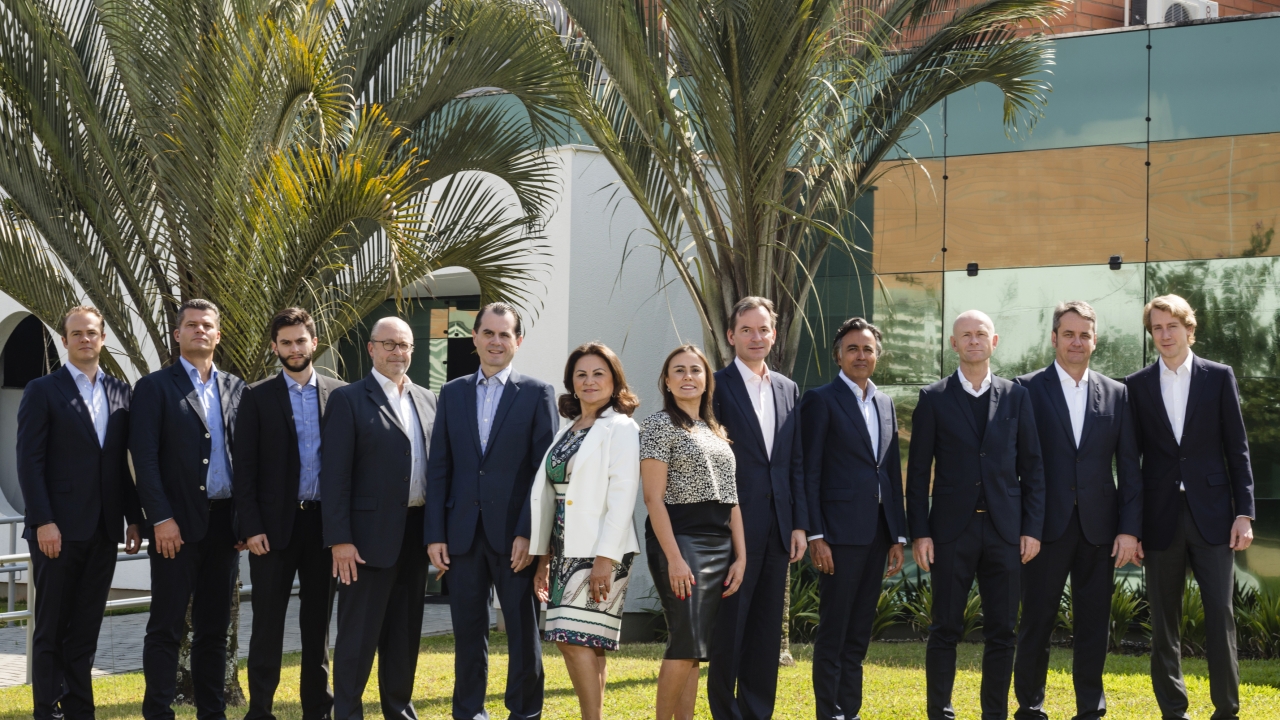
Into this mix comes the Rako, X-Label and Baumgarten merger, which opens up possible new models for consolidation.
These types of co-operative arrangements mean each company retains its own internal structure and cohesion and voluntarily puts into the mix the products and facilities which fit in with a commonly agreed group strategy. In theory this should avoid the disruption and culture clashes that often – though by no means always – accompany acquisitions.
Technology is pushing in a direction which supports such strategies. Secure networks allow the exchange of color-matched pre-press files and profiles, meaning jobs can be color matched on both conventional and digital presses at multiple print sites; MIS packages allow managers to move work between sites and to obtain real-time feedback for planning purposes. On this topic, I recommend reading Mike Fairley’s exciting look at the future of automated production, ‘Automate to survive’.
And what about the other end of the spectrum – the small converting operation (up to five million USD turnover)? All the signs are that despite the profitability challenges facing the industry, companies at this scale which are prepared to invest continue to thrive, being small enough to service local label buyers and flexible enough to switch production rapidly between short product runs, as well as filling niches as industry-only suppliers.
Charles Darwin correctly noted that it is not the strongest that survive – but the most adaptable. It will be fascinating to see which models allow label converters to survive and thrive in the next 10 years.
This opinion article featured in the L&L Yearbook 2017, available to read online here
Stay up to date
Subscribe to the free Label News newsletter and receive the latest content every week. We'll never share your email address.