US converter panel looks to future
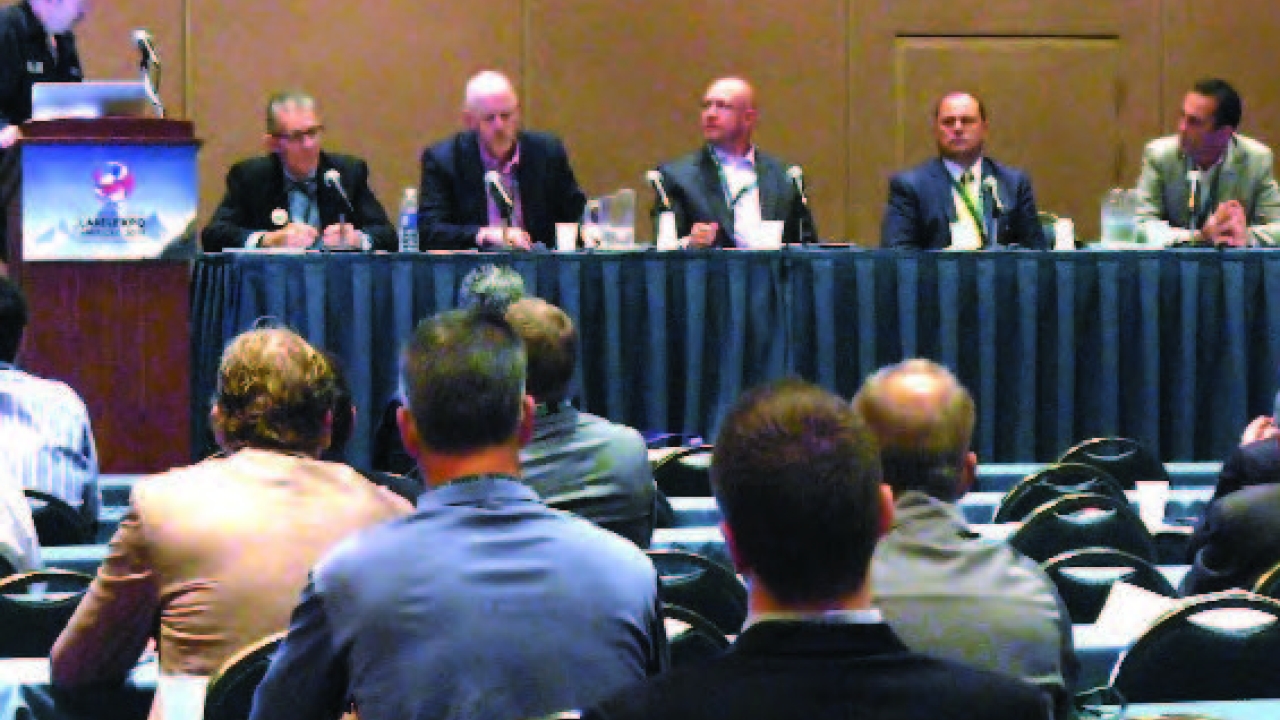
Top package print and label converters from across the US took part in a key panel session at Labelexpo Americas. Executives from a diverse group of companies, including small and large label converters, flexibles and folding carton held the attention of the audience. The panel members were Micheal Lane, CEO Lofton Label; Tom Carroll, president, The Labeltape Group; John McDowell, president, McDowell Label; Thomas Tyndall, Vice President, Eagle Flexible Packaging; and Ed Wiegand, Executive Vice President, The Matlet Group.
I was happy to moderate this expert group and have pulled together a selection of what was discussed. The group looks to remain relevant as the converting business continues to evolve.
A significant trend is converting multiple materials on the same press line, as brand owners shift products rapidly between packaging formats. John McDowell said the market is too fluid to dedicate certain presses to certain types of work, and job planning is entirely customer-driven.
Materials trends include a shift in demand towards flexible packaging and a significant growth in shrink sleeves. Micheal Lane, CEO Lofton Label, pointed out how changing perceptions of the recyclability of shrink sleeves could still derail this product category, and a lot of work is going into this issue from film suppliers. Narrow web converters looking to enter the flexible packaging market were cautioned about the whole new world of compliance they would face when converting direct food contact containers.
Digital print proved to be a topic of great interest to the audience. Ed Wiegand told delegates how digital has transformed cartons since the installation of an HP10000 – a machine not intended for the carton market but which showed the ‘huge pent up demand’ for short run variable imaging in this traditionally conservative market.
Tom Carroll gave the perspective of the smaller converter on the process of adding digital capacity, where the investment decision represents a major risk. The panel agreed that one of the principal benefits of acquiring a ‘digital culture’ was in knocking out waste from other parts of their business.
Explained Michael Lane: ‘you suddenly find you have these “white” areas which are jobs waiting to be processed, and you start to fill these in through your business.’ Customer expectations are also dramatically influenced by digital, when they start asking for shorter lead times across the business.
Stay up to date
Subscribe to the free Label News newsletter and receive the latest content every week. We'll never share your email address.