Smithers report examines e-commerce packaging
The global e-commerce packaging market is predicted to top 105 billion USD by 2031.
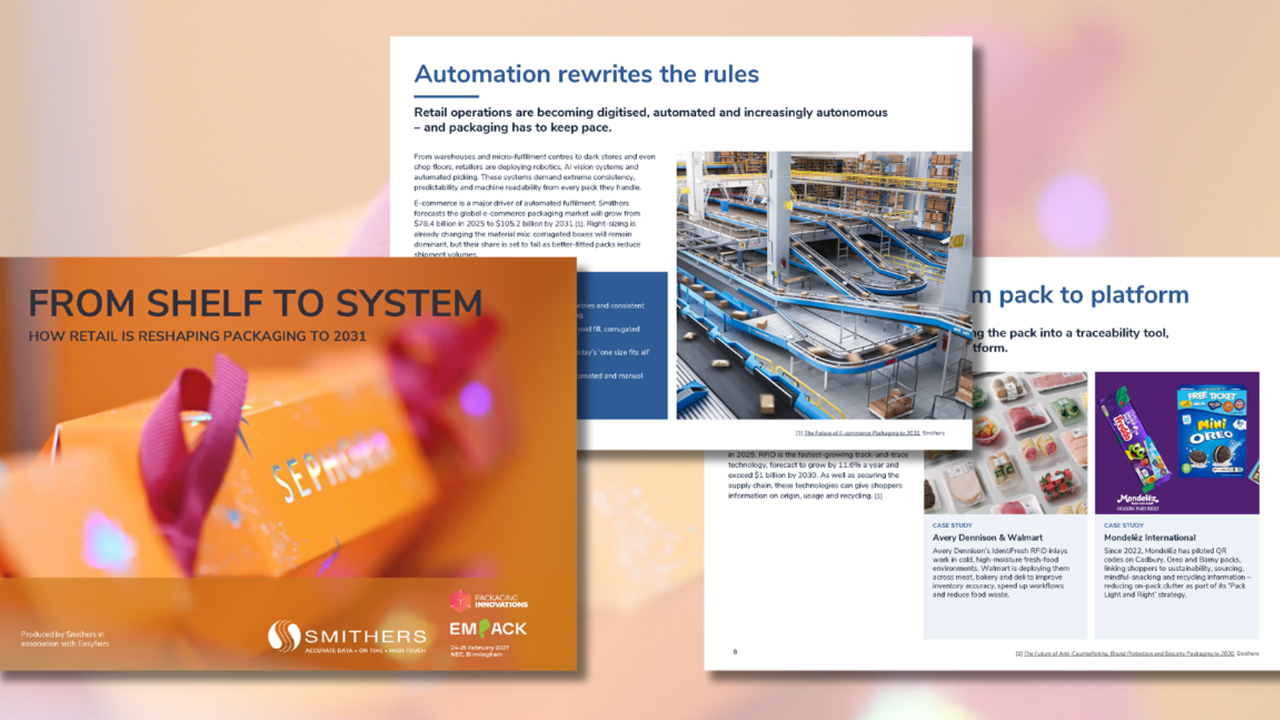
The global e-commerce packaging market is forecast to grow from 78.4 billion USD in 2025 to 105.2 billion USD by 2031, as automation and changing retail models transform packaging requirements, according to a new Smithers report produced for Packaging Innovations & Empack 2027.
Titled 'From Shelf to System: How Retail Is Reshaping Packaging to 2031', the research reveals how packaging is becoming integral to retail operations, moving beyond product protection and presentation to support automated fulfillment, digital traceability and supply chain efficiency. With global retail sales forecast to reach 35.1 trillion USD by 2031, growing at an annual rate of 3.1 percent, the pressure is on packaging suppliers to deliver greater value across the entire supply chain.
Automation is already rewriting the rules of packaging design. As retailers invest in robotic picking, AI-enabled inventory systems and automated fulfillment, packaging must become more consistent, machine-readable and compatible with high-speed handling. Right-sizing technologies are already reducing material consumption and shipping costs, with retailers reporting reductions of 30 to 40 percent in cubic shipment volumes. Technologies such as those developed by AutoStore and Packsize demonstrate how automated box production can improve fulfillment efficiency. Corrugated will remain the dominant e-commerce packaging material, although its share is expected to decline as more efficient formats gain ground.
Smart packaging is also becoming part of retail's digital infrastructure. Smithers values the track-and-trace segment of anti-counterfeiting and brand protection packaging at 1.79 billion USD in 2025, with RFID forecast to grow by 11.6 percent annually and exceed 1 billion USD by 2030. Walmart is already deploying Avery Dennison's RFID technology across fresh-food categories to improve inventory accuracy and reduce waste, while Mondelēz International has piloted QR-enabled packaging across brands including Cadbury and Oreo to communicate sourcing, sustainability and recycling information.
Regulation is also turning circularity into a commercial imperative. Mono-materials already account for 81 percent of flexible plastic packaging, according to Smithers, and are forecast to grow faster than multi-material alternatives through to 2031. Molded fiber packaging is also expected to grow by approximately 4.1 percent annually, driven by Extended Producer Responsibility (EPR), the EU's Packaging and Packaging Waste Regulation (PPWR) and consumer pressure. The report highlights AB InBev's plastic-free Leffe multipack, developed with Graphic Packaging International to run on existing machinery without additional capital investment, as an example of sustainability innovation delivering practical operational benefits.
Meanwhile, rising material costs, longer payment terms and increasingly complex logistics are placing greater pressure on packaging suppliers. The research suggests that businesses able to reduce costs across the entire retail system, improve automation compatibility and strengthen supply chain resilience will become increasingly valuable partners.
'We've spent years asking how to make packaging better. Retail is now asking a different question: how can packaging make the entire system work better?' said Josh Brooks, divisional director – packaging at Easyfairs.
He continued: 'A pack might use less material, but if it slows production, increases damage in transit or adds costs to fulfillment, where is the real saving? That's the challenge this research brings into focus. The next generation of packaging innovation will be measured by its contribution to the entire system, from manufacturing and distribution to the consumer and beyond. The businesses that can demonstrate that value will be the ones retailers increasingly turn to.'
These findings will help shape discussions at Packaging Innovations & Empack 2027, where the theme Innovation in Practice will explore how packaging businesses can translate technological advances, regulatory requirements and sustainability ambitions into measurable commercial results.
Packaging Innovations & Empack 2027 takes place at the NEC Birmingham on February 24 and 25, bringing together more than 500 suppliers and an expected 8,000 packaging professionals.
Stay up to date
Subscribe to the free Label News newsletter and receive the latest content every week. We'll never share your email address.

