Report maps path to flexible plastic recycling
Advanced mechanical recycling can deliver 30 percent recycled content for labels and shrink films.
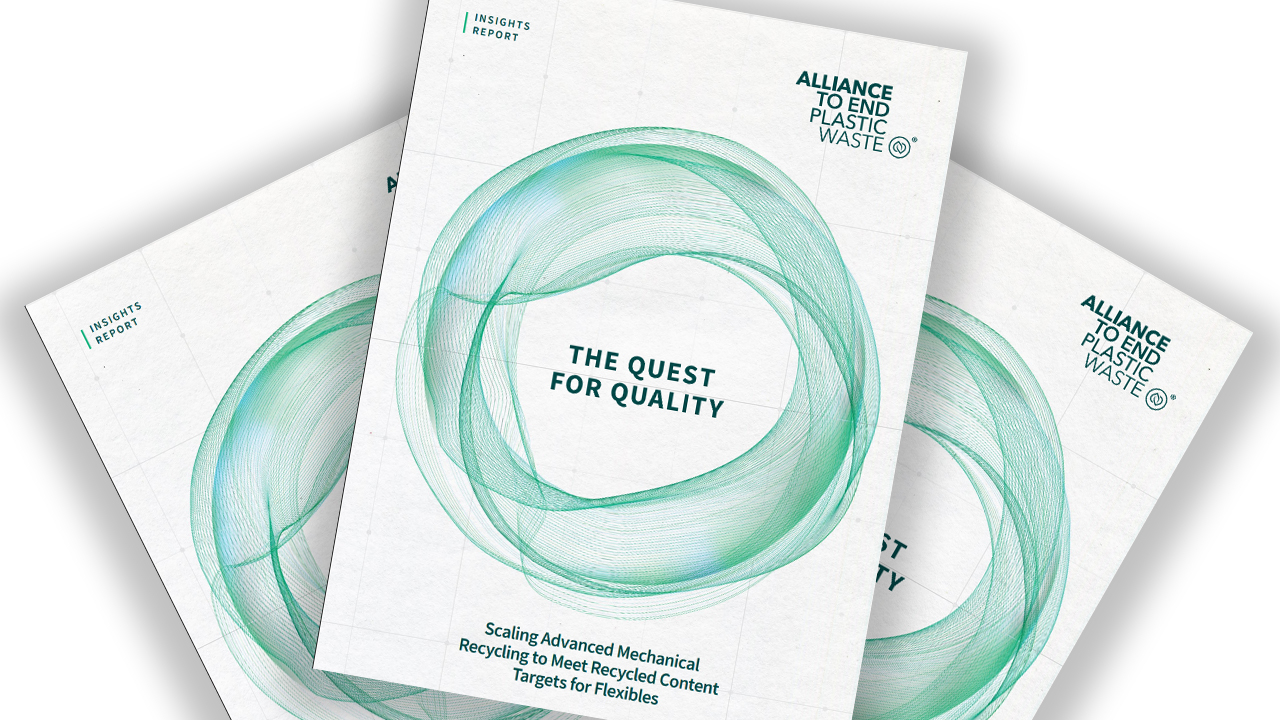
A new report from the Alliance to End Plastic Waste has found that advanced mechanical recycling of post-consumer household flexible plastics can produce recyclates suitable for 30 percent or more recycled content in demanding film applications, including shrink films, labels and pouches, using existing sensor-based sorting, hot-washing and double-melt filtration systems.
The report, The Quest for Quality: Scaling Advanced Mechanical Recycling to Meet Recycled Content Targets for Flexibles, provides a technical and economic assessment of a 50,000-ton-per-year advanced mechanical recycling plant and identifies conditions needed to scale these processes commercially ahead of the EU Packaging and Packaging Waste Regulation mandate for 35 percent post-consumer recycled content in non-food packaging by 2030.
Key findings indicate that chemical recycling will complement, rather than replace, advanced mechanical recycling, with each targeting different fractions of the flexible plastics waste stream.
The report identifies systemic enablers required to make the business case viable, including Extended Producer Responsibility schemes to fund collection and sorting, mandated recycled content targets to drive demand and access to concessionary capital. It also recommends brownfield site upgrades over greenfield construction, and shifting complex sorting upstream to centralized plastics recovery facilities, to reduce capital costs.
'The technology needed to produce high-quality recyclates already exists. The challenge now is scaling these solutions commercially through stronger alignment across the value chain,' said Jacob Duer, president and CEO of the Alliance to End Plastic Waste.
The report is based on learnings from the ValueFlex project, launched in 2022 by the Alliance, CEFLEX, Roland Berger and HTP Engineering. Although the planned facility was not built due to changing macroeconomic and policy conditions, the project generated technical and economic data that is now made publicly available through the report.
Stay up to date
Subscribe to the free Label News newsletter and receive the latest content every week. We'll never share your email address.