A window of opportunity for low migration UV inks and LED curing technology
Changes in legislation and pressure from environmentalists, guardians of health and safety, from print buyers and from within the packaging industry itself have made the development and use of low migratory ink an important subject for discussion.
Low migratory UV inks, coatings and adhesives are being formulated to tackle the potential risk of packaging inks, coatings and adhesives contaminating the product contained within, affecting texture, taste, odor and the health of consumers. Ink additives and other components migrate by at least two recognizable routes, diffusion and set-off. Migration by diffusion occurs as a result of minute molecules traveling to and across packaging layers. Set-off migration can occur as a result of a surface printed layer coming into contact with a non-printed layer.
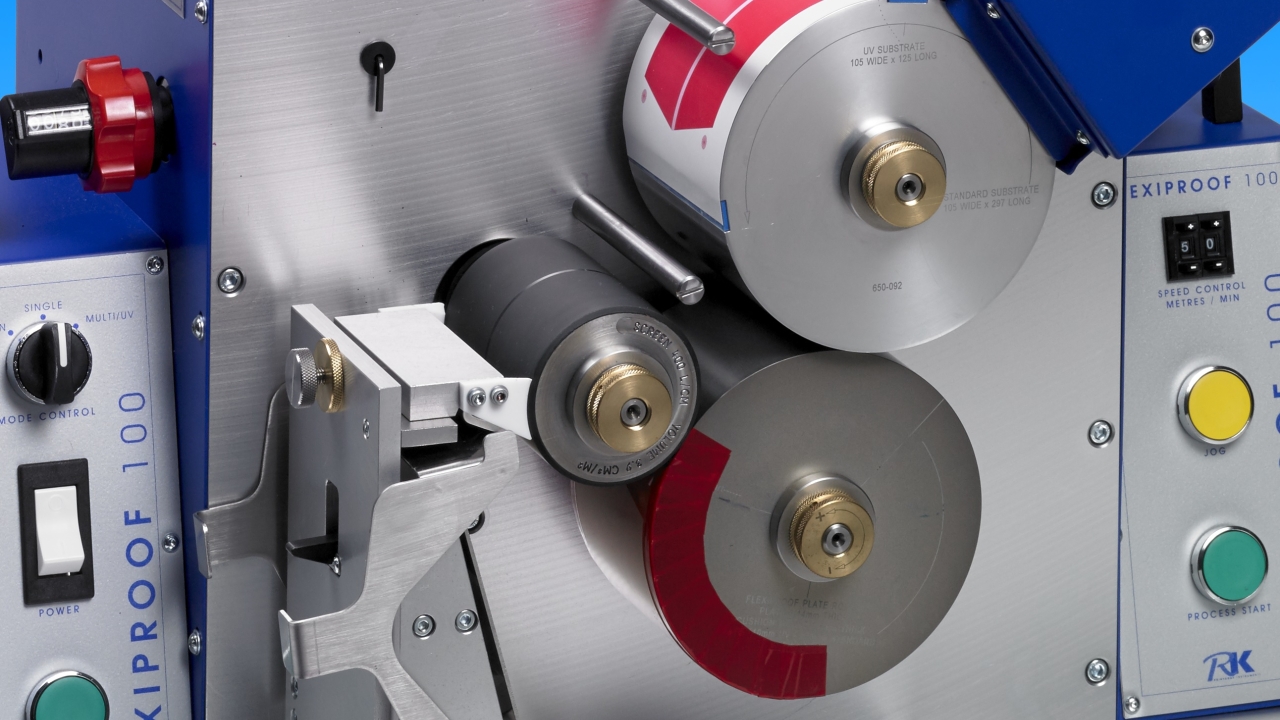
Inks must be cured sufficiently before a product is wound up, transported and stored, prompting interest and development in systems/components that enhance productivity and quality such as UV LED lamps, which offer minimal heat/energy transfer to the substrate with a broader range of heat sensitive substrates able to be cured, and pre-press color communication devices such the FlexiProof UV LED proofing system.
Many industry professionals associate the need for low migratory UV inks solely with food products but in actual fact product categories include pharmaceuticals, beauty and grooming products, baby and childcare, beverage items and tobacco. The successful implementation of low migratory UV LED cured inks, coatings and adhesives is at this point in time looked upon as being very much a team effort involving supply chain providers, printers/converters, customers, etc. Quality control procedures, good housekeeping and open dialog are essential.
Breakthrough developments seldom take place in isolation or indeed take place overnight. Benchmark testing and a better understanding of light manipulation technology together with pre-press support have made implementing UV LED curing possible. Prototyping and pre-press trialling are set to assume even greater importance as the ideal time to pick up on performance issues associated with ink such as gloss, printability, scuff resistance, chemical resistance, durability is at the pre-press stage prior to commercial commitment.
UV LED integrated in with the FlexiProof tool operates within a relatively narrow part of the UV spectrum and output is tailored either at 385 or 395 nm wavelengths. An additional benefit of the integrated FlexiProof UV LED is that pin holing and other defects are easily detectable reinforcing the device’s role as a quality control tool. Conventional UV conveyors are unable to detect pin holes because as the proof is taken from the conveyor chemical changes take place that make pinhole detection difficult or impossible to detect.
Read an inks market update in L&L issue 1, 2017
Stay up to date
Subscribe to the free Label News newsletter and receive the latest content every week. We'll never share your email address.