Advent calendars: Packaging an experience
Advent calendars have evolved from a holiday tradition into a powerful marketing tool.
For as long as I can remember, the de facto date for putting up holiday decorations was the day after Thanksgiving. However, recently, some people apparently bumped that up to the day after Halloween, immediately swapping their orange-and-black for red-and-green.
While I don’t have a hard and fast rule (I celebrate Hanukkah, so our date changes every year), I do know that the anticipation of the holidays is at least half the fun.
Gerhard Lang, a German printer from the early 1900s, understood this better than anyone. Lang was the first to create a printed Advent calendar. He was inspired by the homemade one his mother made when he was a child, a rough-hewn piece of cardboard with 24 pieces of candy taped to it. Lang took his countdown calendar a step further, designing 24 little doors that opened to reveal hidden treats.
Benefits
Advent calendars have come a long way since then. Today they include a sleighful of creative and complex designs, and the hidden treats range from chocolates to candles to cosmetics and even beer and dozens of other items. Brands from nearly every product category are all-in on the advent action. And it’s easy to see why; the calendars accomplish a multitude of brand goals:
• They build anticipation for the holidays (of course).
• They create a memorable, tactile experience through thoughtful packaging.
• It’s a festive way to offer samples and trial sizes to customers, whether they are loyal fans or new customers who may fall in love with the products and start buying them.
• The logo’d calendar has a premium spot in the home for 25 days, and the user is thinking about your brand every single one of those days. It’s hard to buy that kind of consistent visibility.
• The brand becomes part of a daily ritual leading up to Christmas. Whether you are 5 or 85, it’s exciting to open something new every day.
• When done right, the design allows brands to tell their story, whether it’s one of whimsy, luxury, quality, purpose or simply fun. Some brands even extend their content around their mission (as you’ll see below with the first one I’ve highlighted).
• The products are bundled, so consumers feel they are getting a lot of value for the price.
• Many are pieces of art, with gorgeous structures and beautiful materials.
• They typically don’t feel over-packaged, partly because they’re gifts. Brands can use embellishments, foil stamping and the highest-quality paperboards, and it’s all in keeping with the theme of the holidays.
• Many brands’ advent calendars support the ‘reuse’ element of sustainability. With tiny drawers and compartments, people often save them to store small items or even jewelry, further extending brand visibility.
• They lend themselves to a fun unboxing experience. For social media influencers and enthusiasts, Advent calendars offer 25 days of content, with real-time reveals of what’s behind the doors, drawers or flaps each day leading up to Christmas. Brands relish that kind of positive, unpaid promotion.
Real-world examples
While Advent calendars may have leaned initially toward the religious, today’s Advent calendars have such broad and commercial appeal that I eagerly await the new releases from my favorite brands and look for unique, new entries into the category. With that in mind, I thought I’d share several of the Advent calendars I admire most and what makes them standouts in design, packaging, brand extensions, interactivity and more.
Tony’s Chocolonely
Last year, I found the giant countdown calendar from Tony’s Chocolonely in my local grocery store. The size alone makes it a standout; the price makes it easy to gift (about 20 USD); and the chocolate bar samples make it delicious. The calendar aligns perfectly with the brand’s sustainability and quality reputation. It’s a corrugated package with a litho‑laminated coated sheet, allowing for 4-color process for the brand’s recognizable bright colors.
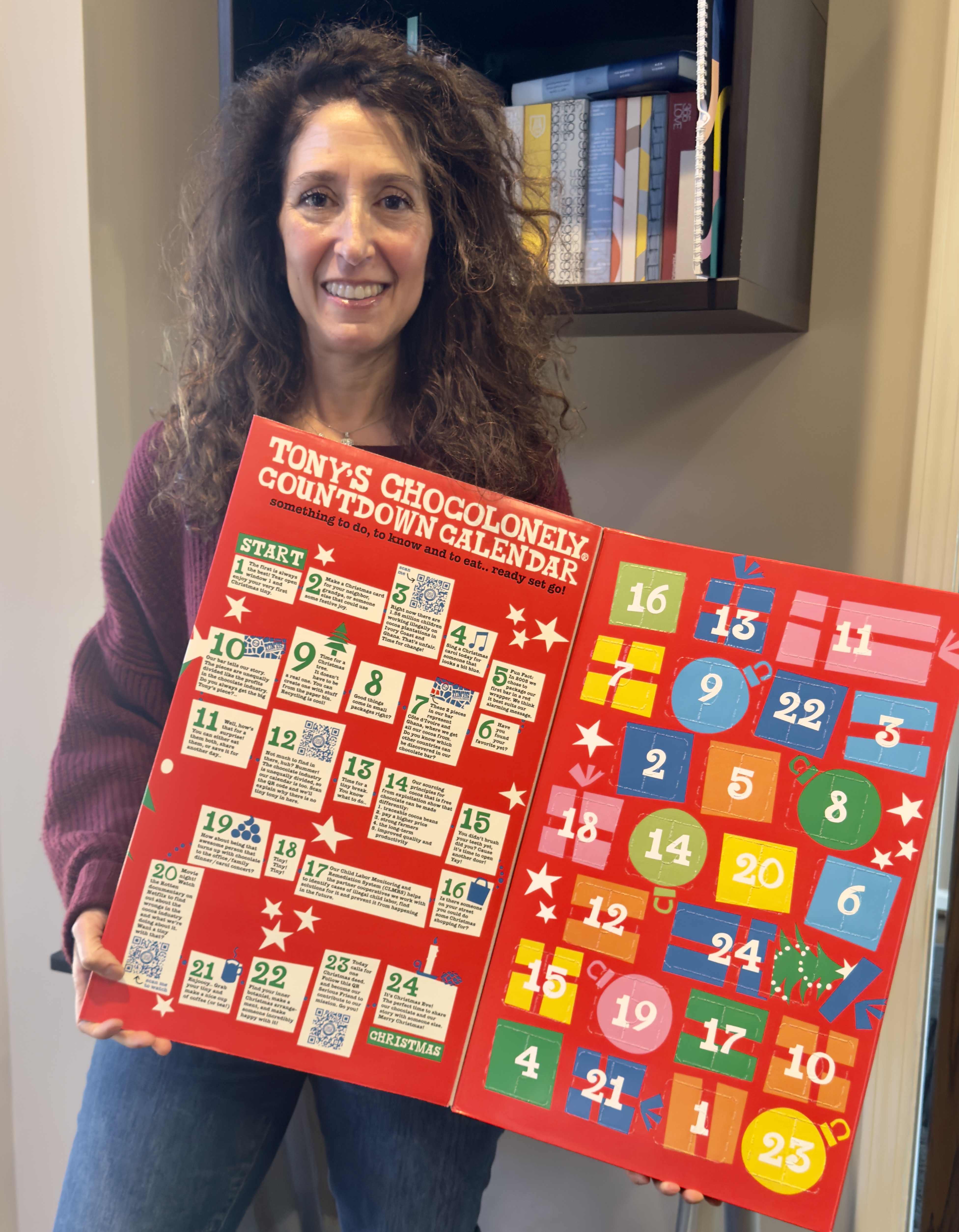
The daily doors are perforated, and the whole thing is super sturdy, so it doesn’t get dinged up. You can put it in your grocery cart or even mail it without fear of it getting ruined. Sometimes miniature things are really cute, sometimes huge things are really cute, too. Either way, I love the uniqueness of this out-of-scale packaging.
Tea Forte
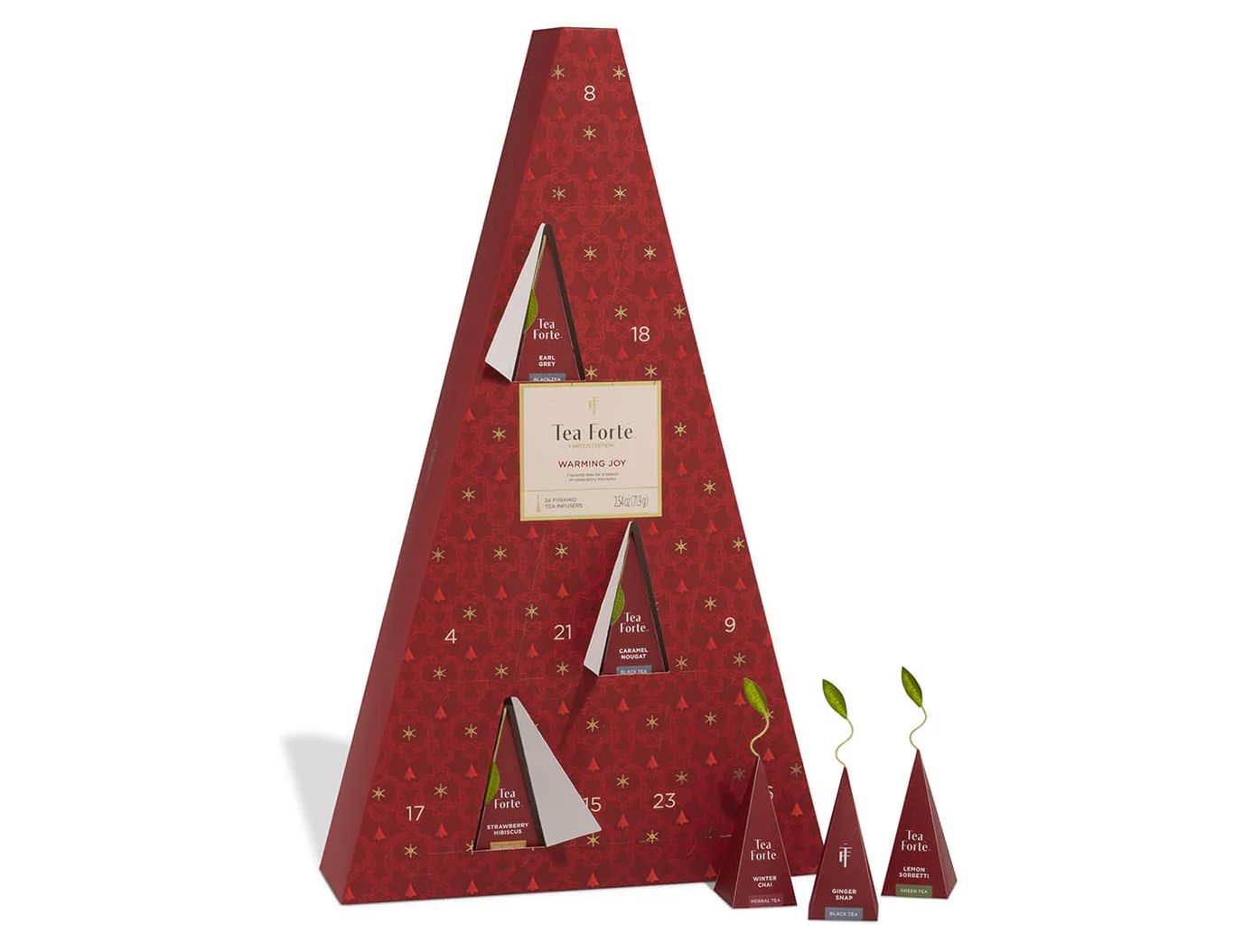
For a designer who loves tea, Tea Forte’s Advent calendars are made for me. First of all, the packaging itself doesn’t even look like a calendar. Instead, it emulates the unique shape the brand is known for, a three-dimensional pyramid. The Advent calendar is a simple, oversized version of that pyramid, where each numbered door flap — and the single-serving tea sachet hidden inside — also mimics the triangular shape. And the artistry! The calendar designs range from vivid watercolor fl orals (one of their long-time partnerships is with the New York Botanical Garden), to a white-and-gold winter wonderland, to a festive ruby-and-green, tree-shaped box.
Diptyque
If you’re serious about Advent calendars, you’re going to love this one from Diptyque. In fact, it’s hard to call it a calendar, because its book-like structure, original holiday tale, luxury ‘treats’ and extraordinary media elements really put it in a class of its own. First, the design: It opens like a book with gilded-edged pages; inside is a beautifully illustrated setting of an imaginary Parisian bookshop. Behind the colorful images are working drawers, where a cat appears and disappears as it leads you through a magical story of wonder.
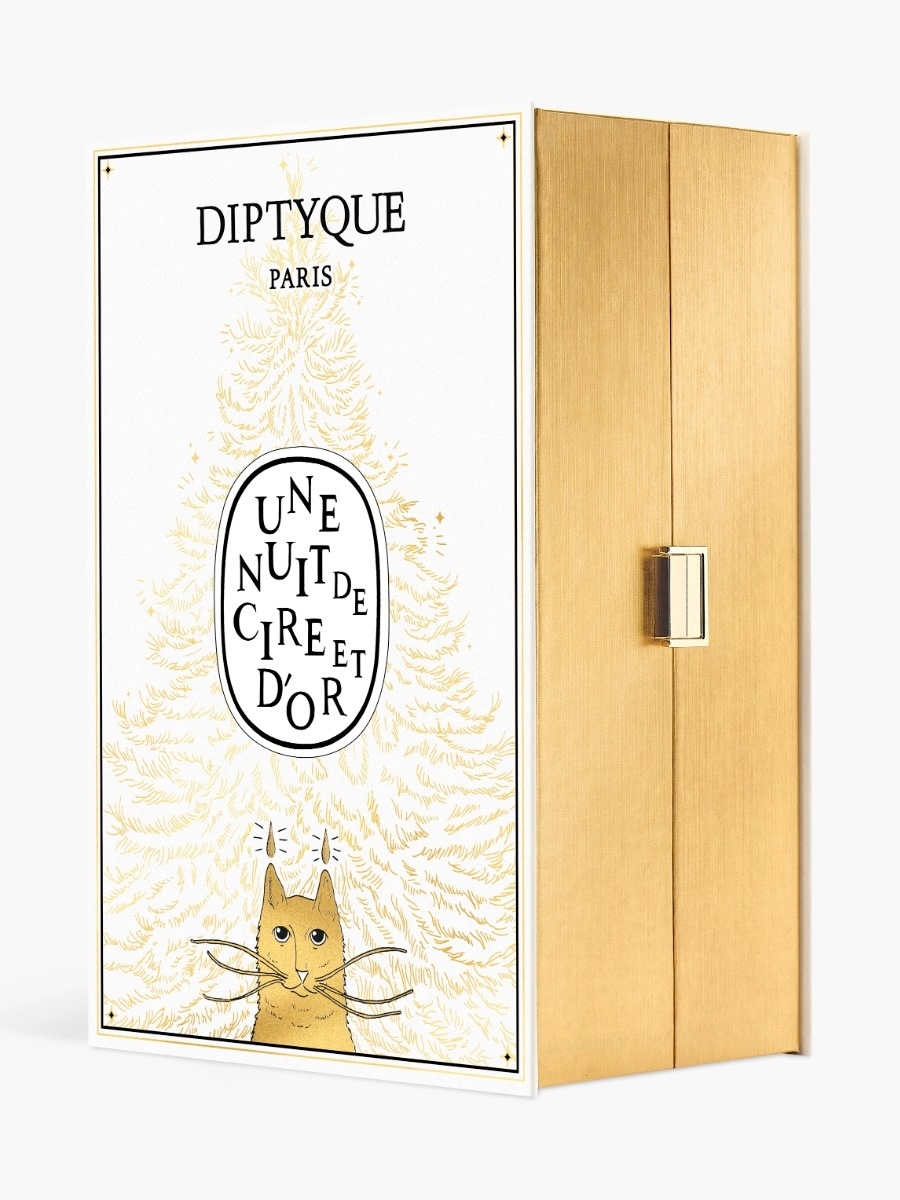
From a brand perspective, Diptyque makes the most of the daily interaction that countdown calendars are known for, creating a luxurious, memorable, multi-dimensional experience. From a sustainability perspective, the Diptyque Advent calendar is sourced from sustainably managed forests, and this is surely one of those packages that people will save, share online and reuse to store their own trinkets and treasures.
High-end chocolate packaging design
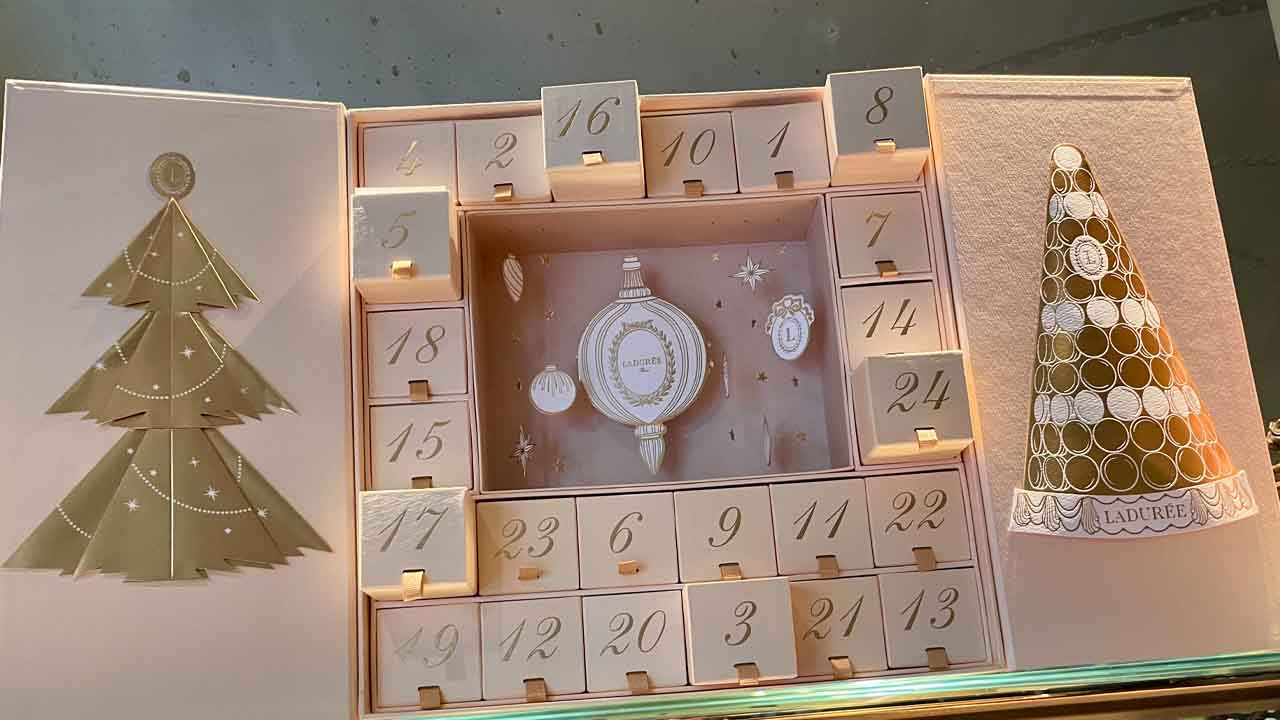
Is it obvious that I really love chocolate? When I was in New York last year, I popped into a high-end boutique chocolatier to see this Advent calendar up close. It features a rigid box wrapped in an uncoated stock. It’s a ‘jewelry box’, but instead of earrings and necklaces, the drawers contain tiny, beautiful chocolates.
Benefit Cosmetics
If you step inside a cosmetics store or department during the holidays, you will likely see dozens of branded Advent calendars in all shapes and sizes, colors and materials, housing everything from lipsticks to nail polishes to perfumes. This one from the popular brand Benefit is called the ‘Glam Cube’ calendar. Like some of the others I’ve shared, Benefit’s Advent calendar packaging dives deep into the user experience, with a Rubik’s Cube-style puzzle that actually twists and turns.
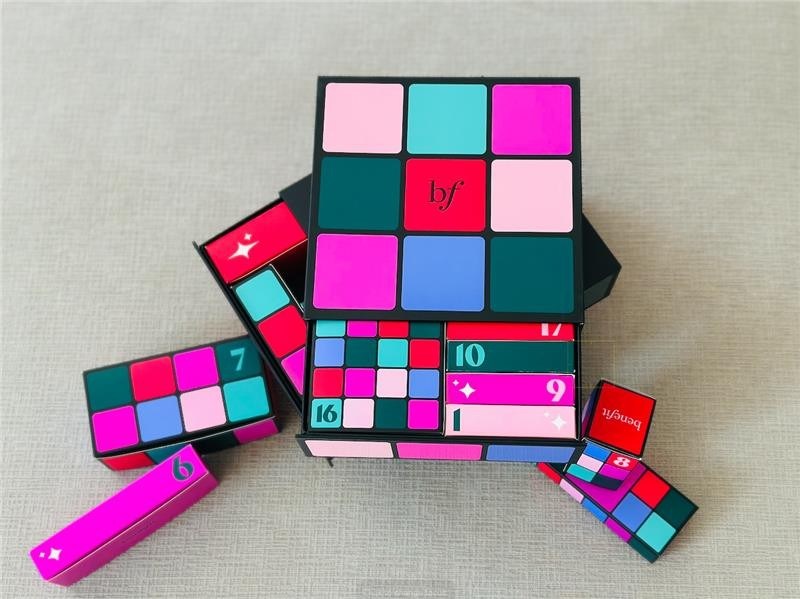
Each time you twist the cube, you reveal more cartons, each containing 24 beauty products. What I love about this calendar is that Benefit has created a seamless omni-channel experience by integrating the packaging with its website and social media platforms, with fun unboxing shorts that show how to ‘win’ the game or how fast people can ‘solve’ it.
City Brew Tours
I know it might be a stretch to call this an Advent calendar, but City Brew Tours has boxed up beer in a fun, interactive way, offering a craft beer for each of the 12 days of Christmas or the eight days of Hanukkah. Behind each numbered compartment is a surprise craft beer, with festive gifts sprinkled throughout.
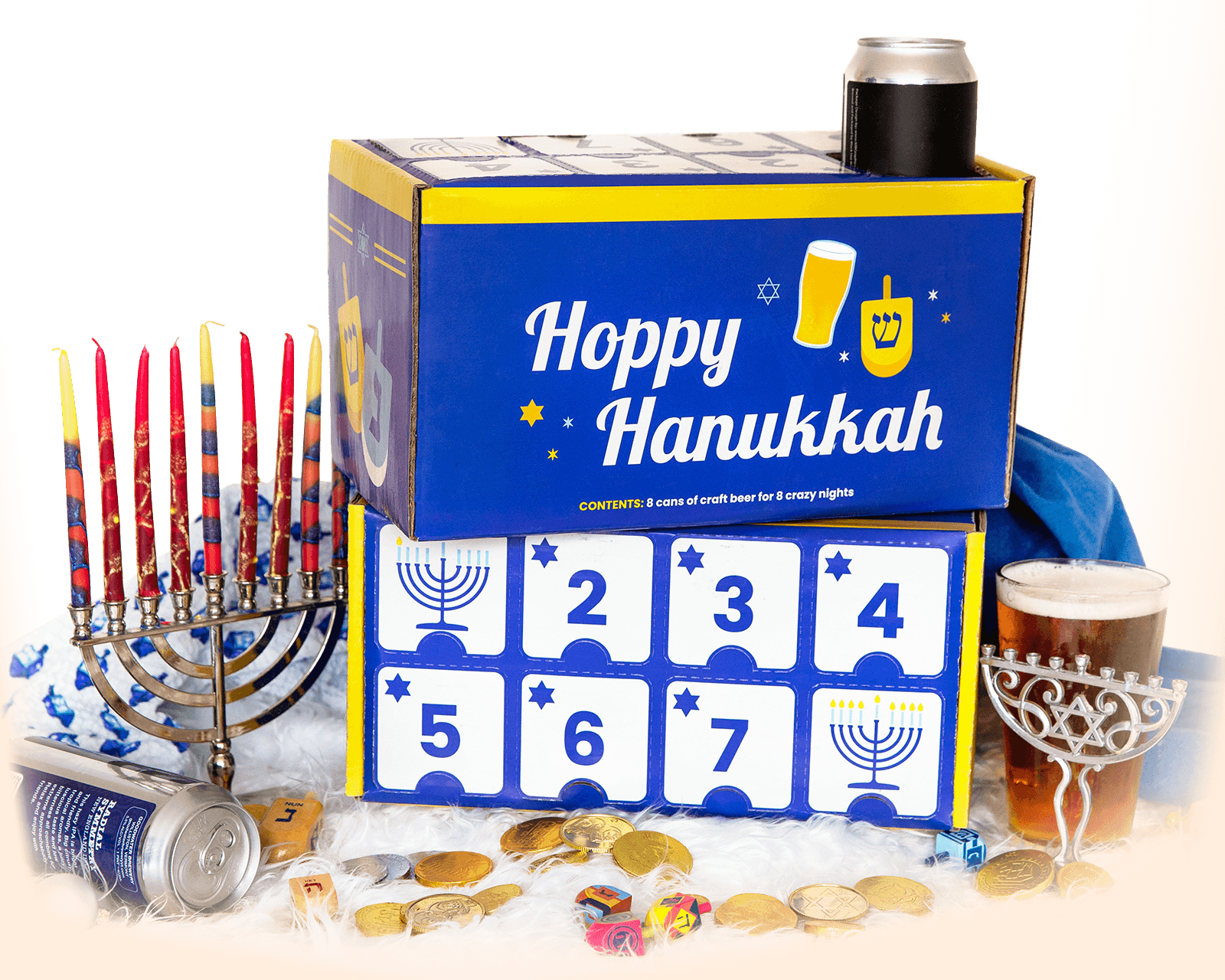
The packaging is what you would expect from a case of beer: corrugated with a litho-lam, with 4-color printing and perforated access, plus a bit of holiday humor. To complement the brew experience, City offers livestream virtual tasting parties for an immersive experience that clearly understands its fanbase and target audience. Whether this is a holiday calendar or a clever 12-pack, I applaud any brand that creates holiday bundles authentically connected to its community. Holiday exclusives like these are a proven way to cultivate loyalty, offer new tastes and fun experiences and create a higher ROI on products specifically packaged for the holidays.
Refashioning a Famous Industry Quote
From a print packaging perspective, Advent calendars are enticing because of the tactile, interactive experience they offer. The physicality of opening a new compartment for 25 days or nights offers memorable sensory moments that not only build anticipation it encourages social sharing and builds relationships with the brand. While marketers focus on strategies each holiday season to attract new customers and entice loyal fans, designers develop concepts and structures that engage those customers. Converters then ensure the interactive packaging is of the highest quality, befitting the brand, from the sturdy substrates that support the construction to the printing and haptic finishes that dazzle. Our packaging creator ecosystem helps ensure these incredible holiday calendars are saved, shared and repurposed as keepsakes.
In our industry, we often quote graphic designer Saul Bass, who famously said in a March 1985 Los Angeles Times article, ‘Packaging is the product.’
However, in the case of Advent calendars, I think packaging actually goes beyond the product. People aren’t buying the package just to get to those surprises inside; they are just as interested in the experience of opening the flap, door or drawer; in the anticipation of the surprise, and in the fun, daily ritual. So, when it comes to countdown calendars, I’d say that packaging is the experience.
Stay up to date
Subscribe to the free Label News newsletter and receive the latest content every week. We'll never share your email address.