Unpacking Future of Pack
A two-day collaborative brainstorming retreat, hosted by Omet, Future of Pack, brought together brand owners and packaging manufacturers to discuss the future of packaging.
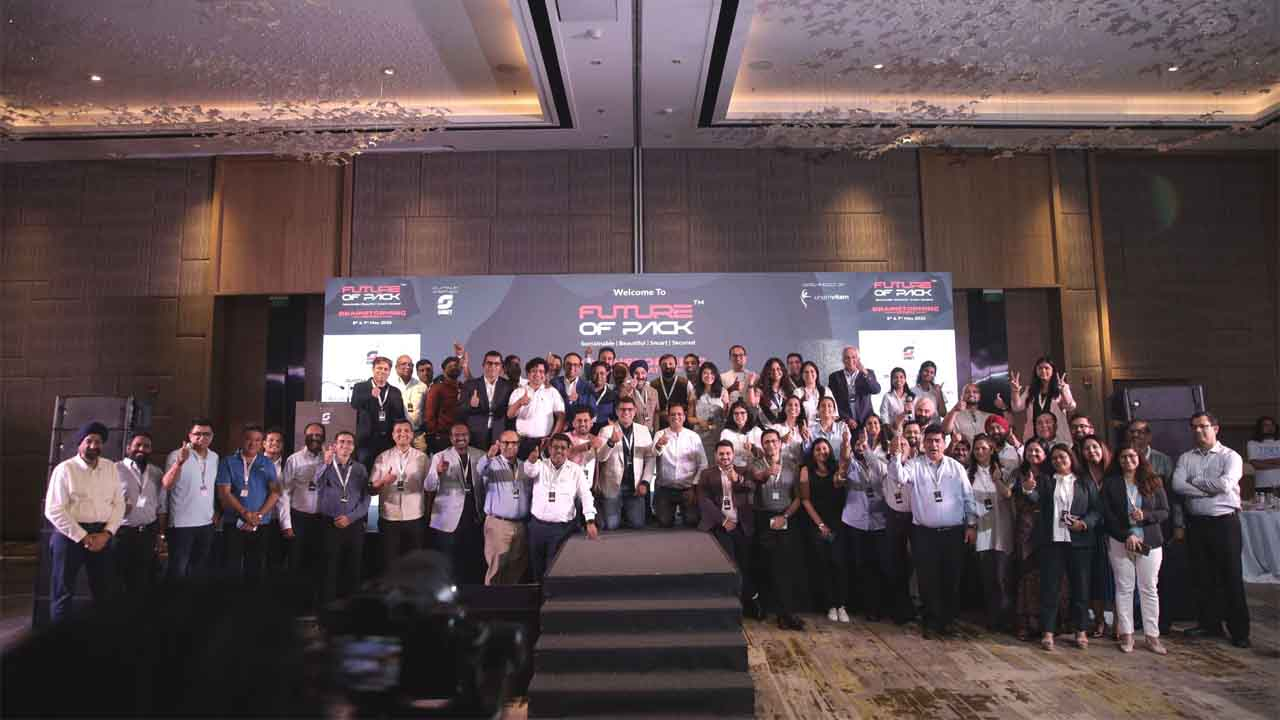
The recent Future of Pack event that took place at Aravali Marriott Resort & Spa in Faridabad, Delhi NCR, on May 8 and 9 was attended by more than 40 brands. The event explored key challenges around sustainability, regulation, packaging and label technology infrastructure, consumer expectations and collaboration across the packaging value chain.
Through discussions and workshops led by companies including Omet, Avery Dennison, UPM, Holostik, Kurz and Zircon, attendees explored packaging innovations and emerging technologies shaping the future of the industry.
Harveer Sahni, chairman, Weldon Celloplast, commented: ‘Pawan and I wished to create a platform for “Future of Pack”, which was not a regular stage and audience event, where speeches are made from a stage, and the questions to the audience are largely met with silence. I am happy we created this very interactive platform, brainstorming at the same level in an open-mic format with those geniuses who define the future of pack and solution providers who deliver capability in innovation, beautification, security, smart and sustainable packs. This endeavor is now recognized as the path to future. Pawandeep Sahni has been outstanding in keeping the packaging fraternity thoroughly engaged and moving within their midst to create a collaborative session.’
Industry transformation
The event began with discussion on the industry’s transformation over the last two years. Attendees noted that the packaging industry has undergone significant changes, evolving from a simple protective container to an integral part of the consumer experience and brand engagement journey. Today, packaging acts as a digital touchpoint, enabling brands to connect directly with consumers through technologies such as QR codes and NFCs that enhance interaction and storytelling.
Brand owners are increasingly adopting a consumer-centric approach, focusing not only on aesthetics but also on functionality, convenience and emotional connection. The speed to market has also accelerated, driven by new decoration technologies and the growing need for rapid product launches. At the same time, sustainability has moved to the forefront, with consumers becoming far more aware of environmental impact and pushing brands toward minimal, responsible packaging. This shift is particularly influenced by Gen Z consumers, who value sustainability, authenticity and minimalist design.
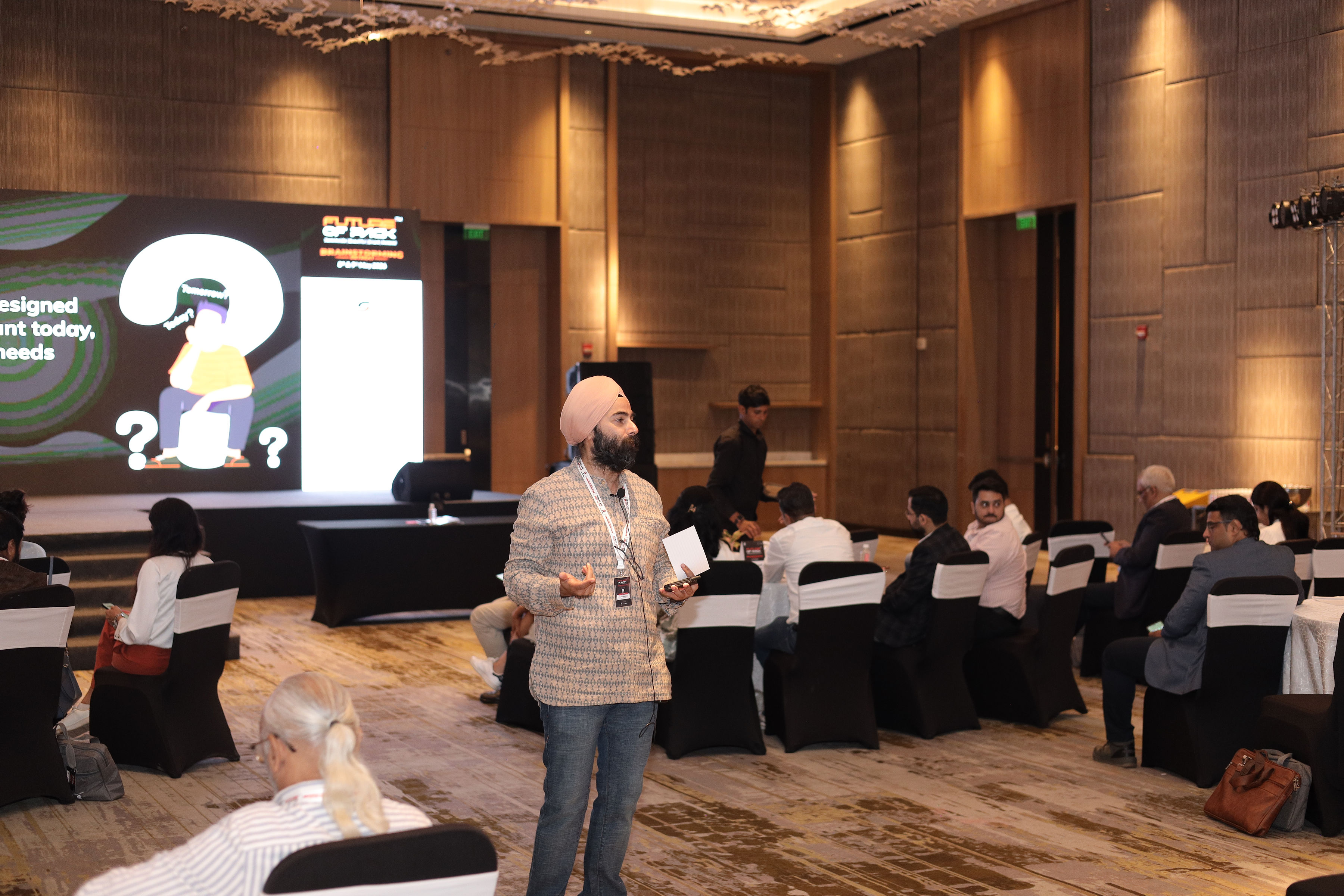
The rise of e-commerce has further reshaped packaging requirements, making logistics efficiency, durability and the unboxing experience more important than ever. Additionally, startups are leveraging premium packaging to differentiate themselves in crowded markets and create stronger brand identities.
Supply chain collaboration
Attendees acknowledged facing growing pressure around margins and hyper-localization in the packaging industry. Speed to market and collaboration between brands, converters and technology providers have become critical to delivering agile and differentiated packaging. Converters are increasingly supporting brands with faster go-to-market capabilities and smaller MOQs as they launch more localized and SKU-diverse products.
It brought together both the demand and supply side packaging business in a free and psychologically safe environment to discuss and debate on various business priorities that may be addressed by this cohort of people
Brands are also being encouraged to look beyond purely cost-driven decisions and consider the long-term value that packaging can deliver. While technologies, such as digital printing, may involve higher upfront costs, they can accelerate product launches, enable faster market testing and improve ROI over time.
The discussions also highlighted that successful packaging development depends on strong partnerships, clear communication and transparent briefs between brands and converters to align expectations and streamline execution.
Challenges
One of the biggest challenges participants noted in packaging development today is balancing rising market demands while maintaining creativity, productivity and OTIF (on time in full) execution. Brands are facing pressure from shrinking margins, faster speed-to-market requirements, counterfeiting concerns and the growing need for real-time product authentication and consumer awareness.
Packaging teams are also expected to balance the evolving ‘5S’ expectations: safety, standardization, sustainability, aesthetics and speed, while delivering cost-effective and commercially viable packaging. At the same time, achieving ‘first-time-right' quality has become a baseline expectation, making it increasingly difficult to maintain consistent quality, efficiency and productivity across complex supply chains and shorter development timelines.
Brand owners also deep-dived into packaging formats including labels, cartons and laminates, with separate groups analyzing the opportunities and challenges associated with each format.
Discussions around labels, shrink sleeves, laminates and cartons highlighted common challenges related to sustainability, recyclability, MOQs, automation and differentiation.
For labels, key concerns included adhesion quality, differentiation, designing for sustainability and MOQs. Brand owners noted shrink sleeve issues such as ink bleeding in high-shrink areas, text distortion and the limitations of decorative effects such as holography and matte-gloss finishes after shrinkage. Maintaining premiumization and shelf impact while designing for sustainability also emerged as a major challenge.
One key takeaway was that while the industry is generating many innovative ideas around printing, labeling and packaging, there is a growing need to evaluate them for real-life applications
For laminates, participants discussed recyclability issues, diverse barrier structures and limited standardization, particularly for sustainable packaging. Structured pouches were noted to have limitations in shape flexibility and decoration visibility depending on the film type. Carton discussions focused on automation challenges, as not all designs are compatible with existing machinery, along with difficulties around smaller MOQs and recycling complex multi-barrier structures.
Sustainability challenges
The discussion on sustainability in packaging focused on whether the industry is truly solving environmental challenges or simply managing compliance requirements. Attendees stressed that sustainability efforts are only effective if supported by proper collection, recycling and circularity systems. As a result, minimalism, mono-material packaging and clearer disposal instructions are gaining importance.
While most brands are still largely compliance-driven, companies such as Diageo were highlighted for integrating sustainability into their long-term business strategies. However, execution remains difficult due to cost pressures, consumer expectations, machine limitations and lack of recycling standardization in the country. The discussion emphasized the need to balance consumer demands with environmental responsibility through scalable and harmonized packaging systems.
In-line technology
Pawandeep Sahni, managing director of Omet India, and the host of the event, highlighted that packaging innovation often happens in silos, with stakeholders adding margins that can slow the adoption of new ideas, particularly in sustainability. He emphasized the need for a more collaborative approach and highlighted Omet’s single-pass technology, which combines multiple processes in one operation to reduce cost and inefficiencies.
He also identified key global trends shaping packaging, including cost optimization through spot structures, compliance-driven packaging, single-pass production and the use of complex graphics for anti-counterfeiting. Omet’s single-pass technology can be applied across labels, flexible packaging, foils, cartons and paper-based products. The company’s XFlex press combines flexo and offset technologies for premium labeling applications.
Automation and AI
Esko showcased how AI-powered artwork management tools, such as WebCenter Go and Esko Comply, are helping brands streamline packaging workflows and ensuring compliance at scale. The platform enables teams across marketing, regulatory, design and finance to collaborate in a centralized environment while automating artwork QC, inspection and validation. Esko highlighted that non-compliant labels can lead to product recalls and brand damage, making compliance a critical challenge for brands today. Through AI-driven compliance checks and automated validation reports, the company demonstrated how packaging workflows can become faster, more efficient and better aligned with speed-to-market goals.
The quality of conversations across brand packaging leaders and solution partners showed an industry becoming far more collaborative, solution-oriented and future-ready
Kurz showcased Dreamcomposer, a tool designed to help brands visualize packaging effects before printing. Through an interactive workshop, attendees experienced real-time mockups and explored how different foils and decorative effects would appear on packaging, allowing brands to evaluate designs, finishes and premium effects more efficiently before production.
Sustainable technologies
UPM highlighted innovations including its UPM PP Lite range and PCR-based materials such as PE PCR White TC 85 and Oceanbound PP. The company also showcased its Renew portfolio featuring Carbon Action PP UCO, RAFNXT+ papers and UPM Forest Film, alongside recycling-focused technologies such as wash-off labels and the SmartCircle initiative to improve packaging circularity.
Stic On focused on cost-efficient and customized labels through investments in backward integration, in-house adhesive development and expanded production capacity. The company showcased a lightweight 70gsm face material with a 23micron liner that delivers substrate savings of 8 to 10 percent, while emphasizing collaboration with converters and its ability to meet global quality and sustainability standards.
Brand protection
As brands face rising concerns around counterfeiting, traceability and consumer engagement, connected packaging technologies are becoming increasingly important across the packaging value chain.
Holostik discussed how smart and digitally connected packaging can improve brand protection through ‘phygital', anti-counterfeiting technologies using QR codes, holograms and RFID for authentication, track-and-trace and supply chain visibility. The company also showcased its three-layer security approach: overt, covert and forensic features, and demonstrated how consumers can identify authentic products in real time using smartphone-scannable QR codes.
Avery Dennison explored connected, intelligent and active packaging technologies, highlighting tools such as RFID, NFC, passive Bluetooth and digital watermarks to improve traceability, supply chain visibility and consumer engagement. The company also showcased Optica RFID technology for food traceability and item-level tracking. A case study from Ocado demonstrated how connected packaging and reusable systems reportedly helped save over 20 million USD for the brand.
A successful event
Attendees appreciated the event for encouraging open discussions on a unique platform across the packaging value chain.
Himanshi Mahajan, deputy general manager, packaging development and corporate R&D, said: ‘My experience at Future of Pack reinforced a strong industry reality—packaging leadership today is defined by the ability to drive business impact, enable sustainability at scale, influence consumer experience and navigate complexity with speed and clarity. The Future of Pack brainstorming retreat reflected exactly that shift. The quality of conversations across brand packaging leaders and solution partners showed an industry becoming far more collaborative, solution-oriented and future-ready.’
Sanjay Ghoshal, head of packaging at Diageo India, noted that it was a great forum for collaborative partnership between brand owners and supply partners. ‘It brought together both the demand and supply side packaging business in a free and psychologically safe environment to discuss and debate on various business priorities that may be addressed by this cohort of people.
‘I experienced a great camaraderie between the participants and an amazing anchoring by the hosts/organizers, thus bringing alive thoughts and counter-thoughts, alignments and deliberations, positive provocations and nudges during the 1.5 days of the session. The way it is building up, this uniquely designed forum, powered by the industry cohort, has the potential to give birth to active communities of practice and go on to become one of the most aspirational platforms for finding plausible answers to some of the most critical packaging-related issues impacting our business, communities and the Mother Earth so far.’
Biswajit Basu, senior manager of packaging development at Nestle India, noted: ‘The session was highly interactive and well organized, bringing together technologists, converters and brand owners for meaningful discussions. One key takeaway was that while the industry is generating many innovative ideas around printing, labeling and packaging, there is a growing need to evaluate them for real-life applications. For brand owners, solutions must not only sound innovative but also deliver value in terms of consumer engagement, productivity and regulatory compliance.’
Pawandeep Sahni concluded by saying: ‘One of the biggest successes for us was creating a casual and intimate brainstorming environment where brand owners could openly discuss challenges and ideas. Another major highlight was the participation of ecosystem partners who conducted interactive workshops and showcased live ideas and solutions, something often missing in larger industry forums.’
He noted that the next edition will aspire to move beyond just print and expand into broader areas of the packaging value chain. The focus will become far more challenge-driven, with content shaped around the real issues attendees are facing rather than what we assume is relevant.
The next Future of Pack retreat will take place from May 7-8, 2027.
Stay up to date
Subscribe to the free Label News newsletter and receive the latest content every week. We'll never share your email address.