TLF’s need for speed in durables labels market
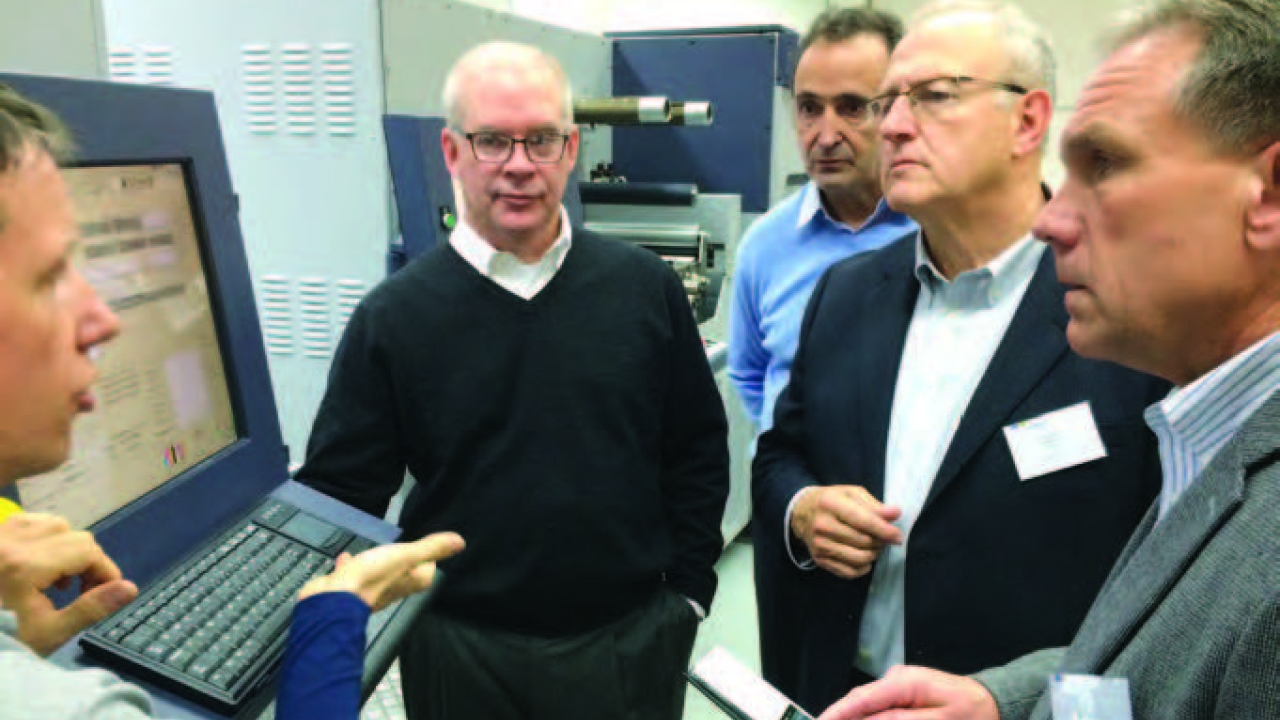
In November 2014, TLF Graphics (TLF), a printing business focused on the production of industrial labeling, product decoration and retail signage, installed a Durst Tau 330 UV inkjet press. TLF is a UL certified label supplier, a Gracol certified master printer and is ISO 9001:2008 certified.
The company was established in Rochester, New York, in 1980 and was acquired by Dan Wagner, VP operations, Bob McJury, VP sales, and Ron LeBlanc, VP finance, in 1996. Under the guidance of its eager new owner partners, TLF quickly invested in digital printing to advance business productivity. Before that it had been reliant on roll-to-roll flexo and screen printing to provide resilient performance with quality graphics to its customer base.
McJury explains: ‘Everything we did addressed speed, quality and reduced cost. We consider ourselves the speed guys. Our whole story is fast. Some of our larger clients don’t need us if we’re not fast. And this holds true with our investment in Durst with Spartanics in-line laser die-cutting – plus it comes with the additional benefit of durability.’
Since 1998, the business has grown from 7 million USD to 21 million USD, employing 114 people today. This healthy development is directly related to TLF’s willingness to invest in digital printing.
Digital printing had accounted for almost zero percent of the enterprise output in 1998. Today it accounts for around 30 percent of production.
Says Wagner, ‘With the Tau, we anticipate our digital production to grow to 45 or 50 percent, or more, of the business as we shift appropriate work from screen to the new press. Over time, I predict that we’ll move 30 percent of our screen printing revenue onto the Durst.’
Digital comfort
TLF is familiar with digital printing having installed its first digital print system in 1998, and now using a variety of technologies including aqueous, solvent and UV inkjet systems for printing on both rigid materials and label substrates.
The business also uses a Matan narrow web roll-fed thermal digital press to create industrial labels and vinyl products that require variable imaging, albeit with lower quality print and slower speeds.
In 2008, TLF selected an HP Indigo s2000 to address smaller run quantities of polycarbonate labels for ID plates, appliances and control panels with high numbers of SKUs. Additionally with the installation of a ws4500, the vast majority of the converter’s process color work moved from flexo to digital.
Multiple birds, one stone
When TLF’s executive team arrived at Labelexpo Americas 2014, it had its investment decisions made. Wagner explains, ‘We had to address specific business with high MSI cost and high waste as orders of say 10,000 shifted to ten orders of 1,000. We had to find a way to address this cost problem.’
The team would upgrade its roll-fed Indigo liquid toner digital press as well as the latest sheet-fed toner option to tackle quality needs; and investigate UV-LED inkjet technology.
Stay up to date
Subscribe to the free Label News newsletter and receive the latest content every week. We'll never share your email address.