Multi-layer defense against counterfeiting
As counterfeiters become more sophisticated, brands are turning to equally advanced authentication technologies to stay one step ahead.
Counterfeit products are rising across industries, posing growing risks to consumer safety and brand trust. From life-saving medicines to everyday consumer goods, recent cases show that no sector is immune to counterfeiting.
The World Health Organization (WHO) recently warned of falsified cancer medication discovered in the Maldives and Mexico after they were distributed through unauthorized suppliers. In the cosmetics sector, counterfeit Korean beauty products caused an estimated 15.1 million USD in damages in 2025, fueled by increasingly sophisticated fakes. Food fraud has also escalated: authorities in Spain and Italy seized more than 260,000 liters of falsely labeled extra virgin olive oil in 2023, while Portugal confiscated over 17,000 liters of fraudulent olive oil in 2025. In Turkey, officials seized nearly 30 million USD worth of counterfeit honey in just a few months in 2025.
While these incidents have been exposed, the true scale of counterfeit products remaining undetected in the market is impossible to know.
The risk of fake goods is growing as counterfeiters are adopting increasingly sophisticated techniques that make
fake products harder to detect. The consequences extend beyond lost revenue, damaging brand reputation, eroding
consumer trust and, in sectors such as pharmaceuticals, cosmetics and food, posing serious health and safety risks.
‘Counterfeiting, gray market diversion, return fraud and unauthorized resales have become harder to manage across
increasingly fragmented channels, and for many brands, the risk is not just lost revenue,’ says Ashley Burkle, director of
business development at Identiv, provider of specialized IoT inlays, tags and labels. ‘Flooded support channels, false warranty claims and reviews, shaped by products that were never genuine, compound that exposure. This leads to consumers bearing a more immediate cost, unknowingly paying full price for products that compromise performance and, in some cases, their safety.’
Traditional security not enough
Consumers are increasingly falling victim to counterfeit products because counterfeiters now have access to high-quality printing and packaging technologies.
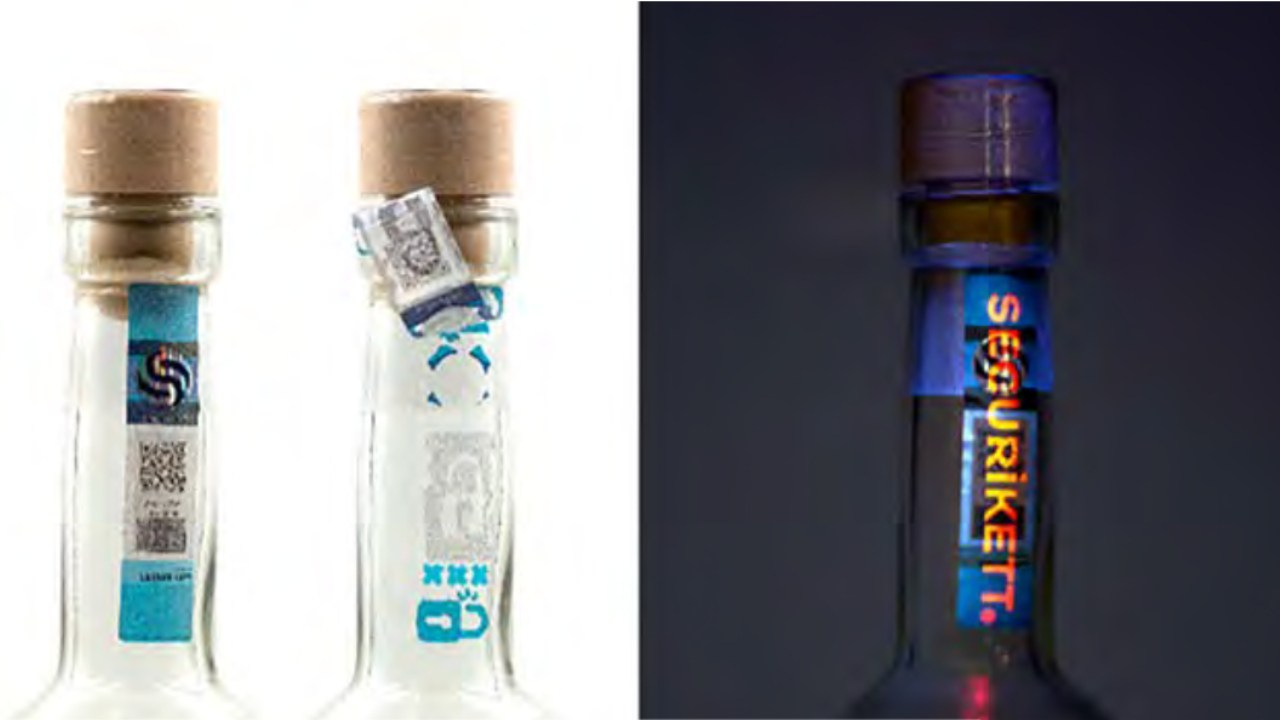
‘Traditional, static security features are becoming increasingly insufficient because counterfeiters today have access to advanced printing technologies, digital design tools and global manufacturing networks that allow them to replicate visible security elements with a high degree of accuracy,’ says Nina Zehetmaier, head of sales at Securikett, Austrian security and
brand protection label manufacturer.
“Counterfeiters today have access to advanced printing technologies, digital design tools and global manufacturing networks that allow them to replicate visible security elements with a high degree of accuracy”
Classic security features such as holograms, special inks, taggants or security print still provide a high level of protection, but effective protection relies on proprietary technologies,
custom‑developed security elements and controlled manufacturing processes that are not publicly available or easily sourced.
Zehetmaier explains: ‘The higher the barrier to understanding and reproducing a security feature, the more effective it becomes as a deterrent against counterfeiting. Security features that are readily available on the open market can, by definition, also be accessed by counterfeiters. Once they are copied, every counterfeit product can carry the same feature.’
She notes that the company has come across cloned labels from time to time, including imitations of its own labels. ‘While some of them may appear quite convincing at first glance and could potentially mislead an uninformed consumer, they are usually relatively easy for a trained eye to identify as counterfeit. The reason is that counterfeiters typically focus on replicating only one element, most often the label's visual appearance. However, effective product protection is not based on a single visible feature, but on a layered security concept.’
Multiple layers of security
As counterfeiting becomes more widespread and sophisticated, brands are moving beyond reactive measures
and embedding product authentication into packaging from the outset.
‘We are observing a clear shift from a reactive protection approach to proactive security design,’ says Stefan Wiedemann, senior director, strategic marketing and business development at Schreiner MediPharm, pharma and healthcare label expert and business unit of Schreiner Group. ‘Instead of adding security features only after a problem occurs, brand owners increasingly want labels to be part of the product protection strategy from the start. At the same time, there is growing demand for connected, smartphone‑enabled authentication solutions that make verification easier, generate data and support more transparent supply chains.’
This shift recognizes that a single security feature is no longer sufficient. As counterfeiters become more adept at replicating packaging and security elements, brands are adopting multi-layered authentication strategies that combine several independent forms of protection.
‘Each security layer operates independently while contributing to the overall system. This means that even if one element were to be copied or compromised, the remaining layers would continue to protect product integrity,’ explains Zehetmaier.
Rather than relying on a single overt feature such as a hologram, modern product protection combines overt, covert and digital security elements with serialization and track-and-trace technologies. This layered approach enables companies to authenticate individual products, monitor their movement through the supply chain, identify diversion and detect suspicious activity far earlier, making counterfeiting significantly more difficult while generating valuable supply chain intelligence.
To strengthen protection, so-called ‘phygital’ labels combine
multiple layers of security, including overt and covert physical
features, unique digital identifiers and cloud-based authentication.
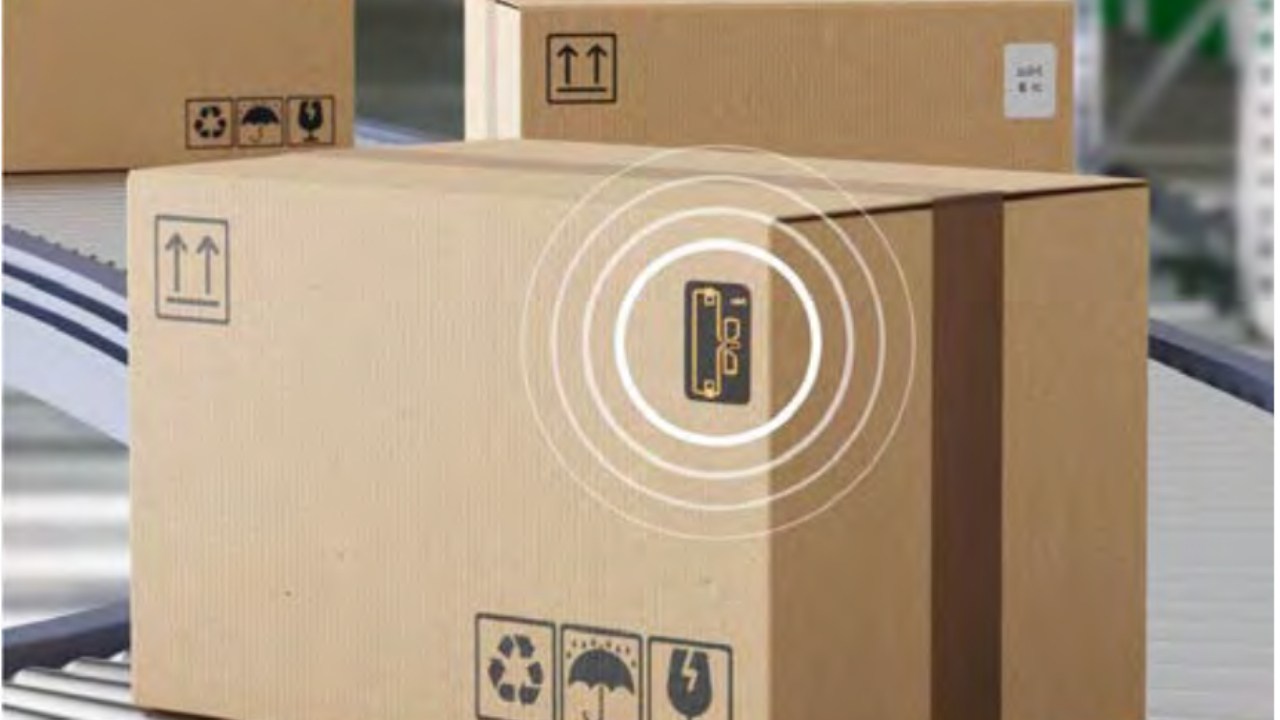
As a result, phygital labels are increasingly being adopted.
Overt features allow consumers or field staff to perform a quick visual check. Covert features give trained personnel an additional level of verification, while forensic elements provide highly secure evidence for expert analysis.
Wiedemann of Schreiner MediPharm says brand owners are
increasingly seeking an integrated, label-based security system rather than standalone anti-counterfeit features. ‘The goal is not simply to raise the hurdle for counterfeiters, but to create a solution that supports authentication, protects brand integrity and fits into existing packaging and supply chain processes.
‘Unlike approaches that focus solely on either physical or
digital protection, our phygital labels bring both worlds together,’ he says. ‘They not only protect products against tampering and counterfeiting but also connect them to a secure digital identity.’
This layered approach makes counterfeiting more difficult,
supports different authentication scenarios and gives brand owners more flexibility to adapt the security level to the risk profile of a product or market.
That digital identity transforms packaging from a passive label
into an interactive touchpoint. According to Burkle of Identiv,
packaging has traditionally been a one-way communication tool, but phygital technology allows brands to continue engaging with consumers long after a purchase. A smartphone tap can verify authenticity while also providing product information, warranty activation, reordering, loyalty rewards or other digital services. Securikett’s Codikett platform links every label to a unique digital identity, enabling authentication, track-and-trace, consumer engagement, analytics and compliance with emerging initiatives such as the Digital Product Passport (DPP).
Identiv’s NFC embeds a unique hardware-based identity into
each product, enabling secure item-level authentication.
Growth in security labels
Demand for product authentication is growing across industries as counterfeit goods become an increasingly widespread challenge. While the underlying technologies are often similar, implementation varies according to industry needs.
‘For instance, in the pharmaceutical industry, regulatory
compliance, serialization, tamper evidence and patient safety are key, while cosmeceuticals often require premium-looking security features that protect exclusivity and brand value,’ says Wiedemann.
Most brand owners now recognize the risks posed by
counterfeiting, product diversion and unauthorized distribution.
However, adoption often lags, with many companies delaying
investment until a counterfeiting incident occurs, a clear
business case is established, or regulatory requirements make implementation unavoidable, according to Zehetmaier of Securikett.
“Instead of adding security features only after a problem occurs, brand owners increasingly want labels to be part of the product protection strategy from the start”
The pace of adoption also varies by region. In Europe and parts of North America, authentication and traceability initiatives are largely driven by regulatory requirements. In contrast, emerging markets are more heavily influenced by consumer demand and the direct impact of counterfeiting.
‘In China and several other Asian markets, consumer awareness of counterfeiting is exceptionally high,’ Zehetmaier adds. ‘We also see growing interest in regions with a particularly high incidence of counterfeiting, including parts of the Middle East, Africa, Latin America and Southeast Asia. In these markets, concerns around product authenticity, consumer safety and supply chain integrity are driving increased awareness and demand for advanced authentication solutions.’
Beyond that, regulation remains one of the strongest drivers for adoption worldwide. ‘Particularly in pharmaceuticals, where serialization, traceability, and tamper evidence requirements have accelerated the use of security labels worldwide. These requirements encourage companies to implement labels that not only identify products, but also help verify authenticity, ensure product integrity and protect users,’ says Wiedemann.

Similar momentum is building across other industries as
governments place greater importance on product safety, supply chain transparency, sustainability and consumer protection. DPP could have a similar transformative effect by creating a common framework for product-level identification, traceability and digital engagement across multiple sectors.
Consumer expectations are also evolving in favor of brand
protection technologies. According to Burkle, consumers no longer accept packaging at face value; they increasingly want to verify a product’s authenticity and claim for themselves. A recent GS1 US survey found that more than 65 percent of consumers are willing to interact with packaging to access additional product information.
‘As trust and transparency become central to purchasing
decisions, traditional packaging is no longer enough. While it
can communicate product information, it cannot verify where a
product has been, whether it has been tampered with or whether the label corresponds to the specific item in hand. Embedding secure digital identities into packaging enables brands to provide real-time, product-specific information that consumers can trust,’ Burkle explains.
Barriers to adoption
Despite growing interest in product authentication, cost and
implementation challenges continue to slow adoption.
“In the pharmaceutical industry, regulatory compliance, serialization, tamper evidence and patient safety are key, while cosmeceuticals often require premium-looking security features that protect exclusivity and brand value”
While cost remains an important consideration, Wiedemann says it is no longer the primary obstacle. Many brands are more concerned about integrating authentication technologies into existing packaging lines and supply chain processes. Successful adoption depends on demonstrating that security technologies can be implemented with minimal disruption while delivering measurable business value.
‘Customers are especially receptive to technologies that integrate smoothly into their existing processes, can be verified reliably, and offer clear benefits for brand protection or supply chain visibility. Smartphone-based authentication, connected product identification, tamper-evident concepts and combined analog-digital solutions are gaining attention where they are supported by a clear communication and security strategy,’ Wiedemann adds.
Zehetmaier agrees that the biggest barriers are often economic and organizational rather than technological. ‘While brands may be aware of the risks posed by counterfeiting, they struggle to justify the investment before a concrete problem has occurred. Hence, they view security measures as an insurance policy rather than a strategic business tool.’
Another challenge is complexity. Many advanced authentication labels require integrating multiple technologies, vendors and systems, which can be difficult for organizations with limited resources or technical expertise to manage.
Brands often also lack the dedicated personnel and organizational resources needed to implement, maintain and actively leverage these systems. Even when the technology itself is available, managing authentication programs, analyzing data and acting on the resulting insights can be challenging without the necessary internal capabilities.
Another barrier is the perception that sophisticated security
technologies are only relevant for large multinational companies or heavily regulated industries. In reality, counterfeiters often target brands that tend to have fewer protection measures in place.
Finally, there is often a lack of visibility regarding the true scale of the problem. Counterfeiting can remain undetected for years, making it difficult to build a compelling business case.
‘As technology becomes more accessible and cloud-based
platforms reduce implementation complexity, we expect these
barriers to continue to decrease,’ Zehetmaier notes. ‘The key
challenge is helping brands understand that modern security labels are no longer merely a cost of protection but an investment in trust, transparency and business intelligence.’
Burkle of Identiv echoes this view, noting that the challenge
lies less in coordinating packaging, supply chain and cloud-based systems at scale. As a result, adoption has been fastest in sectors where the cost of counterfeiting is most apparent, including pharmaceuticals, luxury goods, beauty, and wine and spirits.
Overt, Covert and Connected
As counterfeiting becomes more sophisticated, brand
protection demands a multi-layered response. By pairing overt, covert and connected digital traceability features, brands can achieve complete visibility from factory to shelf.
Overt features are visible security elements on labels or packaging that can be verified with the naked eye. Examples include holograms, color-shifting inks, hot/cold foils, tamper-evident shrink-wraps, security tear tapes, destructible ‘void’ labels and embossed or debossed patterns.
Covert features are hidden security elements that are
invisible to the naked eye and require specialized tools or
expertise for verification. Examples include microtext, UV/
IR-invisible inks, digital watermarks and microscopic or
DNA-based taggants and forensic markers.
Digital and traceability features connect products to secure databases for authentication and supply chain tracking. Examples include smart QR codes, RFID/NFC tags, unique serial numbers, barcodes or 2D codes used for track-and-trace and recall management.
UV and IR pigments in brand protection
UV and IR pigments enable rapid authentication by brand
owners, inspectors and law enforcement agencies while
helping combat counterfeiting across high-value products.
UV for fast visual verification
UV pigments or UV fluorescent inks are colorless or barely
perceptible (invisible) under normal visible light, but under
ultraviolet illumination they become immediately visible.
Because the effect lasts only while the UV source is present,
these inks are particularly suitable for fast authenticity checks
using handheld UV lamps.
IR for covert, machine-readable security
IR pigments or infrared inks operate differently. Unlike UV inks, IR fluorescent inks can only be detected using an IR camera.
As a result, IR systems in printing are used mainly as covert,
machine-readable security features. At the same time, UV
systems more often provide rapid visual feedback that a
human operator can also check.
IR fluorescent taggants are generally regarded as offering
a higher level of security. Simple UV markings, by contrast,
are now often seen as a baseline protection feature unless
they form part of a more sophisticated multi-color or
multi‑wavelength system.
Stay up to date
Subscribe to the free Label News newsletter and receive the latest content every week. We'll never share your email address.