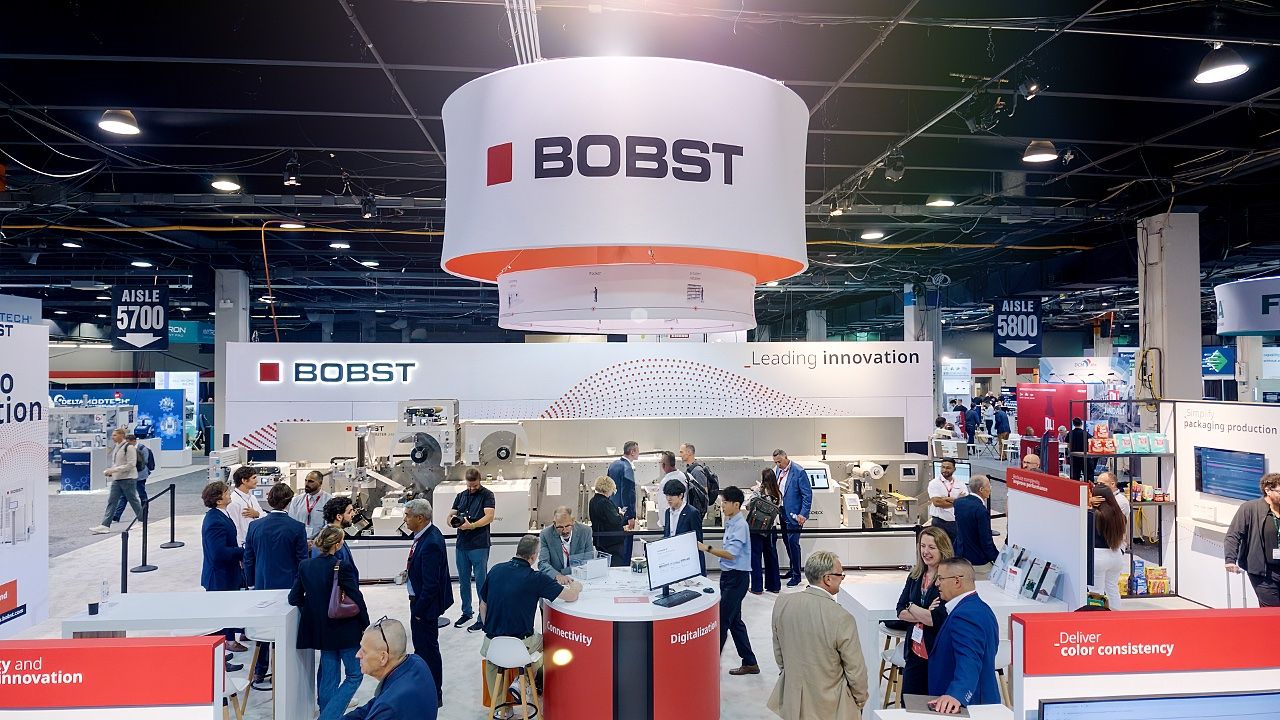
New York Label & Box Works unites labels, carton production
Third-generation family-owned company brings together labels and in-line folding carton production, offering customers faster time‑to‑market.
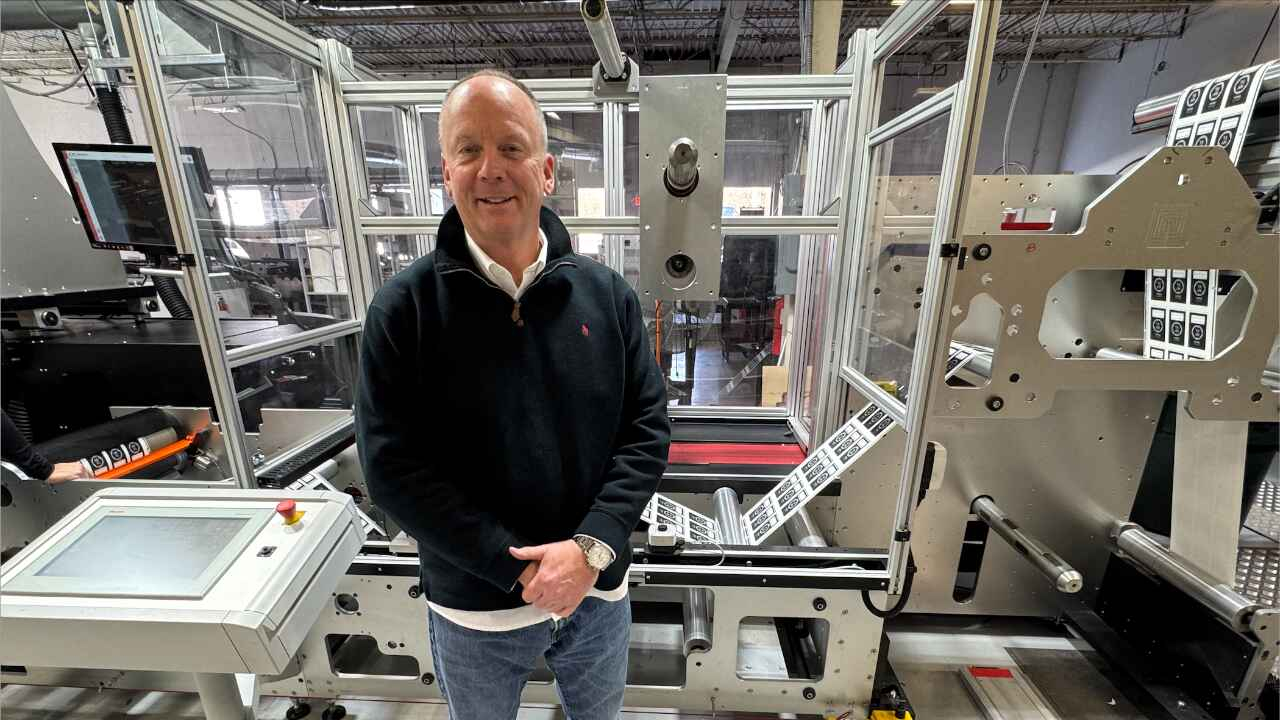
New York Label & Box Works president Steven Haedrich
New York Label & Box Works is redefining what it means to be a modern packaging converter. The 148-year-old company, based in New York’s Long Island, has been steadily expanding into folding carton, bringing both label and carton capabilities under one roof.
The company is unique in offering both labels and folding cartons. New York Label & Box Works can streamline its production, match labels and cartons, reduce complexity and offer customers a faster time-to-market at a lower cost.
Equipment
New York Label & Box Works offers both sheet-fed and in-line carton production and pressure-sensitive labels. The labels are produced on twin 10in, 10-color legacy Mark Andy presses, while in-line carton production is done on a pair of Edale FL5 presses, first installed in 2021. New York Label & Box Works was the first converter in the US to invest in the 20in, 8-color Edale in-line folding carton press.
With the Edale press, the converter can print on both sides of 700-micron board material and offer its customers other value-added features, such as coating, laminating, cast-and-cure, varnishes, foil stamping and embossing and in-line die-cutting, all in a single pass. But what brands really love, the company says, is its ability to match color between label and folding carton jobs.
New York Label & Box Works president Steven Haedrich explains that this process allows its customers to achieve brand and color consistency across formats, a quicker time-to-market and reduced costs. Offering those same value-adds and embellishments on a sheet-fed production line would mean higher operational costs and longer lead times.
“I looked at our customers who were ordering labels and cartons, and I said, ‘well what if we could do both?’ It’s kind of a no-brainer”
‘A big factor for our investment [in Edale FL5 machines] was the ability to embellish in-line, including front and back printing, film lamination, cold foil and the use of specialty UV ink,’ Haedrich said at the time of the installation. ‘There are so many advantages to running everything in-line rather than on separate pieces of equipment as in a typical sheet-fed factory,
which takes more time, needs more people and ultimately costs more.
‘Our investment allows us to present to our clients new embellishment possibilities, a lower cost of manufacturing due to greater operational efficiency and speed of response. Traditionally, it can take between eight and 16 weeks for carton production. We aim to reduce this time by at least 50 percent.’
Deming philosophy
The agile operation at New York Label & Box Works not only reflects where the industry is headed, but it’s a philosophy
rooted in the management theories outlined by Dr W Edwards Deming.
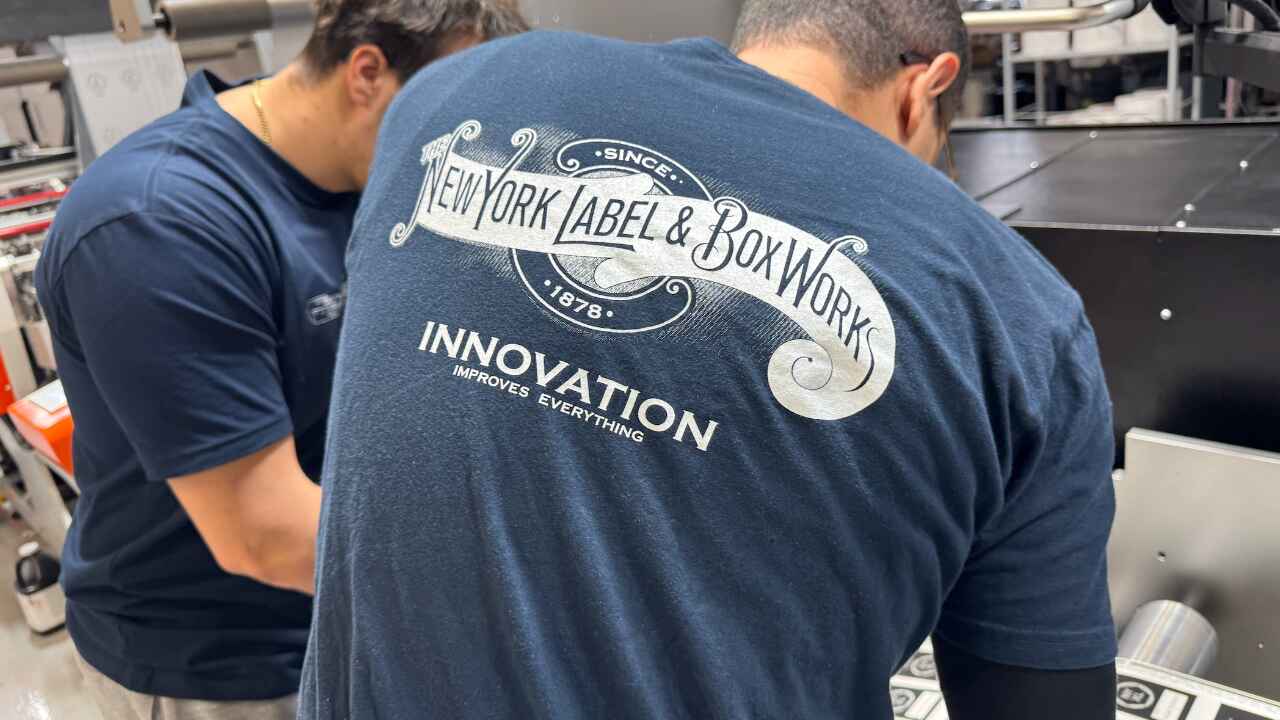
Deming is an American statistician and management thinker whose principles for operational performance were popularized after WWII and became widely recognized after a revealing documentary was produced in the 1980s. Deming
transformed manufacturing by focusing on quality, efficiency and continuous improvement. Haedrich not only took the Deming management principles to heart but also wove them throughout every facet of the business. Haedrich also serves as a board member in the Deming Institute, a group that honors the teachings of Dr Deming.
At its core, the Deming philosophy focuses on building a system that consistently produces quality outcomes and continuously refines processes, products and services. Businesses should reduce variation, as stability and predictability are essential for quality, Deming says.
The Deming philosophy appears well-timed for today’s label converter, many of whom are reassessing their position in the packaging value change and diversifying their product portfolios.
“You must have quality and must have innovation, and when you can do those two things, well, you’ll be on the path to success”
Reducing press variability means better print quality; process control means less waste; supplier relationships mean more
stable performance; and continuous improvement means easier expansion into new areas. For New York Label & Box Works, that meant a move into in-line folding cartons.
‘One of the key tenets of the Deming philosophy is that you’ve
got to innovate and delight your customers,’ Haedrich explains. ‘If your customer is buying a label and a carton, you’re helping them by producing both. I looked at our customers who were ordering labels and cartons from other suppliers, and I said, “What if we could do both?” It’s kind of a no-brainer.’
Haedrich became interested in Deming’s philosophy shortly
after taking over operations at New York Label & Box Works in
1996, when the company’s largest customer demanded improved quality from all its vendors. He then began reading everything he could about quality. He soon discovered that in every book he read, Deming’s name appeared. Haedrich credits the Deming philosophy for guiding the company through economic ups and downs, and shaping decisions that didn’t always look obvious at first glance.
Haedrich admits that he’s not particularly risk-averse. Especially if he’s confident it’s the right business move. This no-fear attitude led him to invest in a second Edale carton press before the first had reached full capacity. In his view, it
wasn’t a gamble, but a necessity.
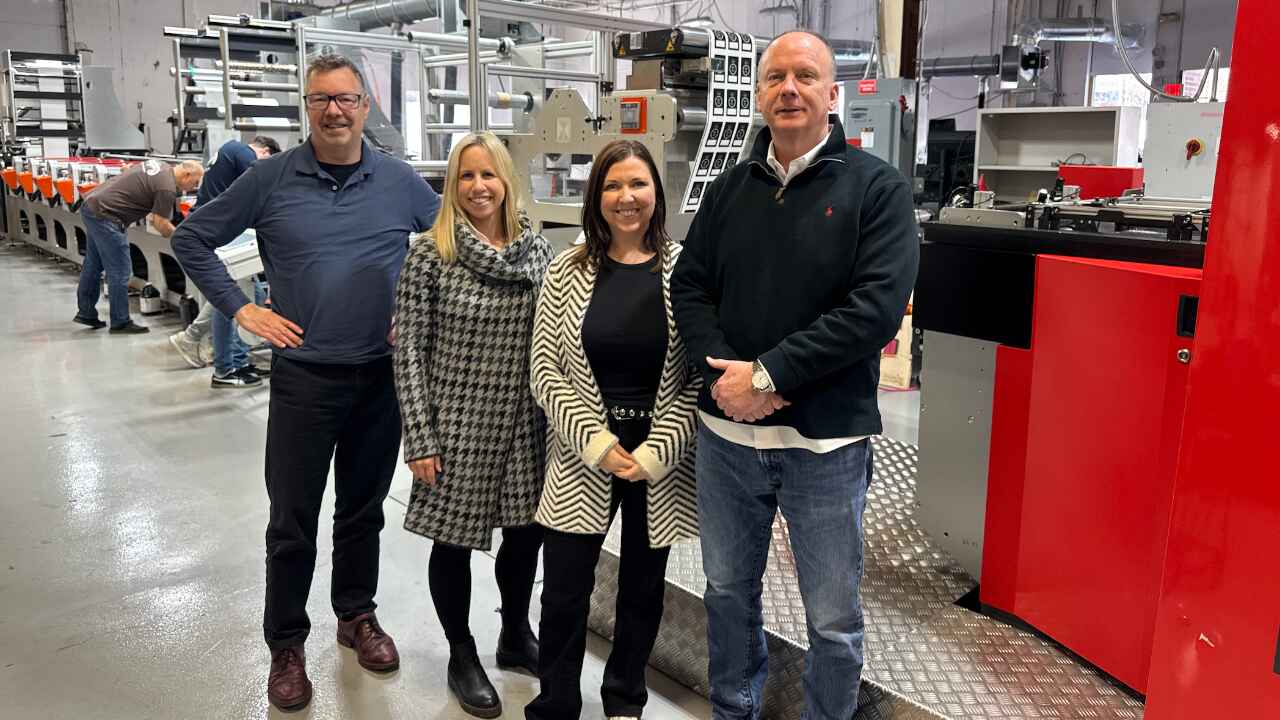
‘A client does not want to walk into my shop and see one press,’ Haedrich says. ‘Their immediate reaction is what if this press goes down? How will I get my cartons? So, I’m of the opinion you had to have two machines.
‘My people just looked at me and said I was crazy. But if you
look at every single innovator in the last 200 years, they’ve all
been called crazy. I’m not innovating. I’m just using innovative
technology, and to my customers, their perception is we’re ahead of the curve. And that’s everything.’
Customers
New York Label & Box Works caters to the vitamin, cosmetic and food industries. In addition to color consistency and a ‘one-stop-shop’ mentality, what customers really love is the speed-to-market it provides.
‘Our biggest competitive advantage is that we can turn around
jobs faster than any billion-dollar printer,’ Haedrich says. ‘And
that is the magic bean. Because the world changes so quickly,
people can’t accurately predict their inventory levels. When
they’re out of labels or cartons, they’re out. So, we’ve got to get to the order quickly. It’s very difficult to predict people’s buying patterns right now.’
History
New York Label & Box Works was founded in 1878 in New York City, providing labels and folding cartons to pharmacies across the city. ‘At the time, pharmacies were like Starbucks; there was one on every corner. It was a very good business back then,’ Haedrich says.
In 1930, Frederick Haedrich Sr, Steven’s grandfather, purchased the company. Steven is the third generation in his family to run the company. Today, the company has 53 employees.
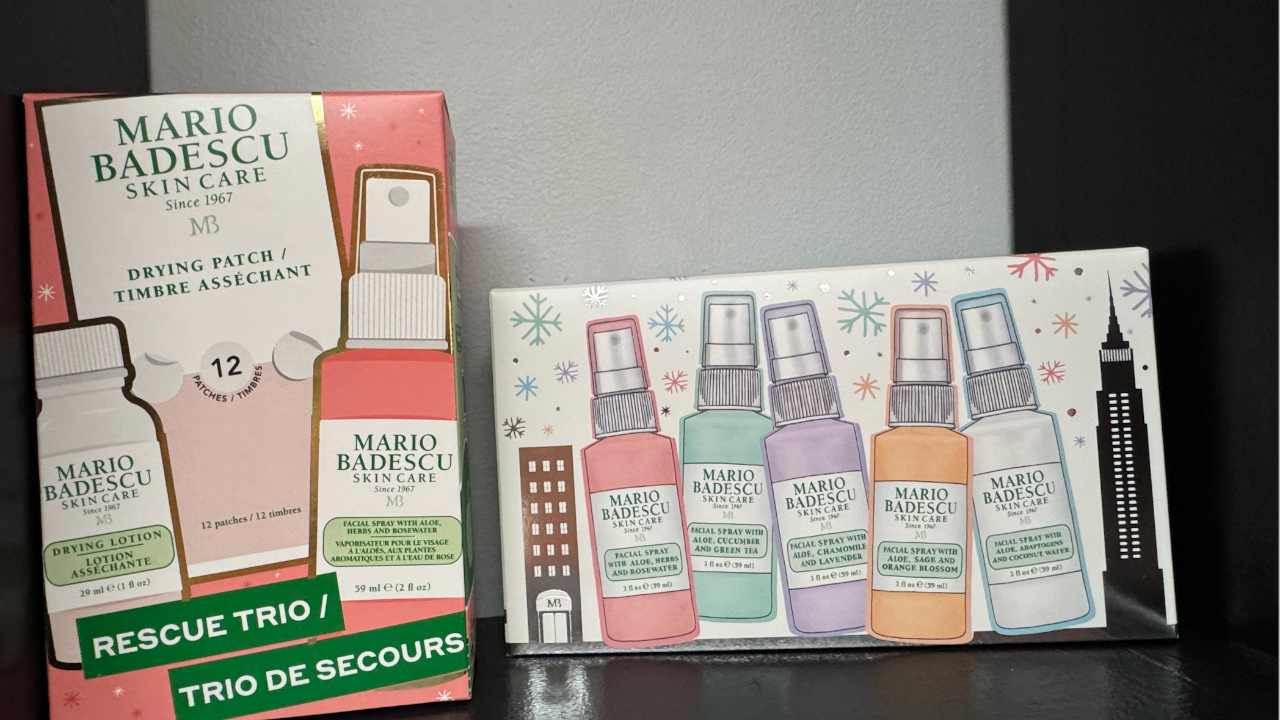
As New York Label & Box Works has evolved from labels to
cartons, it has maintained a focus on high-quality production
by leveraging advanced technology and maintaining strong
vendor relationships.
‘We don’t beat up vendors,’ Haedrich says. ‘We want them to
make money. We want them to stay in business. We want them to continue to be our partner. We want them to continue to help us improve our quality continuously.’
It’s exactly what New York Label & Box Works looks for in its
own customers as well.
‘It’s always messy, it’s always challenging, there’s always a
learning curve. But Dr Deming said, “You must have quality and must have innovation, and when you can do those two things, well, you’ll be on the path to success”.’
Edale on the future of folding carton
Technology alone will not define success in 2026. Workflow
intelligence and production resilience will.
Converters are no longer chasing a single perfect technology. Instead, they are building mixed fleets of digital, offset and flexo presses, and making practical decisions about which process fits each job best. It is less about tradition and more about what works.
Flexo’s role is shifting from a high-volume method to an efficient production platform, delivering automated, repeatable output, particularly where in-line finishing and process consolidation reduce complexity.
Automation will be judged less by how impressive it looks and more by what it removes: labor pressure, variability and work in progress. Stability, predictability and ease of operation will matter more than novelty.
At the same time, brand owners are pushing for consistency
across labels and packaging, further blurring the line between
label and carton production.
The converters who outperform in 2026 will be those who
simplify and use data to orchestrate production for efficiency,
quality and resilience.
Industry ambassador
Steven Haedrich, president of New York Label & Box Works, has been selected as a Loupe Americas 2026 industry ambassador. As a Loupe ambassador, Haedrich will share his
knowledge and insights on moving into in-line folding carton production. He joins ambassadors representing other segments and key topics. Katie Harrington of Winpack will
serve as future leader ambassador, David Totten of Nosco will serve as flexible packaging ambassador, Tyler Matusevich of Brook + Whittle will be sustainability ambassador and Corey
Reardon of AWA will serve as label market intelligence ambassador.
Stay up to date
Subscribe to the free Label News newsletter and receive the latest content every week. We'll never share your email address.