Smart Labels transform brand experience
For decades, the ‘static’ label was the industry’s ‘silent salesman’, but in an era where regulations are tightening, a package that stays silent is a package with something to hide.
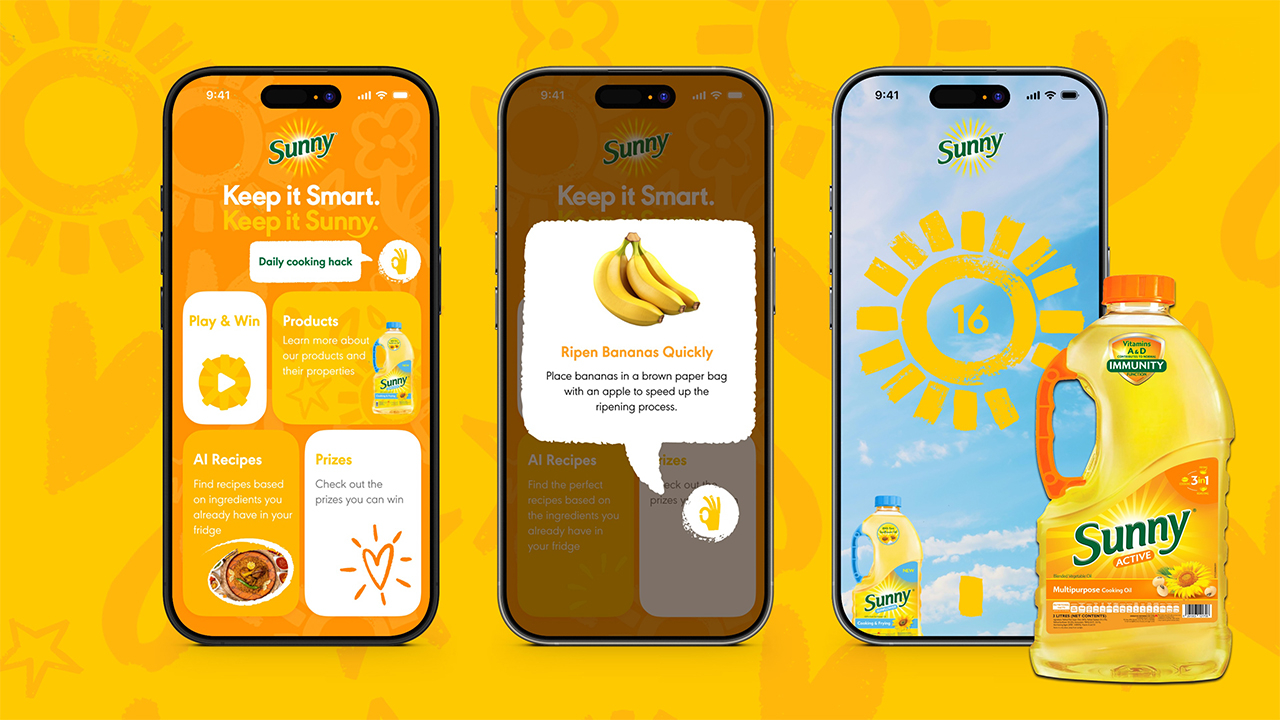
Sunny sees strong consumer engagement with smart packaging
Connected packaging is no longer optional for brands; it has become an essential part of the packaging experience, providing consumers with unit-level intelligence and transparency. Packaging that utilizes QR, RFID, NFC and digital watermarks shifts the format from a one-way channel to a multidirectional digital footprint. These technologies are evolving rapidly as global regulations inch closer.
QR codes and GS1 digital links
QR or ‘Quick Response’ codes store more data than traditional barcodes and can be quickly scanned with smartphones. With fast, omnidirectional scanning and error correction, it’s widely used across industries and growing rapidly with smartphone adoption.
GS1 digital link, set to become mandatory from 2027, enables barcodes and other data carriers to serve as web links, connecting a product’s unique identity to online sources of real-time information that brands can control.
“Labels will increasingly become gateways to much larger volumes of digital information”
The adoption of QR codes is becoming the norm, as scanning a package or label has become a reflex for most consumers. Around 75 percent of consumers scan QR codes to get more information, ahead of those seeking discounts (52 percent) and making payments (35 percent), according to a 2026 research report by Uniqode. Yet only 36 percent of marketers use QR codes to deliver additional information, highlighting an opportunity for brands to better match QR code content to consumer intent.
RFID and NFC
RFID (Radio Frequency Identification) and NFC (Near Field Communication) are wireless communication technologies that use radio waves to identify objects. Unlike QR codes, these technologies don’t require a direct line of sight to be read. RFID is designed for distance and volume and is particularly useful in supply chain and inventory tracking.
While NFC is a branch of RFID. It is designed for secure, two-way communication at close range. The technology enables contactless payments and ‘tap-to-interact’ packaging.
NFC tags are increasingly being developed with sustainability in mind. For example, Tageos’ new NFC inlay lines, EOS Lite and EOS Zero Lite, feature Pragmatic Semiconductor’s ultra-thin PR1301 chip for low-carbon smart packaging. EOS-932 Zero Lite is a paper-based NFC inlay designed for scalable use in packaging and labels.
Avery Dennison also launched a flexible NFC inlay range using Pragmatic Semiconductor’s FlexIC technology. The ultra-thin inlays target retail and healthcare, with a lower-impact manufacturing process that uses less energy, water and chemicals than traditional silicon. It can also be adapted for curved packaging surfaces.
Digital watermarks
Digital watermarks are invisible codes embedded directly into a package’s artwork. Unlike a QR code, which requires a specific black-and-white square, a digital watermark is woven into the design itself, altering colors, shading and textures at a microscopic level. With digital watermarks, every surface of a package becomes scannable with smartphones or industrial scanners.
After years of development and testing, digital watermark technology is now proving it can deliver the precision needed to enable packaging recycling and sorting, as L&L reported in Issue 4, 2025. Traditional sorting technologies cannot identify crucial information, such as product applications (food, cosmetics or detergents); recycled content levels; or whether materials are bio-based or fossil-based. Digital watermarks address these gaps by encoding detailed information directly into packaging during the printing process.
Regulatory forces
Regulations such as GS1’s Sunrise 2027 initiative are driving the shift from 1D barcodes to 2D QR codes, enabling greater transparency, traceability and consumer engagement while improving inventory management, recall management and authentication. At the same time, the European Union is introducing Digital Product Passports (DPPs) under the Ecodesign for Sustainable Products Regulation (ESPR), providing detailed lifecycle data to support compliance and sustainability. Complementing this, the Packaging and Packaging Waste Regulation (PPWR) will require recyclable packaging, recycled content and waste reduction by 2030, with connected packaging playing a key role in enabling traceability, digital labeling and efficient reuse and recycling systems.
Jenny Stanley, managing director and founder of Appetite Creative, an expert in connected packaging, says that connected packaging addresses both regulatory requirements and consumer trust simultaneously.

‘We’re facing a number of transitions right now. There’s the Sunrise Project, which is driving the shift to QR codes by 2027 as part of a GS1 initiative around digital links. Then there’s the legislation around DPP and Extended Producer Responsibility (EPR).
‘All of these changes are pushing brands to find ways to meet new requirements. What’s compelling about connected packaging is that it transforms compliance from a necessity into an opportunity, one that allows brands to deliver genuine value to the consumer while staying aligned with evolving regulations.’
“Connected packaging can have a very tangible impact on sales. We typically see an increase of around 20-30 percent, which is a significant part of the value story”
Connected packaging helps brands engage directly with consumers, especially in FMCG, where end users are often unknown, while delivering detailed, compliant product information in a clear, engaging format. It also improves transparency and builds trust by replacing dense legal text with more intuitive, visual communication.
Camilla Mjelde, compliance and sustainability director at Trimco Group, a label and packaging supplier with expertise in traceability and RFID, says: ‘Labels will increasingly become gateways to much larger volumes of digital information. With DPPs, products will carry access to far more data, and often more complex information than what can realistically fit on a physical label.
‘What we see is that brands are approaching this differently. Some want to keep it simple and focus on compliance, while others are looking to capture the full potential of connected products and deliver as much value and information as possible through the digital layer.’
"For patients, particularly those self-administering complex treatments like injectables, this can mean instant access to multilingual instructions, video demonstrations, dosage reminders, or real-time adherence support, all triggered by a simple smartphone tap."
A ‘must have’
Research by Appetite Creative and Koenig & Bauer Auraveo reveals that 92.3 percent of those surveyed say that connected packaging will be increasingly important to the packaging industry in the next 12 months and beyond, up from 88.8 percent in 2025.
Adoption of connected packaging has risen strongly, with 81.2 percent of companies currently using the technology, up from 72.6 percent last year.
The shift from single technology to multi-technology implementations continues. Around 47.1 percent of brands use QR codes and NFCs combined, compared to QR codes alone (31.8 percent) and NFC tags alone (21.1 percent).
Interest in serialized QR codes increased to 73.2 percent in 2025, reflecting a strong majority in favor of more sophisticated connected packaging. Industry skepticism has dropped, with only 7.7 percent of respondents viewing connected packaging as a passing fad, down from 13.4 percent in 2025.
‘What I’ve seen from working with brands like Tetra Pak is that over 78 percent of customers agree connected packaging helps them better understand sustainability credentials. That’s a strong signal,’ Stanley adds. ‘It shows a shift away from greenwashing towards something more tangible and meaningful for consumers.’
As a result, consumer expectations of connected packaging have shifted from a ‘nice to have’ to a ‘must have’. Today’s consumers want more. They expect to understand what they’re buying, and they’re looking for experiences that are engaging, interactive and even rewarding. Consumers want the full story behind their purchase.
That’s where connected packaging becomes a gateway to deeper engagement. When a consumer scans a QR code, they’re stepping into a richer experience. The shift is redefining packaging from a static touchpoint into a dynamic, data-driven channel for engagement and connection.
What is equally valuable is the data that connected packaging creates. Brands can see where consumers spend the most time, what information they engage with and what matters most to them. This allows brands to refine both their messaging and the overall consumer experience continuously.
'Demand [for connected packaging] is growing steadily across the board, but we are seeing the strongest interest in high-risk categories; those most likely to attract counterfeiters,' says Tiffany Overstreet, global director of innovation at MM Pharma & Healthcare Packaging. 'This typically means high-value products and products where supply constraints may exist. GLP-1 obesity drugs have been a particular focal point for bad actors due to patient interest in the products.'
For pharmaceutical companies, interest in connected packaging is driven by patient safety, followed by an interest in improving patient outcomes through better communication that can provide helpful information on the drug, how to use it, and how to manage the underlying condition.
Artificial intelligence
AI is opening up a wide range of possibilities within connected packaging. For instance, it can power personalized product recommendations by analyzing consumer behavior and preferences.
There’s also predictive repurchase. By understanding consumption patterns, brands can anticipate when a product is likely to run out and proactively prompt a reorder. With messaging platforms integrations, this can be as seamless as sending a direct link to repurchase at the right moment.
“What I’ve seen from working with brands like Tetra Pak is that over 78 percent of customers agree connected packaging helps them better understand sustainability credentials. That’s a strong signal”
Another key area is content optimization. ‘Based on what we know about a consumer, we can tailor the experience, whether that’s highlighting recipes, sustainability information, promotions or interactive content. And as we gather more data, that experience continues to evolve, becoming more relevant over time,’ Stanley says.
‘That said, I think it’s important to stay grounded. The goal isn’t to use AI just because it’s the latest buzzword, much like we saw with augmented reality. The real focus should always be on delivering genuine value to the consumer. If a technology enhances the experience in a meaningful way, then it has a place. If not, it risks becoming noise rather than something truly useful.’
A major application of connected packaging is shifting toward more user-centric and personalized experiences, according to Overstreet of MM Pharma.
'NFC technology is already moving from proof of concept to commercial deployment in pharmaceutical packaging, and we will see broader adoption. Particularly so in high-growth categories like injectables, where self-administration and adherence are pressing concerns,' she says.
Smart 2D codes, carrying far more data than a traditional QR code and interacting dynamically with digital systems, will also gain traction as standardization progresses.
"Misalignment between any part of the chain can derail even the most well-conceived project"
'Perhaps most significantly, we anticipate AI-enabled technologies beginning to interact with bespoke packaging features, creating adaptive patient experiences, flagging supply chain anomalies in real time, or personalizing information based on a patient's treatment profile. The industry should be building the data infrastructure and cross-functional expertise now to make the most of these capabilities when they arrive,' Overstreet explains.
Competitive edge
Connected packaging isn’t just for large brands; smaller ones can benefit too. They’re often more agile, able to experiment quickly and act on opportunities without complex approval processes.
‘While larger brands might work on planning cycles of one to two years, smaller brands can often bring something to market in three to six months. That speed can be a real competitive edge,’ Stanley highlights.
For smaller brands, focus is key. Rather than doing everything, they should prioritize use cases that deliver the most value, such as engagement, education, loyalty, data or sustainability storytelling.
A clear objective enables more targeted campaigns and smarter execution, often by building on existing tools, such as QR codes, rather than starting from scratch.
Reusability is key. Designing experiences that can be updated over time turns one-off campaigns into long-term value and makes investments more efficient.
For smaller brands, this means meaningful consumer engagement through content or storytelling, without a large budget, as long as the approach is strategic and intentional.
Connected packaging also offers strong scalability for multilingual, adaptable content across markets without repeated redesign, making it highly efficient for global brands.
‘So ultimately, I do think smaller brands can compete with larger players when it comes to innovation. The key is having a clear strategy, strong creative thinking and a sharp focus on delivering genuine value to the consumer. That principle holds regardless of the size of the brand,’ Stanley notes. ‘Connected packaging can have a very tangible impact on sales. We typically see an increase of around 20-30 percent, which is a significant part of the value story.’
“The goal isn’t to use AI just because it’s the latest buzzword, much like we saw with augmented reality”
Beyond sales, engagement is another key metric. Stanley observes that consumers spend around two to three minutes interacting with connected packaging experiences, which is a substantial amount of time. In some cases, like the Sunny oil campaign (see box out), that engagement time has gone even further, reaching over six minutes per session on average. What’s equally interesting is repeat interaction. Consumers don’t just engage once; they often come back three to four times.
‘If you think about it, even at an average of two minutes per session across multiple visits, that quickly adds up to meaningful, sustained engagement,’ Stanley says. ‘For me, it all comes back to one core principle: genuine value. If the experience is relevant and interesting, consumers will spend time with it and, more importantly, they will return to it. That’s where you start to build trust, loyalty and deeper brand relationships.’

Connected packaging can expand what packaging can do. Traditionally, the role of secondary packaging has been to protect, contain, and inform. Connected technologies turn the pack into an active communication channel that can be used for patient engagement and security.
'For patients, particularly those self-administering complex treatments like injectables, this can mean instant access to multilingual instructions, video demonstrations, dosage reminders, or real-time adherence support, all triggered by a simple smartphone tap. That has the potential to have a major impact on health outcomes,' says Overstreet.
For brand owners, it opens a direct line to the patient that was previously unavailable after the point of dispensing. Understanding how products are being used, identifying where patients drop off a treatment regimen, and providing timely interventions are genuinely valuable capabilities.
The design challenge is integrating these features in a way that feels intuitive and does not add complexity for users who may already be managing a difficult health condition.
However, to implement connected packaging successfully, collaboration between packaging manufacturers, label converters, and technology partners is crucial.
'Misalignment between any part of the chain can derail even the most well-conceived project,' notes Overstreet.
'Within a pharmaceutical business alone, the stakeholder map is significant: packaging engineering, manufacturing, quality, supply chain, brand and marketing, digital health, procurement, and legal or security teams all have legitimate input. Each brings a different lens and focus. Beyond the organisation, external partners are just as important. Packaging manufacturers and label converters who understand technical and regulatory requirements, such as GMP compliance, integration into production lines and quality protocols, are essential.
Enabler of sustainability
While connected packaging is often associated with consumer engagement, the technology is a critical enabler of sustainability, helping bridge the gap between products and recycling systems by delivering clear information that guides consumers toward better disposal and circular practices.
'The traceability infrastructure that underpins connected packaging for security purposes is also transferable to sustainability applications. That same data trail can demonstrate responsible sourcing, support EPR compliance reporting, or feed into digital product passport requirements as they develop under EU regulation,' explains Overstreet.
From a consumer-facing perspective, connected labels can also deliver targeted recycling guidance at the point of disposal. Rather than static on-pack symbols that may be confusing to consumers or may not reflect the recycling infrastructure in a specific region, a connected label could provide dynamic, location-relevant guidance.
Polytag, for example, provides brands with connected packaging technology that serves as consumer engagement and marketing tools and optimizes supply chain processes.
Alice Rackley, CEO of Polytag, says: ‘Traditionally, we have focused on the recycling and reuse opportunities unlocked with next-generation QR codes and invisible UV tags, to trace product and packaging through circular economies. However, brands that work with us are looking to unlock benefits across the entire lifecycle of a product, and DPPs are a significant area of opportunity for everyone moving into 2027 and beyond.’

QR codes powered by GS1 enable product-level data to be delivered directly to consumers via a simple scan. The content is fully branded, easily updated and highly effective for communicating information on recycling, reuse and repair.
The use of invisible UV tags on packaging enables barcode-level tracing in recycling centers, unlocking rich, never-before-seen insights into the quantity of packaging being recycled.
‘This is helpful for many agents operating in the recycling circular economies today because what gets measured gets managed, and we need to see change in our lifetime. The introduction of EPR means that brands now have to contribute financially to the optimal end-of-life management of their packaging. Data and insights from Polytag are essential for this new legislation to be effective,’ Rackley explains.
With regulations such as DPPs and EPR evolving globally, Rackley urges brands to get started now, ‘because the opportunities are significant for brands that move first and unlock the marketing and customer communication benefits of on-pack QR codes built on global open standards.
Once the QR codes are included in your product and packaging artwork, you can evolve the content that they link to thanks to the flexible, customizable and interoperable tools available on your brand account on the Polytag platform.’
Challenges
Implementing connected packaging can bring several challenges, including high upfront costs, complex integration with legacy systems and large-scale data management. Data security and privacy risks are also significant, particularly when handling consumer data.
‘When we talk about AI in connected packaging, it has to be aligned with regulations like GDPR in Europe, alongside other global privacy standards. For me, that means ensuring clear opt-in mechanisms and being transparent about how consumer data is collected, used and managed. That trust piece is critical, especially when you’re building more personalized, data-driven experiences,’ Stanley explains.
Looking ahead, content management is also becoming a major challenge. With so many data points being generated, it quickly becomes a data problem, including organizing, updating, controlling and scaling content effectively.
‘At the same time, not every consumer is equally comfortable with technology, so it’s important to ask whether AI-led experiences are right for the audience you’re targeting,’ Stanley notes. ‘Some consumers will be highly tech-savvy and excited by these kinds of interactions, but others may feel hesitant. For example, it may not resonate with older audiences who might be less comfortable using features like opening their phone camera.’
Those are important points to consider, because the success of any connected packaging experience depends on how well it aligns with the needs and behaviors of the people it’s designed for.
As packaging and labels evolve into a true communication medium, this shift also applies to design. QR codes no longer need to be plain black-and-white squares hidden on the back of pack.
‘When they’re thoughtfully designed with a clear call to action, we can achieve scan rates of over 10 percent, which is significantly higher than typical digital click-through rates,’ Stanley says.
Overstreet of MM Pharma agrees: '"Fit for purpose" is a key challenge. A technology that works in a lab or pilot setting must be validated through real production conditions, including multiple packing processes, quality inspection systems, varying line speeds, and logistics handling. NFC tags, for example, must be embedded in a way that survives those processes without compromising functionality or the integrity of the packaging itself.'
That introduces a new kind of design challenge. Packaging needs to be designed to invite interaction while also making it easy for consumers to access and understand the product’s story and its recyclability.
One of the biggest hurdles is data management. When every unit carries a unique identifier, the volume and flow of data through the supply chain becomes complex quickly. Understanding how that data is captured, stored, transferred, and actioned at each stage, from production through to dispensing, requires careful planning upfront.
As consumer expectations and regulations evolve, the real opportunity lies in delivering meaningful, consumer-first experiences. Because in the end, the brands that win won’t be the ones using the most technology, but the ones using it most meaningfully.
Sunny leverages AI and connected packaging for consumer engagement
Cooking oil brand Sunny in the United Arab Emirates (UAE), owned by IFFCO, in partnership with Appetite Creative, launched a new AI-driven interactive smart packaging experience.
In a new campaign, ‘Keep it Smart, Keep it Sunny’, the brand highlights the benefits of using quality cooking oil. It shows customers how the product can save time in the kitchen, freeing them up to spend time with their family and friends.
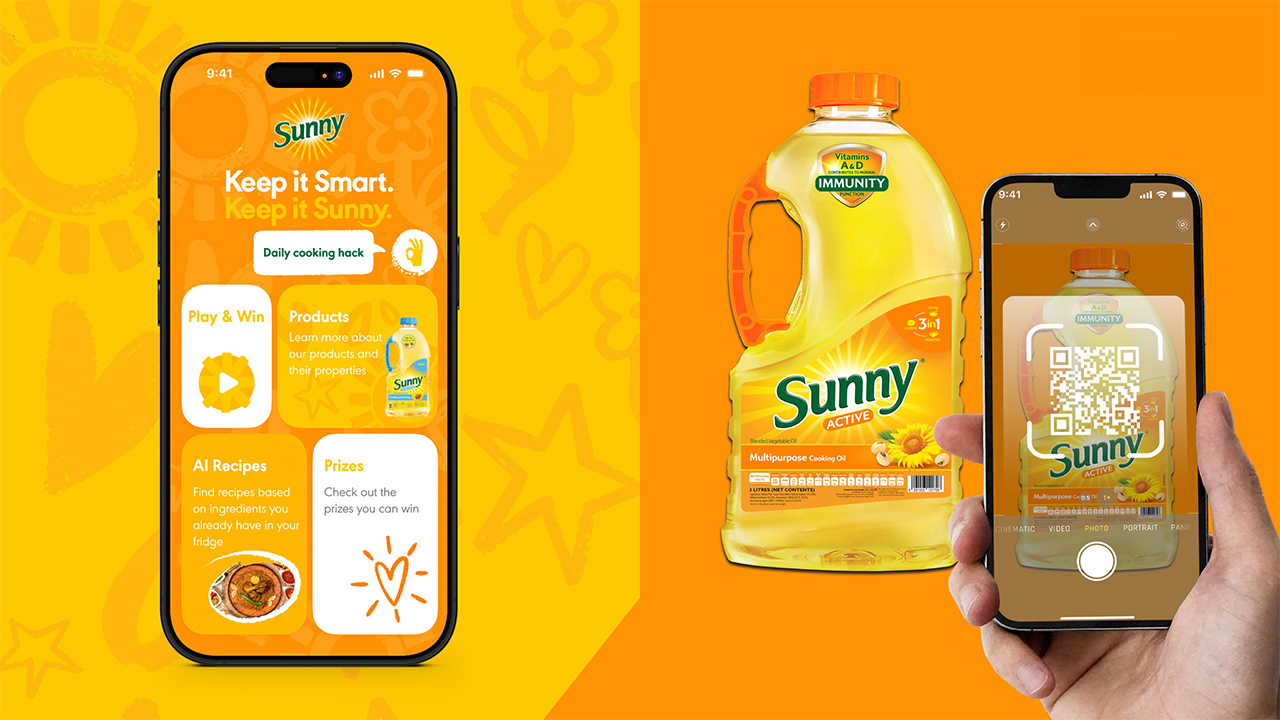 The web app-based connected experience offers users the opportunity to play games to win prizes, learn new cooking hacks and take part in fun daily activities. The smart packaging campaign, accessed via QR codes, runs across three Sunny products, including Everyday, Crunch Lite and Sunflower.
‘With Sunny cooking oil in the UAE, consumers don’t just access nutritional information, they can explore AI-powered recipe suggestions based on ingredients they already have at home. They also get cooking tips, interactive content like games and a more immersive brand experience overall,’ Stanley explains.
The web app tracks real-time interaction, such as buying habits, product preferences, average engagement time, age, location, scan rate, page views, number of users, return users and social media shares, including GDPR-compliant personal data to enable the brand to optimize its marketing and better understand consumers.
The Sunny oil campaign delivered strong results, with 10.7k total pageviews and high engagement reflected in 11.43 views per visit. The bounce rate was a low 21 percent, indicating excellent retention, while the average visit duration reached 6 minutes and 46 seconds, one of the best recorded.
Connected packaging for accessibility
Connected packaging can unlock new applications and address everyday challenges in ways that were previously not considered.
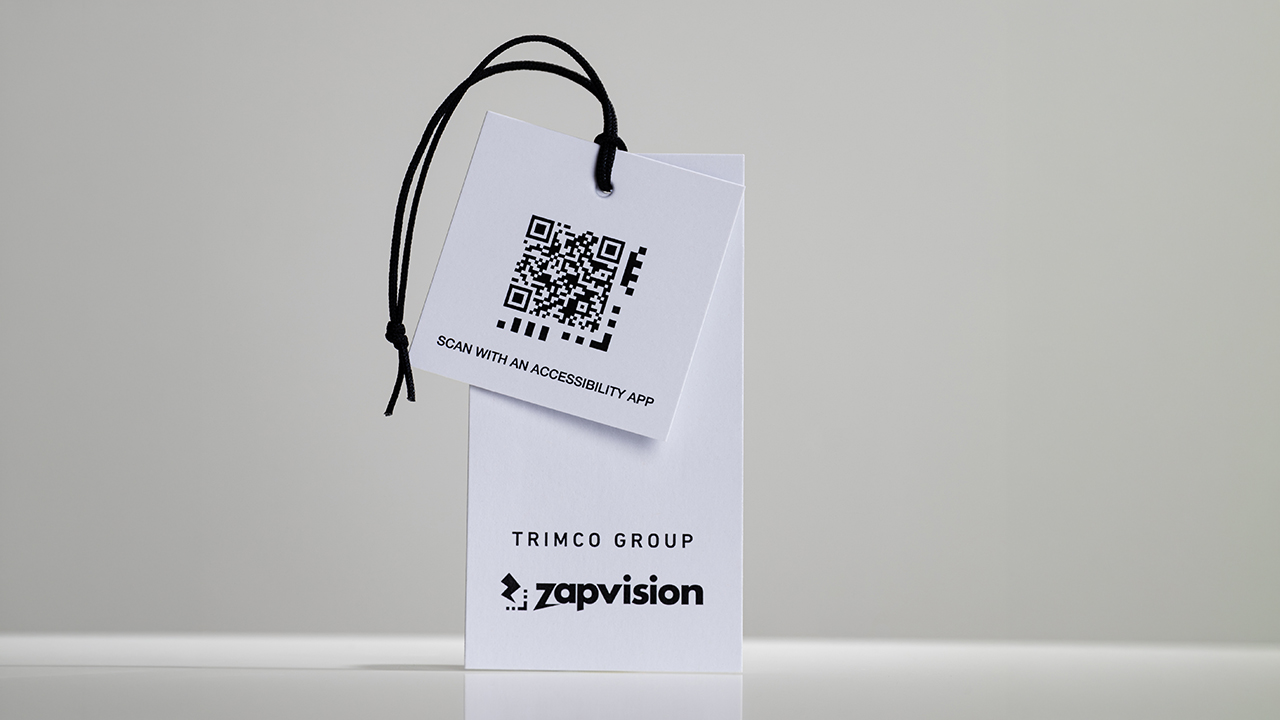
For example, as QR codes evolve and become mainstream, applications are expanding across industries. Trimco Group partnered with Zappar to bring Zapvision Accessible QR codes to the apparel and footwear industry for people who are blind or have low vision.
Zappar provides the technology to create and manage accessible QR codes and product data, while Trimco integrates them directly into garment labels during manufacturing. For brands, it’s a low-friction shift: use QR codes as usual, with accessibility built in, without separate labels or symbols.
Accessibility entered the conversation through discussions on the upcoming Textile Labeling Regulation (TLR) revision. A key concern about digital labeling is that it may exclude certain consumers, such as the aging population in Europe, who are not comfortable with fully digital formats.
‘Traditional QR codes were designed for sighted users, so they assume you can see, align and scan the code precisely,’ says Max Dawes, chief operating officer at Zappar. For people who are blind or have low vision, QR codes create multiple barriers. There’s no guidance to locate them, limited scanning flexibility and no accessible way to deliver structured information. Accessible QR codes address this by improving scanability and linking to content that works seamlessly with VoiceOver and TalkBack via assistive apps.
As QR codes become a likely carrier for DPPs, these systems must be designed to work for all consumers from the start.
‘If accessibility isn’t built in at that stage, we risk recreating the same exclusion we see today with physical labels, just in a digital format. The opportunity right now is that the industry is still in transition. QR codes are being adopted at scale, so there’s a window to make them accessible by design before they become standard across billions of products,’ Dawes days.
Mjelde from Trimco Group, adds that the biggest challenge for accessible QR codes is awareness. ‘In the apparel and footwear industry, accessibility in connected packaging is still almost unknown. Other industries, such as food, are further ahead in this area. In fashion, the first step is really about socializing the concept, communicating that accessible QR technology exists and educating the industry on why it matters.’
Mjelde adds that Trimco sees interest in accessibility from some of the largest brands, particularly those with strong resources dedicated to digital product development, traceability and on-product digitalization. However, most brands are not yet requesting accessibility features, largely because many are still unaware that such technologies exist.
‘That is why Trimco is actively bringing this conversation to the industry together with Zappar, because we believe it is an important step as connected packaging evolves,’ Mjelde says. ‘We see two distinct mindsets emerging. Some brands view DPPs mainly as a regulatory cost, while others see the potential to elevate the consumer experience.’
Stay up to date
Subscribe to the free Label News newsletter and receive the latest content every week. We'll never share your email address.