Academy changes process with Epson label printers
The California Academy of Sciences has transformed how it organizes its insect specimen collection with Epson label printers.
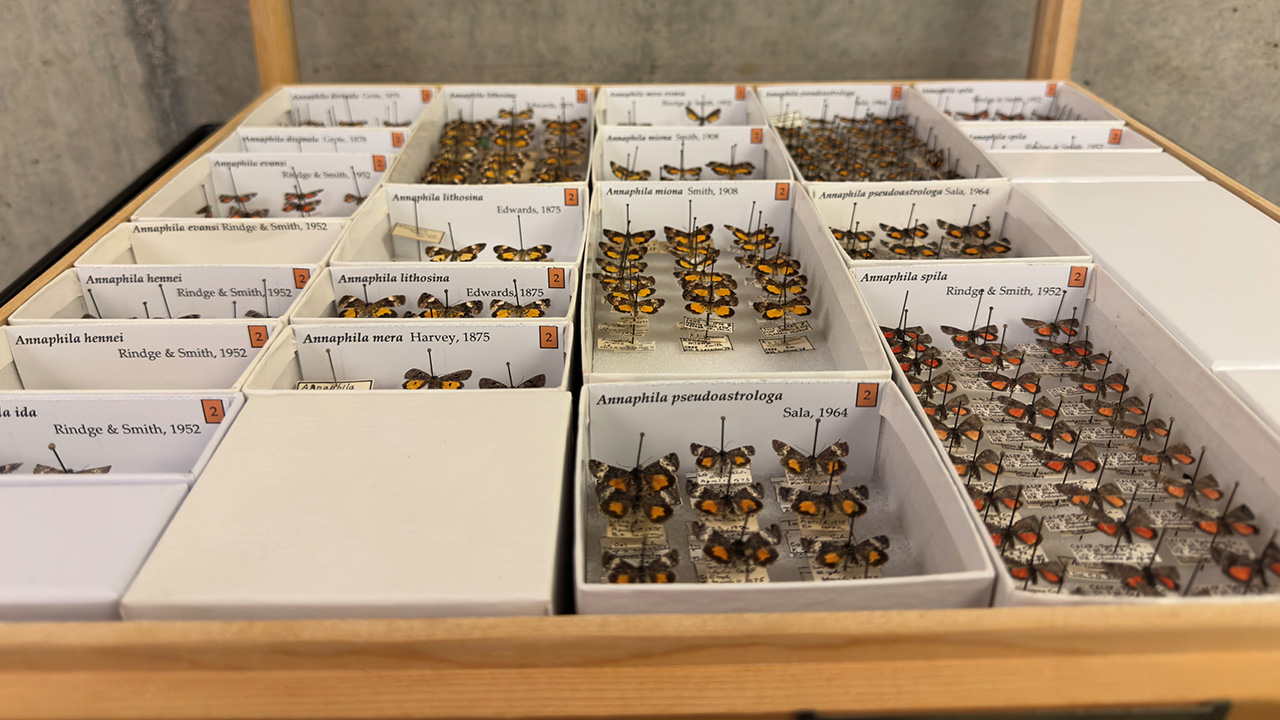
The California Academy of Sciences, home to one of the largest entomology collections in the world, has transformed how it organizes and manages its 18 million insect specimens with Epson ColorWorks on-demand color label printers.
Housing an acre of historic cabinets containing 35,000 wooden drawers filled with insect specimens collected from around the world, the academy replaced an outdated, geography-based color-coding system with a newly designed, bio-geographic color labeling standard using ColorWorks label printers.
'For decades, many museums used a color-coding system tied to geography that has problematic roots,' said Chris Grinter, collection manager of entomology, California Academy of Sciences. 'We moved away from that system years ago, but only recently developed a new one that reflects bio-geographic regions in a way that’s inclusive, color-blind friendly and scientifically useful. The ColorWorks printer made it possible for us to implement this change at scale.'
The academy’s entomology collection includes millions of specimens stored in standardized trays dating back generations. Each tray requires an individual label, and with scientific names constantly evolving due to advances like DNA analysis, updates are frequent. When the academy was looking for a new labeling system, it turned to Elisha Karan with Kenco Label, who recommended the ColorWorks CW-C6000A color label printers in combination with BarTender label design software to create durable, perforated, standardized labels that can be printed on demand.
'The academy was looking for a reliable solution to modernize their collection, and ColorWorks label printers were my first thought for the ideal fit,' said Karan. 'The on-demand nature of ColorWorks allows for rapid change and operational efficiency, while the reliability and ease of use make everyone’s job easier.'
The new system assigns 10 bio-geographic regions both a distinct color and a numeric identifier to ensure accessibility.
'We print labels every day,' Grinter said. 'Whether we’re replacing outdated species names, updating taxonomy or rolling out a new regional system, we can generate exactly the number of labels we need without wasting full letter-sized sheets or spending hours cutting them by hand.'
Previously, staff printed sheets of tray labels and manually cut each one, a time-consuming process for a department responsible for millions of specimens.
'The biggest saving is time,' Grinter said. 'We don’t have enough people to manually create custom labels for 18 million insects. Now we design templates once, upload a spreadsheet and print as often as needed. The quality of ColorWorks is consistent, even after thousands of labels.'
Because entomology collections must endure decades of handling and environmental exposure, durability was a key consideration. Unlike thermal labels that fade over time, Epson’s inkjet technology is designed to create long-lasting, durable labels that withstand heat and moisture. The academy team also selected perforated labelstock to streamline production, and after printing thousands of labels, consistency and reliability have remained high.
Beyond tray labels, the academy also uses a WorkForce WF-M1030 printer with pigment-based ink to create labels for jars and vials containing insect specimens stored in alcohol. The ability to print directly onto high-quality, alcohol-resistant paper has improved clarity and longevity compared to handwritten lids.
'We’ve even designed round stickers for vial tops,' Grinter noted. 'Eventually, we plan to add a second ColorWorks printer so we can operate both a tray-label station and a round-sticker station simultaneously.'
Organization is critical to ensuring researchers can quickly locate and request specific specimens, whether beetles from South America or insects from a particular habitat. Each specimen’s scientific name ties it to a precise location within the collection.
'When a researcher asks, "What is this bug?" we need to know exactly which tray holds that specimen,' Grinter said. 'Clear, standardized, color-coded labeling helps us maintain accessibility across an enormous and constantly evolving collection.'
The academy’s transition to on-demand printing also eliminates the need to outsource label production, which is an impractical option given the volume, frequency and customization required.
'Scientific names change all the time. This is not something you can standardize and order in bulk once a year,' Grinter added.
'We love to see the creative ways ColorWorks label printers are put to work, whether adding brand logos to a consumer label or organizing a scientific collection,' said Connie Kuo, product manager, Epson America. 'ColorWorks has brought organization and efficiency to the Academy’s entomology collection with can’t-miss-it color, improving inventory management and operations.'
With plans to further integrate its database systems with the BarTender label printing software in the next year or so, the California Academy of Sciences continues to demonstrate how technology adoption can advance scientific research, improve accessibility and modernize the stewardship of natural history collections.
'We have invested in a piece of technology that simply works and makes everyone’s job easier,' concluded Grinter.
Stay up to date
Subscribe to the free Label News newsletter and receive the latest content every week. We'll never share your email address.