UPM extends barrier paper to label applications
With this launch, UPM has expanded its range to include an 80 gsm basis weight, commonly used in label end uses.
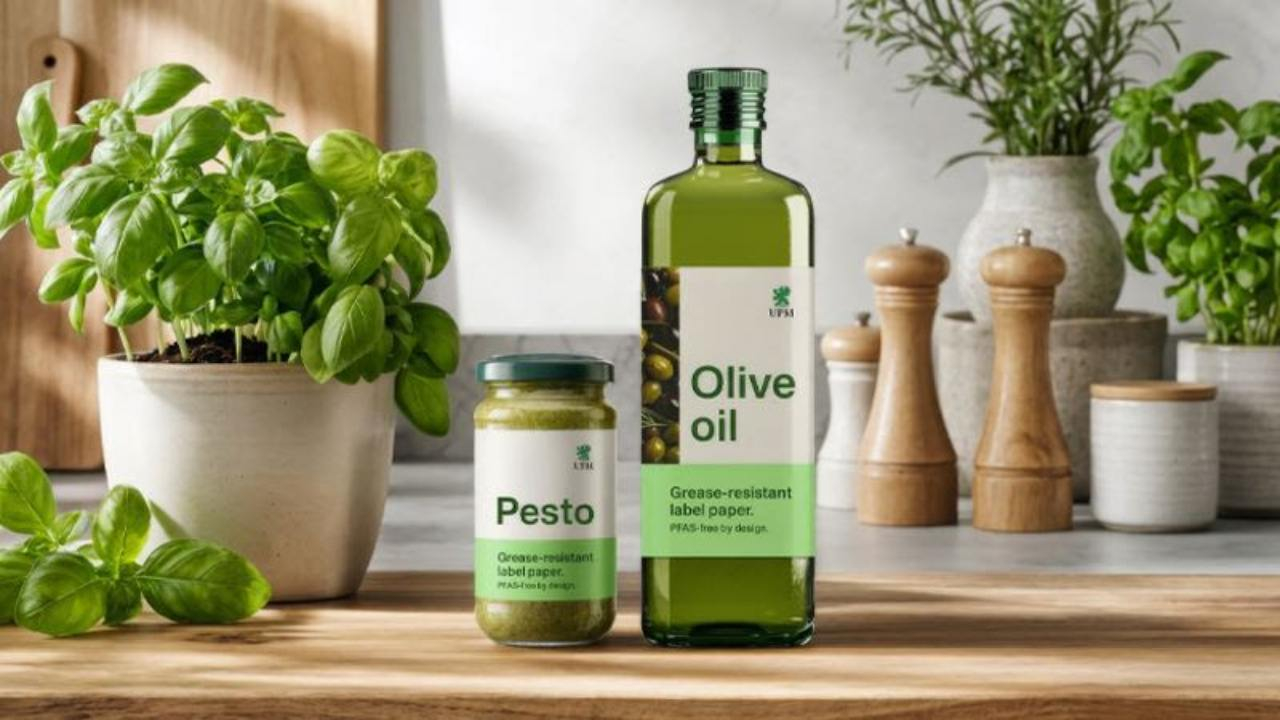
UPM Specialty Materials has extended its barrier paper technology, first introduced in the company's packaging papers, to label face papers. The new grade, UPM Asendo 80, applies that grease-resistance technology to labeling without PFAS.
The EU's Packaging and Packaging Waste Regulation (PPWR) restricted per- and polyfluoroalkyl substances (PFAS) in food-contact packaging, which became applicable across the EU on August 12, 2026. Label converters serving food-contact and other grease-sensitive applications, such as olive oil packaging, require face papers validated to perform without relying on PFAS chemistry.
UPM Specialty Materials does not add PFAS to its papers at any stage of production. Independent, third-party laboratories test each grade, providing converters with the documentation they need for their own customers.
UPM Asendo 80 is compatible with a range of adhesive types. It is also suited to UV Flexo and UV inkjet printing and is available as FSC- or PEFC-certified, meeting the US Food and Drug Administration (FDA) and the German Federal Institute for Risk Assessment (BfR) requirements for food-contact use. With this launch, UPM Specialty Materials has expanded its range to include an 80 gsm basis weight, typically used in label end-uses. Label converters can draw on UPM's technical team for guidance on design considerations when adapting UPM Asendo 80 to a particular label format.
'Bringing our barrier technology from packaging into UPM Asendo 80 gives label converters access to grease resistance that has been validated over years of use in demanding packaging applications. It also helps converters grow and win by opening the door to higher-value label applications,' said Kirsi Lahtela, product manager, UPM Specialty Materials.
Converters evaluating UPM Asendo 80 for a specific end use can request samples for testing under their own production conditions, with UPM Specialty Materials supporting them throughout the evaluation.
Stay up to date
Subscribe to the free Label News newsletter and receive the latest content every week. We'll never share your email address.