Loupe Americas 2026 software, inspection and platesmaking review
Software, inspection and platemaking converge around data and automation.
Labels & Labeling's Loupe Americas technology preview sorted exhibitors into 14 categories, a tidy map for anyone hunting for a specific product on the show floor. However, across the halls in Rosemont, that map often blurred those territories. An inspection system used press data to decide whether a roll was worth stopping for. A plate mounter identified each plate by camera and verified its job assignment. An AI agent turned a customer's email into a sales order. The three belong to different categories, yet all were chasing the same goal: capturing more data at the point of production, connecting it to the rest of the business and acting on it with less manual effort.
Software and workflow
Cloud becomes the default
The clearest architectural shift is from installed software to browser-based platforms. Cerm used the show to launch O2, a cloud-native MIS aimed at small and medium-sized converters. The first version supports label production, with flexible packaging and folding carton functionality to follow in a second phase. O2 takes an API-first approach and draws on Cerm's partner ecosystem, which includes Esko, Hybrid Software, ABG and Screen. It sits alongside Cerm7, the established suite used by more than 500 companies, rather than replacing it. According to Cerm, O2 drew strong interest at the show from visitors looking for a browser-based MIS built around ease of use, automation and connectivity. 'Our goal is to create a platform that companies can grow with,' says Jan Heyse, CEO of Cerm.
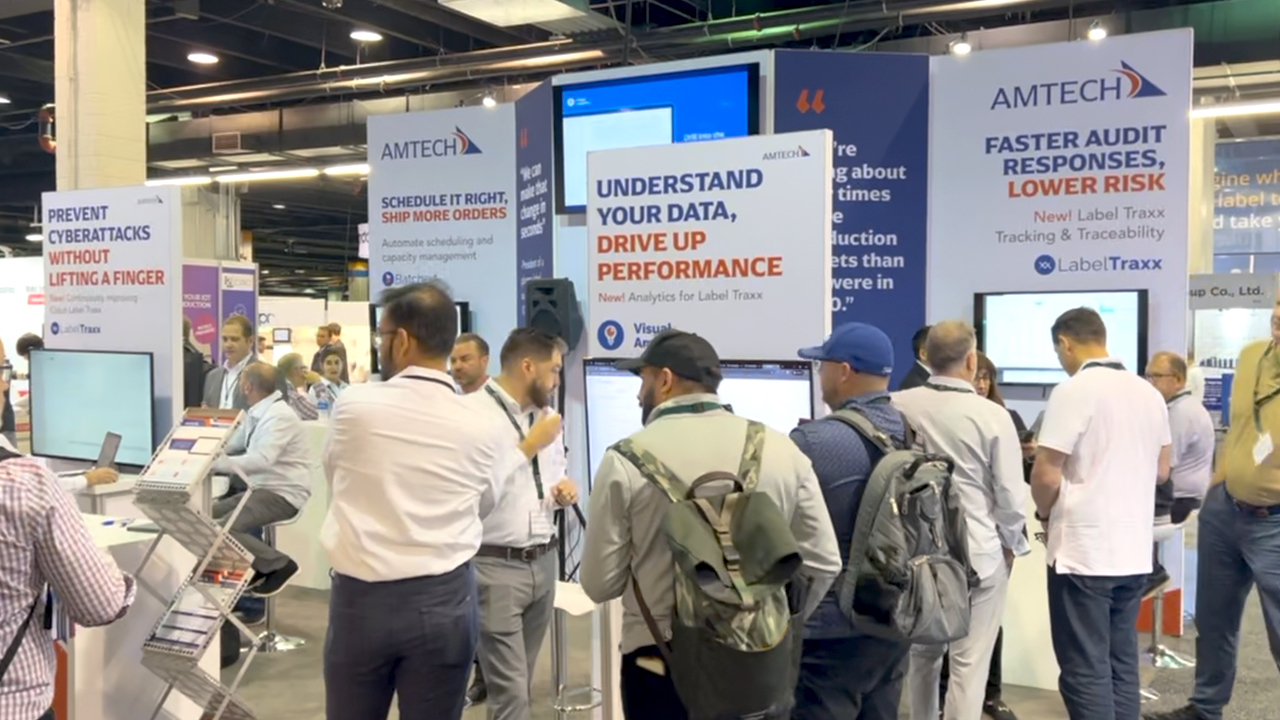
Amtech Software is making a parallel move with its label management system. Grant Emison of Amtech gives three reasons for going to the cloud. Smaller single-site converters carry the cost of maintaining servers, upgrades and backups, and face exposure to cyberattacks. Larger customers want proof that the system scales with their business. A modern microservices architecture also lets Amtech deliver features faster than an on-premises release cycle allows. Its design priority is continuity: menus and layout stay close to the existing application, so customers face neither a data migration project nor a retraining exercise.
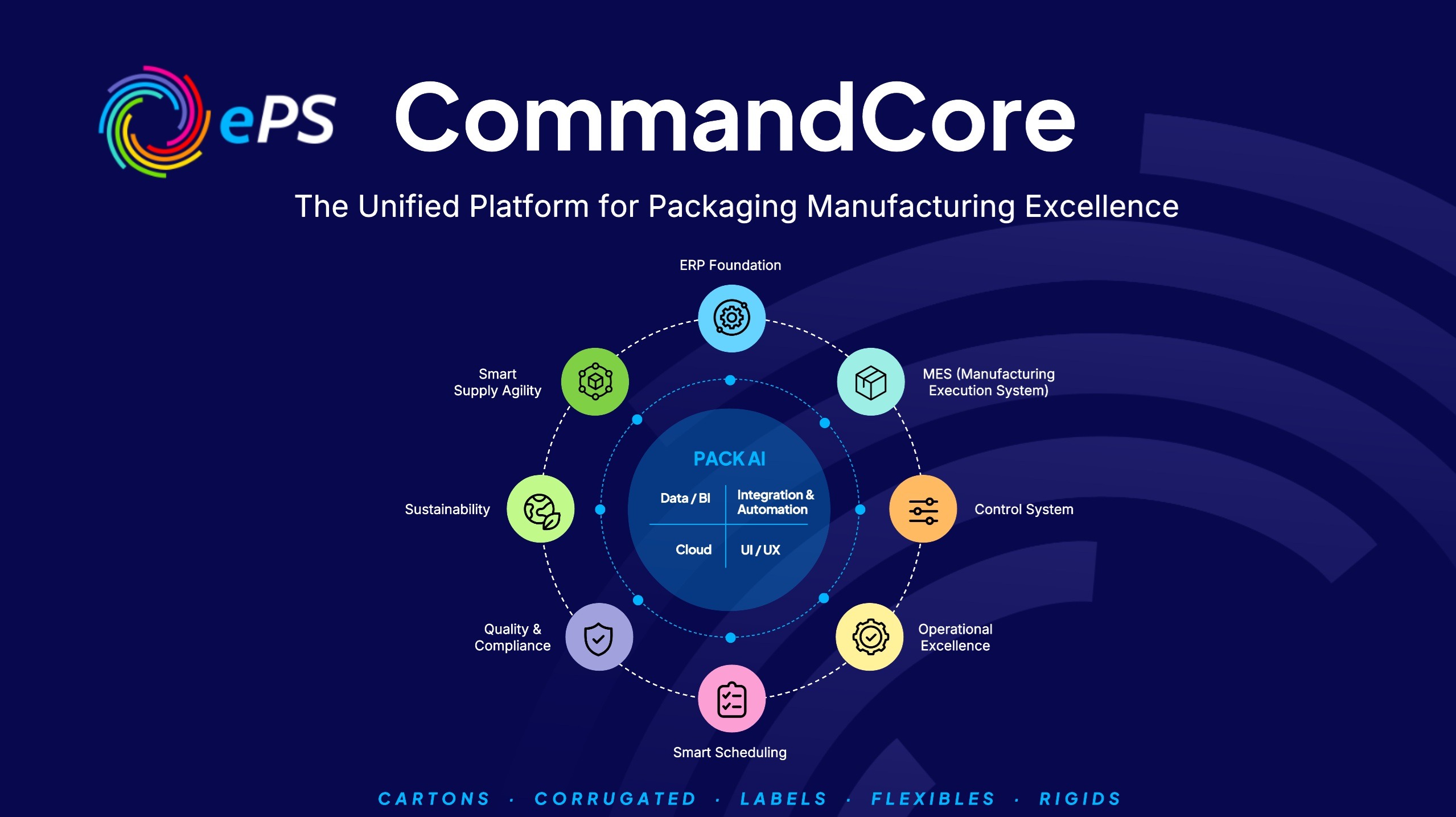
ePS took a two-tier approach. Paxis is a cloud-native SaaS ERP for small and growing independent label converters, designed for rapid deployment with minimal IT requirements. CommandCore sits above it, connecting ERP, MES, scheduling, quality, analytics and sustainability applications through a shared data model and common interface, with an AI layer called Pack AI.
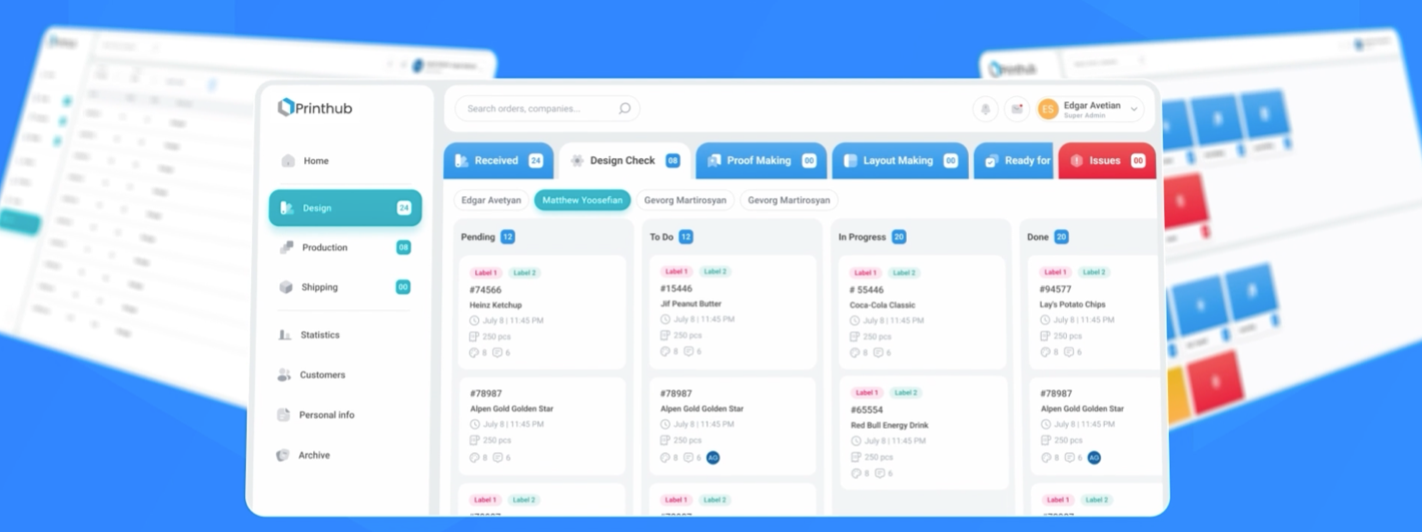
theurer.com, exhibiting in the US for the first time, showed a browser-based scheduling board, Web Portal 2.0 and a prototype C3 Web CRM, along with a mobile logistics app for goods receipts, material movements and shipping. Neetry's PrintHub and Sistrade's Atlas make the same case from other angles, unifying quoting, order management, planning and analytics on one connected platform.
The common thread is the target customer. Smaller converters without dedicated IT departments are now the priority audience, and vendors are removing infrastructure ownership from their list of worries. Steffen Haaga, director of global business development at Cerm, links this to a wider labor issue. Converters, he notes, struggle to find enough educated people, and training takes too long, so systems have to be simpler and faster to learn.
HiFlow Solutions heard a similar concern from converters at the show. 'Experts are aging out of the industry, plants are consolidating, and labor is harder to find and keep,' explains Alfonso Hernandez, vice president of sales at HiFlow. 'Having real connectivity on the shop floor is also paramount, being able to track equipment, substrate and tools so you're not losing time to unplanned downtime.'
AI settles into workflows
Nearly every software and inspection vendor at the show referenced AI. Product listings for Cerm, Esko, HiFlow Solutions, Hybrid Software, ePS, theurer.com, SpencerMetrics, Sistrade, Flex-Metrics, Techkon, EyeC and AVT all mention it in some form. With that much overlap, the useful question is which jobs each vendor hands to it.
The most crowded area is order intake. Cerm's Lexis reads incoming order emails and attachments, matches the content against live MIS data, attaches a confidence score to what it finds and prepares a sales order for a staff member to review. Nothing enters Cerm without a person signing off. Cerm says Lexis is live with 20 customers, and it was nominated for the Innovation Award at the Labels & Labeling Global Awards.
Onpack, an early adopter, has processed 260 orders covering more than 3,500 products through it. 'For our larger orders, what used to take two to three hours to key in by hand now takes under an hour with Lexis,' explains Michael Nankervis, managing director at Onpack.
Hybrid Software demonstrated jAImes, which automates the processing of customer emails and production requests. theurer.com lists email and service request processing in C3, and HiFlow includes order processing among the six AI workflows it demonstrated. Cerm's Haaga puts the scale of the opportunity at 60 to 80 percent of customer jobs being repetitive, with many orders still arriving by email.
Estimating is the second target. HiFlow introduced an AI Quote Agent that lets users begin an estimate through conversation rather than manual entry, alongside AI workflows for estimate processing, supplier deliveries, supplier price lists, bills of lading and accounts payable. 'AI is quickly becoming a checkbox for every software company. But having AI isn't the point,' notes Mariusz Sosnowski, CEO of HiFlow. He describes the current agent as a starting point for a future where users interact with every part of the ERP rather than navigate screens and menus. 'Loupe gave us the opportunity to move the AI conversation from what might be possible to what converters can actually see working today,' adds Sosnowski. 'When AI can read the information already coming into a business, turn it into usable ERP data and eliminate repetitive entry, that's where it begins to make a real operational difference.'
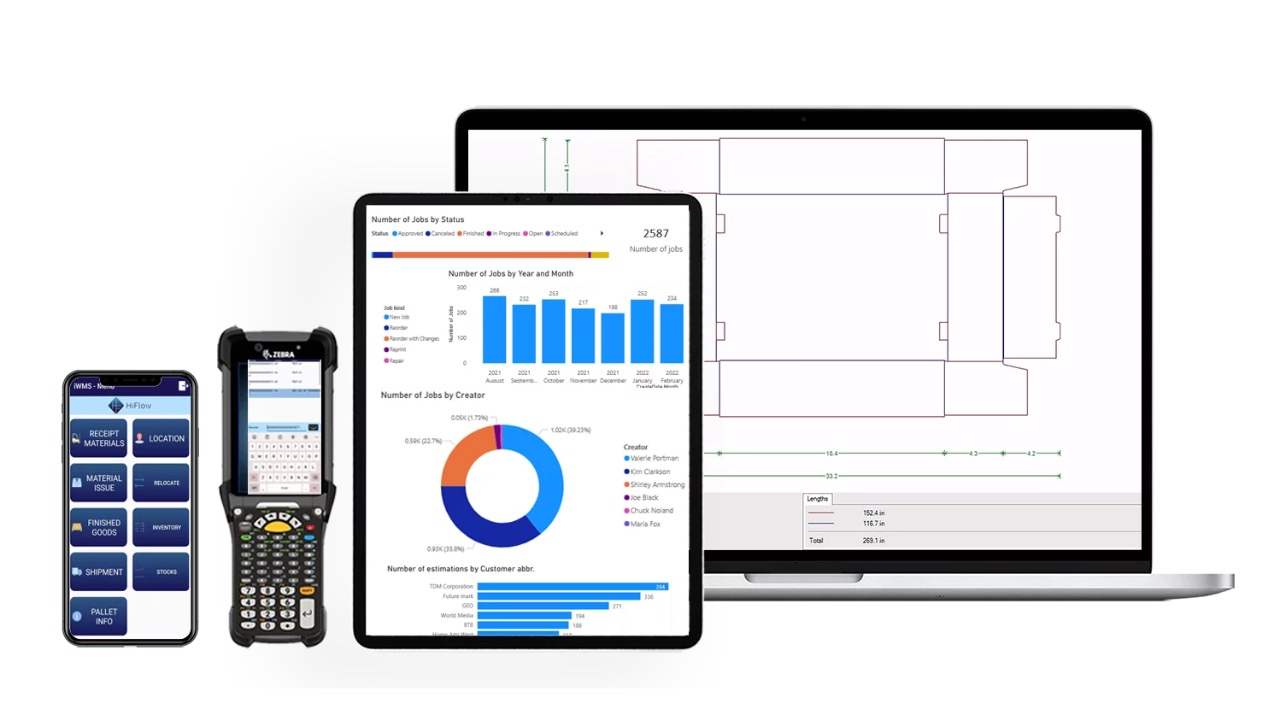
Steve DeBenedetto, business development manager at HiFlow, points to a related shift behind the push: converters increasingly run label, flexible packaging, folding carton and other processes together rather than staying in one segment, so the platform has to keep pace with how they actually operate rather than the segment they started in.
The third area is questions about data already held. SpencerMetrics unveiled Q, an AI module for its Connect platform that answers queries on job performance, ink and media usage, and machine and operator productivity, without a separate data analyst workflow. Sistrade's Atlas applies AI to KPI dashboards, profitability tracking and anomaly detection. Cerm's Smart BI Enterprise adds a new architecture that lets customers combine the Smart BI data model with external data sources, along with a new set of standard reports and automatic translations of the data model.
Fourth is operator assistance in pre-press: Hybrid Software's PackZ PDF editor adds AI tools for support, scripting and custom actions, and Esko says AI capabilities now speed up the operator at several points in its pre-press workflow. Esko's customer portal, shown for the first time, uses AI to check artwork quality when a packaging buyer uploads it. Techkon's ChromaQA7 color management release also adds AI features.
Vendors disagree on how much ground remains. 'I would say it's less than 10 percent,' replies Haaga, when asked how much of the productivity opportunity AI has tapped. Jan De Roeck, marketing director at Esko, argues the measure is the wrong one. 'With AI, we are in a totally different paradigm, whereby the software is capable of making certain decisions and driving the workflow forward,' he adds. Until converters accept that change, he continues, they will not get the full benefit from the tools. The two views are compatible: narrow, well-defined jobs deliver value now, while the larger gain depends on converters letting software carry more of the process.
Shop-floor data gains context
A second theme is what counts as production data. Machine-generated data is now routine. The newer question is how to add the human context that explains it. Flex-Metrics launched Flex-Voice, which combines operator voice input with machine sensor data and links the verbal description directly to the corresponding machine event. The company argues that a press stopping for 17 minutes is a data point, while what the operator noticed beforehand is the root cause. It positions that context as the raw material future AI analysis will need.
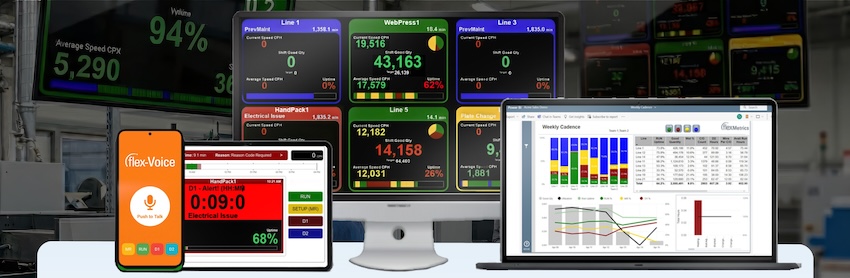
Other vendors are deepening the machine-side record. ePS's Auto-Count 4D offers browser-based real-time monitoring, OEE measurement, downtime tracking and KPI dashboards, and claims efficiency gains of up to 20 percent. Cerm's updated traceability creates a digital record whenever a new production input is scanned or started, an operator changes or a semi-finished good is completed, capturing timestamp, duration, unit, image, product list and pallet. It supports narrow web labels, sheet-fed offset, wet glue and RFID labels, and folding carton. Its quality management update replaces paper records with digital checklists tied to each job.
Amtech's track and trace module treats a roll coming off a machine as inventory, with known width, cost, parentage and floor location. If a quality problem is found, users can search backward to the root cause and forward to identify what to quarantine and which customers to inform, all the way to serialized cartons, packing slips and invoices.
Labor is the subtext. 'One of the biggest benefits of implementing Cerm is that it allows us to do more with the same staff,' comments John Abbott, president of Abbott Label. The stated aim is reallocating people rather than eliminating positions, a position Onpack's Nankervis echoed for Lexis.
Scheduling turns rule-based
Scheduling software is following the same logic. Cerm Tempo is a browser-based scheduler that uses rule-based automation and a scoring system. Converters define rules to minimize switchovers, prioritize customers or balance workloads across similar equipment, and the system schedules complete jobs within seconds and recalculates when orders or priorities change. ePS's PrintFlow offers finite capacity, constraint-based and multi-plant scheduling, and theurer.com's new browser-based scheduling board moves the same function away from desktop software. Faster quoting expectations sit behind all of it. Cerm’s Haaga notes that converters once had a week to turn around a quote, while customers now expect responses far sooner.
Pre-press speeds up and connects
Esko's WebCenter Pack combines automated job onboarding, instant preflight feedback, templated specifications, no-login file uploads, integrated approvals and version control. Flexo Front End+ is claimed to cut file preparation time by as much as 50 percent. Both sit within Esko's Spec-to-Pack strategy, which links specification, artwork management, pre-press and print production.
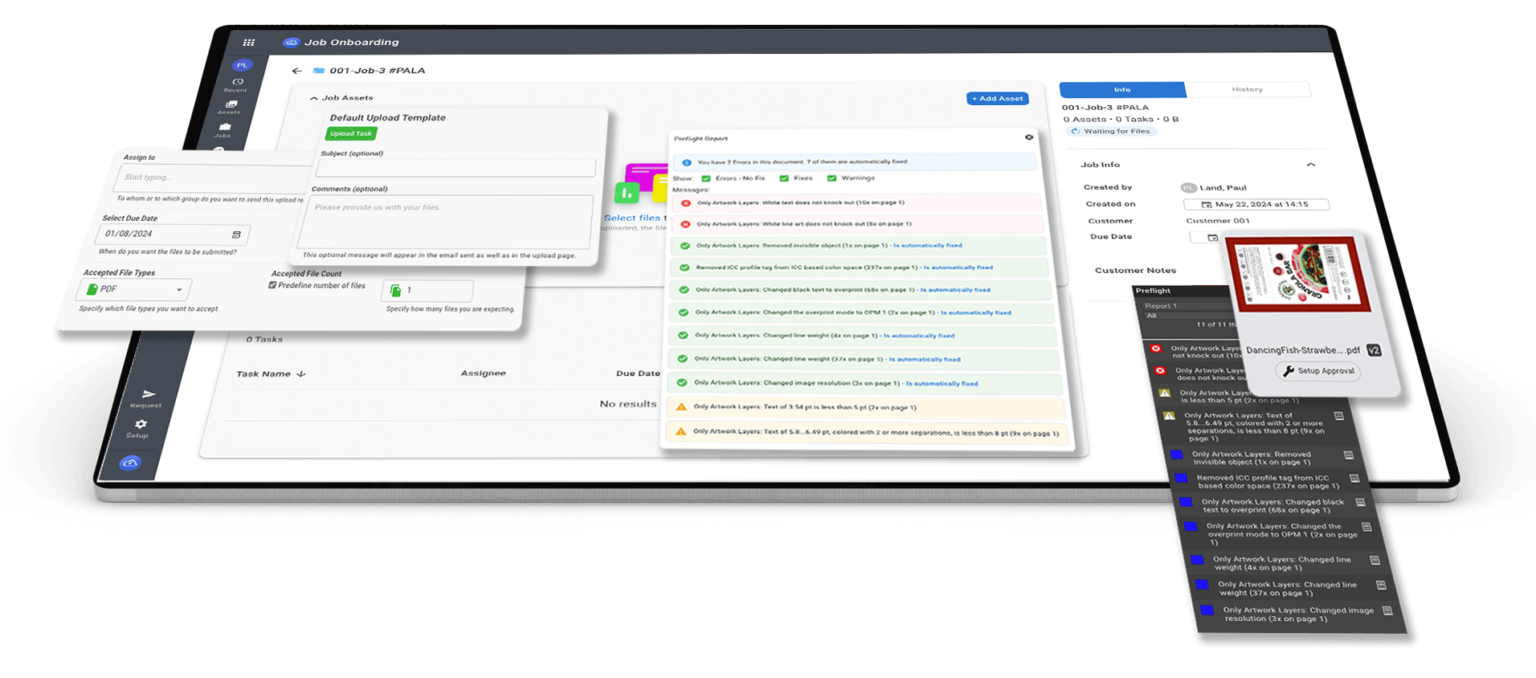
Hybrid Software showed CloudFlow with CloudFlow Matches, the latest Artflow release and an updated iC3D with improved asset management and native CF2 structural design file support.
On the RIP side, Hybrid Software Helix's SmartDFE Version 6 brings a GPU-native Harlequin RIP. The company says it delivered rendering speeds 30 times faster than the CPU-native version in testing on real-world variable data files, and that it reduces hardware requirements while maintaining quality. Integration is becoming a selling point in its own right.
EyeC's new Proofiler Graphic Connect is a cloud-based service that inspects print-ready and step-and-repeat files inside workflows such as Hybrid Cloudflow or Esko Automation Engine. Esko's Label Trail, a guided tour through end-to-end label production, linked live demonstrations at the booths of Avery Dennison, CarbonQuota, Cerm, Flint Group Digital Xeikon, Grafisk Maskinfabrik, Kurz and Scribos.
Inspection and testing
Inspection becomes a data source
Inspection vendors are positioning their systems as sources of process data as much as defect detectors. AVT says its 100 percent inspection systems provide continuous real-time visibility into print performance, so operators can spot trends, reduce waste and shorten set-up times, and it demonstrated multi-layer varnish inspection on its Helios systems. The Helios Varnish Inspection Module, which lets converters inspect clear varnish during high-speed production, won the Innovation Award at the Labels & Labeling Global Awards on the opening day of the show.
EyeC's ProofRunner Web HighLight UHD, with an 8K camera, was shown with MPrint on an integrated rewinder. The setup uses press data to evaluate roll quality early, so operators can approve minor deviations without stopping the line, and the AI-driven defect classification aims to improve speed and accuracy. 'By combining press-based quality evaluation with automated rewinder control, EyeC gives operators the speed and accuracy customers expect,' adds Juergen Klicker, president of EyeC-America.
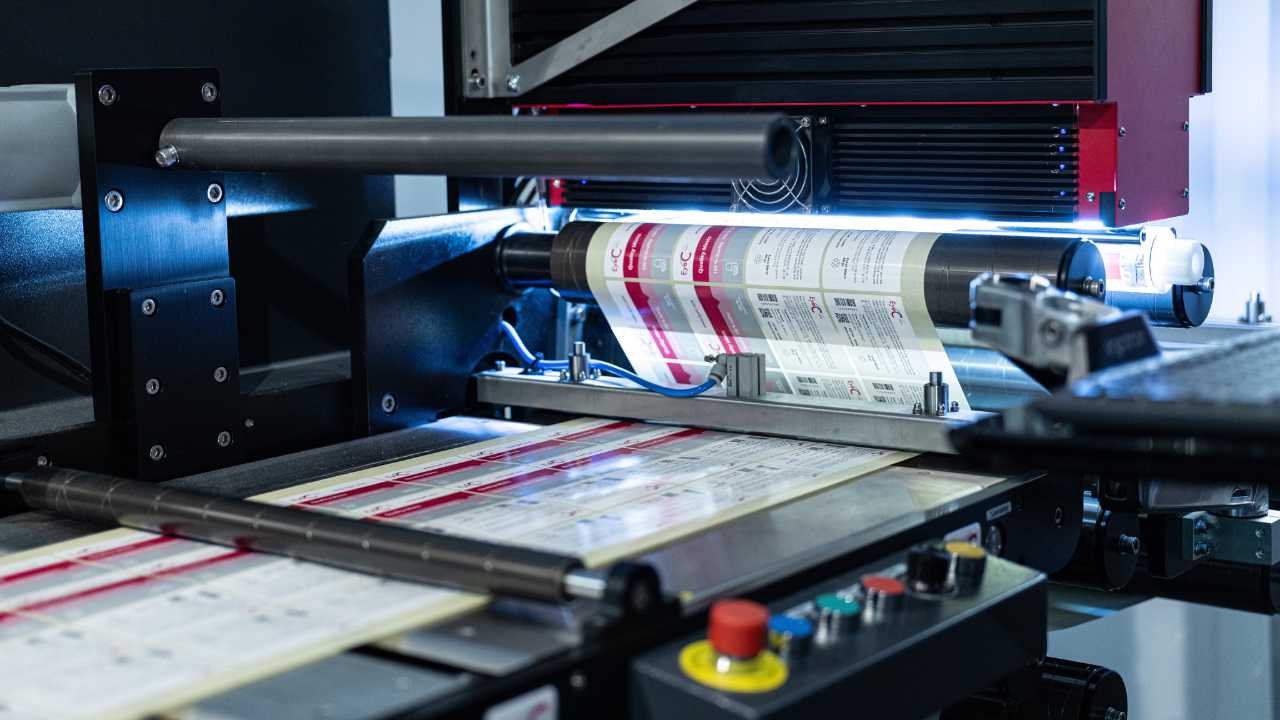
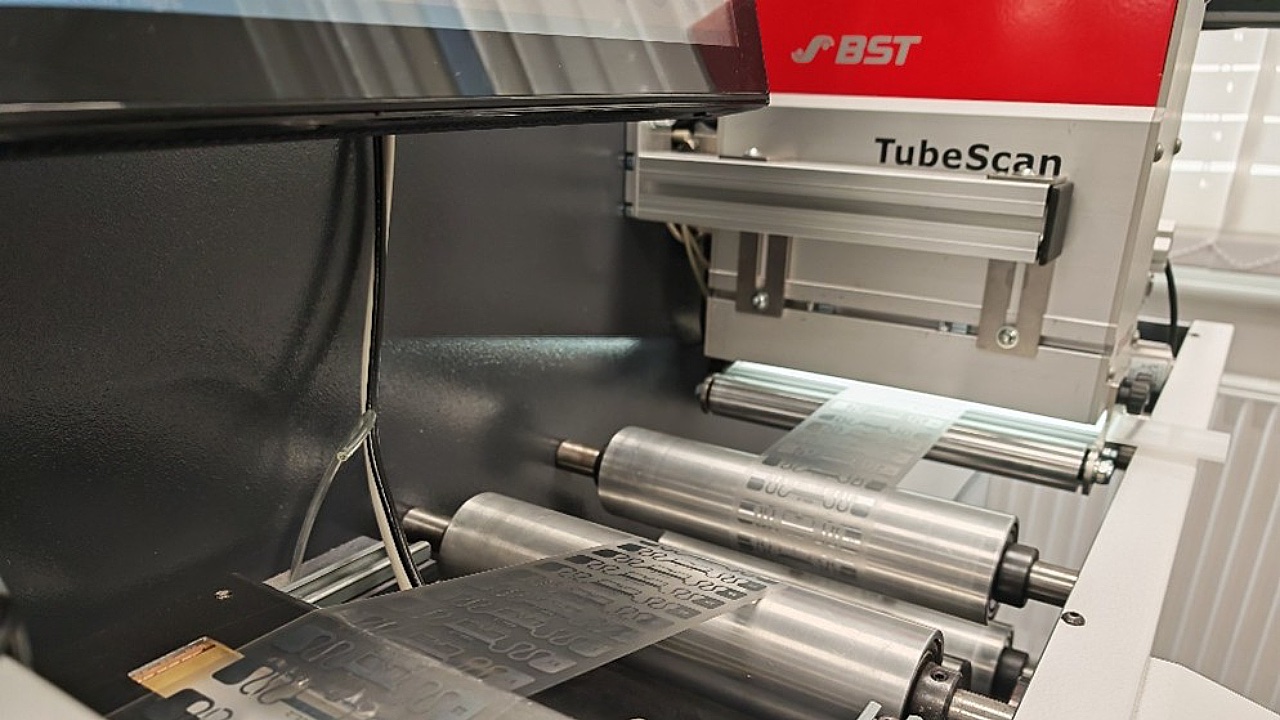
The hardware keeps expanding what it can detect. BST's TubeScan with Digital Strobe 6K uses Multiplex Illumination to run up to three lighting modes in one pass, and Dynamic Job Change switches inspection settings between jobs on a single digital roll without interrupting production.
Erhardt+Leimer showed a second-generation Elscan OMS3 with 4K imaging, and the OMS5 adds a lighting concept for gloss varnish and gold and silver foil. Its Smartscan UV makes fluorescent features, security markings and transparent adhesive areas visible. Rosas paired its Viper 750 rewinder, running at up to 750 m/min, with the Rosas Infinity 4K inspection system.
RFID gets its own inspection
RFID has grown into a distinct quality discipline. Erhardt+Leimer's Smartscan RFID uses a 200 percent concept with dual image acquisition to check print, material and inlay defects together. Rosas built its Leopard 300 tabletop platform around that system and CISC's Xplorer RFID testing technology, adding a code verifier that extends it to optical inspection, RFID encoding linked to QR codes or barcodes, variable data verification and automatic removal of defective tags.
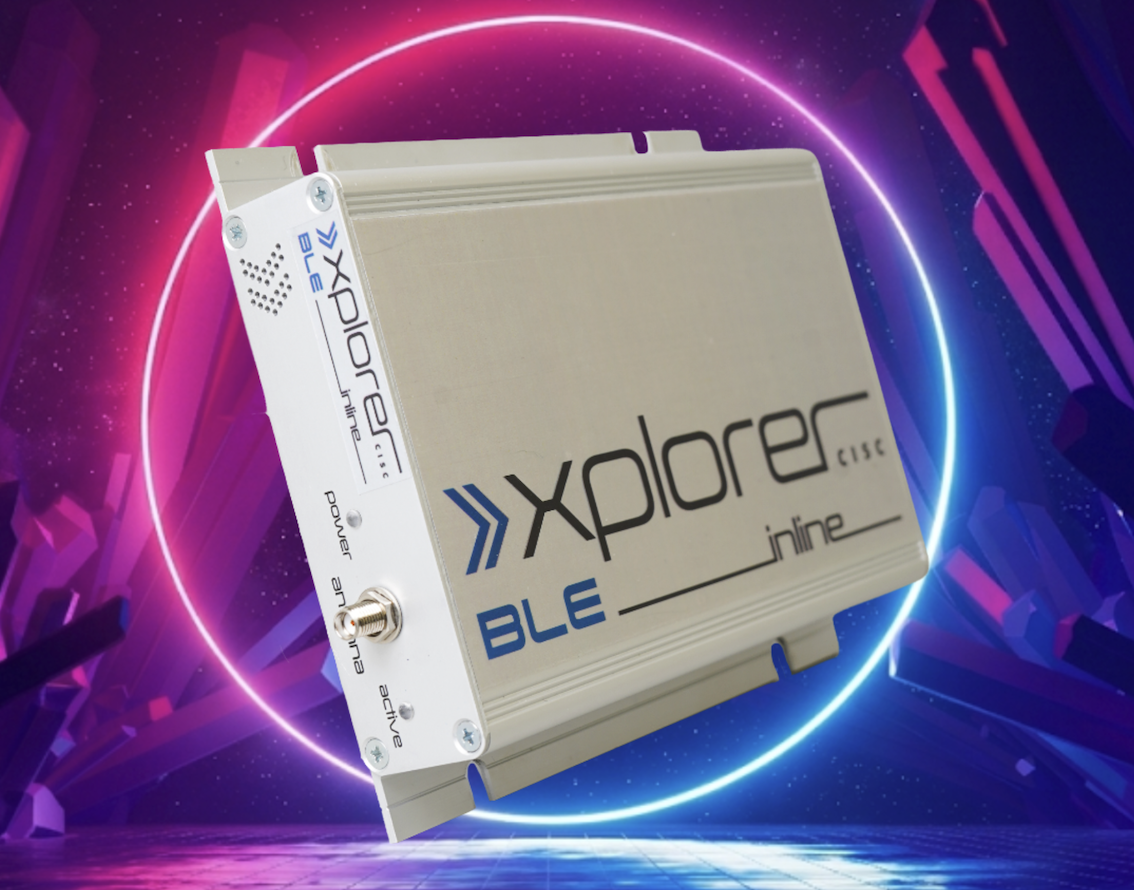
CISC's Xplorer series covers in-line quality assurance, encoding and encryption for RAIN RFID, NFC and BLE, with demonstrations alongside Del-ta ModTech, Tamarack, Mühlbauer, Rosas and DPI. Axicon's 15000 series verifies linear and 2D barcodes, including GS1 formats, and can grade direct part-marked symbols to ISO/IEC 29158.
Measurement moves in-line
Testing equipment that once lived at the bench is being installed on the line. Applied Rigaku pairs its NEX QC II benchtop X-ray fluorescence analyzer for silicone coat weight with the NEX LS, an in-line analyzer measuring across the full roll width. Kett offers continuous online near-infrared analyzers for moisture, barrier coat weight and film thickness.
MoistTech's IR3000-C stores calibrations for up to 50 products and connects to oven and dryer controls to support energy optimization.
The same pattern appears in press-side measurement.
Troika's new Evo 3D scanning microscope captures cell volume, depth and wall thickness on anilox rolls and gravure cylinders, and its FlexoCAM handheld device measures plates on press. Both feed data into Troika's management platforms for wear-trend tracking and asset-lifecycle monitoring.
Techkon, Monarch Instruments, IMASS, Thwing-Albert and SGS – IPS Testing rounded out color, web viewing, adhesive, friction and independent laboratory testing.
Plates and platemaking
Platemaking cuts energy and touchpoints
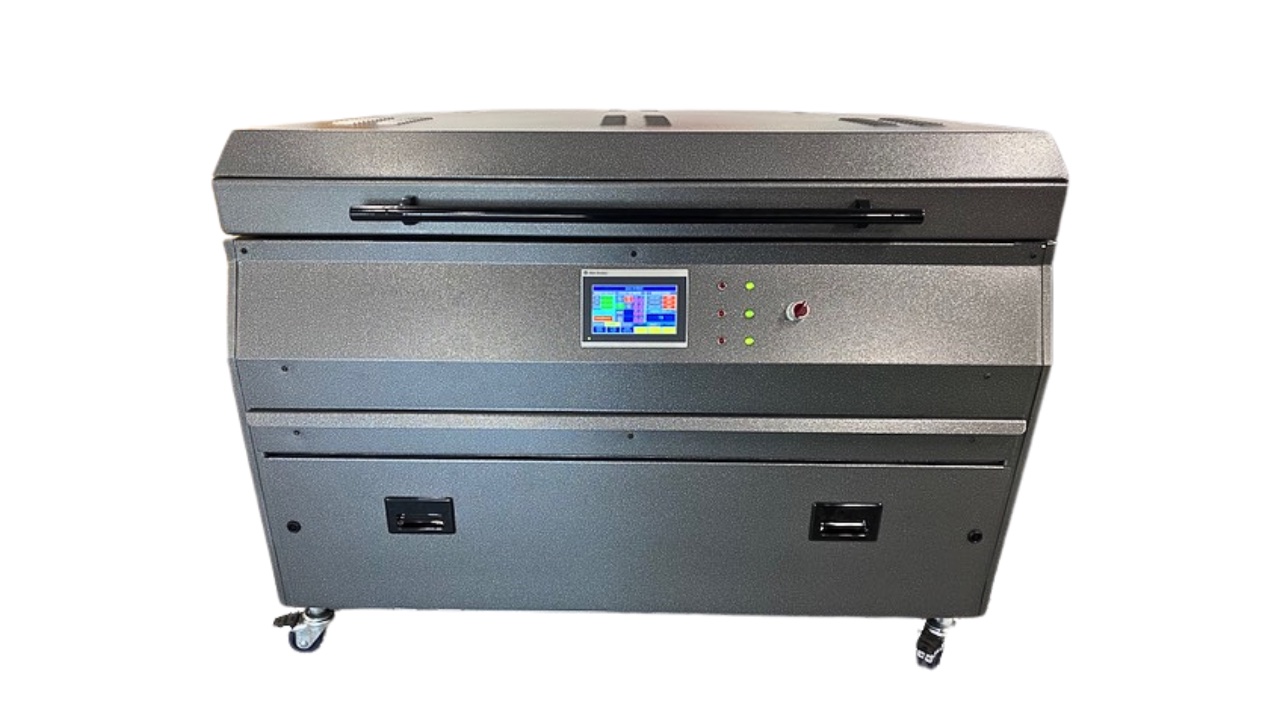
Platemaking exhibitors focused on energy, materials and fewer manual steps. LED exposure is replacing UV tube banks. Esko's XPS Spark 4835 delivers up to 80 percent lower energy consumption and removes mercury and tube replacement, while Anderson & Vreeland's new AVxpose UV-LED unit produces flat-top dots without additional consumables and needs no warm-up.
Lower-carbon plates, thermal workflows
Materials are the other lever. DuPont Cyrel showed Cyrel ReNew, a plate family made with a photopolymer containing more than 50 percent certified bio-circular raw materials from renewable natural sources, backed by ISCC Plus-certified traceability through a mass balance approach. The family won a Sustainability Award at FTA Forum Infoflex 2026 and was a finalist for the Sustainability Award at the Labels & Labeling Global Awards. PJ Fronczkiewicz, North America technical marketing and service leader at DuPont Cyrel, describes it as a drop-in product, so printers can reduce reliance on fossil-based raw materials while keeping the quality, consistency and productivity they expect. DuPont claims the highest share of renewable content on the market.
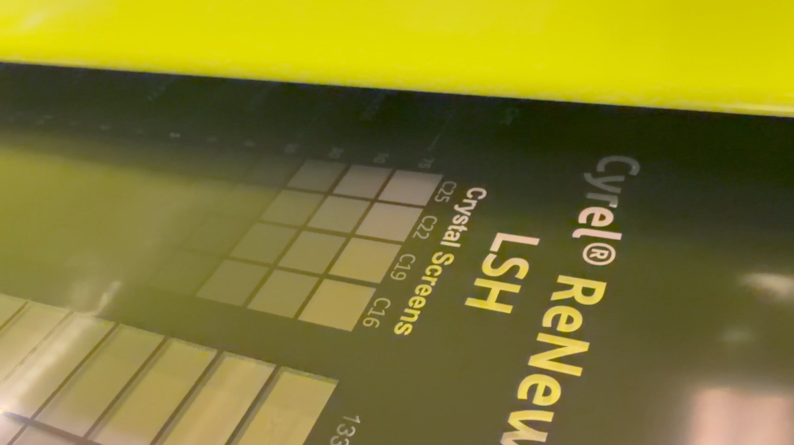
Thermal processing is the second half of the story. The Cyrel Fast workflow develops plates in minutes using heat instead of washout chemistry, and GreenCircle has certified it as delivering 20 percent less energy consumption. DuPont plans to extend ReNew to thermal-processed plates. The company also showed the Esko CDI Quartz plate imager on its booth, and three Cyrel plates (Cyrel Easy ESXR, Cyrel Easy EPR2 and Cyrel Fast Easy EFXR) are now certified for the Esko Quartz workflow. 'The certification of Cyrel Fast Easy EFXR is particularly significant as it is the first thermally processable plate certified for the Esko Quartz workflow,' explains Fronczkiewicz. It allows converters and trade shops to combine Quartz imaging precision with the operational and environmental benefits of thermal platemaking. The certification is also another example of vendors validating products to work together rather than selling them in isolation, which echoes the integration theme in software.
Direct engraving and mounting
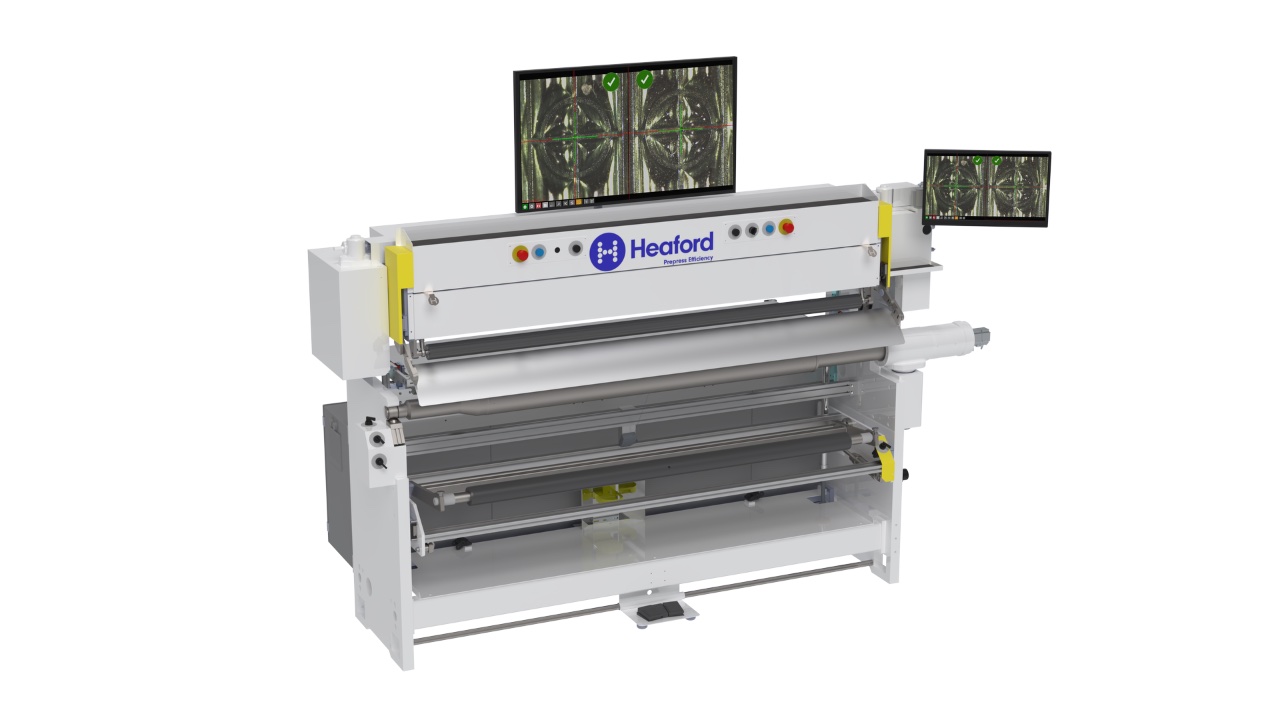
Direct engraving offers another route to fewer variables. ContiTech promoted its Conti Laserline direct laser engravable plates, and Luminite showed seamless laser-engraved elastomer sleeves that remove plate joins and the exposure, washout and mounting steps. Automation is arriving at the mounting stage: Lehner's FlexoMatrix identifies plates by camera, verifies job assignment and presets 360-degree register, with variants adding MIS integration and robotic handling. Heaford's ModularMount lets converters raise automation levels incrementally without replacing the base unit. Esko's Quartz Thermal Screens and Flexo Front End+ target a familiar complaint. 'Traditionally, flexographic platemaking has relied on a collection of separate technologies,' says De Roeck. He notes that managing them independently adds complexity and setup time.
Measuring and handling plates
Plate data is following the same path as press data. Beta Industries added microcell analysis, hybrid screening analysis, 3D topographical imaging of ink laydown and four focus levels down to the plate floor for washout verification to its BetaFlex Pro2 plate image and print analyzer, which measures dot percentage down to 0.5 percent at 300 lpi. Lehner's Print4Matrix adds automatic plate identification and permanent backside marking with plain text, barcodes and QR codes.
Handling gets attention too. Heaford's FTS range supports multiple presses from a single mounter, and Jalema and Railex showed vertical filing and trolley systems for storing and moving plates and dies.
What converters should watch
Many of the headline numbers are vendor-reported and come from unspecified conditions: 30 times faster rendering, up to 50 percent faster file preparation, up to 80 percent lower energy use, up to 20 percent efficiency gains. Converters will want to test them on their own files, presses and workflows.
The wider pressure is not in doubt. De Roeck points to geopolitical instability, rising energy costs and price increases in flexible materials as sources of inflation and margin worry, and to extended producer responsibility fees becoming a US topic as well. Cerm's post-show summary of its customer sessions adds a more operational list of challenges: increasing production complexity, shorter runs, pressure on skilled personnel, more advanced traceability requirements and the need to connect more systems across the production workflow. Heyse reads the response as a demand signal. 'The reaction to O2, Lexis and Cerm Tempo confirmed that converters are actively looking for more automation, better connectivity and software that makes complex processes easier to manage,' he reflects. Against that background, the direction across all three categories is consistent: platforms that live in the cloud, AI assigned to defined jobs, measurement that feeds back into the wider operation and less hardware and labor per finished label. The remaining question is how quickly converters, especially smaller ones, can absorb the change.
Stay up to date
Subscribe to the free Label News newsletter and receive the latest content every week. We'll never share your email address.