Labelexpo targets the future
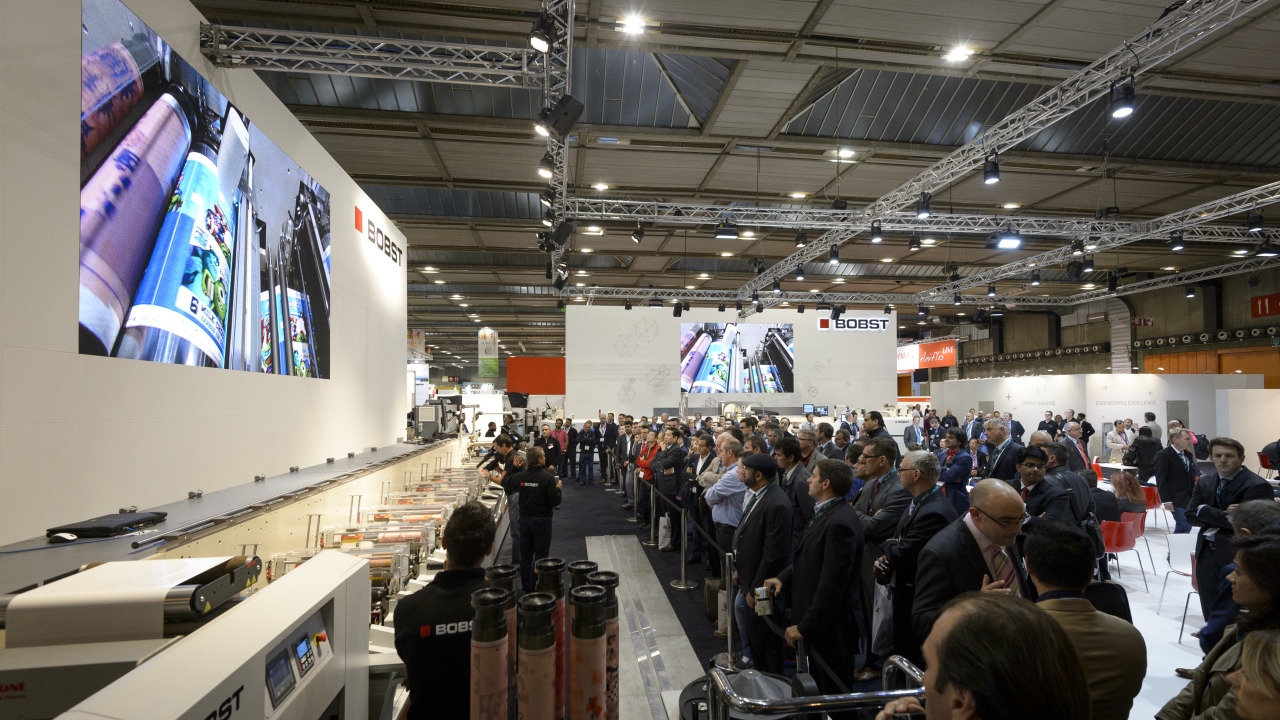
Any one of the near 36,000 visitors from 150 countries that attended Labelexpo Europe 2015 cannot fail to have been impressed with the sheer size of the show, the number of new product launches and the feeling that something momentous was happening to the industry.
Digital printing was once again to the fore, although this time even more heavily focussed on the potential of inkjet.
Historically the label converter has been very much dependent on capital-intensive investment decisions to produce good quality 4-color labels. This time however, Labelexpo showed stand-alone inkjet label printing machines capable of good quality process printing for an investment of less than 50,000 EUR. At this level of investment, almost any label printer or even small commercial, point-of-sale or display printers can get into the label business, all of which is expected to see a rising trend in labelstock growth. Maybe that is not what the average label printer really wants to hear. More competition.
But the growth of a wide range of inkjet press and finishing opportunities at Labelexpo, from under 50,000 up to one million EUR and above for inkjet/conventional hybrid machines, offers label converters at every level a whole new world of personalisation, serialization, versioning, test marketing, ultra-short runs, security features, and more. All the major conventional label press manufacturers also showed their own conventional/digital hybrid solutions.
This growth in inkjet technologies is very much complementary to UV flexo, still the dominant label printing technology worldwide, but now enabling digital to provide a wide range of short-run and other solutions in the fields of industrial labels, stickers and point-of-sale material. New applications will come from small local businesses that have not necessarily been the label converter customers of the past.
Along with the growth of inkjet, the electrophotographic technologies, primarily of HP Indigo and Xeikon, also had a major presence at the show. Very much complementary to offset and combination process printing, the toner technologies are now taking label converters into new markets in the digital printing of flexible packaging, sachets, pouches, pot lids, small cartons and tubes. Both companies had excellent shows.
Although digital and hybrid label press investment in Europe in the past year was close to 50 percent of all narrow-web press installations, it should not be forgotten that conventional analogue presses are still by far the dominant presses in the world of labels, and it was great to see the crowds around the stands of Gallus, Nilpeter, Mark Andy, Omet, MPS, Bobst, newcomer Soma and others. Digitization of conventional presses, along with the new hybrid technology, still has a major place in the world of longer runs and highest quality production.
With all the new label printing technology on show at Labelexpo came the accompanying innovations and advances in label materials and ancillary technologies that the industry needs to continue growing – substrates, inks, origination and pre-press, MIS and workflow. It was also good to see the development and innovations in the whole field of the environment, sustainability, recycling, down-gauging, linerless, food and product contact. Long needed, such developments should ensure a continued healthy growth for the industry.
If any further evidence of the health and potential of the label industry is needed just think about this: although only representing around ten per cent of the whole printing industry, the niche sector that is labels is still one of the fastest-growing; still offers some of the highest added-value opportunities; has pioneered web-fed digital technology; is at the forefront of the smart-label revolution; and supports one of the fastest-growing and largest print-related exhibitions in the Western world. It is the envy of most other print sectors.
What can I add to that? The label industry must be doing something right.
This article featured in L&L issue 5, 2015, which can be read online here
Stay up to date
Subscribe to the free Label News newsletter and receive the latest content every week. We'll never share your email address.