Automated web handling cuts waste
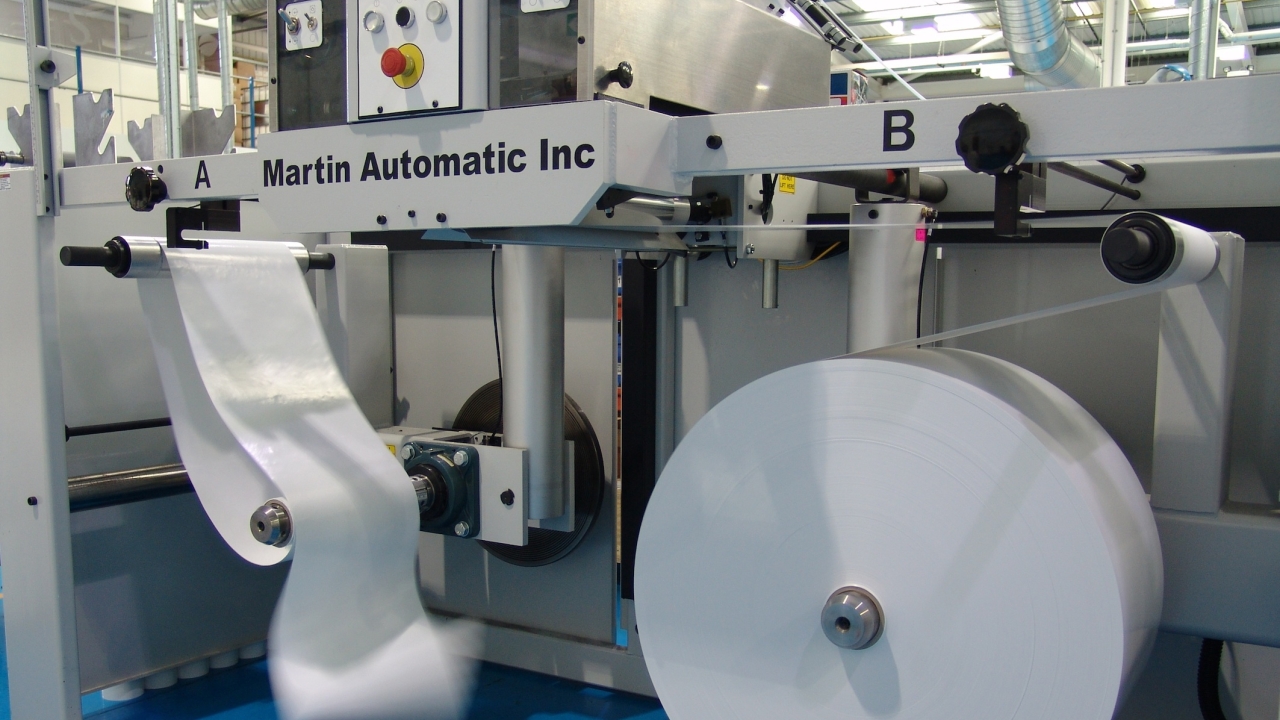
Martin Automatic believes that a smart business is also a sustainable business and that the commercial environment in which we work demands a closer relationship between sound business practice and a strong social conscience, which are not to be seen as mutually exclusive.
Addressing the narrow web sector, the company highlights a number of key pointers that include the continued rapid evolution of digital technology, including nanography; the increased use of RFID; and the demand for smart labels. These will need to be accommodated alongside improved profit management, environmental, waste control, recycling and energy concerns, as well as a need for better education and training.
Each of these poses a challenge in the need to reduce costs. But reduced costs alone do not increase productivity – this takes creativity and imagination, and includes developing new control systems, launching new products, and using renewable materials. Essentially, what has to happen is the transfer of raw materials into saleable products by making the best use of resources available.
Defining ‘waste’ as any material or resource that is not used profitably, Martin aims to increase output by decreasing input. By adding value, waste is reduced. So, being in a position to charge more for the finished product than the original raw material and its conversion costs, is a move towards profitable sustainability. Look at it this way – working on a 15 percent margin, a saving of 150,000 euros is the same as adding 1m euros of sales in the year.
Stay up to date
Subscribe to the free Label News newsletter and receive the latest content every week. We'll never share your email address.