Multitec launches new mid-web flexo press
The Indian press manufacturer showcases its latest S3S, a 670 mm sleeve-based flexo press, during a two-day open house at its facility.
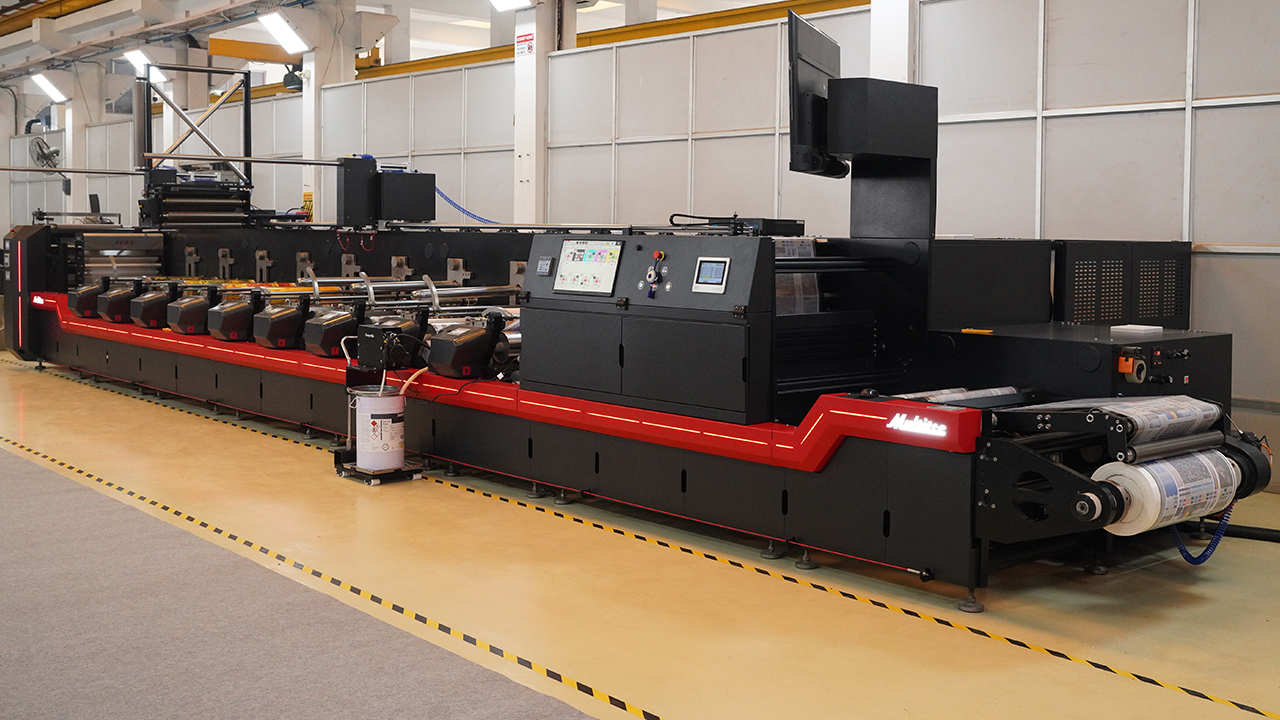
The new S3S 670 mm sleeve-based flexo press from Multitec
The landscape of Indian flexible packaging is currently undergoing a tectonic shift. For decades, the industry has been defined by the high-volume, high-velocity output of rotogravure—a process that has served the massive Indian consumer market with unmatched consistency. However, as brand owners pivot toward hyper-personalization, SKU proliferation, and regionalized marketing, the long-run dominance of gravure is being challenged by a new reality: the demand for extreme agility.
At the heart of this transition stands Multitec, an Indian engineering powerhouse, which launched a machine that promises to bridge the gap between digital's agility and gravure's quality.
S3S engineering
Multitec's latest is a 670 mm sleeve-based flexo press. The machine isn't merely an upgrade to existing narrow-web platforms; it is a ground-up reimagining of what a mid-web press should be, tailored explicitly for the flexible packaging sector.
'Historically, converters in this space have been burdened by the weight and slow changeover times of traditional heavy cylinders. The S3S addresses this directly by introducing a fully sleeve-based architecture, standing as the first and only machine of its kind built entirely on this technology within India,' shares Amit Ahuja, CEO of Multitec.
This design choice is critical, as it allows for the use of engraved jointless sleeves, which are significantly lighter and easier to handle than their steel counterparts,' Ahuja added.
Beneath its sleek exterior, the S3S is a masterclass in motion control and mechanical stability. The machine operates on a gearless, fully servo-driven architecture that uses four independent servo motors per print station to give operators total control over pressure, infeed, and registration.
"Historically, converters in the flexible packaging space have been burdened by the weight and slow changeover times of traditional heavy cylinders."
Ahuja notes: 'This sophisticated drive system is supported by a vibration-free, heavy-duty frame that ensures absolute stability even at the press's maximum production speed of 200 meters per minute. Such technical rigor allows the press to handle a wide range of substrates, from ultra-thin 12-micron PET films to 15-micron matt BOPP and even light monocartons up to 400 or 500 microns.'
The versatility of the S3S is further enhanced by its variable repeat capability. Using its sleeve technology, the press can handle print repeats from 12 to 32 inches continuously. This specific range is vital because it allows flexo converters to match standard gravure formats 1:1. 'By doing so, Multitec ensures that existing downstream equipment, such as slitters and pouch-makers, can be used without any mechanical modifications, significantly lowering the barrier to entry for gravure houses looking to diversify,' shares Ahuja.
To ensure the output is ready for immediate processing, the press is equipped with an extended solvent dryer and a flexible suite of curing options, including conventional UV, LED UV, and Hot Air drying systems.
Bridging the 'profitability gap'
The economic argument for the S3S centers on what Ahuja calls the 'bridge' between digital and gravure. Traditionally, a converter faced a difficult choice when it came to jobs in the 20 kg to 500 kg range. Rotogravure setups involve high origination costs—specifically the expensive engraved cylinders—and massive material waste during make-ready, which makes small volumes financially unviable. Conversely, while digital printing offers low setup costs, it carries high capital expenditure and astronomical per-meter ink costs that eat into margins as volumes increase.
The S3S targets this 'short and medium run wonder' zone with surgical precision. With an incredibly short web path of just 1.5 meters between print units, make-ready waste is kept to an absolute minimum, ensuring that even the first few meters of a run are sellable. During live demonstrations, the press achieved complete job changeovers in under four minutes, a feat that is simply impossible on a standard gravure line. For the modern converter, this means that a 100 kg job—which was previously a logistical and financial headache—becomes a high-margin opportunity.
'The humongous gravure presses are simply not equipped to work with short volumes,' Ahuja explains. 'If demands are only short-run, a converter can opt for digital. However, when the question about juggling between both short and volume jobs arises, this press bridges that gap efficiently. By integrating sleeve-based technology and servo precision, we deliver consistency and low changeover time, allowing converters to transition confidently to mid-web segments with proven, profitable technology.'
At the heart of Multitec's innovation is a long-standing philosophy that high-quality engineering should be accessible. Amit Ahuja often challenges the industry myth that only foreign, high-priced equipment can deliver world-class results. By offering a press with 90 percent of the features of European machines at a significantly more competitive price point, Multitec is empowering local converters to climb the technological ladder while maintaining a healthy bottom line.
The open house
The S3S 670 mm was launched during a two-day, invitation-only open house at the company's Faridabad facility in November 2025. The event was designed to address the specific' pain points' of flexible packaging converters. The highlight was a complete 'print-to-pouch' workflow demonstration, proving that the S3S is a full production tool rather than just a printing unit.
Multitec partnered with Galaxy Packtech to demonstrate how the printed web from the S3S seamlessly transitions through lamination and pouching. Visitors witnessed challenging CMYK jobs, including reverse text in small fonts and register-precision tests across the whole 670 mm width. The register stability was particularly noteworthy; Multitec showcased special test prints that demonstrated register accuracy on all four corners of a repeat.
"By integrating sleeve-based technology and servo precision, we deliver consistency and low changeover time, allowing converters to transition confidently to mid-web segments with proven, profitable technology."
'A minor register shift when zoomed onto a 65-inch screen would have been clearly visible, but we had the confidence in the S3S to show this live—without apprehensions,' notes Ahuja. The inclusion of Galaxy Packtech enabled attendees to evaluate the entire workflow, checking bond strength and sealing performance on finished packs, ensuring that the S3S output meets the rigorous standards of modern retail packaging.
The launch of the Multitec S3S, a 670 mm sleeve-based flexo press, marks a significant milestone in indigenous machine manufacturing. With its first flagship installation already operational at Ahmedabad-based Rang Roto Pack, the industry is witnessing a clear signal that mid-web flexo is no longer a peripheral technology but a central pillar of future growth. This is not merely an incremental update; it is a fundamental shift in how Indian converters approach the profitability of short and medium runs.
Looking ahead
The open house led to multiple confirmed orders for the 670 mm S3S platform, with converters leaving the event with a clear realization: short-run flexible packaging is no longer a niche requirement—it is a profitable frontier.
As the industry moves toward 2026, Multitec plans to introduce new automation upgrades to the S3S platform, further reducing the need for manual intervention and pushing the boundaries of what indigenous engineering can achieve. For converters like Rang Roto Pack, the S3S is more than just a press; it is a strategic insurance policy for a future where agility is the ultimate currency.
Rang Roto Pack's strategic pivot
The most compelling evidence of the S3S's market relevance is its successful installation at Rang Roto Pack in Ahmedabad. As a dedicated rotogravure house, Rang Roto Pack currently operates a high-capacity facility converting approximately 110 metric tonnes of flexible packaging material per month. The company's specialty lies in high-demand products such as zip-lock and stand-up pouches, serving a diverse customer base nationwide.
For Rang Roto Pack, the investment in a nine-color, 670 mm S3S represents a major strategic pivot. This is its first foray into flexography, and it was a decision born of a need to address a specific production bottleneck: the 'dead zone' of short runs increasingly appearing in the company's order books. As brands launch more specialized versions of their products, the average run length has plummeted, leaving high-capacity gravure lines underutilized during frequent, long setups.
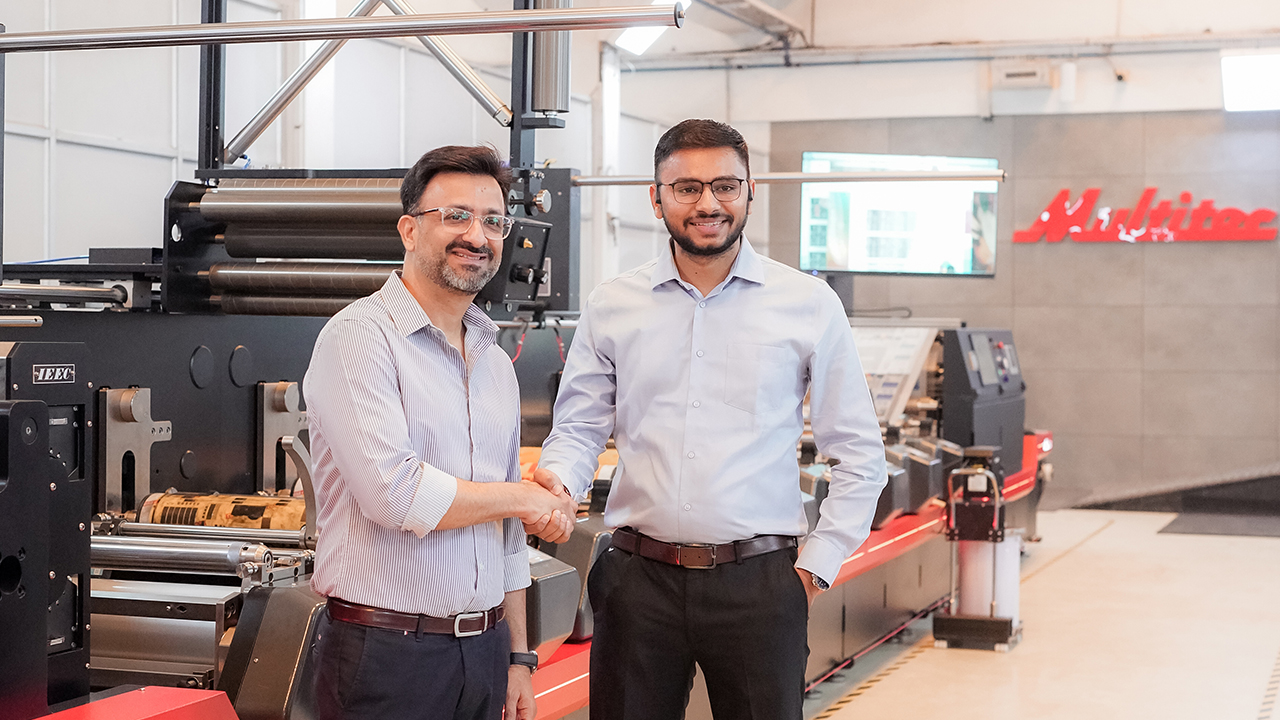
'This is our first flexo printing press, and it represents a new chapter for our company,' says Primal Patel, director of Rang Roto Pack. 'The S3S will allow us to cater to short- and mid-run flexible jobs—a rapidly growing segment where customers demand faster turnaround and lower volumes without compromising the quality they expect from our gravure lines.'
The installation has allowed Rang Roto to re-optimize its entire floor. Small orders of 20 kg to 100 kg are now diverted to the S3S, which handles them with ease and minimal waste. This frees up their primary gravure capacity for the massive, long-run work it was originally built for. Beyond domestic efficiency, the investment has global ambitions. Patel notes that with the new S3S, the company aims to expand its market reach beyond India to international markets, offering a unique value proposition that combines speed-to-market with the high-quality aesthetics of flexo-printed pouches.
Stay up to date
Subscribe to the free Label News newsletter and receive the latest content every week. We'll never share your email address.