Parkside launches home compostable films
Flexible packaging maker adds metallized cellulose structures to its compostable range.
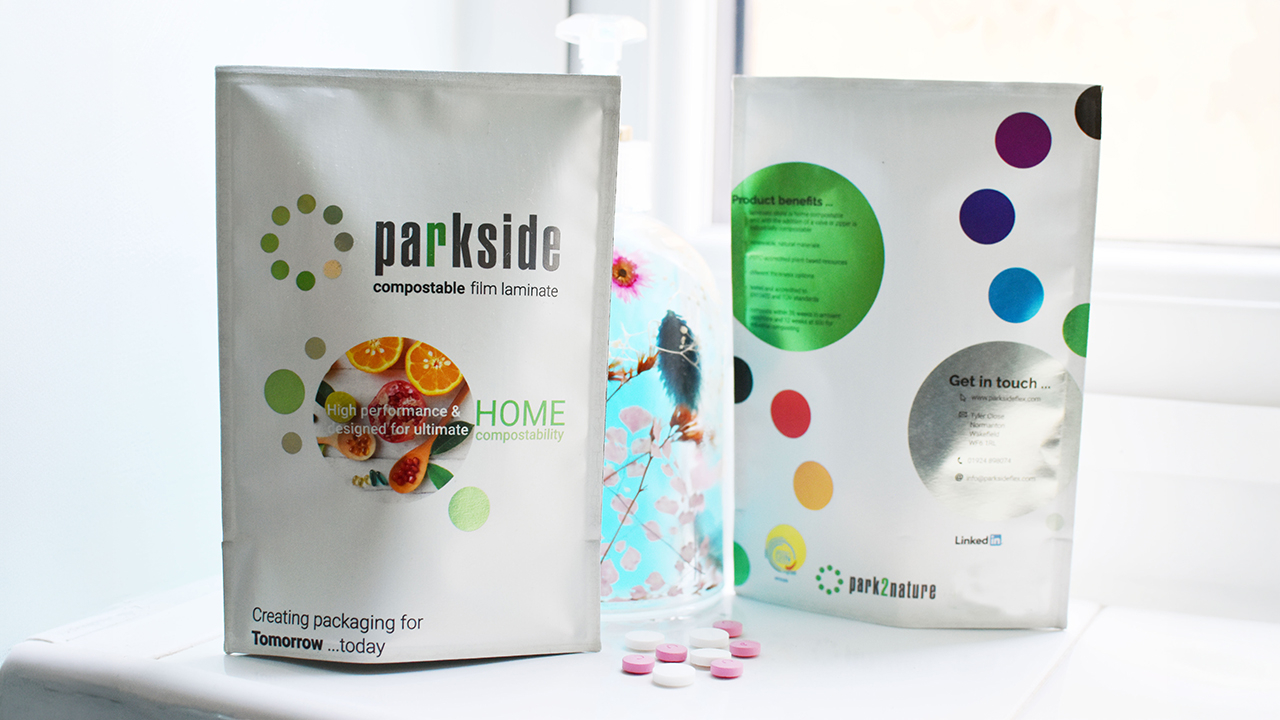
Parkside has expanded its accredited compostable flexible packaging range with three new cellulose-based filmic structures that combine home compostability with the barrier performance traditionally associated with multilayer plastics.
The new materials — HCFD6, HCFD7 and two triplex films, HCFT1 and HCFT2 — address longstanding challenges in compostable packaging, including low barrier properties and reliance on industrial composting infrastructure. All four structures carry DIN CERTCO accreditation for home compostability and are free of conventional fossil-based plastics.
'Consumers are increasingly demanding packaging that can be composted at home, not just in industrial facilities,' said Georgina Merry, NPD manager at Parkside. 'Our new structures are designed to compost in a well-managed domestic environment within approximately 26 weeks, making the move to sustainability practical for consumers.'
The HCFD6 and HCFD7 are engineered with a single functional barrier layer to deliver enhanced oxygen and moisture protection for sachets and flow wraps, with added light protection making them suitable for snacks and powders. The HCFT1 features a dual metallised triplex construction — combining cellulose with two metallised layers — targeting nutraceuticals, specialty foods and light-sensitive goods requiring a dense barrier matrix. The HCFT2, also a triplex structure, pairs cellulose with a metallised and bio-polymer layer for products with moderate shelf-life requirements.
Merry added: 'The new materials reaffirm our commitment to ongoing innovation and, crucially, do not contain conventional fossil-based plastics. This expansion comes at a critical time, where changing legislation is now front of mind for many, and businesses must make the right choices to reduce waste and meet consumer demand.'
Stay up to date
Subscribe to the free Label News newsletter and receive the latest content every week. We'll never share your email address.