Flint Group confirms compositional GIO compliance
The GIO, coming into effect from January 1, 2026, will mandate specific compliance requirements for printing inks used on food contact materials.
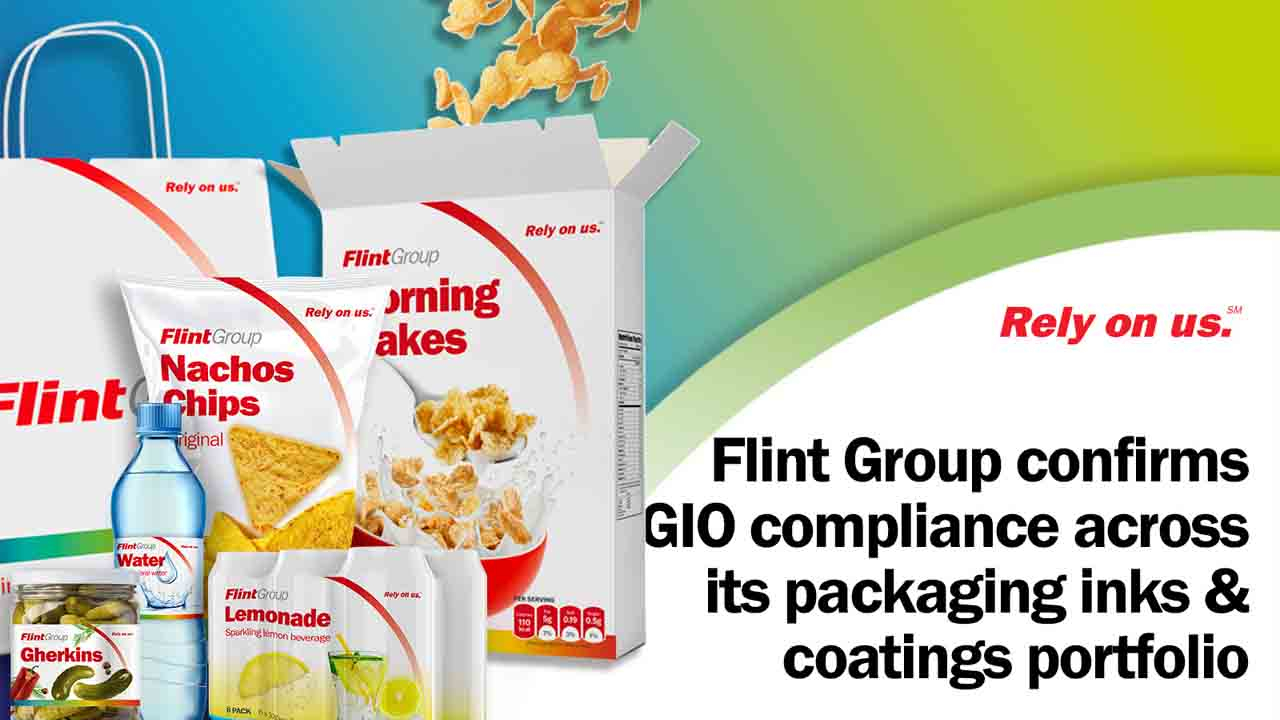
Flint Group has confirmed its compliance with the compositional requirements for the German Printing Ink Ordinance (GIO) for inks and coatings designed for food contact materials.
The portfolio includes inks and coatings for flexible packaging, paper and board, narrow web, and sheetfed packaging applications that meet the compositional requirements of the 21st Ordinance amending the Consumer Goods Ordinance (known as the GIO). This position reinforces the company's proactive commitment to providing compliant, high‑performance inks and coatings ahead of the regulation's full implementation on 1 January 2026.
Paul Winstanley, vice president, technology and product management at Flint Group, said: ‘Our mission has always been to stay ahead of regulatory developments rather than simply respond to them. Our chemists and regulatory teams have collaborated closely to review and confirm that our inks and coatings comply with the most rigorous packaging safety standards. We want our customers to feel assured that, as new regulations - such as the GIO - come into effect, Flint Group will continue to design products that keep food packaging materials unrestricted by the use of our inks and coatings. Just as important, we are committed to maintaining our ability to support ongoing packaging development and innovation while fully complying with the requirements of the new GIO legislation.’
The GIO will mandate specific compliance requirements for printing inks used on food contact materials. It covers all food contact material applications: inks applied on the food contact side, inks not intended to be in food contact but foreseeable coming in direct food contact, as well as inks printed on the non-food contact side (surface print and in the middle of laminates). The GIO takes full effect on January 1, 2026.
Flint Group's GIO compositionally compliant products apply to the following European-manufactured inks and coatings, designed for printing on the non-food contact side of food-contact materials, labels, and packaging.
Its solvent-based ONECode flexographic and rotogravure inks and coatings Its water-based AquaCode series of inks and coatings Its flexographic UV Hg and UV LED-curable inks and coatings, covering Flexocure Ancora and EkoCure Ancora ranges, as well as the company's latest innovation, Flexocure LEAP Its Novasens PRIME series of vegetable oil-based sheetfed packaging process inks, bases and speciality inks, as well as Novaset water-based coatings Its dedicated coatings that are specifically designed for direct food contact applications
Heiner Klokkers, CEO packaging inks Europe at Flint Group, said: ‘The GIO regulation represents an important step for the packaging industry, and Flint Group is proud to be at the forefront of compliance. Our customers rely on us to help them navigate complex regulatory landscapes, and this achievement underlines our industry leadership and reinforces the trust that converters and brand owners place in our inks. GIO compliance across packaging segments is a clear signal of our readiness for the future.’
Flint Group advises that, in accordance with EU and GIO regulations, the organization placing the food contact material on the market should assess the final package suitable for the intended use. Also, whilst the raw materials used in Flint Group’s FCM products meet the compositional requirements of the GIO, certain packaging structures may still require additional migration testing.
Stay up to date
Subscribe to the free Label News newsletter and receive the latest content every week. We'll never share your email address.