Jackrom optimistic about Venezuela’s future
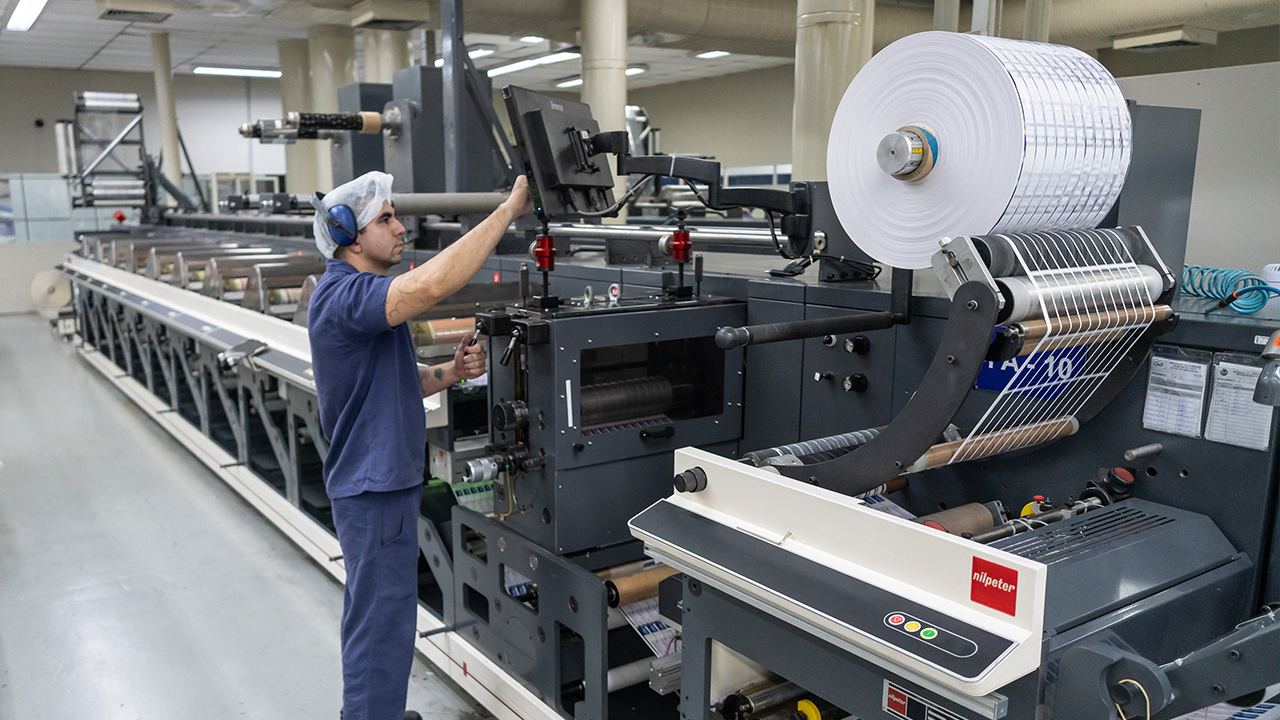
Venezuelan converter Jackrom has ordered a Rotocon RFP flexo press to expand its flexible packaging production, amid optimism that better times lie ahead for the country.
Venezuelan converter Jackrom is investing in a mid-web Rotocon RFP flexo press to expand its flexible
packaging production.
In business for 54 years, the company is among the country’s leading producers of labels, cartons and flexible packaging, having navigated times of boom and bust. With the Venezuelan economy beginning to bounce back following years of stagnation, Jackrom is optimistic about the country’s future.
Jackrom was founded in 1972 by Juan Zaragoza. Beginning with a single one-color Heidelberg offset press, it printed labels for liquor brands before moving into the beer segment. Growth was gradual. Zaragoza added personnel and more Heidelberg presses to his fledgling operation, and then Blumer die-cutting systems to allow greater automation. The company also moved into food label production.
The addition of flexo printing in 2000, through the installation of a Mark Andy 2200, was a key moment in the company’s growth. ‘We broke the paradigm of flexo printing in Venezuela,’ says Susana Zaragoza, managing partner and development and quality director. ‘At the time, flexo was considered to be of poor quality. Local producers of plastic films would often also print on their materials themselves, but they were focused on extruding plastic rather than perfecting the printing process.
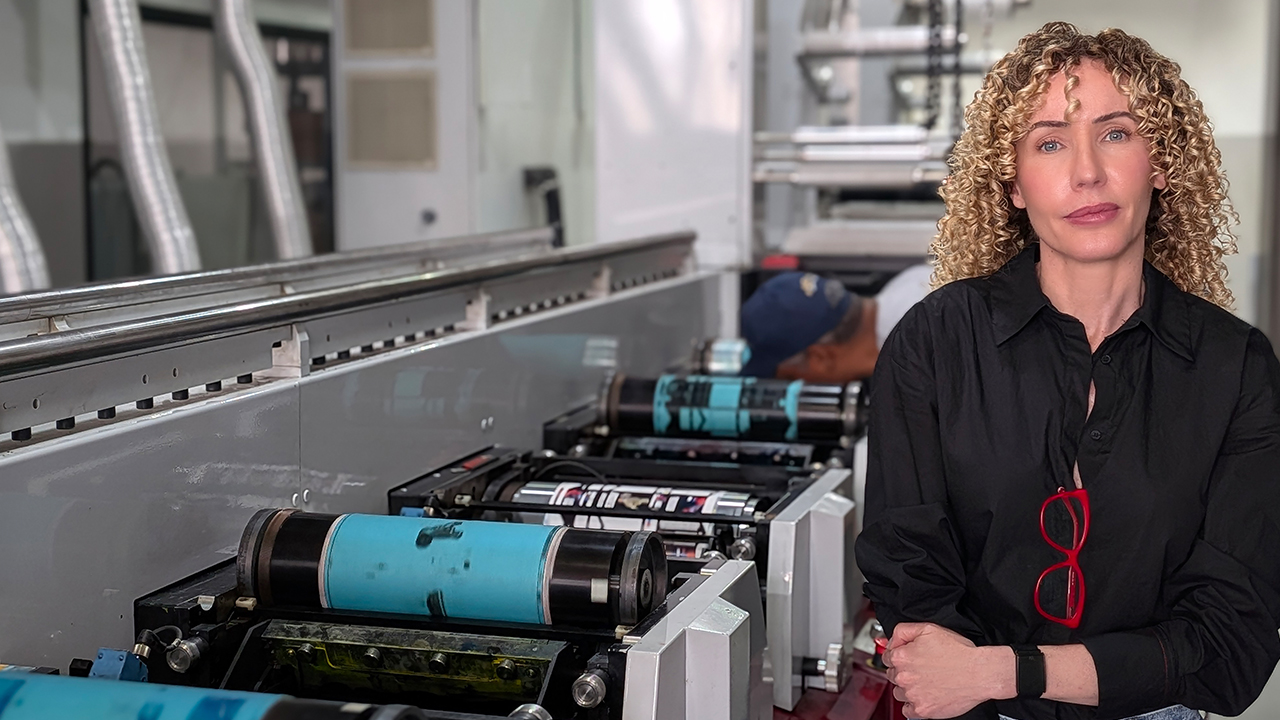
‘In contrast, we were used to working to extremely high-quality standards. We have a reputation in the market for being one of the highest quality printers. We achieved excellent results and raised standards in the local flexo market. It helped that the Mark Andy machine produced high-quality results, and our knowledge of pre-press was also a key factor.’
In addition to moving some existing offset work to its Mark Andy flexo press, Jackrom began printing cigarette packs, becoming the sole supplier to the Venezuelan subsidiary of British American Tobacco.
Following success with the Mark Andy 2200, Jackrom further expanded its flexo capabilities and efficiency by installing a Mark Andy Performance Series 5 equipped with in-line die-cutting, embossing and hot stamping stations, as well as automated packaging systems for its printed labels.
Three years ago, says Zaragoza, Jackrom noticed that orders for short runs were becoming more common. ‘We were uncompetitive at these smaller volumes, so we decided to partner with HP Indigo and add digital technology to the company as well,’ she says.
Flexible packaging
Jackrom also spotted that stand-up pouches and other forms of flexible packaging were becoming increasingly popular around the world. ‘We saw that no one in Venezuela was producing stand-up pouches,’ says Zaragoza. ‘Companies were importing flexible packaging from Colombia and Asia, but with long lead times and large minimum order quantities due to it being produced on wide-web machinery. So, we installed laminating equipment and other things in order to test the market, initially on a small scale.’
“We realized that to be competitive in the flexible packaging and stand-up pouch market, we needed a slightly wider machine”
Jackrom’s success with its initial foray into stand-up pouch production led it to research a new, wider press to increase capacity. ‘We spoke to Mark Andy, which is a very reliable partner whose machines are excellent and incredibly durable. But with the complicated economic situation in Venezuela at the time, we wanted to choose something a little more economical. We also looked at presses from Asian suppliers but couldn’t quite find what we were looking for.
‘We attended Labelexpo Europe 2025 in Barcelona, and a machine on the Rotocon stand caught our attention. We saw it in action and liked its robustness. So, we decided to do some testing and visited some of their clients to see the machine running and saw what it was capable of. We were pleasantly surprised by the print quality.’
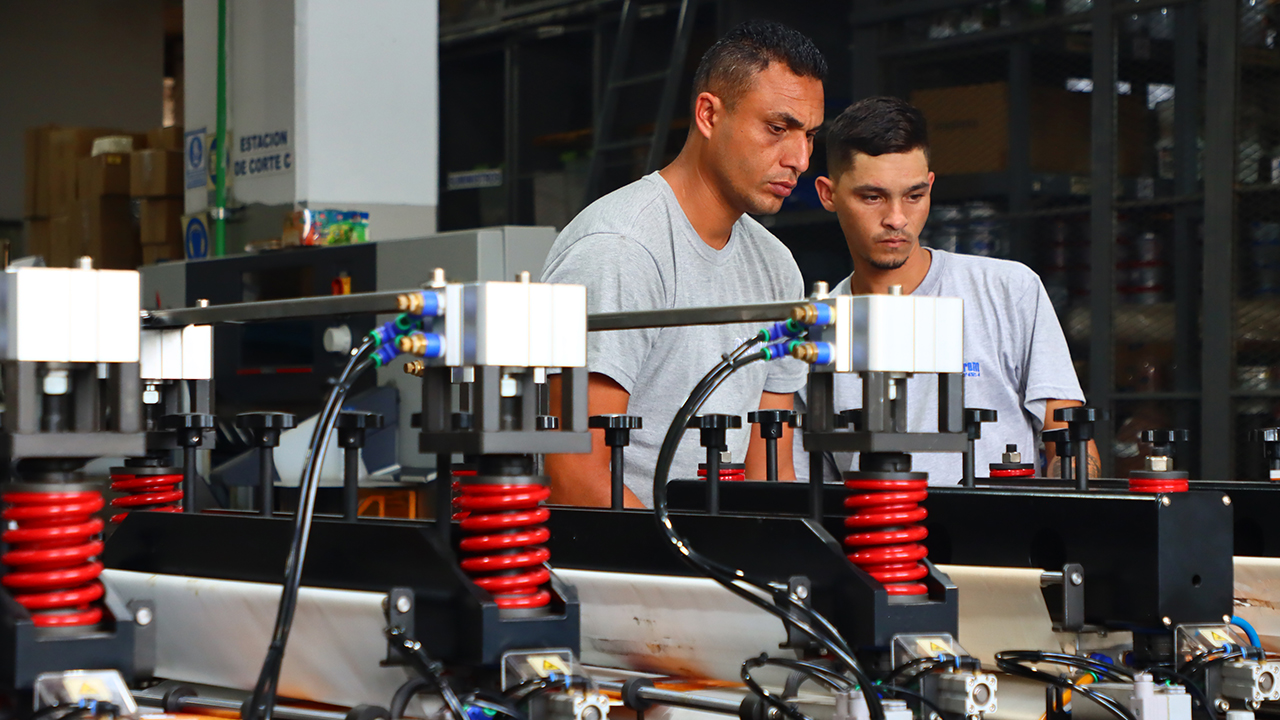
The Rotocon RFP S-Series is a modular sleeve-based flexo press with triple servo-driven precision, fast job changeovers and speeds of up to 200m/min. It combines advanced German engineering, automation and efficiency, and can be configured with a range of expandable smart modules, including rotary screen printing, hot foil embossing, lamination, multi-layer and booklet labels, and more.
Initially, Jackrom was keen to install the 530mm version of Rotocon’s RFP S-Series, the lower end of the mid-web category, but just before finalizing the order, the converter switched to the wider 630mm option. ‘We realized that for us to be competitive in the flexible packaging and stand-up pouch market, we needed a slightly wider machine,’ explains Zaragoza. ‘The 630mm web width is ideal for what we want to develop.’
The new six-color press is due to arrive at Jackrom’s 2,850sqm facility in the Venezuelan capital Caracas, in November and will be complemented by a Rotocon RD 530mm rotary die-cutting finishing machine.
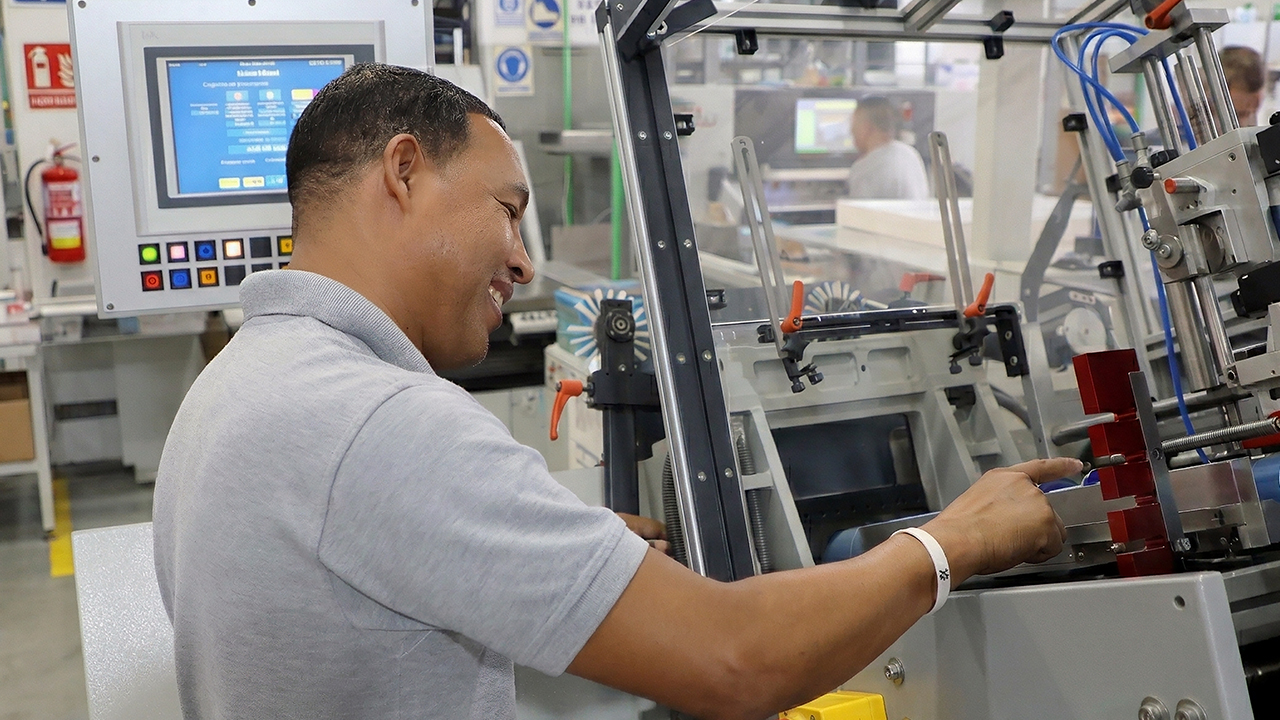
‘The Rotocon press is very efficient, quick and easy to set up. It will allow us to enter the flexible packaging market more formally, while maintaining the high level of print quality that we are known for,’ says Zaragoza. ‘We will produce not only stand-up pouches but also rolls that we can supply directly to producers of dairy products and coffee, for example, both important sectors in the Venezuelan market, so they can fill the pouches at their plants.’
Jackrom plans to move some of its offset food label production to the Rotocon press too. ‘If the experiment works, then we might well buy a second machine. With offset printing, you need to dry the sheets before moving on to the other processes. In contrast, flexo-printed labels come out dry and ready for processing, which is a big advantage that allows for quicker turnaround. Now that the quality of the work between offset and flexo is indistinguishable, moving more work to flexo will help us to be more efficient.’
As well as the possibility of a second mid-web flexo press, Jackrom plans to invest in further finishing and processing equipment for its flexible packaging production next year.
Conviction
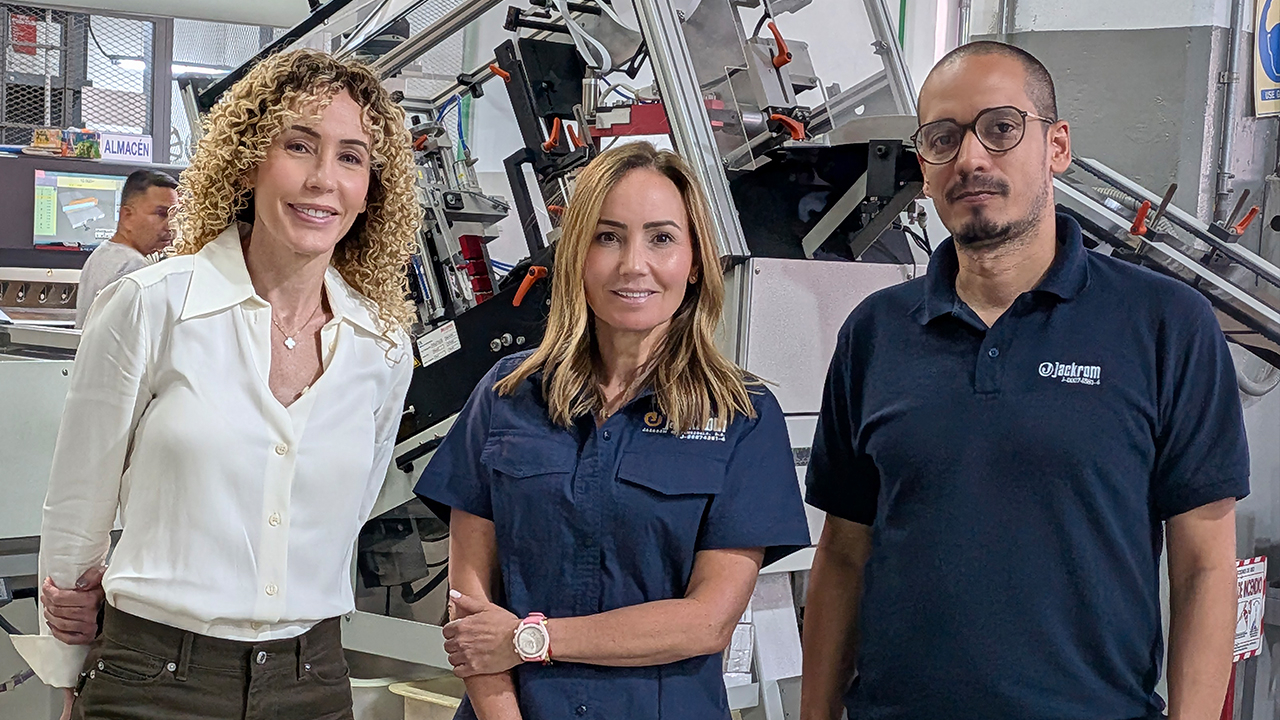
Today, Jackrom is run by three of founder Juan Zaragoza’s five children. Susana oversees development and quality control; Carolina runs admin and finance; Nathalie is in charge of sales and planning. A fourth, Daniel, works part-time for the company as machinery director while also managing business interests in Miami.
“There’s an atmosphere of excitement and progress. Foreign investment is increasing. People who had left are returning home. Companies are innovating”
Seventy percent of Jackrom’s production is for the food sector, with labels for liquor, particularly rum and beer, and cartons for the cigarette market, taking a large part of the remainder. The company’s digital technology handles short runs of premium labels, finished on a Cartes converting system, as well as flexible packaging.
Jackrom largely imports materials from abroad, with ‘very little’ bought locally, according to Susana Zaragoza. Because of import tariffs, the company pays a premium for sourcing quality products not available locally.
‘It’s normal daily life in Venezuela,’ she says. ‘The productive sector is severely contracted. It is challenging to run a manufacturing company in a climate of currency exchange controls, political problems and an economic structure designed to prevent private enterprise. But we have innovated, grown and maintained a leadership position in the market, which leads us to have a strong conviction about Venezuela’s potential.’
The events of January 3, when Venezuelan president Nicolas Maduro was deposed and extradited to the US, signal that ‘change is coming,’ says Zaragoza. ‘There’s an atmosphere of excitement and progress. Foreign investment is increasing. People who had left are returning home. Companies are innovating. The market is undergoing a massive transformation. We were hoping for change for a long time, and we’ve prepared for it through our investments.’
Zaragoza’s paternal and maternal grandparents emigrated to Venezuela from Spain and France, respectively, in the aftermath of the Second World War. The country’s economy boomed in the 1940s and 1950s, driven by European and American demand for oil; Venezuela has the largest proven reserves in the world. In 1950, it had the fourth-highest GDP per capita globally; by the early 1980s, it was still the richest country in South America.
But the economic decline over the past two decades has been dramatic. An over reliance on oil exports, coupled with policies that crippled domestic industry, brought about years of hyperinflation following the oil price collapse in 2014, and acute shortages of medicine and food. More than a quarter of Venezuela’s population has fled the country.
‘We went from running shifts 24 hours to having just one short shift. Our staff headcount halved. We went from printing 100 million beer labels to under three million,’ says Zaragoza. ‘But being able to manage these storms is what allows you to survive. It makes you a strong person and a strong company.
‘It never even crossed our minds to leave. This country welcomed our grandparents. We have always believed in Venezuela and the potential of the Venezuelan people. Despite the political and economic problems in the country over the years, Jackrom never stopped investing. We could always see opportunities for growth.’
Rotocon’s increasing Latam focus
Rotocon is a relative newcomer to the Latin American market. It made its regional tradeshow debut at Labelexpo Mexico in Guadalajara in April 2025 and exhibited the RFP 340, a multi-substrate flexo press which can print labels, shrink sleeves and flexible packaging and runs at up to 200m/min. Rotocon Europe managing director Marco Aengenvoort believes the press is ‘well-positioned for this market’.
The company appointed Francisco Soto, who has 19 years of industry experience from roles at Rotoflex, Grafotronic and others, as sales director for Canada, Florida, Latin America and the Caribbean last year to aid its push into the Americas. Soto believes Rotocon’s equipment is a ‘perfect fit’ for the Latin American market. ‘There is a clear trend toward automation, flexibility and efficiency. Customers are increasingly seeking equipment that minimizes waste and cuts set-up times, while supporting shorter run lengths,’ he says.
Stay up to date
Subscribe to the free Label News newsletter and receive the latest content every week. We'll never share your email address.