Maxcess deepens commitment to Indian market
Maxcess is accelerating its localization strategy with expanded domestic assembly, tooling repairs and next-generation smart technologies.
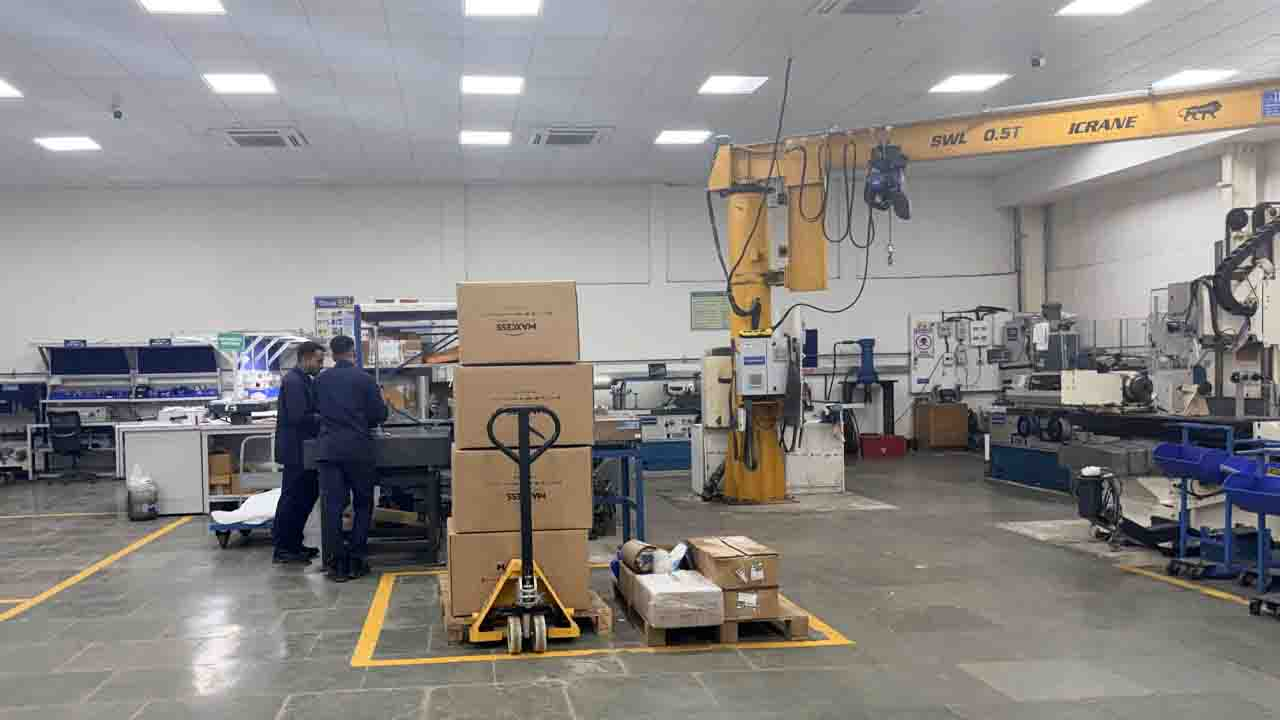
Maxcess India repair center
Maxcess, among the global leaders in web-handling technology with brands including FIFE, Tidland, RotoMetrics, MAGPOWR, Componex, Webex, Valley Roller, and International Cutting Die (ICD), is deeply committed to serving the India market as a core part of its global business network.
Three years after opening its assembly and repair facility in India, Maxcess is deepening its localization strategy with an expanded portfolio of locally delivered services, faster tooling turnaround and new automation technologies designed around the evolving needs of Indian converters.
According to Niraj Muni, general manager - India, Maxcess: ‘Our local assembly and repair capability has significantly improved our responsiveness. Customers no longer need to depend entirely on international shipments for selected products, repairs and support.
‘We are also continuously expanding what we can offer locally, including solid die resharpening services from our Mumbai repair center. These capabilities allow us to respond faster and provide more comprehensive technical support to customers across the region.’
A notable addition is the solid die resharpening service at the Maxcess Mumbai repair center, which allows customers to access a specialized tooling service locally rather than sending dies overseas. Maxcess has also introduced new arrangements for flex dies that can reduce turnaround times to as little as three days.
‘For converters, this can make a meaningful difference in keeping production running and avoiding extended downtime,’ notes Muni.
Vocal for local
For Maxcess, its ‘Vocal for Local’ initiative extends beyond simply assembling products domestically. The company sees localization as a broader commitment to developing engineering, manufacturing, repair and service capabilities in India.
Local assembly is already underway for Fife web guiding systems and central position control systems, alongside the company’s expanding repair operations. The addition of solid die resharpening further extends the range of specialized services available closer to customers.
‘Going forward, we will evaluate additional products and services where local capability can improve delivery, customization and customer support while maintaining Maxcess global quality standards,’ says Muni.
This approach reflects the changing profile of the Indian converting and labeling industry.
‘Indian converters are increasingly demanding the same levels of automation, precision and productivity available in mature global markets. Maxcess is well positioned with technologies across web guiding, tension control, slitting, winding, rotary die cutting and converting. Alongside technology, we are strengthening our local capabilities and response times, including faster tooling services and local repair, so customers get both global-standard technology and locally responsive support,’ explains Muni.
The full Maxcess product portfolio spans all core segments of the converting industry, including web guiding, tension control, slitting, winding, rotary die cutting and other converting technologies. The company’s strategy is to combine this global technology base with increasingly localized service and repair capabilities.
For converters, the value extends beyond the initial equipment purchase. Faster tooling services, local repair and shorter response times can have a direct impact on production continuity.
The company’s approach is particularly relevant in an industry where unexpected tooling or equipment issues can quickly translate into lost production time. Local repair capability can shorten the gap between identifying a problem and getting production assets back into operation.
Local support with global standards
Balancing global innovation with local market requirements is another key component of the Maxcess corporate strategy.
‘We follow a two-step localization framework to strike this balance: first, we retain the core global Maxcess innovation IP for reliability and precision, then we adapt hardware dimensions, product durability, and software interfaces to match the Indian market’s unique scale and cost sensitivities,’ says Muni. ‘ We also set up a local repair center and plan to have more product manufacturing in India to cut customization lead times and avoid unnecessary premium costs on non-essential features.’
The core value-added proposition that Maxcess delivers for both narrow and wide web converters is its full-lifecycle, locally rooted service ecosystem, fully demonstrated by RotoMetrics flexible dies.
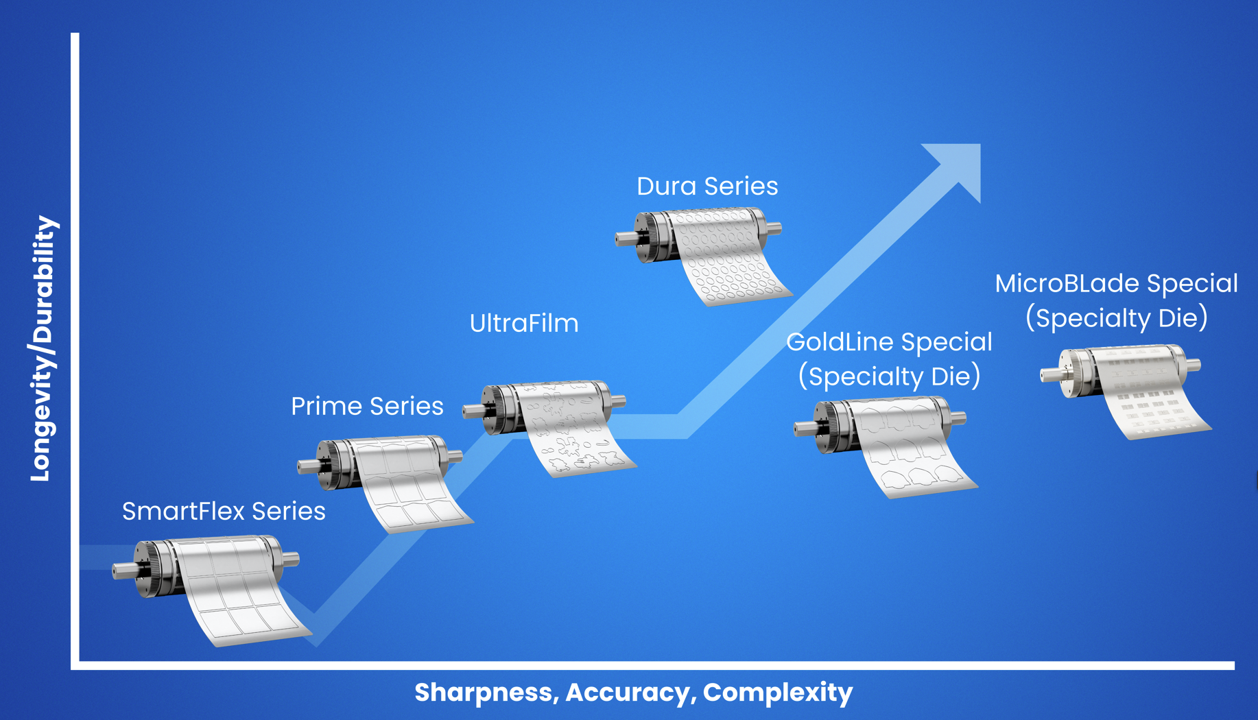
‘We operate six global manufacturing sites with wider same-day shipping capacity than competitors, plus a dedicated Converting Technology Center for R&D Innovation, local time-zone customer reps, on-site expert sales teams, and responsive local tech support to minimize downtime. Backed by the industry’s most robust historical database for dies, mags, retools and repairs, we deliver top-tier performance and end-to-end product/repair coverage, while cutting extra logistics and service costs to keep offerings cost-competitive,’ he adds.
This model allows Maxcess to maintain a common technology foundation while adapting the implementation to different customer requirements.
Muni also highlights the historical database maintained by Maxcess, which covers dies, magnetic cylinders, retools and repairs as an important resource for supporting customers throughout the product lifecycle.
The objective is to combine performance with service responsiveness while controlling the additional logistics and service costs that can make sophisticated converting technology less accessible.
Reducing waste and downtime
Material waste, quality defects and downtime remain major cost drivers for converters. Maxcess technologies are designed to address each of these areas.
Accurate web guiding, tension control and precision slitting help converters improve process stability and reduce material losses. At the same time, initiatives such as faster flexible die delivery and local solid die resharpening help customers reduce waiting time and keep valuable production assets running.
Over the next one to two years, Maxcess plans to introduce several technologies aimed at addressing the needs of different segments of the Indian converting industry. The company highlighted next-generation smart tension-control systems, compact modular slitting technology for mid-sized Indian converters, and advanced web-guiding tools with real-time defect detection.
‘These innovations are designed to bridge performance gaps for both small-scale workshops and large converting facilities across India,’ highlights Muni.
This also reflects a wider shift in the industry toward intelligent automation, where equipment can respond to changing web conditions rather than relying entirely on manual intervention. Converters are also facing ongoing challenges in finding and retaining highly skilled operators automation is becoming increasingly important.
The newer product lines launched by Maxcess integrate automated calibration, real-time adjustment and saved production parameters. These features can allow equipment to optimize settings such as tension, alignment and slitting speed according to operating conditions, reducing the number of manual adjustments required for standard jobs.
The FIFE-500 MAX guiding system illustrates this approach.
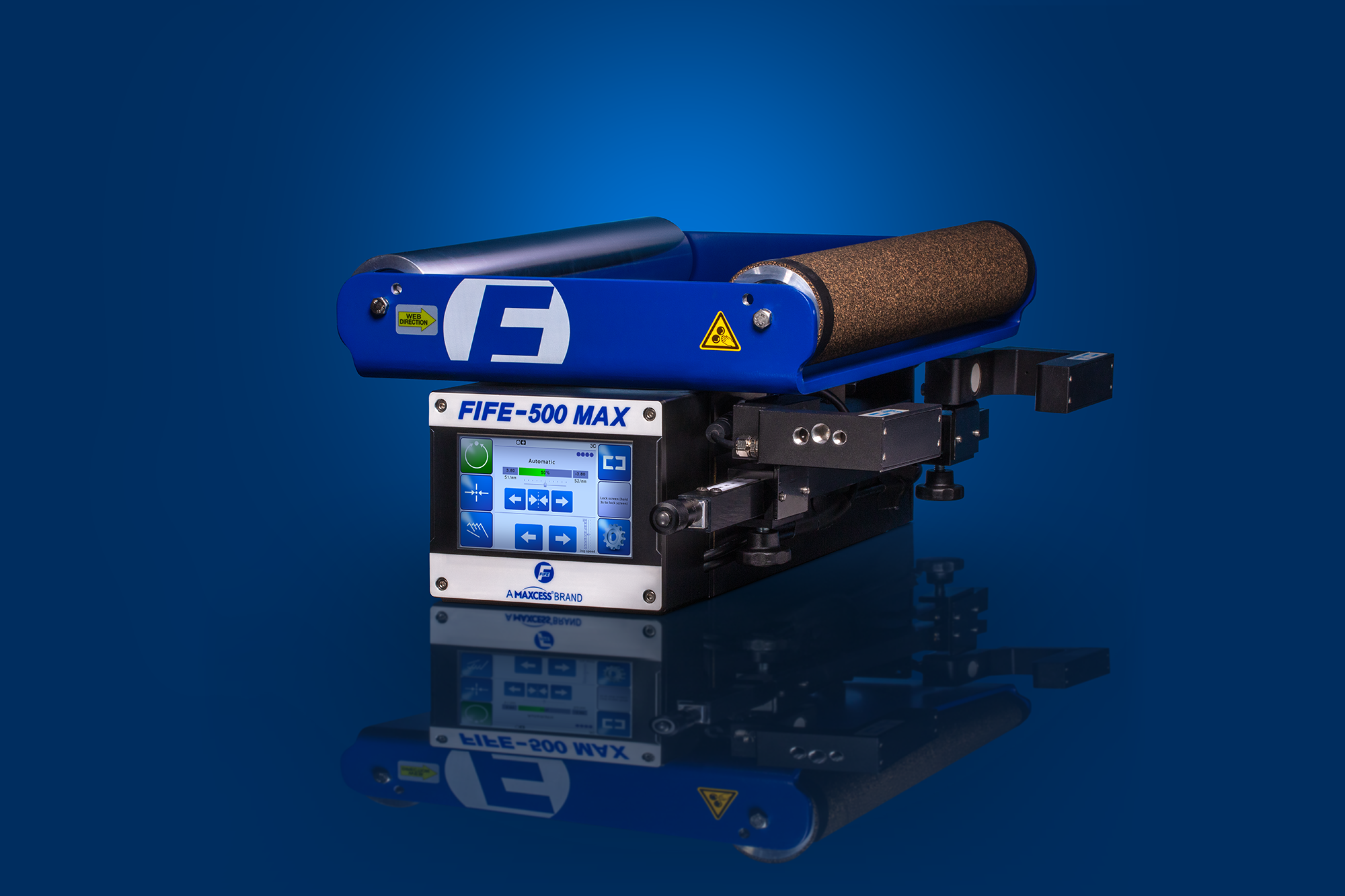
The upgraded FIFE-500 MAX guiding system eliminates process guesswork and cuts manual interventions for converters. Built on the established FIFE-500 platform, it features an 8-pole brushless motor for ultra-smooth guiding and high accuracy, auto-adapting to web changes at high speeds to reduce scrap from human error. Its 5-inch multi-language touchscreen cuts setup time, while seamless PLC connectivity enables auto-operation. Optional splice table and fine-tune brackets further automate changeover steps, delivering consistent, low-intervention production.
The system supports Ethernet/IP and CC-Link communications, with optional PROFINET and EtherCAT connectivity. This enables it to communicate with existing PLC infrastructure and participate in synchronized automatic operation across the converting line, rather than requiring operators to manually coordinate settings between separate devices.
Optional features, including a splice table and fine-tune brackets, can further reduce manual steps during setup and changeovers.
‘All these features work together to minimize manual touchpoints throughout the production workflow, helping converters achieve more consistent, hands-off automated operations without unnecessary complexity,’ Muni adds.
Automation also has implications for workforce development.
When equipment relies heavily on experienced operators to set parameters manually, bringing new employees up to speed can take considerable time. Intuitive interfaces, automated setup procedures and stored job recipes can reduce that learning curve.
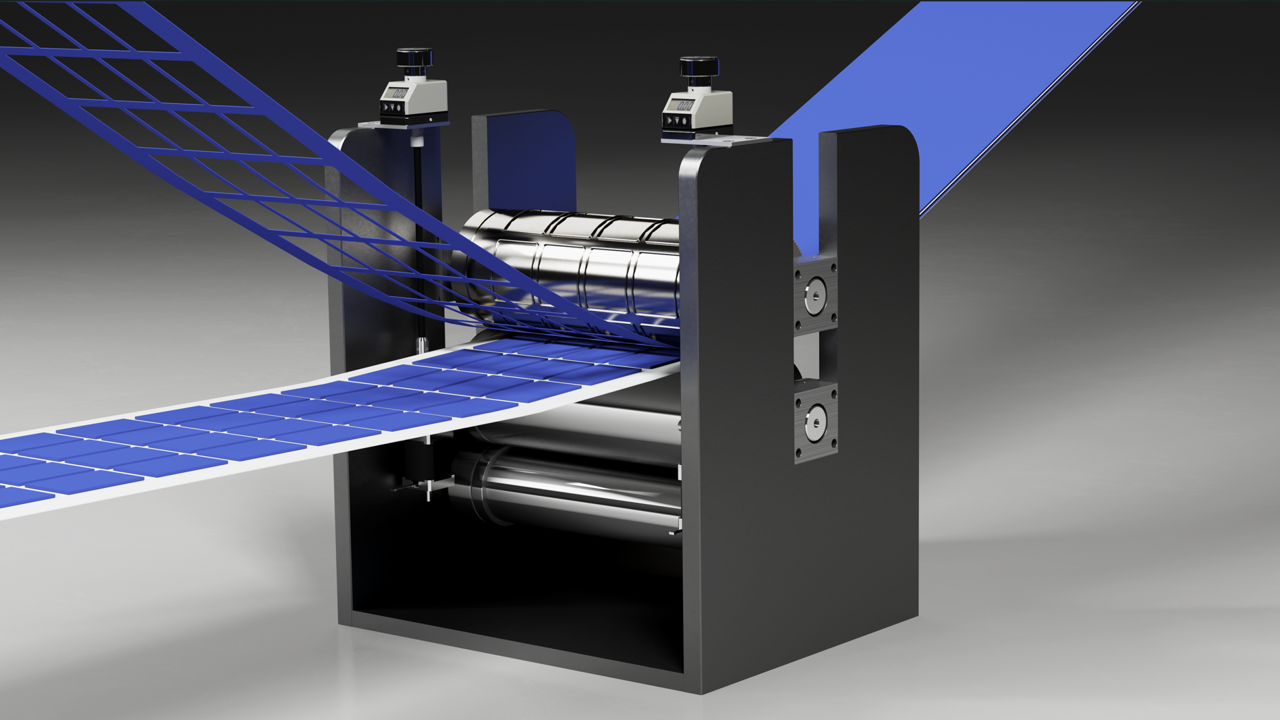
The RotoMetrics AccuAdjust Dual Adjustable Anvil, for example, solves liner variability issues with ease. Cut PET, Glassine, Kraft and more with a turn of a high-quality, precision digital dial, adjusting die strike across the web to cut perfect labels and reduce waste no matter the liner material. In addition, each AccuAdjust unit comes automation-ready for the upcoming RotoAdjust Operator Interface upgrade, enabling even greater control in the future.
For converters dealing with skills shortages, these capabilities can help make repeat production more consistent while reducing dependence on individual operator experience.
Stay up to date
Subscribe to the free Label News newsletter and receive the latest content every week. We'll never share your email address.