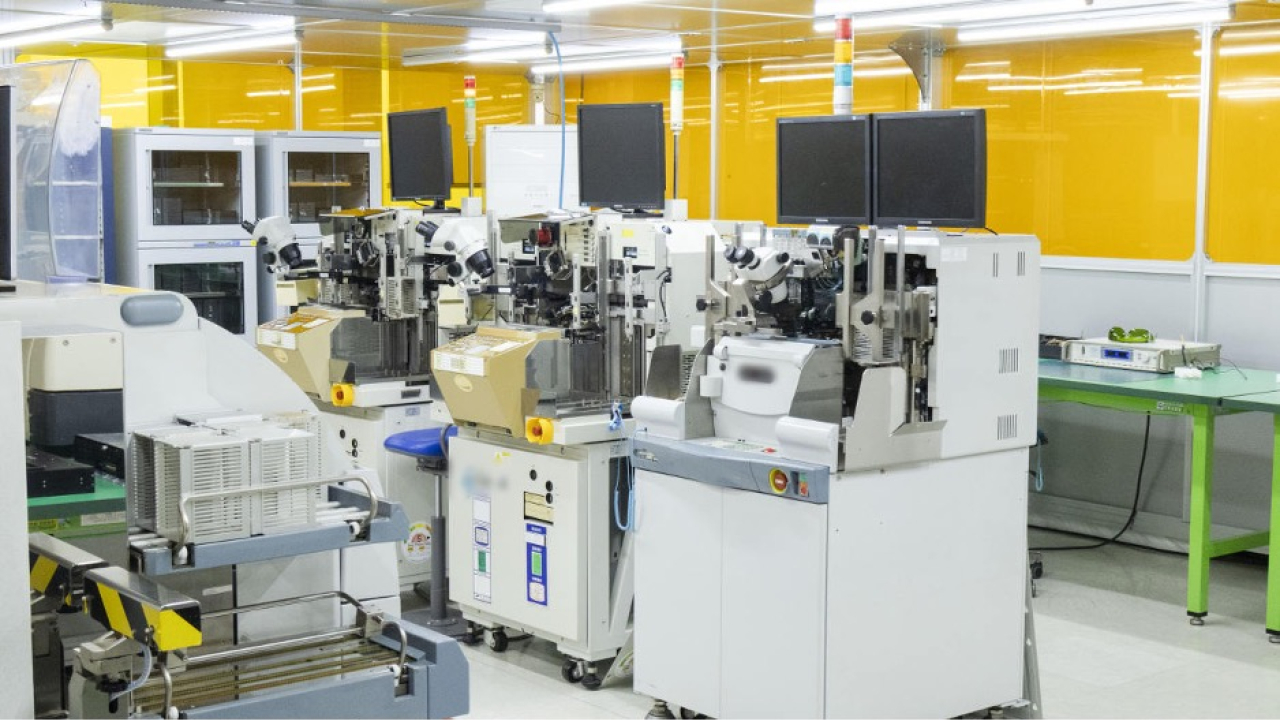
Label industry has complexity problem
The label industry doesn't have a technology problem. It has a complexity problem. Jos Kabouw, global sales manager at GM Finishing, reflects on labels, digital print, flexo, automation and where we go from here.
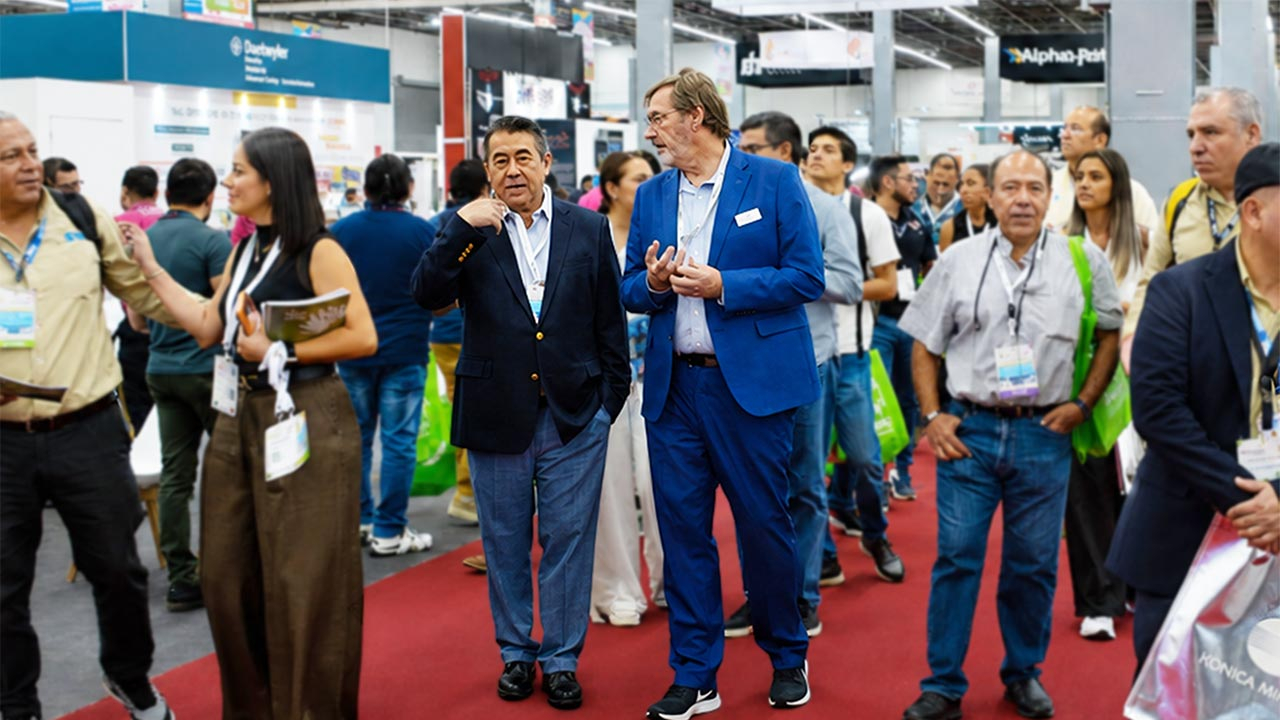
Jos Kabouw in conversation with Rubén Masayi González Uyeda, a well-known Mexican entrepreneur and business leader, owner of Uyeda Industrial de México S.A. de C.V., and President of the Jalisco Food Industry Chamber.

Over the past year, I have spent a lot of time traveling, visiting customers and attending industry events across North and South America, the Middle East and Europe. What I find particularly valuable about these trips is the opportunity to hear directly from converters, partners and industry colleagues about what is changing in their businesses and markets.
Looking back, some of the signals were already very visible at Labelexpo Europe in Barcelona last year. Automation, digitalization and the convergence of technologies were high on the agenda. It was also in Barcelona that the transition from Labelexpo to Loupe was announced, reflecting an industry that itself is becoming broader and more diverse.
Since then, two industry meetings in particular have added to that picture: the Finat European Label Forum in Seville and Dscoop Edge in Slovenia. They are very different events, but when I put their messages together, they tell a remarkably consistent story.
- Finat showed us what the market is asking for.
- Dscoop showed us where technology is going.
- Peter Hinssen, keynote speaker at Dscoop, challenged us to act on it.
- Loupe is where these conversations come together.
What I take from all of this is that our industry is not simply going through another technology cycle. The economics of producing labels are changing. We have spent years discussing faster presses, better print quality, and the relative strengths of different technologies. All of that still matters. But the bigger competitive challenge is shifting elsewhere: how do we manage increasing complexity without allowing that complexity to consume our margins?
The market isn't disappearing. The rules are changing.
At Finat in Seville, one expression caught my attention: 'transformation moment.' I think that describes our situation very well. European converters are operating in an environment of modest economic growth, geopolitical uncertainty, increasing regulation, sustainability demands, and strong competitive pressure. But beneath the headline market numbers, something more fundamental is happening: the mix is changing.
Customers want shorter lead times, more versions, more SKUs, more frequent artwork changes, less inventory, greater traceability and better sustainability documentation, while still expecting competitive prices. In that environment, producing more labels per hour is not necessarily the same as becoming more productive. The real question is increasingly: How much complexity can we absorb while remaining profitable?
That distinction matters. An industry can become faster at producing labels while simultaneously becoming less efficient at managing the jobs around them. Setup, changeovers, workflow, labour, finishing, inspection and delivery all become part of the productivity equation. If we only measure what happens while a machine is running, we risk optimizing the wrong thing.
Maybe we've been asking the wrong question about digital and flexo
For years, we have discussed whether digital printing will eventually replace flexo. I increasingly think this is the wrong question.
Modern flexo is extraordinarily sophisticated, with automation, servo technology, register control, job recall and impressive productivity. But in many areas the technology has reached a high level of maturity, and one constraint is becoming increasingly important: setup. Further reductions in setup time are possible, but achieving marginal gains can require increasingly significant investment.
This is where digital shows its competitive edge. By removing many of the physical setup requirements between jobs, digital changes the economics of short runs, multiple SKUs and frequent job changes. The advantage is not simply that digital is different or faster to set up. It is that complexity has a much smaller impact on the production process.
That is why the question should no longer be whether digital will replace flexo. The more relevant question is where each technology makes economic sense. Flexo remains extremely powerful for volume. Digital becomes increasingly powerful as complexity grows.
The winning technology is therefore not digital or flexo. It is the production setup that makes the job profitable. Flexo optimizes volume. Digital optimizes complexity and diversity. Hybrid can optimize the combination. And automation optimizes what increasingly matters most: the factory around them.
Faster printing doesn't necessarily mean a faster factory
At Dscoop, we saw again how rapidly digital production is developing: more automation, more data, higher productivity, smarter workflows and less operator intervention. But there is a potential contradiction here. The faster and more flexible printing becomes, the more pressure we put on everything that happens before and after the press.
A 200 m/min press doesn't create a 200 m/min factory. If the next production stage requires manual setup, tool changes, operator decisions, inspection or waiting time, we have simply moved the bottleneck. We sometimes talk about the printing press as though it is the factory. It isn't.
The real production chain is Order → Workflow → Print → Finishing → Inspection → Delivery, and the customer ultimately pays for the result of that entire process, not the speed of one machine within it.
The next major productivity battle will not simply be about machine speed. It will be about eliminating friction between processes. A faster press is valuable, but only if the rest of the factory can translate that speed into a finished, sellable product. The value isn't created when the image is printed. The value is created when the customer receives what they ordered, correctly and on time.
And then there is AI
No industry discussion in 2026 is complete without AI. But here too, I think we risk becoming distracted by the technology itself.
The question shouldn't be, 'Where can we put AI?' It should be, 'Where is complexity costing us time and money, and where can intelligence remove it?'
That immediately makes the conversation more practical. Estimating, scheduling, workflow, production planning, quality control, predictive maintenance, inventory, customer service and sales all contain processes where complexity creates friction. AI may become extremely valuable in many of these areas, but simply adding AI to an inefficient process does not make the process intelligent.
The companies that benefit most will not necessarily be those using the most AI. They will be those that understand their own business well enough to know which problems are actually worth solving.
Europe cannot win the race to the lowest price
This connects to another message I took away from Finat. Europe will struggle to win a race based purely on the lowest production cost. That applies to converters, but also to European equipment manufacturers.
If our answer to lower-cost competition is simply to become a little faster and a little cheaper, I don't think that is a strategy Europe can win. We have to make European production more valuable, not simply less expensive.
Our competitive advantage has to come from quality, automation, technical expertise, reliability, compliance, innovation, responsiveness and proximity to the customer. Digital production is particularly interesting in this context because it allows converters to compete on speed, flexibility and complexity rather than simply volume. Flexo continues to provide extraordinary productivity and scale. The opportunity is not to choose sides, but to understand where each technology creates the greatest economic value.
The same applies to what converters sell. The successful label producer of the future may increasingly sell much more than a printed label. They sell reliability, data, compliance, sustainability expertise, responsiveness and the ability to manage complexity. That is a much more defensible position than competing to produce the cheapest thousand labels.
The future doesn't wait for us to be ready
This brings me back to Peter Hinssen's message at Dscoop: the future doesn't wait. Viewed alongside what we heard at Finat, that becomes particularly relevant. The market is transforming. Technology is transforming. The uncomfortable question is whether we are transforming with it.
There is always a reason to wait. Wait for the economy to improve. Wait for customers to demand something different. Wait until AI becomes clearer. Wait until the business case for a new technology becomes obvious. But by the time the direction is obvious to everyone, the advantage of moving early may already be gone.
That doesn't mean chasing every new technology. It means experimenting, learning, and being prepared to invest before every answer is known. Sometimes it also means being willing to change something that still works because we can see that the environment around it is changing.
So where does finishing fit into all of this?
For us at GM Finishing, these developments reinforce something we have believed for a long time: finishing cannot be an afterthought to increasingly automated print production. It has to become part of the same production philosophy. If digital printing is becoming faster, more automated, and capable of handling greater complexity, finishing has to evolve alongside it, not only in terms of speed, but through automation, faster changeovers, inspection, workflow integration, reduced operator intervention, and the flexibility to handle a broader mix of applications.
This is why we continue to develop our finishing technology alongside the latest generations of digital printing, including HP Indigo, while also applying our roll-to-roll, converting and engineering expertise to new areas through GM Functionals. Labels and functional materials may appear to be very different worlds, but the underlying industrial challenge is remarkably similar: how do we turn increasingly sophisticated processes into reliable, scalable production?
That question will continue to shape how we develop at GM, but I believe it is equally relevant to the wider industry.
The technology is moving. Are we?
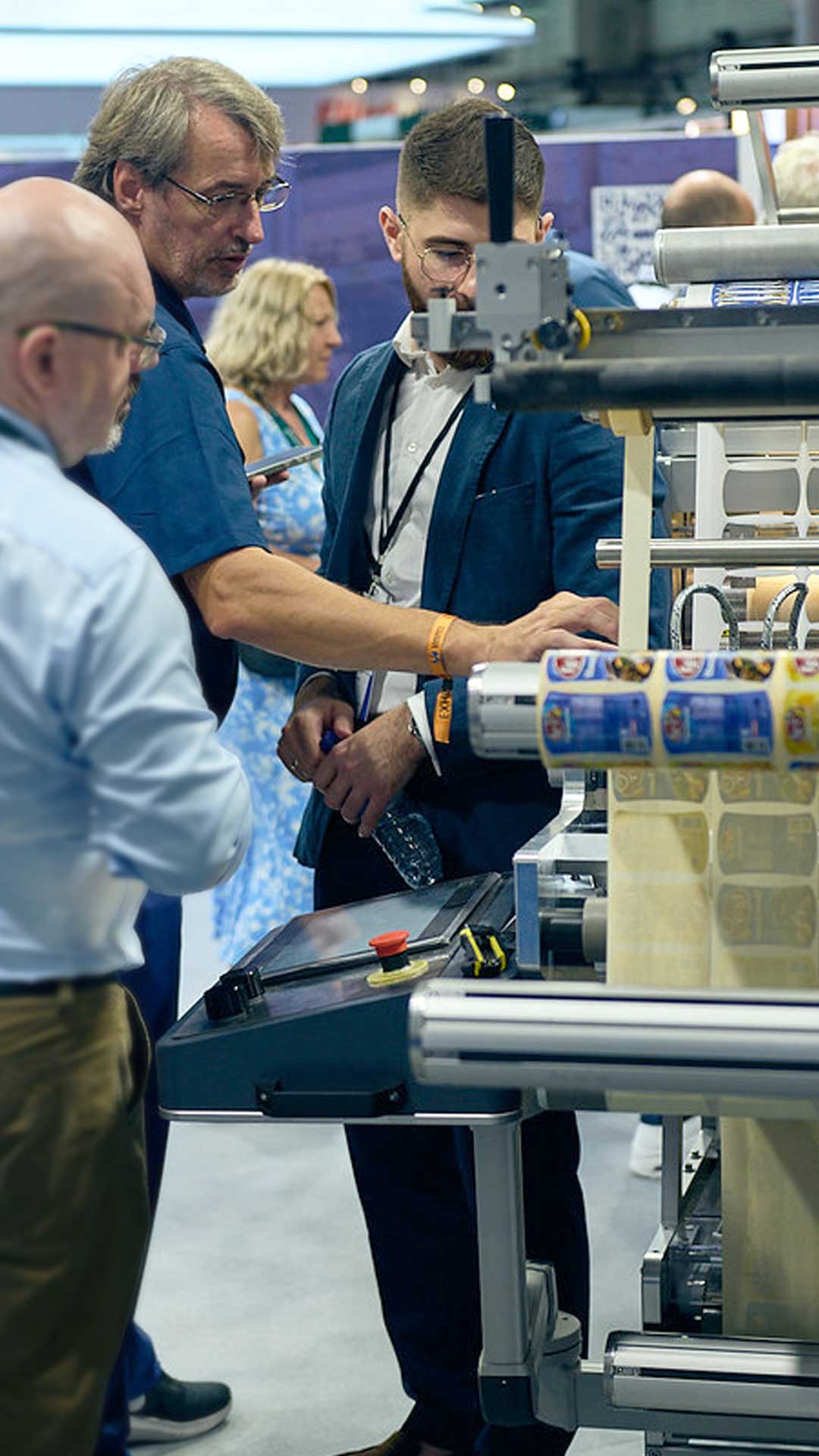
After eight months of conversations across the industry, I don't see a label market in decline. I see an industry being forced to redefine where value comes from. Volume still matters. Speed still matters. Flexo matters. Digital matters. Automation matters. AI will matter. But none of them, individually, is the answer.
For me, the bigger shift is from optimizing individual technologies to optimizing the economics of the entire production process. The companies that succeed will be those that can absorb greater complexity without allowing costs, lead times and inefficiency to grow with it.
And that brings me back to Peter Hinssen's challenge to act. Our industry does not lack technology. We have more capability, speed, automation and intelligence available to us than ever before. The challenge is using that technology to remove complexity rather than adding more of it. Acting does not mean chasing every new technology. It means identifying where complexity is holding the business back, making deliberate choices and being prepared to change before change is forced upon us.
As the industry comes together again at Loupe Americas, perhaps this is the conversation we should continue: not which technology will win, but how we use the technologies already available to manage a more complex production environment profitably.
- THE TECHNOLOGY IS ALREADY HERE.
- THE COMPLEXITY IS GROWING.
- THE OPPORTUNITY LIES IN WHAT WE DO ABOUT IT.
Stay up to date
Subscribe to the free Label News newsletter and receive the latest content every week. We'll never share your email address.