Baker Labels takes UK’s first HP Indigo WS6800
Baker Self Adhesive Labels has installed an HP Indigo WS6800, a UK first and its fifth model from the digital press manufacturer in the last decade.
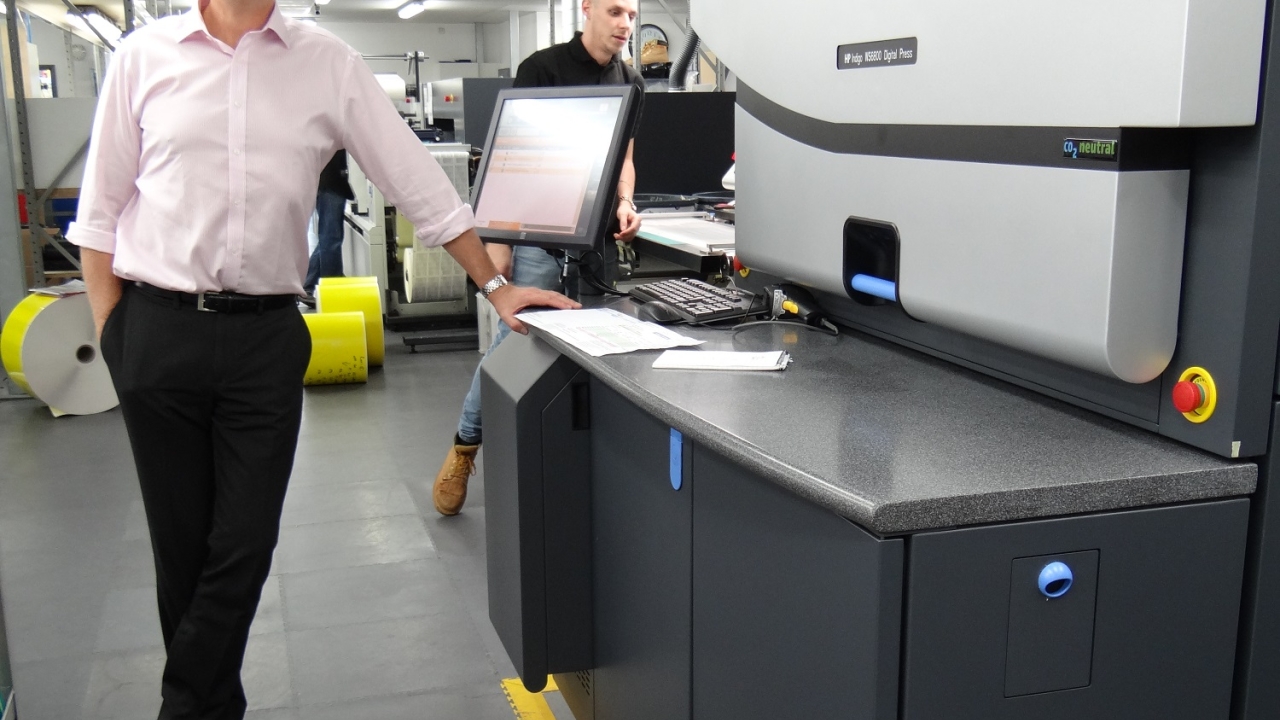
The new WS6800 boasts additional features that will reduce many of the non-productive tasks, including on-press color profiling and color matching for reprints, and Automatic Alert Agent, which spots any errors in the print and can be set to warn the operator or stop the press
Baker Self Adhesive Labels’ investment in the WS6800 also includes upgrading its existing WS6600 to match the features of the WS6800, plus upgrading the digital front end of the 4050 to generation 8 and v4 RIP, which is part of an effort to ‘future-proof the Indigo department for the next few years along with maximizing production and quality now’.
The WS6800 investment also represents a commitment to environmental issues, Baker Labels said, as HP Indigo has established a program in collaboration with Good Energy Initiative, a project for environmental learning and leadership, to offset carbon emissions associated with the manufacture of the press. Investment in reforestation and social investments in renewable energy mean the WS6800 was manufactured via a carbon dioxide neutral process. There is also a significant reduction in oily waste due to the new self-sustaining imaging oil usage.
Baker Self Adhesive Labels managing director Steve Baker (pictured) said: ‘The digital market is becoming more competitive each year so the need to take advantage of every available improvement has moved from “nice to have” to essential.
‘Minutes saved per job on set-up, less stops for checking scaling and auto-color correction can make a huge difference to daily output.’
Baker added: ‘One of the main advantages for production will be the improved speed at which jobs can be sent to press. The new generation 8 and v4.1 RIP is mind-blowingly fast. We ran a test on a large VDP job that we had produced previously. We had to split the job into 18 files and each one took over 1.5 hours to normalize and RIP. The new RIP took just three minutes.’
Stay up to date
Subscribe to the free Label News newsletter and receive the latest content every week. We'll never share your email address.