Study forecasts fiber-based packaging lead by 2045
Barrier coating advances and tightening regulation set to reshape food packaging market.
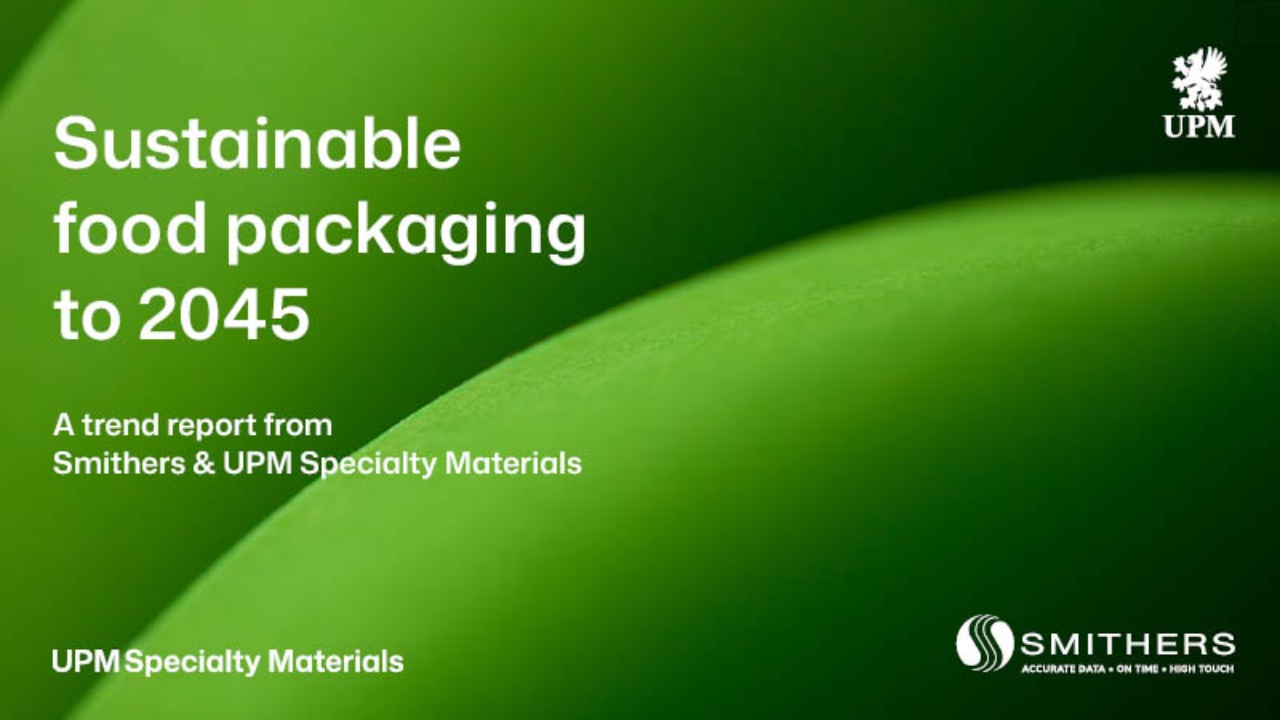
Fiber-based food packaging has been on course to become the leading sustainable material category by 2045, with its share of the global food packaging market forecast to rise from 37 percent today to 42 percent, driven by advances in barrier coatings, tightening regulation and consumer pressure on single-use plastics, according to a new study from UPM Specialty Materials and global consultancy Smithers.
The study, based on input from more than 230 global packaging professionals, found that 71 percent of respondents expect fiber-based packaging to be perceived as the most sustainable option by 2045, with barrier coating innovations set to unlock food applications previously limited to plastics. Global recycling rates are forecast to climb from 31 percent in 2030 to 37 percent by 2045, though respondents expect landfilling and incineration to persist, with significant variation between Europe, the US and Asia-Pacific.
Some 71 percent of respondents believe sustainability will become a strict government mandate rather than a brand differentiator by 2045, with 88 percent expecting that shift to fundamentally reshape packaging material choices. Extended Producer Responsibility schemes and eco-modulation fees are projected to become primary drivers of material selection, rewarding recyclable solutions and penalizing hard-to-recycle alternatives.
'Ongoing innovation in barrier technologies is opening up new applications for fiber-based packaging to compete with plastic alternatives,' said Ciaran Little, vice president of the global consulting information division at Smithers. 'EPR and eco-modulation are directly influencing material choices.'
Stay up to date
Subscribe to the free Label News newsletter and receive the latest content every week. We'll never share your email address.