Coca-Cola turns sleeves into collectibles
The beverage giant's latest collaboration with Panini demonstrates how shrink-sleeve technology, automation and responsible sourcing can transform a label into a marketing channel. Will Drysdale reports.
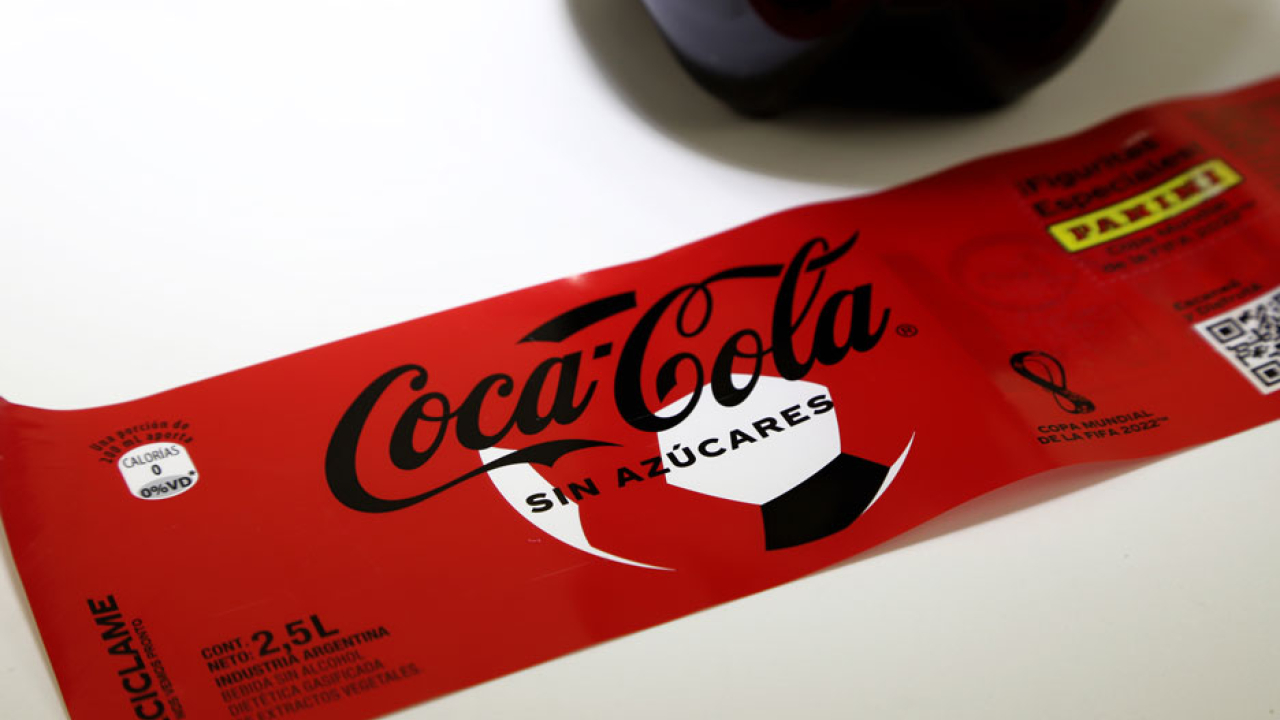
Coca-Cola is never far from launching a major consumer campaign, and the 2026 FIFA World Cup was just that.
It has now come to an end, with Spain crowned champions of what is regarded as the biggest tournament in the competition's history, and once again, the beverage giant turned to Panini to engage football fans through packaging.
Founded in Italy in 1961, Panini is best known for its football sticker albums, which have become renowned during international tournaments. The companies have collaborated before, including a promotion for the UEFA European Championship in 2016 that reportedly placed around 265 million stickers across Europe.
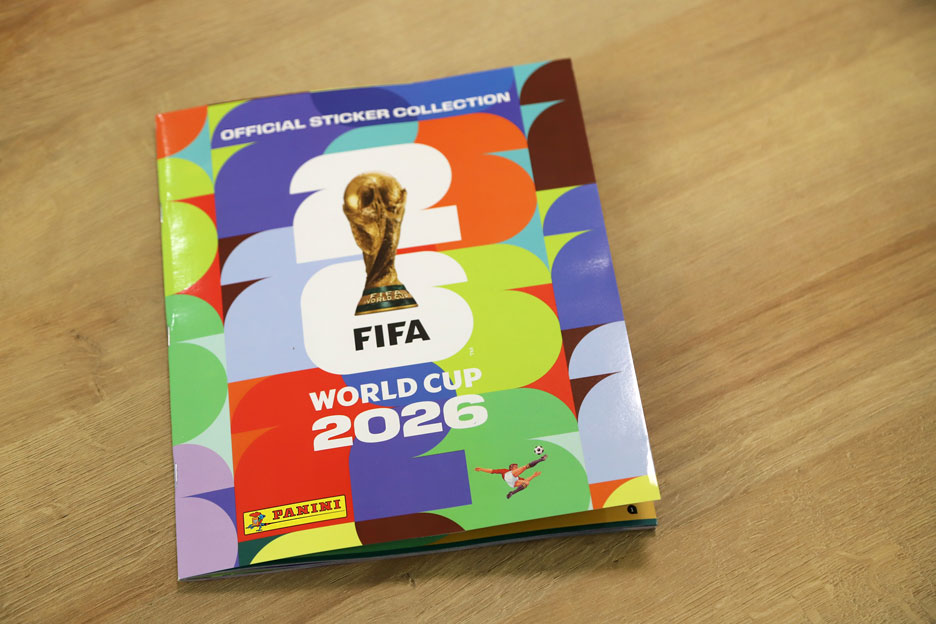
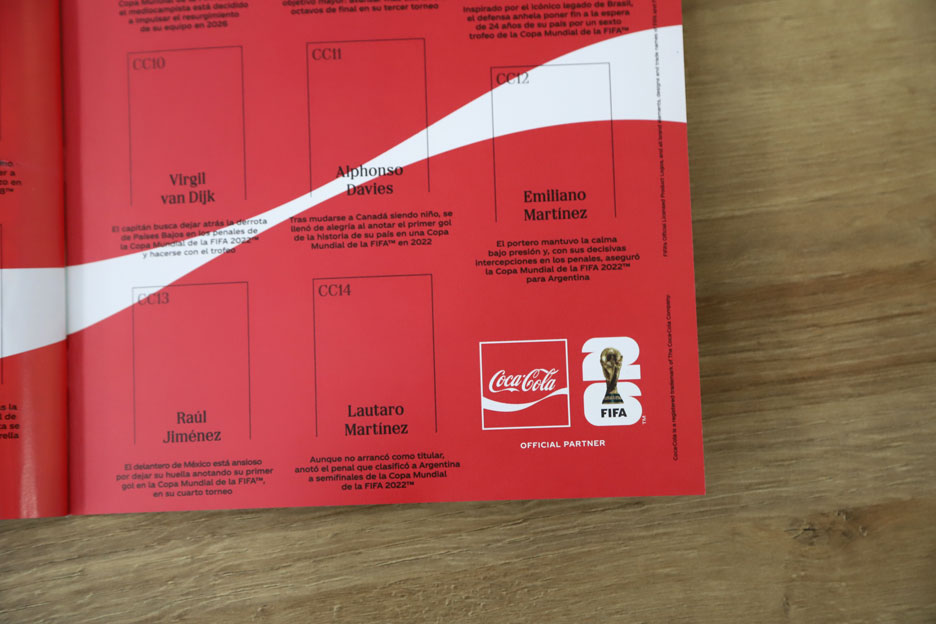
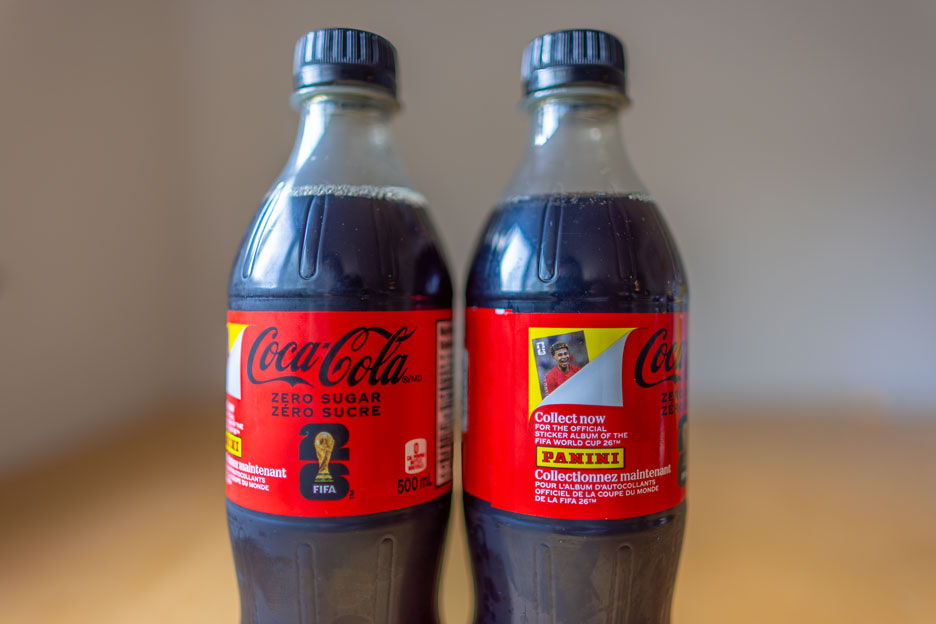
For the latest campaign, Coca-Cola integrated exclusive Panini stickers into the labels of selected Coca-Cola bottles. Consumers could peel back the promotional label to reveal one of 12 player stickers designed to fill a dedicated spread in the official FIFA World Cup 26 sticker album. The players included Harry Kane, Lamine Yamal, Virgil van Dijk, Lautaro Martínez, Joshua Kimmich, Gabriel Magalhães and Weston McKennie.
"For the labels and packaging industry, however, the campaign is more significant than a football promotion. It represents a sophisticated example of packaging being used as a direct consumer-engagement tool."
The promotion turned the label from a largely informational component into an interactive part of the product. Rather than receiving a separate giveaway at the point of sale, the consumer discovers the collectible within the packaging itself.
For retailers, the objective is to increase purchasing frequency, create theatre around tournament displays and give shoppers an additional reason to return in search of particular players. For the labels and packaging industry, however, the campaign is more significant than a football promotion. It represents a sophisticated example of packaging being used as a direct consumer-engagement tool while still fulfilling its conventional branding, regulatory and protective functions.
Collectible campaign
The collectible stickers are produced at Panini's headquarters in Modena, Italy, before entering a broader packaging supply chain, where they must be accurately paired with the appropriate promotional labels.
Although the finished concept appears simple, placing a paper collectible beneath a shrink-sleeve label introduces a series of production challenges. Each sticker must remain securely attached during converting, transport, bottling and distribution, while also being easy for the consumer to remove without damaging the image.
Unlike a standard shrink-sleeve application, the promotion requires an additional component to be inserted into an already highly optimized production workflow. The sticker must be positioned accurately beneath the sleeve and temporarily secured with an adhesive that withstands transportation, warehousing, application, heat and refrigeration.
At the same time, the sticker must detach cleanly when the consumer removes the sleeve. Too little adhesive could allow the sticker to move or fall away during production. Too much could damage the sticker, affect its appearance or make it difficult to remove.
Achieving that balance across hundreds of millions of units requires extensive testing and validation. Small variations in adhesive coat weight, temperature, humidity, substrate performance or application pressure can influence the result. A process that works successfully during a short trial must be repeatable across multiple production sites and markets.
The sticker itself also requires protection. Panini stickers are typically intended to be stored in albums, but those concealed beneath beverage labels must withstand far harsher conditions. Exposure to moisture, temperature fluctuations and condensation throughout the supply chain could otherwise affect a standard paper construction.
"When production volumes extend into hundreds of millions of units, the consequences of a minor error are magnified."
A protective laminating varnish is applied over the printed surface to prevent moisture from reaching the image during transport and handling. The finished collectible may pass from a production line into a warehouse, a distribution vehicle, a supermarket refrigerator and finally into the consumer's hands before it is removed.
Integrating the sticker into a beverage bottling environment poses an additional challenge. Large-scale bottling operations can process tens of thousands of bottles an hour, leaving little room for additional handling stages. Any promotional component must therefore be incorporated without affecting efficiency, output or line reliability.
The sticker insertion process must operate in synchronization with the label and decoration systems. Automated feeding equipment positions the collectible accurately beneath the sleeve before the completed construction is applied. Even a small disruption could generate bottlenecks or result in bottles being produced without stickers.
When production volumes extend into hundreds of millions of units, the consequences of a minor error are magnified.
Quality-control systems are therefore crucial, as inspection equipment can verify the presence and position of each sticker and reject defective products before they leave the production environment.
CCL coordinates global production
CCL Label has confirmed its involvement in producing the packaging for the promotion, describing the campaign as an example of what can be achieved when a global manufacturing network operates as one team.
In a social media post, the company said executing a project of this scale required 'flawless coordination across borders', involving its sites in the US and teams in Austria. It compared the collaboration to a well-organized football team, with different operations contributing to the quality and production volumes required by Coca-Cola and Panini.
That contribution illustrates why global promotional campaigns increasingly depend on converters with multinational manufacturing footprints. Materials, graphics, production specifications and quality requirements must remain consistent even where labels are produced at different locations and supplied to multiple bottling operations.
The involvement of facilities in the US and Austria also reflects the geographical complexity behind what consumers experience as a single campaign. Promotional components may be printed, converted, assembled and distributed across several countries before reaching the final bottling line.
Consistency is therefore as important as speed, as every aspect of the process must remain within the required tolerances at every participating facility.
Shrink sleeves have become one of the fastest-growing decoration formats in the beverage sector partly because of their ability to cover complex container shapes and provide 360-degree graphics. They also give brands a large printable area for promotions, limited editions and connected-packaging features.
Modern converting systems use high-definition flexographic, gravure or digital printing to produce vivid graphics with fine detail and consistent color. Increasingly sophisticated registration and inspection systems allow converters to maintain tight tolerances across long production runs, which is an important consideration when promotional components must align precisely beneath printed imagery.
After printing, sleeves are normally seamed into tubes and supplied in reels for application. On bottling lines, automated systems cut each sleeve to length and position it over the container before the container passes through a steam or hot-air shrink tunnel.
For this campaign, those established processes must accommodate the additional sticker without reducing line performance. The collectible needs to remain securely in place as the sleeve is applied and shrunk but must not be affected by the heat used to mold the film around the bottle.
Packaging as media
Brand owners are increasingly treating labels and packaging not simply as containers for products, but as owned media channels capable of encouraging interaction, collecting data and supporting wider marketing campaigns. For example, Wimbledon Tennis and the Belgian lager brand Stella Artois have been collaborating for more than a decade and develop further each year, including Stella Artois and Wimbledon branded clothing.
Unlike digital advertising, a package is guaranteed to reach someone who has already purchased the product or is actively considering it. It remains physically present throughout the consumption experience, giving brands a direct route to the consumer.
This has driven investment in QR codes, connected packaging, variable-data printing, promotional mechanics and collectible formats. Coca-Cola's partnership with Panini combines several of these principles with an established emotional connection that is the tradition of collecting and swapping football stickers.
The value of the promotion comes partly from turning routine packaging into something consumers actively search for. A label that would ordinarily be discarded becomes the gateway to a collectible associated with one of the world's largest sporting events.
It also demonstrates that consumer engagement does not have to depend entirely on digital technology. The physical sticker provides the immediate reward, while the packaging itself creates the element of discovery.
However, as packaging becomes more elaborate, promotional impact must increasingly be balanced against environmental performance. Additional layers, adhesives, varnishes and components may improve the consumer experience, but they can also add material and complicate end-of-life treatment.
That tension makes responsible sourcing and design considerations an important part of the campaign rather than a separate discussion.
Sourcing at scale
The official FIFA World Cup sticker collection packaging carries the FSC Mix label, indicating that its paper-based materials come from a combination of FSC-certified forests, recycled material and controlled sources.
"It also means that the environmental stakes are higher, because the choices made at this scale can have a much larger impact."
Helen Chepkemoi Too, senior director of markets at FSC International, notes that responsible sourcing at this scale depends on establishing clear supplier expectations and verification processes throughout the supply chain.
'When we talk about complex global supply chains and campaigns involving millions of products, responsible sourcing means setting clear supplier requirements and having robust verification systems in place to ensure all involved partners are meeting them,' she says.
'FSC certification helps provide a tested and practical framework to help companies ensure their forest-based materials are sourced in-line with rigorous environmental, social and economic standards, even when production volumes are exceptionally high.'
The 2026 Panini collection is the largest World Cup edition produced by the company, containing 980 stickers, including the dedicated Coca-Cola spread.
Too says that operations capable of supplying such volumes require strong management systems to ensure sourcing standards are applied consistently.
'The scale of such a campaign only reinforces why certification matters,' she explains. 'When millions of items are being produced, consistency depends on having recognized processes and structures in place. It also means that the environmental stakes are higher, because the choices made at this scale can have a much larger impact.'
The campaign involves numerous companies, including brand owners, material suppliers, converters, bottlers and licensing partners. FSC chain-of-custody certification provides those participants with a common framework for handling and making claims about certified material.
'For a global project involving brand owners, converters, printers and licensing partners, that common framework matters,' says Too. 'It helps ensure that responsible sourcing is not just based on trust alone but supported by audited processes that can verify the materials were handled appropriately throughout the supply chain.'
For the consumer, much of that activity remains invisible. Shoppers see the finished label or sticker rather than the sourcing and production network behind it. The FSC mark is intended to link the finished product to a verified chain-of-custody system that includes supplier controls and independent auditing.
Too adds: 'The FSC label is not just a symbol, it is backed by a framework which includes chain-of-custody controls, supplier verification requirements and regular third-party auditing.'
Creativity and responsibility
Promotional packaging creates a highly visible platform for brands. Still, Too argues that sustainability should be built into such projects from the beginning rather than considered after the creative concept has been agreed.
'Packaging is not always at the center of sustainability conversations, but it should be,' she says. 'It's one of the most visible touchpoints between brands and consumers, and its impact can be significant.
'This is why sustainability needs to be considered alongside creativity and marketing impact from the outset. Certification helps brands move beyond vague sustainability claims to sending a clear signal of responsible business practice.'
For global sporting events, that visibility creates both an opportunity and a responsibility. Sponsors can use campaigns reaching millions of consumers to demonstrate that engagement and responsible sourcing do not have to be competing objectives.
"Packaging is not always at the center of sustainability conversations, but it should be."
Too expects sourcing requirements to receive greater attention from tournament organizers and sponsors as environmental claims face closer scrutiny.
'We're already seeing that responsible sourcing is moving from a "nice to have" to a baseline expectation in many sectors,' she says. 'Major sporting events are highly visible and closely scrutinized, so it is reasonable to expect that organizers and sponsors will give greater weight to responsible sourcing requirements.'
This could ultimately extend into licensing decisions. Production capacity, consistency and product quality have traditionally been central to the selection of partners for major global promotions. Too believes certification should increasingly sit alongside those commercial criteria.
'Licensing criteria should reflect the growing expectation that brands take environmental responsibility seriously, particularly when their products depend on natural resources,' Too says. 'Credible certification can act as a signal to help brands assess whether suppliers can meet responsible sourcing expectations at scale before entering into partnership.'
Fanatics-owned Topps is expected to take over production of FIFA's official stickers and trading cards from 2031, ending Panini's long-running World Cup relationship after the 2030 tournament. Too says future producers should retain credible sourcing requirements while also examining recycled content, efficient manufacturing and waste reduction.
For converters and packaging manufacturers, the opportunity extends beyond certified fiber. Material reduction, lower production waste, recycled content and improved end-of-life performance can all help reduce the impact of high-volume campaigns.
'For large-scale campaigns, even small improvements can go a long way,' Too says. 'The key is to make sustainability a part of the planning process, so that every decision from sourcing to production to end-of-life considerations supports the same environmental goals.'
A repeatable model
For the labels and packaging sector, the Coca-Cola and Panini campaign is a reminder that innovation does not always require an entirely new decoration technology. Sometimes it comes from combining established materials, machinery and processes in a way that creates a different consumer experience.
By using shrink sleeves to coincide with one of football's most recognizable collectibles, Coca-Cola and Panini have shown how packaging can become an active participant in the consumer experience rather than simply a vehicle for delivering a product.
As competition for consumer attention intensifies, similar campaigns are likely to become more common. Combining converting technology, automated manufacturing and carefully designed promotional mechanics gives brands a means of engaging consumers directly through packaging.
For the labels industry, it is another example of how labels continue to evolve, creating new opportunities for converters, material suppliers and machinery manufacturers while placing greater emphasis on traceability, consistency and environmental responsibility.
Stay up to date
Subscribe to the free Label News newsletter and receive the latest content every week. We'll never share your email address.