Mini Rodini joins ProductDNA
Children's wear brand adopts Trimco Group's platform for compliance and traceability.
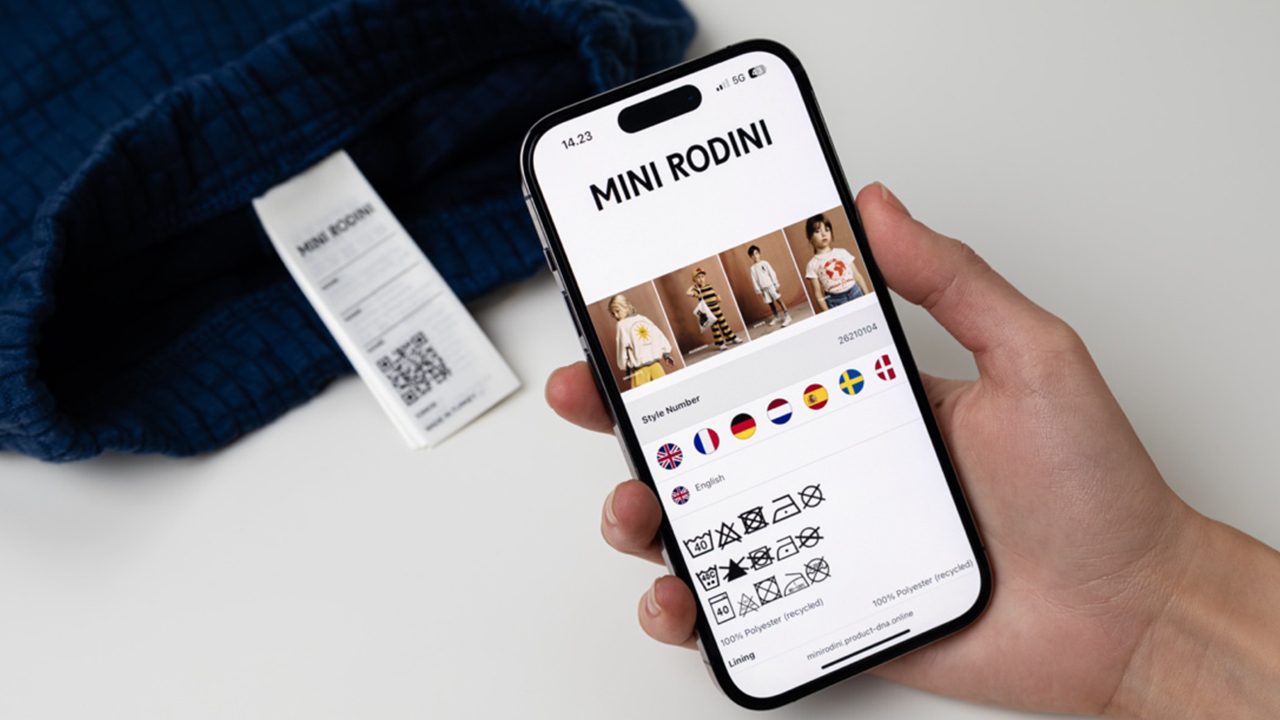
Swedish children's wear brand Mini Rodini has signed up to Trimco Group's ProductDNA platform to support the next stage of its traceability and compliance journey.
Beginning with ProductDNA's global textile regulations compliance and translations service, the partnership will help Mini Rodini meet a wide range of international textile requirements. The brand will also introduce digital labeling through QR-code-enabled digital twins, displaying fiber content and care instructions in all relevant market languages, feeding into future Digital Product Passport (DPP) requirements expected under upcoming ESPR textile delegated acts.
As a first step, Trimco has set up an online ordering tool to manage care and content labels, capturing critical data needed for compliance with global textile regulations, including EPR textile guidelines, the French AGEC law and Zalando reporting readiness. By capturing fiber usage data by weight, season and style at the bulk production stage, the system enables more accurate ESG reporting compared to traditional head-office data collection.
'Sustainability is a business imperative for Mini Rodini,' said Kristin Roos, sustainability and quality manager. 'Trimco's ProductDNA is helping us transform supply chain traceability and ESG compliance into streamlined, actionable processes, which is invaluable.'
The service also includes global onboarding and training for suppliers through Trimco's certificate manager, enabling risk assessment, supplier categorization and direct linking of certifications to products at the bulk stage.
Camilla Mjelde at Trimco Group added: 'We admire Mini Rodini for what the brand has achieved and what it stands for. We look forward to continuing to support this trailblazing brand on its ongoing compliance journey.'
Founded in 2006, Mini Rodini will continue to monitor upcoming ESPR textile delegated acts to ensure its data capture can be expanded as regulatory clarity is confirmed.
Stay up to date
Subscribe to the free Label News newsletter and receive the latest content every week. We'll never share your email address.