Open Pack accelerates export expansion
Open Pack prepared for the reopening of Argentina’s economy by installing hybrid technology and is now ready to re-establish itself as a regional player.
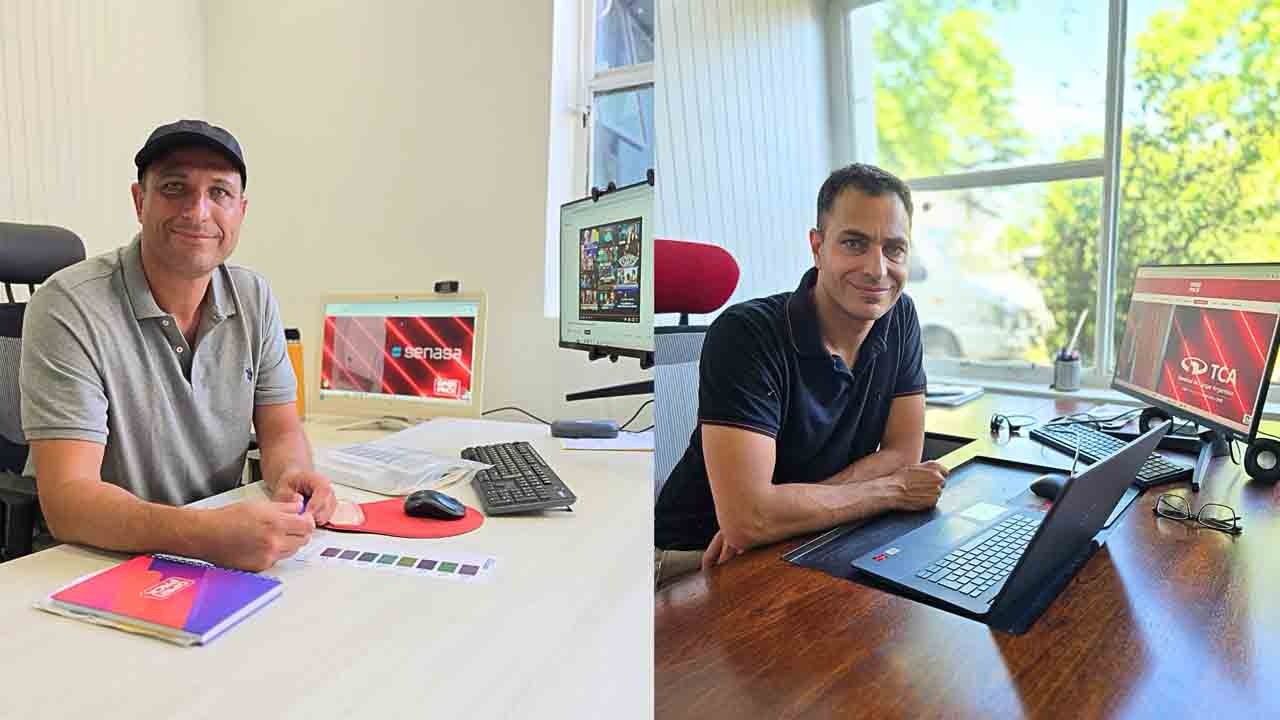
Four years ago, Argentine label converter Open Pack was faced with a stark choice, according to managing partner Alejandro Szpektor: ‘We knew we had to change, or we would die.’
It’s a surprising sentiment, given that Open Pack was, at the time, running a successful business. Its expertise in security labeling was well-known. It was providing innovative, specialist self-adhesive labels for premium technology products, among other sectors.
But Open Pack and its fellow label converters in Argentina were operating under extremely challenging conditions.
Government-imposed currency controls and import restrictions were suffocating the local industry. Credit was hard to come by. Materials were hard to source. It was, in effect, a closed market.
‘We knew that sometime soon, the political situation would change and the market would open up,’ says Szpektor. ‘We would be competing not just with local companies, but with the world. If we did nothing, in a few years we could have big problems. And we knew that we would want to go out and sell our labels into the wider region. We needed to be prepared.’
So Alejandro Szpektor and his brother, fellow managing partner Gabriel Szpektor, began to hatch a plan.
Hybrid printing investment
During multiple visits to Labelexpo trade shows around the world, the Szpektor brothers had become convinced that hybrid flexo/digital printing represented the future of label production. ‘We didn’t want just any machine. If you’re going to compete in the top league, you have to buy the best. We wanted Messi, not any old player,’ says Alejandro Szpektor, referencing the legendary Argentine soccer star.
After researching the market and watching multiple press demonstrations, the brothers decided to install a Mark Andy Performance Series P7 hybrid. It would be the first in Latin America, after a demo machine installation in Mexico.
‘Even Mark Andy themselves were surprised that a company in Argentina – with the closed economy we had at the time – would be ordering this machine,’ recalls Alejandro Szpektor. ‘Tom Cavalco [Mark Andy’s vice president of international sales] came to visit us. I think he wanted to find out who these crazy guys were. The machine wouldn’t even fit into the small factory we had at the time. Over a coffee, I told him not to worry, we would move to a bigger space to fit the machine. And I said that we would also end up buying a second press, too. I don’t think he believed us. He laughed, we hugged and we ended up with a great relationship.’
We didn’t want just any machine. If you’re going to compete in the top league, you have to buy the best. We wanted Messi, not any old player
This was in May 2022. The Performance Series P7 hybrid arrived in October of that year. ‘We were very proud because it was very hard to get credit in Argentina, and very hard to try to do something different from everyone else,’ says Alejandro Szpektor.
‘We see the move to hybrid printing as a path of no return,’ says Gabriel Szpektor, who oversees new product development at Open Pack. ‘Hybrid technology has broken the paradigm of choosing between flexo and digital. When we installed the first Mark Andy P7 hybrid, it was the only machine of its kind in Argentina. Our clients didn’t realize what could be achieved.
The bigger companies said, “Okay, can we try this, can we try that”, until suddenly we started to have a volume that got out of hand. We hadn’t appreciated the level of demand, the response speed, the satisfaction we would get from clients.
‘We are natural developers; we enjoy developing products. We enjoy it like a magician who performs a magic trick and surprises the client with different solutions. In Argentina, which previously didn’t have this hybrid combination, it’s very easy to surprise people. The press changed the standard of what can be achieved in one pass.’
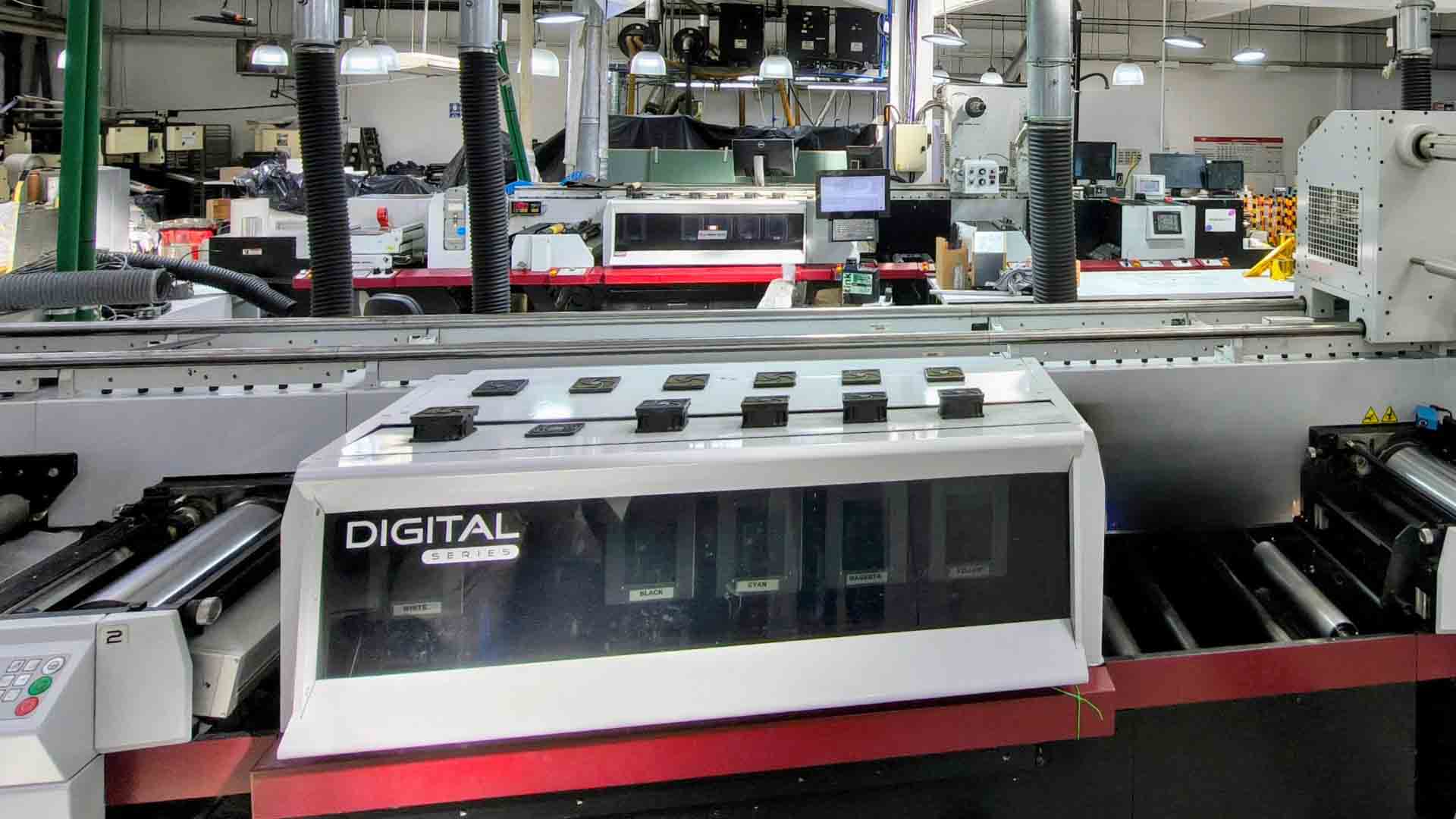
Word spread. Gabriel Szpektor cites the example of the agricultural products division of Argentina’s largest energy company, YPF, approaching Open Pack unsolicited to supply multi-layer labels with embedded security features. This combination of advanced printing capabilities, married to Open Pack’s expertise in security labeling, has led it to become a supplier to the country’s national airline and numerous government ministries.
Two years after installing the first Mark Andy P7 hybrid, Alejandro Szpektor’s words to Mark Andy’s Cavalco proved prophetic.
After a visit to the press manufacturer’s European headquarters in Poland to see the new machine, Open Pack installed a second P7 hybrid late last year, making it the only converter in Latin America to run two of the presses.
‘Single-pass hybrid flexo/inkjet is the future,’ says Alejandro Szpektor. ‘Some of our competitors have digital toner or inkjet presses, but these machines are not efficient for the high-volume work that our clients need, so hybrid technology is a huge strategic advantage for us.’
Export
Just 14 months after the installation of Open Pack’s first Mark Andy P7 hybrid, libertarian politician Javier Milei was elected as Argentina’s new president. He swiftly set about dismantling the import/export and currency exchange restrictions that were so hampering local businesses. Open Pack’s bet – to prepare in advance for potential political change – had paid off.
Prior to Milei’s victory, Open Pack could already count on export experience. Food products, particularly meat, are a key market for the company. ‘Argentina is a huge producer of beef, but many of the most important cuts are not consumed here; they go directly abroad,’ says Gabriel Szpektor. ‘We produce security labels which identify where the beef is from and that it complies with certain certifications, such as being kosher, for example.’
The graphic arts industry is changing. Increasingly, it is about gathering and managing data, and creating a digital identity for each individual label
Open Pack sells its meat-certification labels to various clients abroad, and in the past was also a major supplier of prepaid telephone cards to Cuba. But the reopening of the Argentine economy allows Open Pack to reassert itself as a regional player rather than just a national one, says Alejandro Szpektor. ‘Before Milei, we could export, but because we couldn’t bring consumables into the country, it was very hard to serve markets abroad.’
Exports of security labels for meat products have already ramped up, with millions now sold into Brazil, Mexico, Paraguay, Peru, the US and Uruguay. Now, the company’s principal focus for developing its export business is the technology sector, to which it has long been a leading supplier, even prior to adding hybrid printing capabilities. The converter provides specialist, high value-added labels, with features such as tamper-evidence, holograms and unique tracking identifications, to technology companies such as LG, Nokia, Microsoft, Motorola and Samsung.
‘Non-conventional labels for high-level companies with complex needs,’ as Alejandro Szpektor puts it. The next step is to serve those needs regionally, rather than just
nationally. ‘The companies we serve have a regional presence,’ says general manager Pablo Rumelfanger. ‘So we don’t want to supply them only in Argentina, but throughout the region. Argentina is well-located to serve neighboring markets in Chile, Brazil and Uruguay, for example. We have a modern plant with high-level technology and an experienced team. We have been preparing ourselves to compete internationally and are now well-positioned to do so.’
Rumelfanger joined Open Pack 18 months ago. His background in technology innovation and international business development in various Latin American countries, rather than specifically in graphic arts, chimed with the Szpektor brothers’ vision. ‘They explained the project to me: the border will open; we want to ramp up our exports and create a factory based on technology and software,’ he says. ‘The graphic arts industry is changing. Increasingly, it is about gathering and managing data and creating a digital identity for each individual label. It’s the natural next step for the industry, and similarly, the project at Open Pack was the natural next step for me, too. We already had the background and expertise in security labeling, we just needed to add the digital identity and workflow.’
With this goal in mind, Open Pack began to reconfigure itself. It brought in new people to run the plant. It started using artificial intelligence to program its machines. It automated processes.
‘We want to transform graphic arts into an automated, efficient, high-quality, sustainable process, without losing our passion for the constant development of solutions for our customers,’ says Alejandro Szpektor.
‘The key elements are security, technology and packaging,’ he continues. ‘We are part of the solution and want to be involved in all three areas.’ He describes the different security options offered by Open Pack as being like a fruit salad. ‘You can add however many ingredients you want, depending on the budget or complexity of the project.’
One new development aimed at food and pharmaceutical applications is smart labels, which can monitor if a product goes above or below a specified temperature as it moves through the supply chain. ‘Although it is still in the experimental stage, laboratory tests show that we will soon have a product that has been industrially tested in renowned pharmaceutical laboratories, which, in their enthusiasm to have it as soon as possible, offered to conduct field tests for the final adjustments,’ says Alejandro Szpektor.
Serving these blue-chip clients across the region, rather than just in Argentina, puts Open Pack – currently an independent company with only one production facility – into competition with multi-national converting groups with facilities in multiple countries across Latin America. It’s a big challenge, but one which enthuses the Open Pack team. ‘Service is the key,’ emphasizes Alejandro Szpektor. ‘Service, and also passion. When a multi-national converting group has been created through acquisitions, they might not have been developing alongside their clients in each of these locations. We have very close relationships with our customers. We have put together a very strong service team, we have brought in experienced people who know what they are doing, and we have set up our plant with the latest technology.’
Open Pack’s 2,200 sqm facility in the Buenos Aires suburb of Vicente López houses close to 50 employees and is recertified to ISO:9001 each year. Its Mark Andy P7 hybrid presses are two of six flexo lines, with the others a mixture of machines from Mark Andy and Nilpeter.
‘It’s not just about doing things well, but about doing them better than yesterday,’ says Gabriel Szpektor. ‘This is our philosophy of work.’
Stay up to date
Subscribe to the free Label News newsletter and receive the latest content every week. We'll never share your email address.