Xinma transforms with Flora
Having started its digital journey in 2021, Xinma is now planning its fourth press investment.
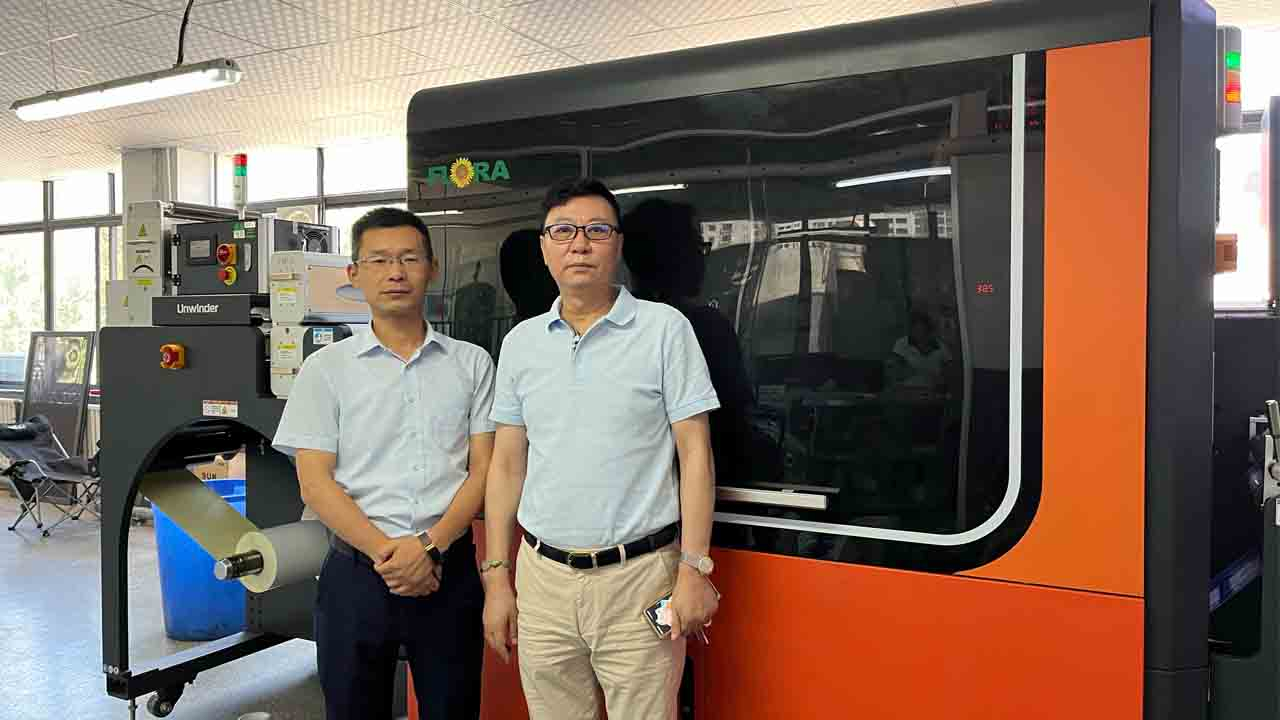
Focused on the tire label sector, Xinma has leveraged digital printing technology as the cornerstone of its business. By enhancing quality, improving efficiency and concentrating on high-value clients, it has blazed a trail for the digital transformation of the traditional label converter.
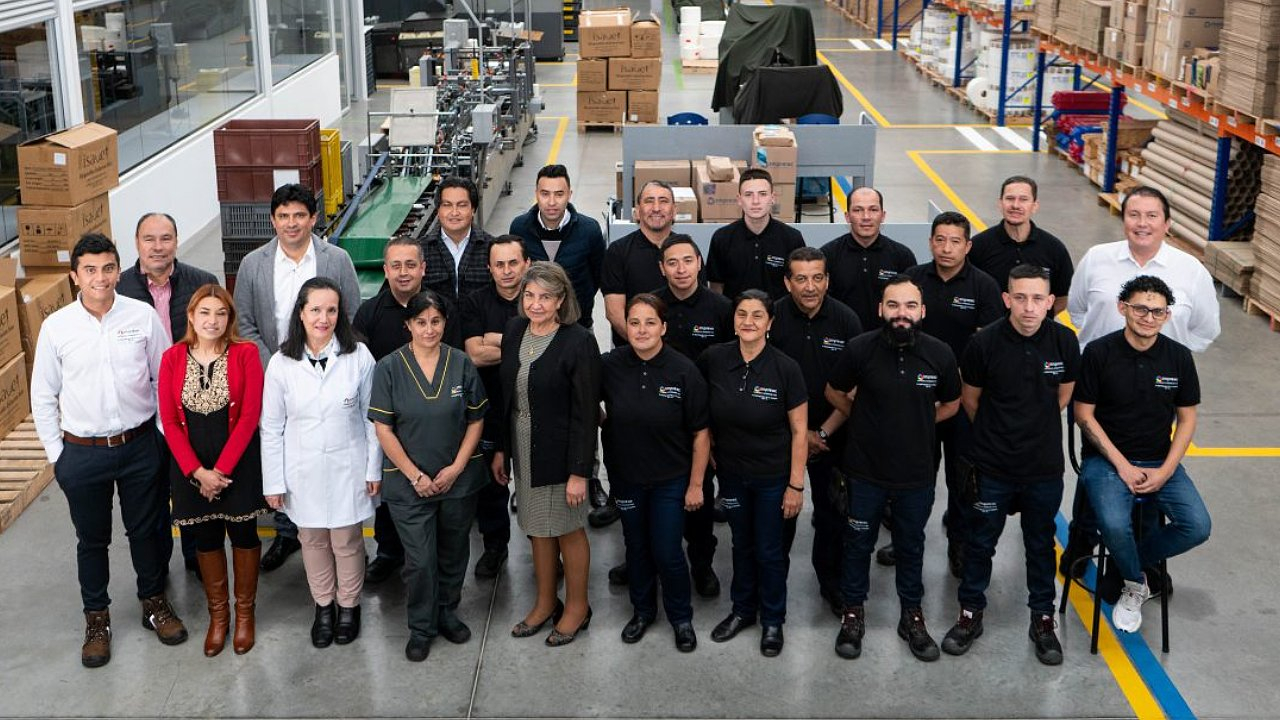
Founded in 2007 in Yantai, Shandong Province, Xinma relocated to its current factory in 2018. Presently, it employs over 50 staff, with a total workshop area of 4,500sqm. The company’s core clientele includes renowned Chinese tire brands such as Linglong, Chengshan, Sailun, Haohua, Hengfeng, Yongsheng, Fengyuan, Xinghongyuan and Formax.
From diversification to specialization
Tian Xuping, founder of Xinma, has been engaged in the printing industry for nearly 30 years. He witnessed the industry’s initial period of rapid growth, but now, like everyone else, faces increasingly fierce competition.
Xuping’s printing career began with bill printing for government institutions, including post offices and electric power bureaus.
Later, the company attempted to expand into new business areas, including label printing, gifts and catering. The gift and catering businesses were eventually shut down as its label printing business achieved rapid success. In June 2008, Xuping reorganized the company, renaming it Xinma Super Label and establishing a strategy focused on tire labels.
‘This decision was based on two considerations. First, the industrial foundation of Yantai and its surrounding areas: 70 percent of the world’s tires are produced in China. Tire enterprises in Yantai alone account for about 60 percent of the national total, presenting significant industrial cluster advantages.
Second, the logic of long-term development means, rather than being an all-encompassing but unrefined multi-category supplier, it is better to deepen our presence in a segmented fi eld and strive to become a leader in that industry,’ Xuping explains.
Xinma expanded its production facilities. The company added 11 intermittent letterpress presses. In response to the special characteristics of tire labels – large in size, and requiring specialist materials – Xinma invested in coating equipment to produce its own self-adhesive labels, achieving quality and cost control over the entire supply chain. Additionally, its own intermittent gluing technology has solved an industry pain point of glue overflow after application, further consolidating its technological advantage.
Digital transformation
Xinma’s digital printing journey began in 2019, with an investment in a second-hand digital press.
In 2021, Xinma installed its first Flora J-330 digital press in Shandong Province, gradually shifting small-run orders to this digital production line. ‘The print-on-demand model enabled by the digital press not only enables rapid response to customers’ urgent needs but also helps to optimize inventory management and achieve lean production,’ he explains.
Xinma soon found that the long-term savings in plates, time, labor and inventory far outweighed the additional cost of digital inks. The company workers also gradually adapted to the fast-paced delivery model of digital production.
In 2023, the company added another Flora digital press to expand capacity. In March 2025, the third Flora press, Model J-350GT, was put into operation.
We found that, just like traditional flexographic, offset and letterpress printing, digital technology is not a one size fits all technology
‘After nearly six years of experience with digital printing technology, we found that, just like traditional flexographic, offset and letterpress printing, digital technology is not a one-size-fits-all technology,’ Xuping states. ‘So, in addition to considering the equipment itself, the supplier’s service response capability is crucial. This is why we have always chosen Flora digital machines.
Its after-sales service and response speed are extremely fast. For example, when we reported an issue with uneven laminating, the manufacturer quickly optimized the technology and applied it to its new-generation machines. This is the core reason for our long-term cooperation with Flora,’
Today, short-run orders of 100-200 sheets (as the production mode of tire labels is roll-to-sheet) account for 70 percent of Xinma’s total orders, and digital printing contributes half of its total revenue, becoming a key driver of the company’s business growth.
Ecosystem expansion
Xinma operates in an intensely competitive market environment. Facing cost control pressures from brand clients, the company has maintained steady growth by leveraging its years of experience in in-house raw material production, equipment operation and maintenance, and quality control management.
Xuping has a clear plan for the future. Xinma plans to install a fourth Flora digital press and, at the same time, gradually reduce the number of letterpress printing machines to two or three units for special orders. Additionally, in 2026, the company plans to invest in flexographic and offset combination presses.
Xinma will expand into automotive-related label fields such as engine oil and adhesive labels. The company also plans to develop its own range of adhesives to reduce its reliance on the raw materials supply chain, and will attempt to replace release papers with release films to help clients achieve their sustainability goals.
Stay up to date
Subscribe to the free Label News newsletter and receive the latest content every week. We'll never share your email address.