Smart packaging adoption remains slow
RRD survey reveals 84 percent of companies plan a transition, but only 1 percent have implemented it.
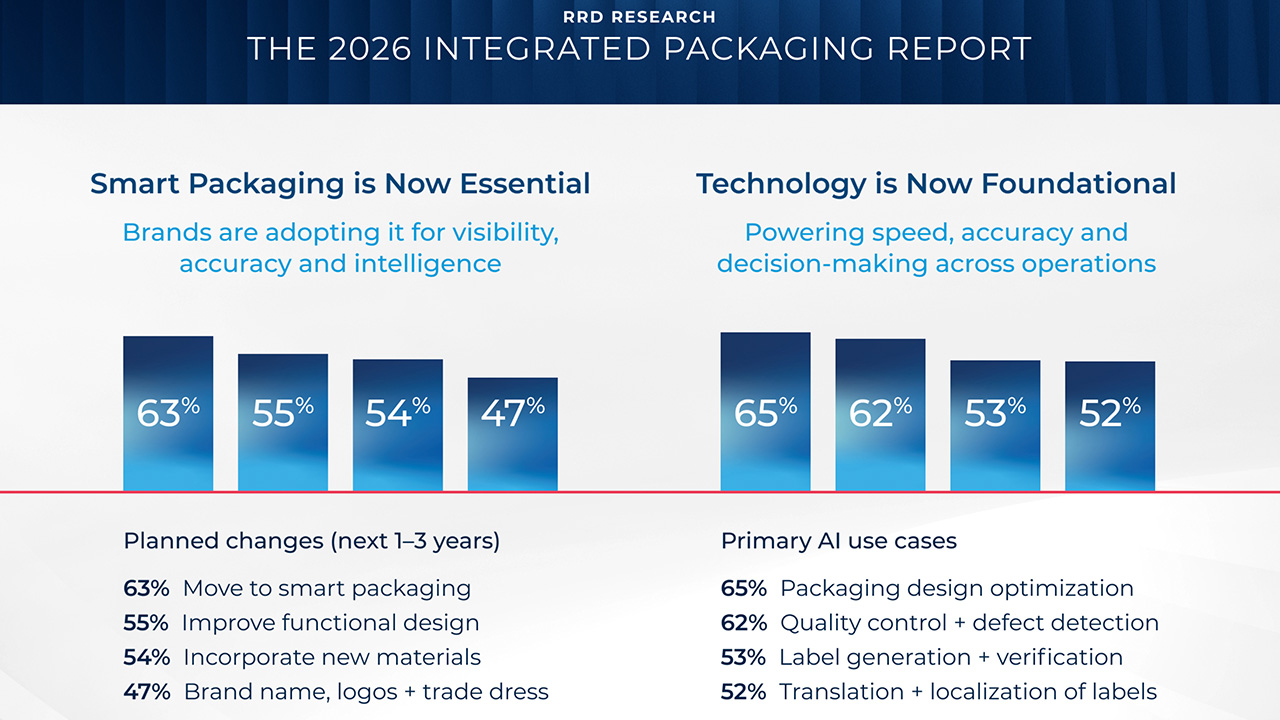
RRD has released its 2026 Integrated Packaging Report, revealing a significant gap between intent and implementation of connected packaging, with 84 percent of 400 surveyed packaging, labels and supply chain leaders planning to transition to smart packaging within one to three years, but only 1 percent having already made the shift.
The survey found that sustainability remains the top major motivating factor for packaging changes, ranked by 74 percent of packaging respondents, while 96 percent of organizations now operate an e-commerce channel, with 80 percent expecting growth in this area.
Of respondents not planning to implement smart packaging, half cited concerns about complexity for their IT and infrastructure. The report shows investments in data-centric tools are maturing, with 87 percent committing to Internet of Things, 85 percent to predictive analytics and 84 percent to real-time visibility.
When asked how AI will be used in operations over the next one to three years, sustainability optimization ranked as the highest priority at 62 percent. A net 77 percent of respondents in packaging roles expect their operations to move their company closer to sustainability goals.
'Digital transformation is no longer a question of if, but when. In the race to smart packaging, preparedness is the key to success, not merely speed,' stated Lisa Pruett, president of integrated packaging, labels and supply chain at RRD.
‘Smart packaging was once experimental; it’s now quickly becoming essential to visibility, accuracy, and product intelligence. Leaders should shift focus from adoption to integration, making sure that innovative packaging delivers real operational value across the supply chain,’ added Craig Lombardi, vice president of labels and packaging at RRD.
‘Leaders are taking a forward-looking view of the market environment, treating current conditions as temporary, and believing that the future justifies continued commitment to sustainability. The challenge is translating the ambition for sustainability into practical, scalable decisions that deliver progress without compromising quality or cost discipline,’ concluded John Marrow, president of supply chain solutions at RRD.
Stay up to date
Subscribe to the free Label News newsletter and receive the latest content every week. We'll never share your email address.