Digital finishing systems line up
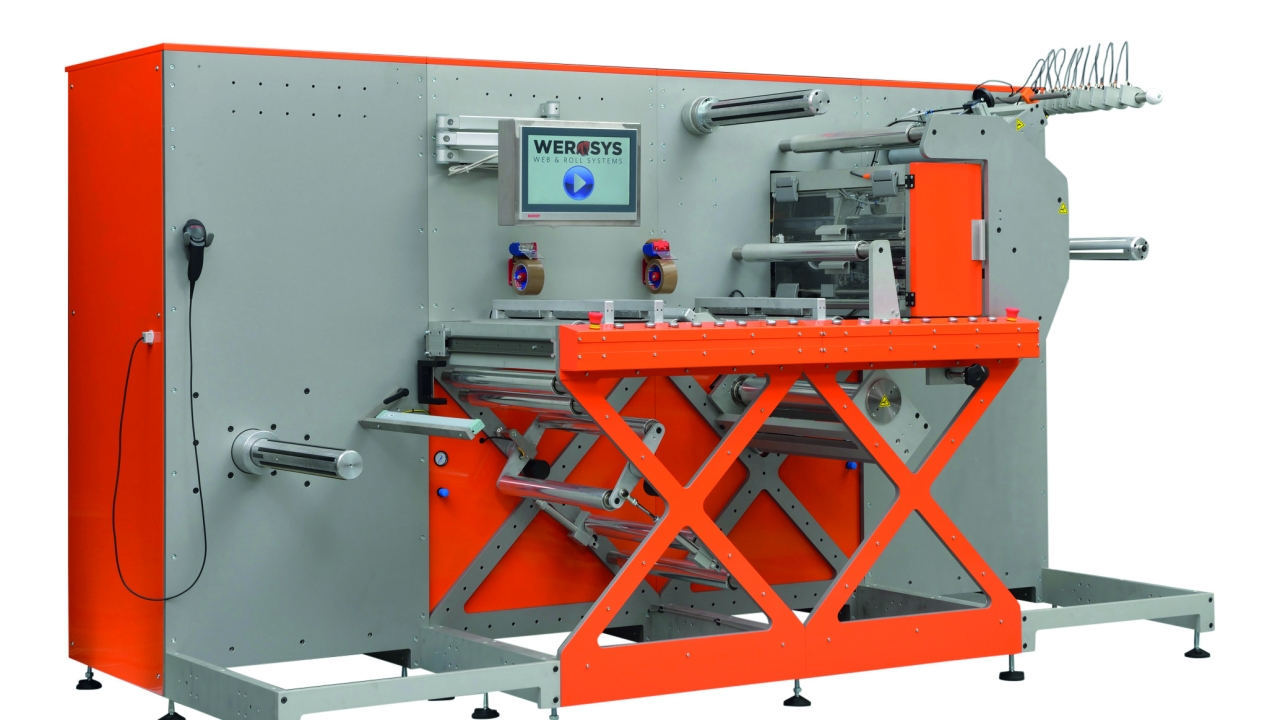
The rapid adoption of digital printing in the label industry created the requirement for finishing systems efficient enough to economically handle short runs of pressure-sensitive labels. In the early days of digital print, the slow speed of the presses made it more efficient to finish labels off-line, with one converting machine often handling the output from multiple digital presses.
With today’s digital presses reaching speeds of 50-75m/min (80m/min in the case of HP Indigo’s new 8000 press), there has been growing interest in in-line configurations which more closely resemble the traditional narrow web model of single-pass printing and converting. In response, more finishing manufacturers are offering systems capable of both in-line and off-line configuration with the addition of a buffer and timing systems.
The requirement for finishing short runs means semi-rotary die-cutting – where different formats can be handled without changing cylinders – has become a standard, with full rotary sometimes offered for handling longer runs, perhaps from a conventional press. And we have seen the development of laser die-cutting for instantaneous change of cutting format, albeit with some substrate limitations.
The drive to automate as many processes as possible has also seen the development of automated slit and back scoring knife positioning, all tied into a unified pre-press workflow based on JMF and JDF file formats. Similarly, more manufacturers now offer semi- and full turret rewinding stations for non-stop operation.
Another key trend has been the development of the finishing system from basic varnishing and die-cutting format into a self-contained value-added converting system, with modules available to add a wide range of decoration techniques including hot foil/embossing, cold foil, semi-rotary and flatbed screen and inkjet numbering/marking.
The decision on which of these options to take or leave is an increasingly complex one, and will require consideration of the degree of automation and added value decoration required, and also the benefits of an off-line verses in-line configuration.
Stay up to date
Subscribe to the free Label News newsletter and receive the latest content every week. We'll never share your email address.