The future of industrial printing: smarter, sustainable and connected
How nonstop digital printing is transforming industrial print operations
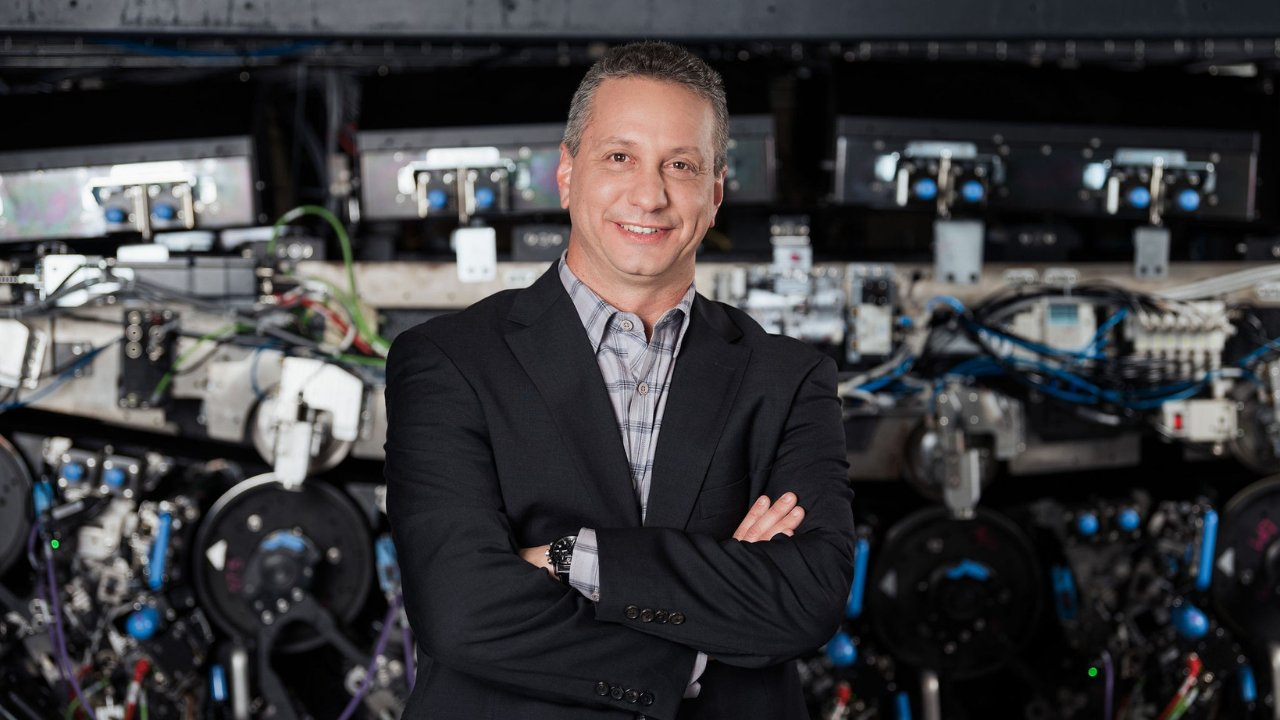
Noam Zilbershtain, VP and general manager of HP Indigo
By Noam Zilbershtain, VP and general manager of HP Indigo
As we reflect on 2025, the industrial print sector stands at a clear inflection point. An industry once defined by speed and scale is now being reshaped by intelligence and agility. AI-driven automation has shifted from ambition to expectation, fundamentally changing how print providers and converters operate. Speed alone is no longer a differentiator. Standing out now requires data-driven decision-making, more sustainable production, and the ability to expand capacity without adding operational complexity.
Across labels, packaging, and corrugated, companies are realizing that growth must be smarter, not more burdensome. Those who succeed are building connected ecosystems that let them do more with less - fewer touchpoints, leaner teams, and greater confidence in their ability to deliver consistently.
The rise of smarter, nonstop digital print and the capacity imperative
Customer expectations have shifted dramatically. Brands want shorter runs, faster turnarounds, and consistent quality across a growing range of applications. At the same time, labour shortages and cost pressures are limiting how easily production can scale. The result is a widening gap between market demands and what traditional operating models can sustainably deliver.
This tension has placed capacity at the centre of strategic decision-making. Capacity is no longer measured only by press speed or raw volume, but by uptime, predictability, and the ability to absorb complexity without disruption. Meeting these demands requires production environments that are more connected, more flexible, and designed to run continuously.
Nonstop digital printing has evolved to meet this challenge. HP Indigo’s vision is to enable customers to print anything, at the highest quality and profitability, using solutions that help converters run 24/7. By maximizing uptime and reducing manual intervention, HP Indigo digital presses allow print providers to increase effective capacity without proportionally increasing labour or cost - closing the gap between rising expectations and operational reality.
Automation as the engine of nonstop digital print
If nonstop digital printing defines the direction, automation is what makes it possible. Over the past year, the industry crossed a clear threshold, where connectivity and workflow automation are no longer optional enhancements, but core requirements for consistency and profitability at scale.
For label and packaging converters, this reflects a hard operational reality. Capacity cannot be increased simply by adding presses or people. SKU proliferation, shorter runs, rising costs, and workforce constraints demand production environments that reduce friction by design and make smarter decisions in real time. Automation enables presses to run longer with minimal supervision, while maintaining consistent quality as complexity increases.
By removing unnecessary touchpoints and enabling more predictable production, automation also supports more sustainable operations through minimising setup waste and improving overall resource efficiency. These gains translate directly into lower material consumption and more efficient energy use.
HP Indigo’s vision: defining the future
HP’s approach is rooted in integration. Platforms such as HP PrintOS and HP Nio connect presses, workflows, and data into a unified production environment - streamlining job onboarding, improving scheduling, and shifting operations from reactive response to predictive insight. By bridging brand intent and production reality, HP enables print service providers and converters to evolve from suppliers into strategic partners, delivering long-term value while expanding capacity with greater control and efficiency.
This integrated approach is reflected in HP Indigo’s leadership in the digital print market. With more than 50% market share in labels - over three times the next competitor - and 66% share in labels and packaging combined, its impact is clear. The installation of the 3,000th HP Indigo labels and packaging press this past year marked a milestone that underscores sustained adoption and continued customer trust.
HP Indigo enters 2026 with strong momentum, guided by a roadmap built on three pillars: more jobs with less friction, deeper brand engagement, and intelligence at the core. This momentum is reinforced by the most comprehensive labels portfolio HP Indigo has ever brought to market. Anchored by the HP Indigo V12, HP Indigo 6K+, and HP Indigo 200K, the lineup addresses the full spectrum of run lengths with quality, economics, and productivity that set a new benchmark for digital.
The HP Indigo V12, in particular, has moved from industry promise to a proven production engine, with converters across Europe and North America now surpassing 1200 km per month on a single press - and several already investing in a second. These results demonstrate a structural shift: digital is no longer an alternative but the primary path to profitable growth, enabling converters to replace analogue capacity, respond faster to brands, and operate with greater agility and confidence.
This reality embodies the vision of nonstop digital printing - fewer touchpoints, broader applications, more sustainable operations, and scalable capacity. Together, intelligent automation and integrated solutions position HP and its partners to shape the next era of industrial printing.
Success in 2026: scaling with confidence
Looking ahead, success will depend less on experimentation and more on execution at scale. As demand fragments and expectations rise, print providers must expand capacity without increasing complexity, cost, or waste. That requires production environments designed to run continuously, supported by automation that reduces friction and improves predictability across the workflow.
Nonstop digital printing has proven its role in meeting these demands. Capacity, once constrained by labor and setup time, is increasingly unlocked through intelligence and integration.
The lesson from 2025 is clear - nonstop digital printing is no longer a vision of the future. It is already reshaping how industrial printing operates - enabling smarter, profitable growth, more resilient production models, and a stronger foundation for the years ahead.
Stay up to date
Subscribe to the free Label News newsletter and receive the latest content every week. We'll never share your email address.